In global manufacturing, shipbuilding, construction, energy, mining, and heavy machinery, steel plate is not simply a raw material. It is a structural foundation that determines load-bearing capacity, fabrication efficiency, service life, safety performance, and long-term project cost. For importers, EPC contractors, shipyards, steel service centers, and industrial manufacturers, choosing the right steel plate requires more than comparing thickness and price. Buyers must evaluate grade, standards, mill origin, mechanical properties, inspection documents, tolerance, logistics, and export compliance.
The importance of steel plate has become even clearer in the current steel market. Worldsteel forecast global steel demand at 1,724 million tonnes in 2026, with a stronger recovery expected in 2027, showing that steel remains central to infrastructure and industrial development despite cyclical pressure in construction and manufacturing. At the same time, global steel excess capacity reached an estimated 640 million tonnes in 2025 and may rise further by 2028, making supplier selection, quality control, and traceability more important than ever for international buyers. :contentReference[oaicite:0]{index=0}
As a Vietnam-based industrial metal materials trading company, Stavian Industrial Metal provides comprehensive solutions for industrial metal materials and supports the global integration of Vietnamese industrial metal products. In the steel plate segment, Stavian Industrial Metal focuses on reliable sourcing, clear documentation, international standards, and practical supply-chain support for customers operating in demanding sectors such as shipbuilding, infrastructure, offshore structures, and heavy industry.
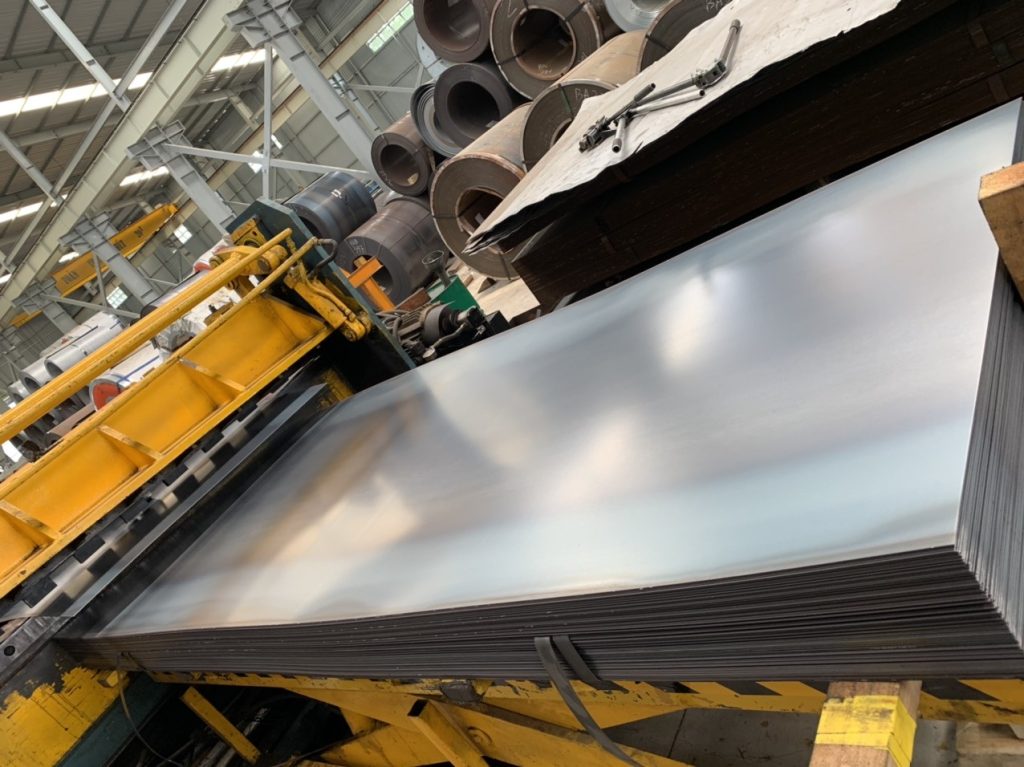
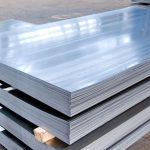
Steel plate is a flat-rolled steel product manufactured in relatively thick sections and supplied in sheets or plates for structural, industrial, and fabrication applications. While the exact definition can vary by market and standard, steel plate is generally thicker and stronger than sheet steel or thin coil products. It is commonly produced through hot rolling, followed by controlled cooling, leveling, cutting, testing, and sometimes heat treatment depending on the required grade and application.
The main value of steel plate lies in its combination of strength, weldability, machinability, toughness, and dimensional stability. These properties make it suitable for parts that must withstand heavy loads, impact, vibration, corrosion risk, or harsh operating environments. In practical procurement, buyers usually specify steel plate by grade, thickness, width, length, delivery condition, tolerance, surface condition, inspection standard, and certification requirement.
Flat steel products are often grouped into sheet, coil, strip, and plate, but their applications are different. Sheet and coil are typically used in lighter fabrication, automotive panels, appliances, roofing, and general manufacturing. Steel plate, by contrast, is selected when the project needs higher thickness, stronger structural capacity, and better resistance to mechanical stress.
For example, a ship hull, bridge component, pressure vessel shell, excavator bucket, offshore platform deck, or industrial base frame cannot rely on ordinary thin sheet. These applications need plate products with verified chemistry, tensile strength, yield strength, elongation, impact toughness, and weldability. This is why international buyers often request mill test certificates, third-party inspection, ultrasonic testing, and classification-society approval for critical steel plate orders.
The global steel market is entering a more selective phase. According to the World Steel Association, steel demand is expected to grow only 0.3% in 2026 before accelerating by 2.2% in 2027. This means buyers are not facing a simple shortage market; instead, they are working in a market where supply is available, but quality, delivery discipline, and compliance matter more. :contentReference[oaicite:1]{index=1}
For steel plate buyers, this environment creates both opportunities and risks. Competitive supply may help improve purchasing options, but excess capacity can also increase the presence of inconsistent materials, unclear origin documents, and price-driven offers that may not satisfy technical requirements. Professional buyers should therefore evaluate total landed cost, supplier reliability, inspection capability, and after-sales support rather than focusing only on the lowest quoted price.
Asia continues to play a major role in global steel consumption and production. India’s crude steel production reached about 164.9 million tonnes in 2025, supported by infrastructure, manufacturing, and industrial expansion. China, meanwhile, remained the world’s largest steel producer, although its 2025 crude steel output fell to 960.81 million tonnes amid weaker property-sector demand and policy pressure on capacity and emissions. :contentReference[oaicite:2]{index=2}
This shift is highly relevant to the steel plate trade. Demand from infrastructure, shipbuilding, renewable energy, ports, bridges, heavy machinery, and industrial plants continues to support flat steel consumption across emerging Asian markets. For international buyers, Vietnam’s strategic location, improving industrial base, and growing role in regional supply chains make Vietnamese metal trading companies increasingly important in connecting mills, fabricators, and end users.
Steel production is energy-intensive, and the steel industry accounts for a significant share of global industrial emissions. Recent market discussions show that green steel investment is growing but still faces cost, technology, and demand barriers. Industry estimates indicate that only around 70 million tonnes of green steel may be produced annually by 2030, compared with total projected steel output near 2 billion tonnes. :contentReference[oaicite:3]{index=3}
For steel plate importers, this means carbon data, origin transparency, and sustainability documentation will become more important, especially for exports into markets affected by carbon rules and environmental reporting. Stavian Industrial Metal recognizes this trend by aligning its industrial metal supply approach with more transparent and sustainable supply chains, helping manufacturers prepare for a future where technical quality and environmental responsibility are assessed together.

Carbon steel plate is one of the most widely used plate categories because it offers a strong balance between mechanical performance, availability, weldability, and cost. It is commonly used in construction equipment, general fabrication, bridges, machinery bases, storage tanks, frames, industrial platforms, and structural components.
Typical carbon steel plate grades include ASTM A36, ASTM A283, ASTM A516, SS400, S235, S275, S355, Q235, and Q345, depending on the market and applicable standard. The right grade depends on design load, service temperature, welding method, fabrication process, and regulatory requirement. For example, a general support frame may use a standard structural grade, while a pressure-related application may require a normalized pressure vessel grade with stricter testing.
High-strength low-alloy, or HSLA, steel plate is designed to provide higher strength while maintaining good toughness and weldability. It often contains small additions of elements such as manganese, niobium, vanadium, titanium, chromium, nickel, or molybdenum. These alloying elements help refine grain structure and improve mechanical properties without making the plate excessively heavy or difficult to fabricate.
HSLA steel plate is commonly used in bridges, heavy transport equipment, cranes, offshore structures, mining machinery, and large welded structures. Because higher strength can allow engineers to reduce thickness in some designs, HSLA plate may help lower total structural weight. However, procurement teams must pay close attention to welding procedures, preheating requirements, impact testing, and heat input control to avoid fabrication defects.
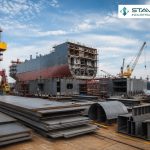
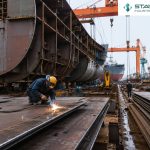
Shipbuilding steel plate is engineered for marine environments where toughness, weldability, corrosion resistance, fatigue performance, and classification approval are critical. It is widely used for ship hulls, decks, bulkheads, offshore units, barges, marine platforms, and other maritime structures. Common classification standards include ABS, LR, DNV, BV, NK, KR, RINA, and CCS, depending on the vessel and project requirement.
Stavian Industrial Metal supplies shipbuilding steel plates designed for demanding marine applications. Its shipbuilding steel plate portfolio includes standard, high-strength, and ultra-high-strength options for ship hulls, offshore structures, and maritime projects that require durability, stability, and reliable performance in harsh environments. This product focus is especially valuable for shipyards and marine contractors seeking traceable material, consistent documentation, and international-standard compliance. :contentReference[oaicite:4]{index=4}
Pressure vessel steel plate is used for boilers, tanks, heat exchangers, separators, reactors, and other equipment operating under pressure or temperature stress. This type of plate must meet strict requirements for strength, toughness, chemical composition, weldability, and testing. Common grades include ASTM A516 Grade 60, 65, and 70, as well as EN and JIS equivalents used in different markets.
Buyers should be especially careful when sourcing pressure vessel plate because failure can create serious safety and operational risks. Important documents may include mill test certificates, heat treatment records, ultrasonic testing reports, impact test results, and compliance with ASME or other project-specific codes. The lowest-cost plate is rarely the best choice for pressure equipment if documentation and traceability are incomplete.
Wear-resistant steel plate, also called abrasion-resistant plate, is designed for applications where sliding, impact, friction, and abrasive materials damage ordinary steel. It is commonly used in mining buckets, dump truck bodies, crushers, conveyors, chutes, cement equipment, quarry machinery, and earthmoving equipment.
Wear-resistant grades are often specified by hardness level, such as 400 HB, 450 HB, or 500 HB. Higher hardness can improve service life, but it may also require more careful cutting, drilling, bending, and welding. Buyers should select the grade based on the actual balance between abrasion, impact, forming needs, and maintenance strategy.
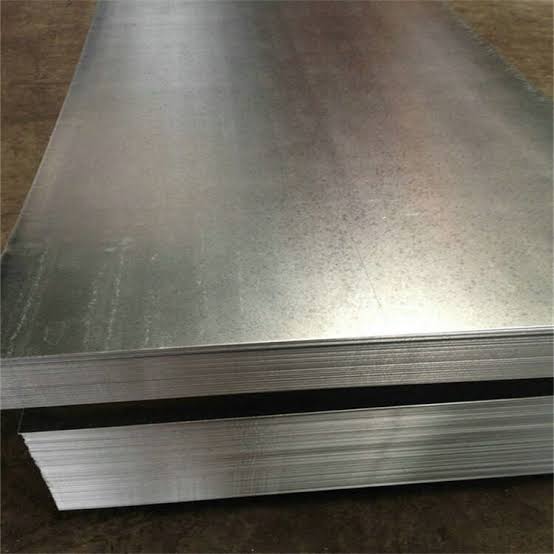
ASTM standards are widely used in international steel trade, especially for projects connected with North American specifications, oil and gas, pressure equipment, construction, and industrial fabrication. ASTM A36 is a common structural carbon steel plate grade, while ASTM A516 is widely used for pressure vessel applications. ASTM A572 and A709 may be used for high-strength structural and bridge applications.
When buying steel plate under ASTM standards, purchasers should verify grade, class, thickness range, testing conditions, and supplementary requirements. A plate described only as “ASTM material” is not enough. The purchase order should clearly state the exact standard, grade, dimensions, tolerances, testing requirements, and certificate format.
European EN standards are commonly used in infrastructure, machinery, wind power, shipbuilding, and industrial projects. Examples include EN 10025 for structural steels and EN 10028 for pressure vessel steels. Grades such as S235, S275, S355, S460, P265, and P355 are familiar to many international buyers.
The EN system often includes important suffixes that describe impact toughness, delivery condition, or special properties. For instance, S355JR, S355J2, and S355K2 are not identical from a toughness perspective. Buyers sourcing steel plate for cold environments, heavy welded structures, or critical safety applications must specify the correct suffix and testing temperature.
JIS standards are common in Japan-linked projects and Asian supply chains, while GB standards are widely used for Chinese-origin materials. Grades such as SS400, SM490, Q235, and Q345 are frequently found in commercial and structural steel plate trade. These grades can be practical and cost-effective when properly matched with project requirements.
However, equivalent grades are not always identical. Chemical limits, yield strength, tensile strength, elongation, impact testing, and delivery condition may differ between standards. International buyers should avoid assuming that two grades are interchangeable without engineering review. A reliable supplier can help compare grade requirements and reduce the risk of specification mismatch.
The first step in choosing steel plate is understanding where and how the material will be used. A plate for a simple base frame does not require the same properties as a plate used in a ship hull, pressure vessel, offshore jacket, mining bucket, or bridge girder. The application determines the necessary strength, toughness, weldability, corrosion resistance, forming behavior, and inspection level.
Professional buyers should collect design drawings, technical specifications, applicable codes, operating temperature, load conditions, corrosion exposure, fabrication method, and inspection requirements before requesting a quotation. This helps avoid vague inquiries and ensures suppliers quote the correct material instead of offering the nearest available stock item.
Dimension control is critical in steel plate procurement. Thickness affects strength, weight, welding time, cutting cost, and project economics. Width and length influence nesting efficiency, transportation method, container loading, and fabrication waste. Tolerance affects fit-up quality, machining allowance, and assembly accuracy.
For export orders, buyers should specify whether the plate must comply with ASTM, EN, JIS, GB, or other dimensional tolerance standards. They should also clarify whether the plate will be supplied as mill edge, cut edge, shot-blasted, primed, normalized, thermomechanically rolled, or quenched and tempered. These details may significantly affect production lead time and cost.
Mechanical properties are at the heart of steel plate performance. The most common values include yield strength, tensile strength, elongation, hardness, and Charpy impact energy. Yield strength indicates the stress level at which the steel begins to deform permanently. Tensile strength shows maximum resistance before fracture. Elongation indicates ductility, while impact testing measures toughness under sudden loading.
Impact testing is especially important for shipbuilding, offshore, bridge, pressure vessel, and low-temperature applications. A plate that performs well at room temperature may become brittle in cold service if toughness is insufficient. Buyers should clearly specify test temperature, test direction, sample location, and acceptance criteria when toughness is required.
A mill test certificate, often called MTC or MTR, is essential for verifying steel plate quality. It should include heat number, grade, standard, dimensions, chemical composition, mechanical test results, delivery condition, and mill authorization. For critical applications, buyers may also request EN 10204 3.1 or 3.2 certification depending on project requirements.
Traceability is especially important in export trade because material often moves through mills, traders, stockists, ports, warehouses, and fabricators before reaching final installation. Stavian Industrial Metal’s role as an industrial metal solutions provider helps customers manage documentation, product origin, quality expectations, and supply-chain coordination more effectively.
Shipbuilding is one of the most demanding applications for steel plate. Marine structures operate under wave loading, vibration, fatigue, corrosion, low-temperature exposure, and strict safety requirements. Steel plates used in ships must provide reliable weldability, toughness, dimensional accuracy, and classification approval.
Stavian Industrial Metal’s shipbuilding steel plate offering is particularly relevant for shipyards, repair yards, offshore contractors, and maritime fabricators. The company’s portfolio supports ship hulls, offshore structures, and marine applications where durability and corrosion resistance are essential. For export buyers, the ability to align steel plate supply with classification standards can reduce approval delays and technical risk.
In construction and infrastructure, steel plate is used in bridges, high-rise buildings, airports, ports, tunnels, railway structures, steel columns, base plates, connection plates, and reinforcement components. Engineers select plate products because they can carry high loads and be fabricated into precise structural elements.
Infrastructure projects often require strong documentation, predictable delivery, and compliance with national or international standards. Delayed material delivery can disrupt project schedules, while inconsistent quality can create fabrication rework. Therefore, buyers should evaluate not only plate price but also supplier capacity, logistics coordination, inspection support, and export experience.
The energy sector uses steel plate in pressure vessels, storage tanks, pipelines, wind tower components, hydropower equipment, refinery structures, and power plant systems. These applications often involve pressure, temperature, corrosion, and fatigue, making material selection highly technical.
For oil, gas, and energy projects, buyers should pay attention to normalized plate, low-temperature toughness, ultrasonic testing, through-thickness properties, and compatibility with welding procedures. A reliable supplier should be able to support detailed technical documentation and coordinate inspection before shipment.
Heavy machinery manufacturers use steel plate for excavators, loaders, crushers, dump trucks, cranes, agricultural machines, and mining equipment. These applications often require high strength, abrasion resistance, impact resistance, and good fabrication performance.
In mining and earthmoving equipment, the right plate grade can reduce downtime and maintenance cost. For example, wear-resistant plate may cost more per tonne than ordinary structural plate, but it can extend service life in abrasive environments. Buyers should evaluate lifecycle cost rather than only purchase price.
In international trade, steel plate is usually classified under Chapter 72 of the Harmonized System, depending on whether it is carbon steel, alloy steel, stainless steel, hot-rolled, coated, clad, or further processed. Hot-rolled non-alloy plate of a width of 600 mm or more is commonly associated with HS headings under 7208, while alloy steel flat-rolled products may fall under 7225. Exact classification depends on chemistry, dimensions, processing, and local customs interpretation.
Correct HS code selection affects import duty, anti-dumping measures, safeguard duties, documentation, and customs clearance. Buyers should confirm classification with customs brokers or trade compliance specialists before shipment. Incorrect declaration can lead to clearance delays, additional taxes, penalties, or disputes with authorities.
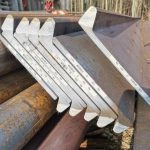
Packaging for steel plate must protect the material during inland transport, port handling, ocean shipping, unloading, and warehouse storage. Common packaging options include bare bundles, steel straps, wooden skids, waterproof wrapping, anti-rust oil, edge protection, and marking on each plate or bundle.
For container shipments, plate size and weight must match container limits and handling capacity. For bulk or breakbulk shipments, lifting points, stowage planning, dunnage, and moisture protection become critical. Buyers should clarify loading method, maximum piece weight, bundle weight, port of loading, port of discharge, and discharge equipment before confirming an order.
Pre-shipment inspection can reduce the risk of receiving non-conforming steel plate. Inspection may include dimension checking, surface inspection, marking verification, certificate review, quantity confirmation, ultrasonic testing, chemical analysis, mechanical testing witness, and packaging inspection.
Third-party inspection is especially recommended for high-value, project-critical, or first-time orders. Buyers may appoint internationally recognized inspection agencies or request supplier-supported inspection arrangements. The key is to define acceptance criteria before production or shipment, not after the material arrives.
Stavian Industrial Metal provides comprehensive solutions in the trading of industrial metal materials and is committed to elevating Vietnamese industrial metal products to the global stage. Established on June 18, 2021, the company was built with the goal of developing a vibrant, transparent, and sustainable industrial metal materials market. :contentReference[oaicite:5]{index=5}
For steel plate buyers, this means Stavian Industrial Metal is not positioned only as a transactional seller. The company supports customers through product selection, supply coordination, documentation, and market connection. This is particularly important for importers and project buyers who require consistent communication, technical clarity, and dependable export execution.
Stavian Industrial Metal supplies shipbuilding steel plates for marine and offshore applications. These products are designed for demanding operating environments and can support ship hulls, offshore structures, and maritime fabrication projects requiring strength, durability, stability, and corrosion resistance. :contentReference[oaicite:6]{index=6}
Shipbuilding customers often need more than available stock. They need grade accuracy, classification compliance, traceable certificates, reliable delivery schedules, and support for technical documentation. Stavian Industrial Metal’s shipbuilding steel plate portfolio helps serve this market by aligning material supply with practical project requirements.
Vietnam’s growing manufacturing base, strategic coastline, port system, and integration into global trade create favorable conditions for industrial metal exports and regional supply-chain development. Stavian Industrial Metal operates from Vietnam and supports the connection between industrial metal supply and international customers seeking dependable sourcing from Asia.
For buyers of steel plate, working with a Vietnam-based supplier can offer advantages in regional logistics, market flexibility, and access to industrial projects across Southeast Asia and beyond. The key benefit is not only geographic location but also the ability to combine trading capability, documentation support, product knowledge, and customer-oriented service.
Steel plate remains one of the most important materials in global industry because it supports the structures, vessels, equipment, and infrastructure that modern economies depend on. In 2026, global steel demand is stabilizing, Asia continues to drive industrial growth, and sustainability requirements are becoming more influential in procurement decisions. These trends make steel plate purchasing more strategic than ever.
For buyers, the best results come from combining technical accuracy with reliable sourcing. Grade, standard, thickness, tolerance, mechanical properties, testing, certification, packaging, logistics, and customs compliance must all be managed carefully. A successful steel plate order is not only about receiving steel at the lowest price; it is about receiving the right material, with the right documents, at the right time, for the right application.
Stavian Industrial Metal supports this need by providing comprehensive industrial metal material solutions, with a particular focus on reliable supply, transparent documentation, and internationally relevant products such as shipbuilding steel plates. For importers, shipyards, fabricators, EPC contractors, and industrial manufacturers, Stavian Industrial Metal offers a practical supply partner for steel plate procurement in a market where quality, traceability, and export execution define long-term value.
Read More
Address
Website: https://stavianmetal.com
Email: info@stavianmetal.com