
| Categories | Details |
| Purity | ≥ 99.995% zinc |
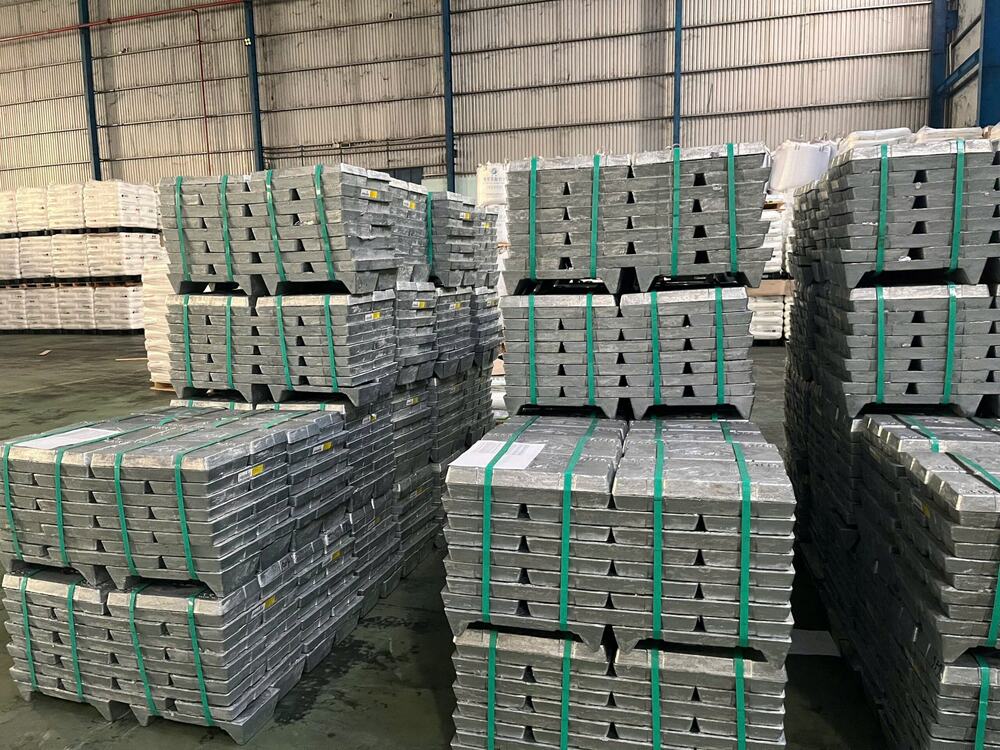
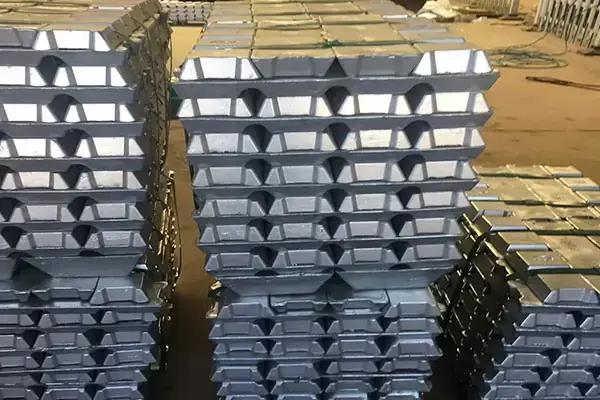
| Shape | Ingot, size according to manufacturer standards |
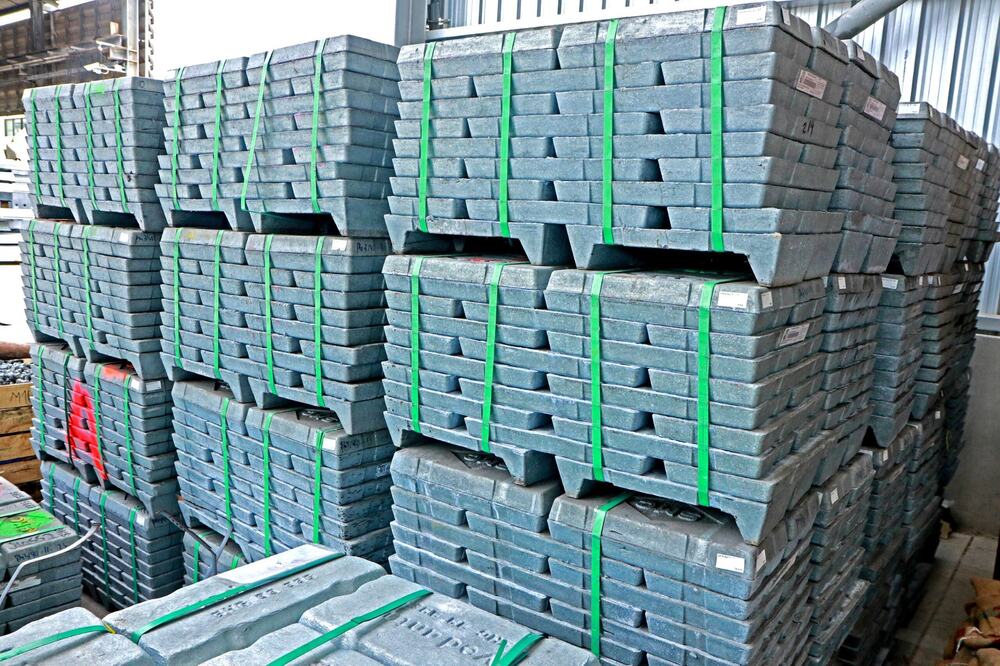
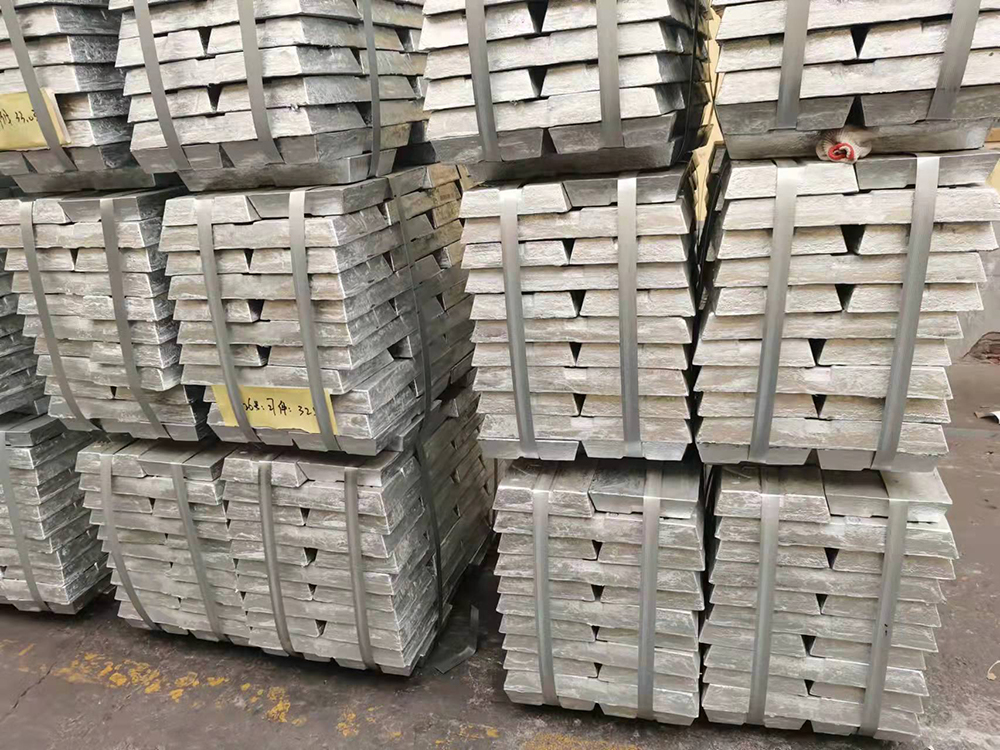
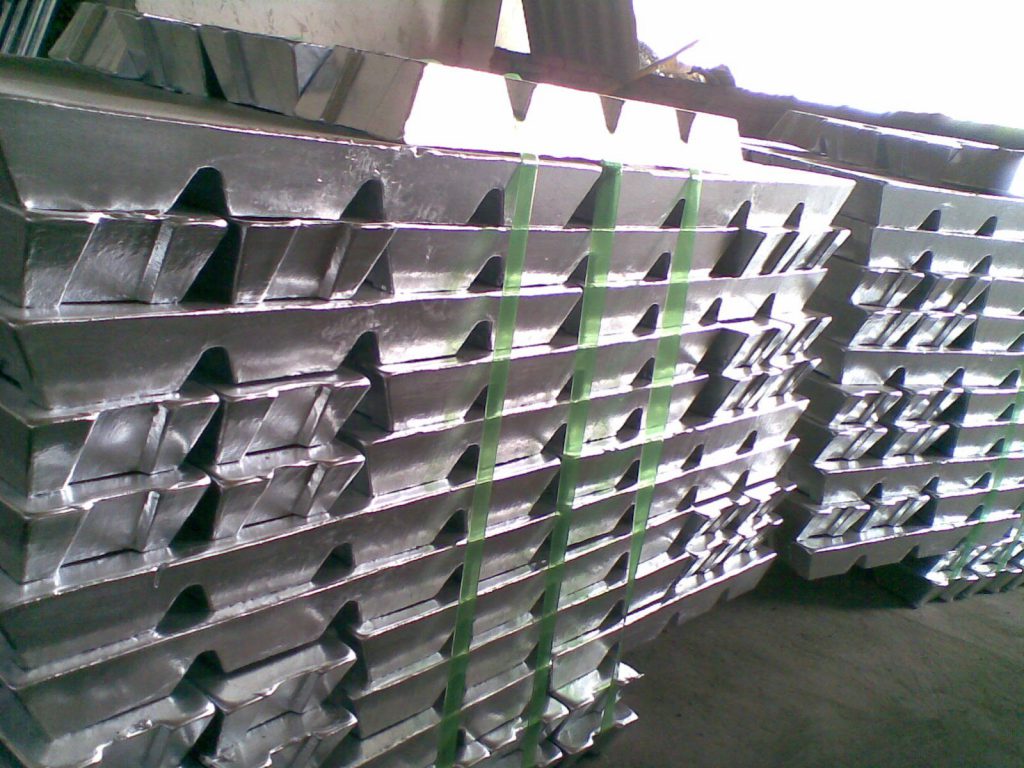
| Surface | Wilver-white, shiny |
| Standards | BS EN 1179:2003 – 99.995% ISO 752:2004 – ZN-1 ASTM B6-12 – LME GB/T 470-2008 – Zn 99.995 |
Zinc ingot
Stavian Industrial Metal supplies high-purity Zinc Ingot, primarily used in the plating and galvanizing industries.
All zinc ingots distributed by Stavian Industrial Metal have clear origins, are stored and transported in accordance with manufacturer standards, and are trusted by both domestic and international markets.
0 ₫
Important notice for customers: Stavian Industrial Metal only applies discounts to large-volume orders: steel from 200 tons, aluminum from 100 tons, and copper and zinc from 50 tons or more.
Zinc ingot is zinc metal cast into ingot form and commonly used as a raw material in metal plating, industrial electroplating, alloy production, die casting, and metal corrosion protection applications. Zinc has the chemical symbol Zn. Under normal conditions, it exists as a solid metal with a clean surface that appears silvery-white with a slight bluish tint.
Thanks to its versatile applications, particularly in anti-corrosion galvanizing, zinc is an important raw material across many industries, including construction, mechanical engineering, automotive manufacturing, electrical equipment, marine applications, and the casting industry. In addition to pure zinc ingot, the market also offers various types of zinc alloy ingots containing aluminum, copper, nickel, or tin to meet specific technical requirements.
Stavian Industrial Metal currently supplies high-purity zinc ingot suitable for galvanizing, electroplating, and various industrial manufacturing applications. When selecting zinc, businesses should consider Zn content, material standards, impurity composition, ingot specifications, and product origin rather than relying only on appearance or unit price.
1. What Is Zinc Ingot?
Zinc ingot is refined zinc metal cast into ingot form for convenient storage, transportation, trading, and use in industrial production lines. Zinc has the chemical symbol Zn and atomic number 30 and is one of the metals widely used across many industrial sectors.
In its clean metallic state, zinc metal has a silvery-white color with a slight bluish tint and metallic luster. Under actual storage and operating conditions, the zinc surface may gradually become dull gray due to reactions with components in the surrounding atmosphere. This explains why commercial zinc products may not always retain the same appearance as freshly processed metal surfaces.
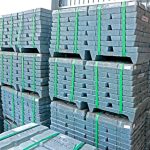
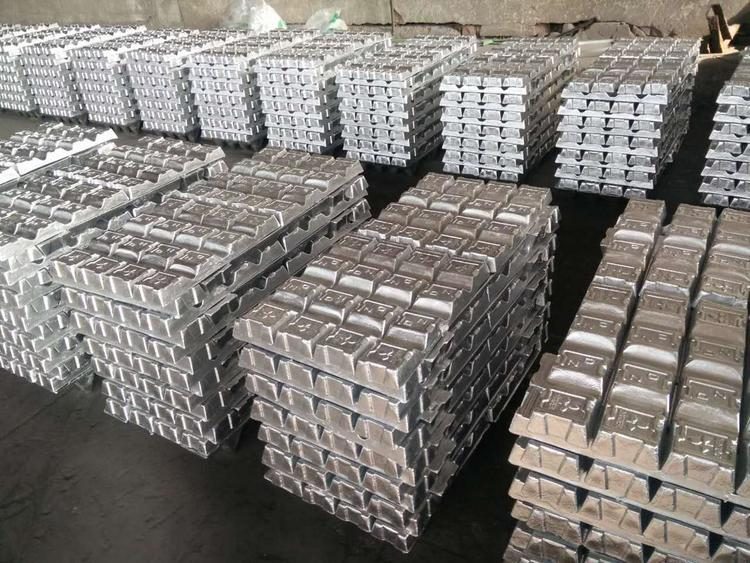
Commercial zinc is available in different purity grades, so not all pure zinc ingots should be assumed to have the same Zn content. For zinc ingot supplied by Stavian Industrial Metal, the stated zinc purity is above 99.995%. The products are supplied in ingot form, with dimensions depending on each manufacturer’s specifications. The surface is bright and silvery-white, and the material is intended for use in galvanizing, electroplating, and other industrial applications.
What Is the Difference Between Pure Zinc Ingot and Zinc Alloy Ingot?
Pure zinc ingot consists primarily of Zn at a high concentration and is suitable for processes that require strict control of raw material composition, such as metal galvanizing, alloy preparation, or the production of alloys according to specified formulations. The higher the zinc purity, the more tightly other metallic impurities can be controlled, helping manufacturers maintain better control over their production processes.
In contrast, a zinc alloy ingot is produced by intentionally combining zinc with one or more other metals to achieve properties suitable for particular applications. Typical alloy systems include zinc-aluminum, zinc-copper, zinc-nickel, and zinc-tin. Depending on the composition, these alloys may be optimized for strength, hardness, load-bearing capacity, castability, or corrosion resistance.
Stavian Industrial Metal supplies various types of zinc alloy ingots, including ZA, ZC, ZN, and ZT grades, for applications such as automotive components, electrical parts, electronic housings, hardware, accessories, and decorative components.
2. Properties of Zn Zinc Ingot
The physical and chemical properties of Zn zinc ingot are among the main reasons why this metal is widely used in industrial applications. Zinc has a lower melting point than many common structural metals, making it suitable for melting, alloying, and casting processes. At the same time, its electrochemical properties allow zinc to be used to protect iron and steel from corrosion.
Some basic properties of zinc include:
- Chemical symbol: Zn.
- Atomic number: 30.
- Physical state: solid under normal conditions.
- Color: silvery-white with a slight bluish tint when the surface is clean.
- Melting point: approximately 419.5°C.
- Boiling point: approximately 907°C.
- Density: approximately 7.13 g/cm³ at room temperature.
- Electrical conductivity: zinc conducts electricity and is used in certain electrochemical applications.
- Solubility: metallic zinc is insoluble in water under normal conditions.
It is important to note that the weight of each ingot is not an inherent property of the Zn element. The weight and dimensions of a zinc ingot depend on the casting specifications of each manufacturer. Therefore, the commonly quoted figure of “25 kg per ingot” should not automatically be applied to all products. Stavian Industrial Metal supplies zinc in ingot form with dimensions based on the manufacturer’s specifications.
Zinc Ingot Specifications at Stavian Industrial Metal
For industrial manufacturing, the specifications of each zinc ingot grade should be carefully verified before the material is introduced into a production line. Zinc products supplied by Stavian Industrial Metal have high purity and comply with international standards corresponding to the Zn 99.995 grade.
| Item | Product Information |
|---|---|
| Product type | Zinc ingot |
| Purity | > 99.995% Zn |
| Form | Ingot, dimensions according to manufacturer specifications |
| Surface | Bright silvery-white |
| Standard | BS EN 1179:2003 – 99.995% |
| Standard | ISO 752:2004 – ZN-1 |
| Standard | ASTM B6-12 – LME |
| Standard | GB/T 470-2008 – Zn 99.995 |
Clearly identifying the required purity grade and applicable standards is particularly important for manufacturers using zinc in galvanizing, electroplating, or alloy preparation. Instead of simply requesting “pure zinc,” businesses should specify the required Zn content, standards, and composition limits in their purchasing requirements.
3. Applications of Zinc Ingot in Modern Life and Manufacturing
Zinc ingot is used across a wide range of industries, particularly for protective metal coating, alloy production, and industrial casting. Each application may require a different material grade, so businesses need to select the appropriate zinc product based on their actual production processes.
Zinc’s broad range of applications comes from its combination of corrosion resistance, alloy-forming capability, relatively low melting point, and compatibility with various manufacturing methods. This is why Zn is used throughout production chains ranging from construction and mechanical engineering to automotive and electrical-electronic manufacturing.
Zinc Ingot in the Metal Plating Industry
One of the most common applications of zinc ingot is as a raw material for galvanizing. In suitable coating processes, zinc forms a protective layer on iron or steel surfaces, reducing direct contact between the base metal and moisture, oxygen, and other factors that can accelerate corrosion.
In addition to acting as a physical barrier, zinc can provide electrochemical protection to steel. Thanks to this characteristic, zinc coating is widely used for metal products designed for outdoor applications or high-humidity environments. Products such as galvanized steel, galvanized steel coil, and galvanized steel sheet all apply the principle of using zinc to protect the steel surface.
In practice, zinc is used in many products and industries, including:
- Construction: coating steel structures, frames, supports, railings, accessories, and outdoor equipment.
- Infrastructure: protecting metal structures frequently exposed to weather conditions.
- Telecommunications: zinc coatings are used on certain steel structures such as poles, supports, and outdoor accessories.
- Mechanical engineering: protecting steel parts, bolts, accessories, and structures from oxidation.
- Transportation industry: used for various steel components that require corrosion resistance.
- Marine applications: zinc is used in solutions designed to protect metals in corrosive environments.
Stavian Industrial Metal currently supplies coated steel in coil, slit coil, and sheet forms. The GI product group uses a zinc coating with published coating weights ranging from Z40 to Z350 g/m². This is a direct example of zinc applications in the steel industry.
Applications of Zinc in the Construction Industry
In construction, steel materials are often exposed to moisture, rainwater, and other oxidation-promoting factors. Galvanizing is therefore commonly used as a surface protection method for many metal structures. The coating helps reduce direct contact between the steel substrate and the environment and can slow down rust formation under suitable service conditions.
Common materials include galvanized steel sheets, galvanized steel coils, galvanized roofing sheets, and surface-treated structural steel. For example, galvanized angle steel combines the load-bearing properties of structural steel with a protective zinc coating, making it suitable for frames, supports, and various mechanical applications.
The protective performance of a galvanized coating depends on several factors, including the galvanizing method, zinc coating thickness, operating environment, and steel surface quality. Therefore, businesses should determine coating standards according to each application rather than relying only on surface color or brightness.
Zinc in Telecommunications and Outdoor Equipment
Outdoor metal structures in the telecommunications industry are continuously exposed to rain, humidity, and atmospheric conditions. Zinc coatings are therefore often applied to steel components to improve corrosion resistance. Galvanized materials may be used for poles, supports, bolts, accessories, and many other structural components.
For these applications, the required durability of the protective coating should be determined based on the environmental conditions and intended service life. Zinc raw materials used in the coating process must therefore meet the technical specifications required by the production line and applicable standards.
Zinc in Marine and Shipbuilding Applications
Marine environments can significantly accelerate metal corrosion due to the presence of moisture and salts. Zinc is used in various solutions to protect steel structures and metal components operating in such environments. Depending on the design, zinc may be used as a surface coating or as part of an electrochemical protection system.
For each shipbuilding or marine structure application, the corrosion protection method should be designed according to actual operating conditions. It should not be assumed that every component uses the same zinc grade or the same surface protection method.
Using Zinc Ingot in Alloy Production
In addition to galvanizing, a significant volume of zinc ingot is used to manufacture industrial alloys. When combined with other metals, Zn can form materials with different levels of hardness, strength, castability, corrosion resistance, and machinability.
One of the most familiar zinc-containing alloys is brass, which consists primarily of copper and zinc. Depending on the composition ratio, brass is used in fittings, mechanical components, electrical equipment, decorative items, musical instruments, and numerous other industrial products.
Beyond brass, zinc alloys are also developed in several other alloy systems. Stavian Industrial Metal supplies representative groups including:
| Alloy Type | Main Alloying Element | Characteristics | Typical Applications |
|---|---|---|---|
| Zinc-Aluminum (ZA) | Aluminum | High strength, hardness, and good load-bearing capacity | Automotive components, hardware, accessories |
| Zinc-Copper (ZC) | Copper | Good strength and ductility, suitable for die casting | Electrical components, automotive components |
| Zinc-Nickel (ZN) | Nickel | High corrosion resistance and durability | Automotive components, electronic housings |
| Zinc-Tin (ZT) | Tin | Good castability | Architectural hardware, decorative components |
These alloy systems have different characteristics and application ranges. Therefore, when purchasing zinc alloy ingot, businesses should clearly identify the required composition, manufacturing technology, and target properties of the finished product. Alloy selection should not be based solely on a general alloy name or price.
Zinc Compounds and Related Applications
In addition to metallic zinc and zinc alloys, zinc is also present in many compounds used in industrial applications. However, these compounds should be clearly distinguished from Zn zinc ingot, as they are materials formed when zinc chemically bonds with other elements or chemical groups.
- Zinc chloride (ZnCl₂): used in certain industrial processes, surface treatment, and specialized chemical applications.
- Zinc sulfide (ZnS): may be used in luminescent materials and certain optical applications.
- Zinc stearate: used in plastics, rubber, and selected material manufacturing processes.
- Zinc oxide (ZnO): applied in industries such as rubber, ceramics, coatings, and other technical products.
Distinguishing between metallic zinc, zinc alloys, and zinc compounds is particularly important when purchasing raw materials. Each group has completely different compositions, properties, storage requirements, and intended uses.
Other Applications of Zinc Ingot
In addition to galvanizing and alloy production, zinc ingot is also used as a raw material in the casting industry, particularly for zinc-based alloys. Its relatively low melting point makes zinc suitable for melting and forming through appropriate casting processes.
Zinc-based alloys may be used in the production of automotive components, electrical equipment, electronic housings, household products, metal accessories, and many other products requiring good formability. Depending on the application, alloy composition may be adjusted to meet requirements for strength, hardness, load-bearing capacity, corrosion resistance, or surface quality.
Certain forms of zinc and zinc alloys are also used in battery production, electromechanical applications, hardware, and consumer products. However, the raw material used for each product should be selected according to the relevant technical standards.
4. Where to Buy High-Quality Pure Zinc Ingot?
The zinc ingot market includes many grades with different purity levels, standards, origins, and specifications. For industrial customers, supplier selection should not be based solely on unit price. Businesses should also evaluate quality control capability, product origin, supply stability, and delivery capacity.
Stavian Industrial Metal operates in the trading and distribution of industrial metal materials, with a product portfolio covering steel, aluminum, copper, and zinc. For zinc products, Stavian Industrial Metal supplies high-purity zinc ingot and zinc alloy ingot for manufacturing applications across various industries.
Zinc products distributed by Stavian Industrial Metal have clear origins and are stored and transported according to manufacturers’ standards. Zinc ingot products have a purity above 99.995% and correspond to BS EN, ISO, ASTM, and GB/T standards.
Advantages of Choosing Zinc Ingot from Stavian Industrial Metal
When purchasing raw materials in large volumes, maintaining a stable supply and ensuring consistent product control directly affect production planning. Stavian Industrial Metal develops its distribution operations through a network of offices and warehouses in Hanoi, Hai Phong, and Ho Chi Minh City while benefiting from Stavian Group’s partner network across more than 100 countries and territories.
Some factors businesses may consider when sourcing pure zinc from Stavian Industrial Metal include:
- Clear product specifications: zinc ingot with purity above 99.995% Zn.
- Specified standards: products corresponding to BS EN 1179:2003, ISO 752:2004, ASTM B6-12, and GB/T 470-2008.
- Clear product origin: supporting better control of incoming raw materials.
- Diverse product portfolio: in addition to pure zinc, Stavian Industrial Metal supplies zinc-aluminum, zinc-copper, zinc-nickel, and zinc-tin alloys.
- Distribution network: offices and warehouse systems in major economic centers.
- International trading capabilities: supporting raw material requirements for both domestic and international customers.
5. Current Zinc Ingot Price
Zinc ingot price may fluctuate depending on the raw material market, purity level, product standard, source of supply, order volume, and delivery conditions. Therefore, there is no single fixed price that can be applied to every zinc grade at all times.
When purchasing industrial raw materials, businesses should avoid comparing two quotations only on a price-per-kilogram or price-per-ton basis without first checking purity grades and applicable standards. 99.995% Zn zinc and zinc with a lower Zn content may differ significantly in composition control requirements and intended applications.
| Product | Characteristics | Reference Price |
|---|---|---|
| Zinc ingot | Purity > 99.995% Zn | Contact Stavian Industrial Metal for a quotation based on the order and market conditions |
| Zinc alloy ingot | ZA, ZC, ZN, ZT | Contact Stavian Industrial Metal for a quotation based on alloy type and requirements |
Stavian Industrial Metal currently applies discount policies to large-volume orders, with copper and zinc orders eligible from 50 tons or more. Specific prices and commercial terms should be confirmed at the time of transaction, as they may vary depending on market conditions and individual orders.
Conclusion
Zinc ingot is an important Zn raw material widely used in metal plating, electroplating, alloy production, die casting, and many other industrial applications. With its ability to provide corrosion protection for steel and combine with other metals to form useful alloys, zinc plays an essential role in construction, mechanical engineering, automotive manufacturing, electrical equipment, and industrial production.
When selecting pure zinc ingot, businesses should pay close attention to purity, technical standards, impurity composition, dimensions, and product origin. It should not be assumed that all zinc ingots available on the market have the same Zn content or the same weight.
Stavian Industrial Metal supplies zinc ingot with purity above 99.995%, along with zinc alloy ingots such as ZA, ZC, ZN, and ZT. With a diverse portfolio of industrial metal products and a distribution system serving both domestic and international markets, Stavian Industrial Metal supports zinc raw material requirements across a wide range of manufacturing industries.
View more other products
Contact form