Important Notice: Stavian Industrial Metal offers discounts only for large-volume orders: steel orders of 200 tons or more, aluminum orders of 100 tons or more, and copper and zinc orders of 50 tons or more.
Square steel billet is a semi-finished steel product with a square cross-section, serving as an essential raw material for manufacturing construction steel, steel bars, steel coils, and certain types of structural steel. Billet quality directly affects the workability, mechanical properties, and consistency of finished steel products. Join Stavian Industrial Metal to explore the characteristics, manufacturing process, technical specifications, and practical applications of this important steel material.
A square steel billet is a semi-finished steel product with an approximately square cross-section, produced through steelmaking followed by casting or rolling. In the metallurgical industry, this product is commonly referred to as a square billet or steel billet. It is an intermediate material that requires further processing, such as heating, hot rolling, forging, or machining, before becoming a finished steel product used in industrial and construction applications.
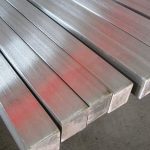
Square billets typically have an elongated bar shape, with four relatively uniform sides and corners featuring a certain radius depending on the manufacturing technology. Unlike finished steel products, steel billets have not yet been processed into their final usable cross-sectional profiles. Their primary value lies in providing metal feedstock with the appropriate chemical composition, dimensions, and quality for subsequent manufacturing processes.

The primary components of a square steel billet are iron (Fe) and carbon (C), combined with elements such as manganese (Mn), silicon (Si), sulfur (S), phosphorus (P), and other alloying elements depending on the steel grade. The proportions of these elements are controlled during the steelmaking process to meet the requirements for strength, ductility, weldability, and machinability of the rolled products.
From a geometric perspective, square billets maintain a relatively consistent cross-section along their length. This characteristic makes them suitable for heating and deformation during hot rolling. However, actual processing performance also depends on metallurgical quality, the presence of defects, and equipment operating conditions.
Several important technical characteristics include:
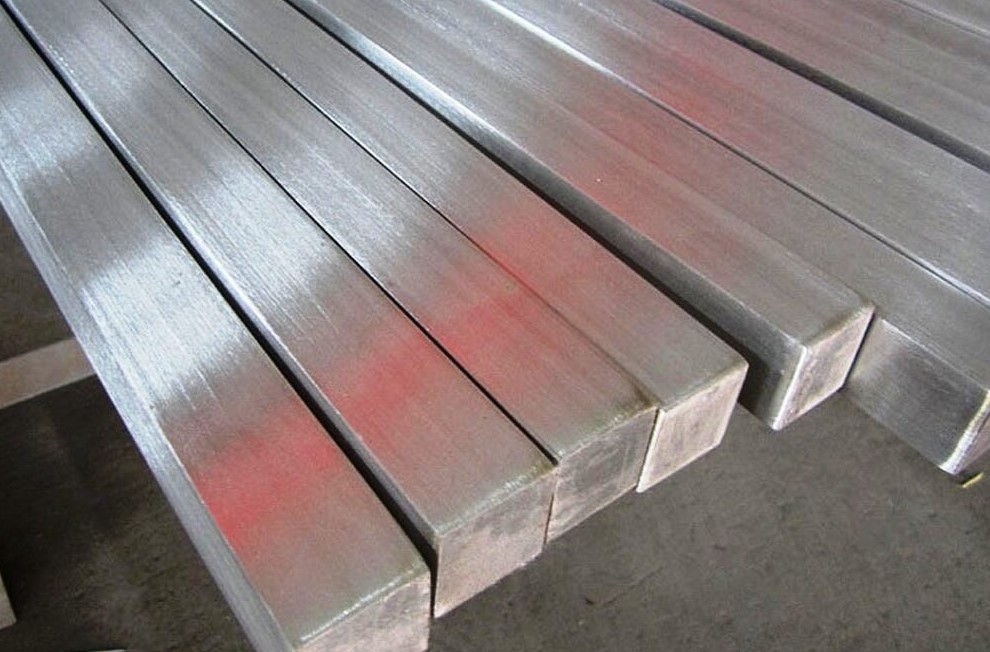
In steel manufacturing, square billets, steel slabs, and steel blooms are all semi-finished steel products, but they differ in shape and intended applications. Square billets are primarily used to manufacture long steel products, including steel bars, wire rods, and construction steel coils. Steel slabs have a wide, flat rectangular cross-section and are commonly used as raw materials for producing steel plates and hot-rolled steel coils.
Steel blooms generally have larger cross-sections than billets, making them suitable for producing large structural steel sections, railway rails, and heavy mechanical components. Understanding the differences between these semi-finished steel products helps businesses select materials compatible with their production line designs and finished-product requirements.
| Steel Semi-Finished Product | Characteristics | Common Applications |
|---|---|---|
| Square Steel Billet | Approximately square cross-section, with dimensions suitable for long-product rolling mills. | Deformed steel bars, plain round bars, wire rods, and steel coils. |
| Steel Slab | Flat rectangular cross-section, with a width significantly greater than its thickness. | Steel plates, hot-rolled steel coils, and other flat steel products. |
| Steel Bloom | Large cross-section, typically square or rectangular. | Large structural steel sections, railway rails, large steel bars, and forged products. |
It is important to note that a square steel billet is not the same as a finished solid square steel bar. A steel billet is an input material for subsequent manufacturing stages, whereas a solid square steel bar has already been rolled or processed to meet specific dimensions and end-use requirements.
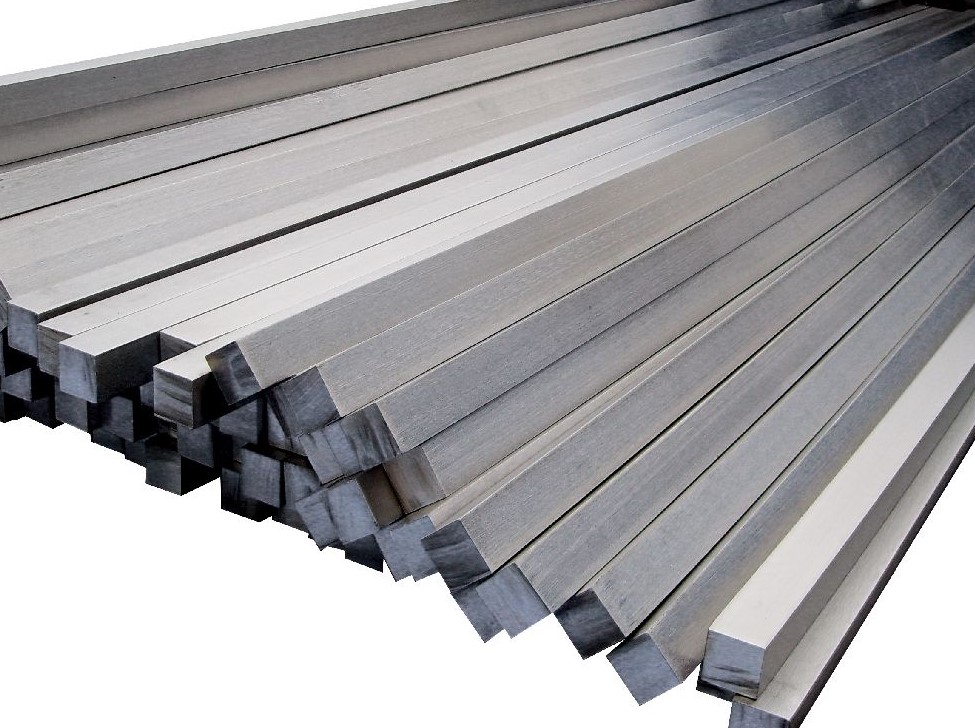
Square steel billets are widely used in long steel product manufacturing due to their suitability for heating, rolling, and forming into various dimensions and profiles. Depending on the steel grade, billet dimensions, and equipment design, they can be processed into deformed steel bars, plain round bars, construction steel coils, wire rods, and certain structural steel products.
One of the most important applications of square steel billets is the production of construction steel. After inspection and heating in a furnace, the billets undergo rough rolling, intermediate rolling, and finishing rolling to form steel bars with the required diameters, shapes, and dimensions. Subsequent rolling and cooling processes also play a significant role in determining the mechanical properties of the finished products.
Square steel billets can be used to manufacture various categories of construction steel, including:
For deformed steel bars, finished-product grades such as CB300-V, CB400-V, and CB500-V must meet the technical requirements of the applicable standards. However, the grade of finished steel cannot be determined solely by the shape or dimensions of the billet. Chemical composition, rolling conditions, and cooling technology all influence the resulting mechanical properties.
In addition to tensile strength and yield strength, bending performance, elongation, and rib characteristics must also be controlled. Although billet quality is a fundamental factor, the overall quality of construction steel can only be fully confirmed by evaluating the finished product against the relevant standards.
Beyond construction, square steel billets can also serve as raw materials for rolling, forging, and mechanical processing. In suitable applications, billets are cut into sections according to design requirements and then further processed into components or semi-finished parts used in equipment manufacturing.
The square cross-section facilitates certain clamping, cutting, and milling operations on flat surfaces. However, for cylindrical components, manufacturers may need to use round billets or perform additional machining to achieve the desired geometry. The selection of billet shape should be based on component design, machining allowances, and mechanical property requirements.
Several categories of products can be manufactured from square steel billets after appropriate processing, including:
Square steel billets are also used to manufacture certain structural steel sections, depending on the required cross-sectional profile, production scale, and rolling mill design. Through a system of specially designed rolling grooves, billets are gradually deformed to produce finished steel products with the desired dimensions and profiles.
Products that can be manufactured from square billets or other suitable semi-finished steel forms include:
For large H-beams, I-beams, or U-channels, manufacturers often use blooms or other semi-finished steel products with larger cross-sections to meet deformation requirements and rolling mill capabilities. Therefore, the suitability of square billets for structural steel production depends on the product type, dimensions, and equipment configuration.
Billet quality affects rolling stability, while the dimensional accuracy and profile consistency of structural steel also depend on groove design, rolling conditions, and cooling processes. Combining suitable raw materials with controlled rolling technology helps manufacturers minimize defects such as warping, edge cracking, and dimensional deviations.
The square steel billet manufacturing process involves several key stages, including raw material preparation, steel melting, secondary refining, billet casting, cooling, cutting to length, and quality inspection. Depending on the manufacturing facility, raw materials may undergo different steelmaking processes before entering the casting stage.
The primary objective is to produce billets with suitable chemical compositions, consistent cross-sections, acceptable surface quality, and internal metallurgical structures appropriate for subsequent processing. Each manufacturing stage can influence product quality, particularly the secondary refining of molten steel and the control of solidification during casting.

The first stage in manufacturing square steel billets involves melting raw materials to produce molten steel. In the modern metallurgical industry, two common production routes are the blast furnace–basic oxygen furnace (BF–BOF) process and the electric arc furnace (EAF) process. Some manufacturing facilities also use medium-frequency induction furnaces (IF), depending on production requirements and technological conditions.
In the BF–BOF route, iron ore is reduced in a blast furnace to produce molten pig iron, which is then transferred to a basic oxygen furnace to adjust carbon content and other chemical components. In EAF steelmaking, raw materials typically include steel scrap, direct reduced iron, or other suitable iron-bearing materials. Heat generated by electric arcs is used to melt the charge materials.
Important factors that must be controlled during steelmaking include:
EAF technology can utilize a high proportion of steel scrap and has the potential to reduce emissions compared with certain conventional steelmaking routes. However, actual emission levels depend on the raw material mix, electricity sources, equipment efficiency, and calculation boundaries. Therefore, a fixed emission reduction percentage cannot be applied universally to all steel manufacturing facilities.

After steelmaking and secondary refining, molten steel is transferred to a casting system to form billets. Continuous casting technology is widely used in industrial steel billet production. Molten steel passes through a tundish and is poured into a water-cooled mold, where it gradually solidifies into a continuous strand with a predetermined cross-section.
After leaving the mold, the steel strand undergoes controlled secondary cooling to complete the solidification process. Guide rollers and withdrawal equipment maintain continuous strand movement. Once the appropriate conditions are reached, the strand is cut into billets according to the required lengths for the production line or customer order.
Factors that directly influence billet quality during this stage include:
Continuous casting helps improve production efficiency and reduce certain material losses compared with conventional ingot casting. However, this technology does not automatically eliminate all defects. Under unsuitable casting conditions, billets may still develop longitudinal cracks, transverse cracks, shrinkage porosity, segregation, or abnormalities in their metallurgical structure.
When evaluating square steel billets, businesses need to consider dimensions, steel grades, chemical composition, surface quality, internal defects, and acceptance conditions. These specifications influence billet suitability for rolling operations and the quality of the finished steel products manufactured from them.
Each steel manufacturing facility may apply different standards or technical requirements depending on the billet category. Therefore, it is essential to distinguish between nominal product specifications, material standards, and standards applicable to finished steel products. This distinction helps prevent misunderstandings during raw material selection and technical document verification.
Square steel billet specifications are primarily defined by cross-sectional dimensions, length, and steel grade. Square billets are available in various sizes depending on rolling mill designs. Common dimensions such as 120 × 120 mm, 130 × 130 mm, and 150 × 150 mm are used in numerous long steel product manufacturing applications.
For the Stavian Industrial Metal steel billet product portfolio, the listed specifications include:
| Category | Specifications |
|---|---|
| Shape | Square cross-section billet |
| Nominal Dimensions | 120 × 120 mm, 130 × 130 mm, 150 × 150 mm |
| Length | 6 m or 12 m |
| Steel Grades | CT5, 3SP, 4SP, 5SP, SD295(A), etc. |
| Standard Systems | JIS, ASTM, BS, TCVN, etc. |
| Custom Specifications | May be considered based on technical requirements and order quantities. |
Nominal dimensions do not mean that every steel billet has perfectly exact measurements at all inspection points. Actual steel billets are subject to tolerances for shape, cross-sectional dimensions, and length, as specified by applicable standards or technical agreements for each order.
When selecting billet dimensions, businesses must consider the capacity and compatibility of their reheating furnaces, roller systems, and rolling stands. Billets that are too large or too small for the production line design may cause operational difficulties, affect productivity, and increase material consumption.
Surface quality and dimensional accuracy are essential inspection criteria before using square steel billets. Cracks, folds, and internal defects may propagate during hot rolling, increasing the risk of producing nonconforming products. Therefore, the permissible limits for each type of defect must be determined according to the applicable standards.
For rolled steel billets within the scope of TCVN 1854:1976, which covers rolled billets made from quality carbon steel, medium-alloy steel, and high-alloy steel, several technical requirements are specified as follows:
These values apply to the specific categories of rolled steel billets covered by the relevant standard. They should not automatically be applied to all continuously cast square steel billets or every steel grade available on the market. For each shipment, the applicable standards, tolerances, and acceptance methods must be clearly defined in technical documentation and contractual agreements.
In practice, minor surface defects may be accepted if they remain within the specified limits. Conversely, defects exceeding permissible thresholds must be removed or reassessed before the billets are used. Visual surface inspection alone is insufficient to determine the overall internal quality of a steel billet.
In addition to visual quality, the chemical composition of steel billets is a critical factor in determining their suitability for producing finished steel products. Carbon affects strength and ductility; manganese contributes to improved strength and supports metallurgical processes; and silicon commonly plays a role in deoxidation. Meanwhile, sulfur and phosphorus must be controlled within the limits specified for each steel grade.
To evaluate billet quality, manufacturers and end users may apply testing methods appropriate to their technical requirements:
Regarding standard systems, it is essential to distinguish the scope of each technical document. TCVN 1765:1975 specifies requirements for ordinary structural carbon steel and includes provisions relating to the chemical composition of certain billets. Meanwhile, JIS, ASTM, BS, and TCVN are standard systems comprising numerous documents covering different products and testing methods.
Standards such as JIS G3101, ASTM A36, and ASTM A615 are primarily associated with structural steel or reinforcing steel products. The fact that billets are used to manufacture steel products under these standards does not necessarily mean that the billets themselves have been certified to meet every requirement applicable to the finished products.
Another important consideration is that TCVN 1850:1976, TCVN 1851:1976, and TCVN 1852:1976, which previously addressed dimensions for certain steel billet categories, were withdrawn in 2008 and are no longer valid references as current standards. Businesses should verify the status of technical standards and select appropriate specifications when preparing procurement documentation.
Stavian Industrial Metal operates in the industrial metals trading sector, supplying various metal products for domestic and international manufacturing and metal processing supply chains. Within its steel product portfolio, steel billets represent an important product category, meeting raw material requirements for metallurgical companies, steel rolling mills, and industrial manufacturers.
Steel billets distributed by Stavian Industrial Metal are sourced from manufacturing facilities with suitable production capacities and equipment systems. The supply portfolio includes billets manufactured using medium-frequency induction furnaces, electric furnaces, and other steelmaking technologies, addressing different requirements regarding product types, dimensions, and steel grades.
For square steel billets, Stavian Industrial Metal offers nominal dimensions of 120 × 120 mm, 130 × 130 mm, and 150 × 150 mm, with lengths of 6 m or 12 m. The product portfolio includes steel grades such as CT5, 3SP, 4SP, 5SP, and SD295(A). In addition to the listed specifications, customized product requirements may be considered based on technical specifications and order conditions.
Stavian Industrial Metal focuses on several key aspects of its steel billet supply operations:
As a trading and distribution company, Stavian Industrial Metal focuses on connecting customers with suitable raw material sources rather than assuming that every billet shipment originates from the same manufacturing facility or production technology. Businesses can select products based on their rolling line requirements, steel grades, applicable standards, and raw material consumption plans.
Notably, Stavian Industrial Metal successfully exported steel billet shipments to the Philippines in April 2023. This activity demonstrates the company’s ability to participate in international steel billet supply and highlights the importance of steel billets within its industrial metal trading portfolio.
Related Articles
Square steel billets play an essential role in the production of construction steel, steel bars, steel coils, and mechanically processed components. Billet quality depends on chemical composition, metallurgical technology, casting conditions, and defect control. Selecting the appropriate dimensions, steel grades, and technical standards helps businesses improve production efficiency. Stavian Industrial Metal supplies a diverse range of steel billet products to meet raw material requirements across various industrial sectors.
Address
Website: https://stavianmetal.com
Email: info@stavianmetal.com