Carbon credits are instruments that represent verified greenhouse gas emission reductions or removals, with each credit typically equivalent to one metric ton of CO₂e. Once validated, verified, and registered, carbon credits can be traded in eligible markets. However, carbon credits are not the same as emission permits. Stavian Industrial Metal helps businesses understand how carbon credits work, their benefits, and how to participate in the carbon market.
Carbon credits are tradable units representing a quantity of greenhouse gas emissions that has been reduced or removed from the atmosphere through activities meeting applicable methodologies and certification standards. Typically, one carbon credit represents one metric ton of carbon dioxide (CO₂) or an equivalent amount of another greenhouse gas, expressed in terms of CO₂ equivalent.
The measurement unit used is tCO₂e (metric tons of carbon dioxide equivalent). This conversion allows the climate impact of different greenhouse gases, such as methane (CH₄) and nitrous oxide (N₂O), to be calculated using appropriate conversion factors.
For example, a project that reduces or removes 1,000 tCO₂e may generate up to 1,000 carbon credits if all verified results meet the applicable issuance requirements. The actual number of credits issued also depends on the calculation methodology, leakage emissions, risk buffer mechanisms, and validation and verification processes.
Businesses can purchase eligible carbon credits to offset emissions or fulfill other purposes permitted under the relevant carbon market mechanisms. However, owning carbon credits does not automatically grant the right to emit greenhouse gases or exempt businesses from their legal obligations regarding emissions.
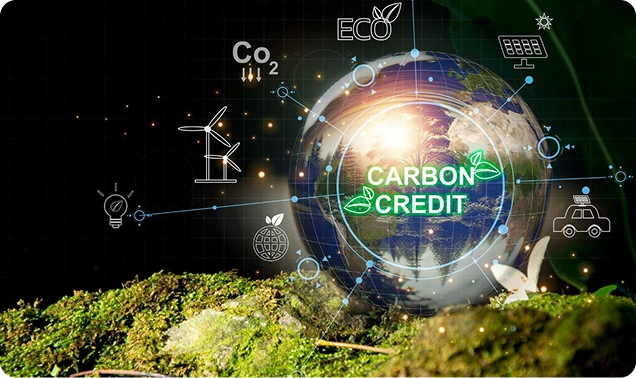
Carbon credits and greenhouse gas emission allowances are two distinct instruments within carbon markets. Both may be measured in tCO₂e and traded when the relevant requirements are satisfied. However, they differ in how they are created and their intended purposes.
An emission allowance represents the maximum quantity of greenhouse gases that a facility is permitted to emit within a specified period under the relevant regulatory framework. In contrast, carbon credits are associated with greenhouse gas emission reductions, absorption, or removals achieved by eligible activities or projects.
| Criteria | Carbon Credits | Emission Allowances |
|---|---|---|
| Nature | Represent greenhouse gas emissions that have been reduced or removed | Represent permitted emissions under a regulatory framework |
| Origin | Certified emission reduction projects or activities | Allocated or issued by competent authorities in accordance with regulations |
| Unit | Typically 1 tCO₂e per credit | Measured in tCO₂e |
| Purpose | Offsetting or other uses permitted under the relevant program | Meeting emission limit compliance obligations |
| Tradability | Depends on applicable standards and market acceptance | Depends on the regulations of the emissions trading system |
Carbon credits can be generated through greenhouse gas emission reduction or removal projects that follow appropriate measurement methodologies. However, environmentally friendly activities do not automatically qualify for carbon credit issuance. Projects must demonstrate actual emission reductions, meet the requirements of the relevant certification program, and undergo verification as required.
Some activities that may be eligible for carbon credit development include:
The carbon credit mechanism operates through the measurement, verification, and trading of greenhouse gas emission reductions. Under a common model, project developers generate eligible carbon credits, while buyers acquire them through transactions and use them for purposes permitted under the relevant program.
The value of a carbon credit depends not only on the quantity of CO₂e recorded but also on the ability to demonstrate a genuine climate impact. Therefore, carbon credit issuance, management, and use must ensure transparency, traceability, and the prevention of double counting of emission reductions.
Carbon credit sellers are typically project owners, project developers, or organizations that legally own issued carbon credits. These entities implement or invest in eligible activities that reduce, absorb, or remove greenhouse gas emissions.
For example, a methane recovery project may record emission reductions compared with an established baseline scenario. If the results meet the applicable calculation methodology and undergo independent validation and verification, the project may receive corresponding carbon credits that can be traded.
Revenue from carbon credit sales provides additional financial resources for emission reduction activities. However, profitability is not guaranteed because projects must also cover measurement, validation, verification, registration, management, and other associated compliance costs.
Carbon credit buyers may include manufacturing companies, commercial organizations, and businesses implementing emissions management strategies. Depending on their objectives, companies may purchase credits to offset a portion of their emissions, support climate targets, or meet obligations under mechanisms that permit the use of carbon credits.
For example, a company that has upgraded its production technology but still has emissions that are difficult to eliminate may consider using high-quality carbon credits as part of its climate strategy. Their use must comply with the relevant reporting and disclosure standards.
In compliance markets, buyers may only use carbon credits that satisfy the requirements of the applicable regulatory system. Purchasing voluntary carbon credits does not exempt a company from its obligation to purchase or surrender emission allowances.
Tradable carbon credits must undergo a control and verification process that meets the requirements of the relevant certification program. The timeline and procedures depend on the project type, calculation methodology, and applicable standards.
The typical process includes:
Registry systems help manage unique identification numbers, credit quantities, and transaction statuses. This information plays an important role when businesses verify credit validity and prepare sustainability reports.
Carbon markets facilitate the trading of instruments related to greenhouse gas emissions. The two main market categories are compliance carbon markets and voluntary carbon markets.
Their key differences lie in their legal frameworks, participants, eligible tradable instruments, and intended uses. Businesses must identify the appropriate market before trading carbon credits because a credit recognized under a voluntary program may not necessarily qualify for use in a compliance mechanism.
Compliance carbon markets are established under legal regulations or emissions management mechanisms administered by competent authorities. Within an Emissions Trading System (ETS), regulated facilities must fulfill their obligations using allocated emission allowances or acquire additional eligible instruments when necessary.
Systems such as the European Union Emissions Trading System (EU ETS) primarily use emission allowances as tradable instruments. The use of carbon offsets, where permitted, is subject to the specific restrictions and regulations of each system.
Voluntary carbon markets allow organizations to purchase credits generated by greenhouse gas emission reduction or removal projects to support their climate strategies. Trading activities are generally associated with certification programs and registry systems that operate under their own requirements.
Common programs include Verra’s Verified Carbon Standard (VCS) and Gold Standard. Issued credits must meet the relevant requirements for calculation methodologies, independent verification, and registry management.
Prices in voluntary carbon markets vary depending on the project type, location, issuance period, credit quality, and credibility. Credits with transparent traceability, demonstrable climate impacts, and additional environmental benefits may command different prices.
| Criteria | Compliance Market | Voluntary Market |
|---|---|---|
| Basis for participation | Legal regulations and compliance obligations | Voluntary participation by organizations |
| Tradable instruments | Emission allowances and eligible carbon credits | Carbon credits issued under certification programs |
| Objectives | Meeting regulatory emissions management requirements | Supporting climate goals and appropriate carbon offsetting |
| Pricing | Depends on supply and demand, policies, and trading mechanisms | Depends on credit quality, project type, and transaction conditions |
| Conditions of use | Governed by the regulations of the applicable system | Governed by credit standards and disclosure requirements |
Vietnam is gradually completing its legal framework for greenhouse gas emission allowance trading and carbon credit transactions. The primary legal framework includes the Law on Environmental Protection 2020, Decree No. 06/2022/ND-CP, and Decree No. 119/2025/ND-CP, which amends and supplements certain related provisions.
Under the roadmap revised by Decree No. 119/2025/ND-CP, the period through the end of 2028 focuses on establishing a national registry system, organizing the pilot operation of a domestic carbon trading exchange, and implementing carbon credit trading and offsetting mechanisms. From 2029 onward, the roadmap aims to further develop the market and its associated regulatory mechanisms.
Decree No. 29/2026/ND-CP further regulates the organization and operation of Vietnam’s domestic carbon trading exchange, including registration, custody, ownership transfers, trading, and settlement of eligible emission allowances and carbon credits.
For the 2025–2026 pilot period, Decision No. 263/QD-TTg approves the total emission allowances to be allocated to 34 thermal power plants, 25 iron and steel production facilities, and 51 cement production facilities. This highlights the need for major industrial emitters to strengthen their greenhouse gas inventory and carbon management capabilities.
The benefits of carbon credits extend beyond trading opportunities to their ability to create financial incentives for emission reduction projects. When properly designed and managed, carbon credit mechanisms help channel financing toward activities that reduce climate impacts while supporting businesses in developing sustainable strategies.
Carbon credits provide additional economic incentives for greenhouse gas emission reduction and removal activities. Revenue generated from credit sales can help sustain projects focused on ecosystem conservation, waste management, or the adoption of emission reduction technologies.
For forestry projects, well-designed carbon credit activities can support forest conservation, ecosystem restoration, and improved natural resource management. Methane recovery projects can also help reduce emissions of a greenhouse gas with significant global warming potential.
For businesses implementing eligible projects, carbon credits can generate additional revenue from verified emission reductions. This mechanism helps convert part of the environmental value created by a project into economic benefits, supporting investment recovery and improving project feasibility.
Revenue from carbon credits can help businesses:
For businesses purchasing carbon credits, a key benefit is gaining an additional instrument to support climate goals and manage residual emissions after implementing direct emission reduction measures.
Selecting high-quality credits with transparent documentation can help businesses undertake appropriate offsetting activities, improve disclosure transparency, and support emission reduction projects that deliver meaningful environmental benefits.
Within a broader sustainable development strategy, carbon credits should be considered a supplementary tool for emissions management rather than the sole solution for achieving Net Zero targets.
Businesses should prioritize greenhouse gas inventories, energy efficiency improvements, technological upgrades, and emission reductions across their value chains. Carbon neutrality claims must comply with appropriate standards, be supported by verifiable documentation, and avoid misleading customers.
Stavian Industrial Metal develops industrial metal trading solutions aligned with emission reduction objectives and improved supply chain efficiency. Alongside its green metal products, Stavian Industrial Metal provides carbon credit services to help businesses manage financial and commercial matters associated with greenhouse gas emissions.
Stavian Industrial Metal’s services focus on carbon credit consulting, trading, and portfolio management. The company also supports customers in assessing costs arising from carbon pricing mechanisms, the Carbon Border Adjustment Mechanism (CBAM), and similar policies in export markets.
Through solutions tailored to specific transaction conditions, Stavian Industrial Metal aims to help businesses improve their ability to manage price volatility risks, control carbon-related costs, and take a more proactive approach to developing long-term emission reduction roadmaps.
Stavian Industrial Metal also develops carbon credit projects with international partners, emphasizing verification processes and international standards. These activities form part of Stavian Industrial Metal’s broader ESG strategy and green industrial materials development ecosystem.
For businesses exploring carbon credit trading opportunities, project development, or portfolio management, Stavian Industrial Metal recommends clearly defining the intended use, credit types, legal requirements, and supporting documentation before implementation. Businesses can contact Stavian Industrial Metal to discuss their requirements and explore suitable solutions.
Carbon credits are instruments that enable the recognition and trading of greenhouse gas emission reductions or removals, creating additional financial resources for sustainable development. To use them effectively, businesses must distinguish carbon credits from emission allowances, select verified credits, and comply with applicable market requirements. With its commitment to developing carbon credit services and green metal solutions, Stavian Industrial Metal supports businesses in managing carbon-related costs and implementing long-term emission reduction strategies.
Related Articles:
Address
Website: https://stavianmetal.com
Email: info@stavianmetal.com