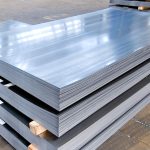
HRC steel (Hot Rolled Coil) is hot-rolled steel produced by shaping steel slabs at high temperatures, followed by cooling and coiling for further processing. With a wide range of specifications and excellent suitability for cutting, bending, welding, and further rolling, this material is widely used in steel pipe manufacturing, coated steel production, mechanical engineering, and structural applications. Stavian Industrial Metal provides a comprehensive overview of HRC steel’s characteristics, applications, and key factors influencing purchasing prices.
HRC steel (Hot Rolled Coil) is a flat steel product manufactured through the hot-rolling process and supplied in coil form. During production, steel slabs are heated to an appropriate temperature, typically above 1,000°C, before passing through a series of rolling mills to reduce their thickness and form steel strips with the required dimensions.
Unlike pre-cut steel plates, HRC steel can be uncoiled and fed directly into slitting, cut-to-length, cold-rolling, or forming lines. This characteristic makes it an essential raw material in the flat steel production chain, mechanical manufacturing, and various industries that consume large volumes of steel.

The production of hot-rolled steel coils (HRC) begins with flat steel slabs. After being heated to the appropriate temperature, the slabs pass through roughing and finishing mills to reduce their thickness, increase the length of the steel strip, and achieve the specified dimensions.
The basic manufacturing process includes the following stages:
The quality of HRC steel depends not only on the rolling temperature but also on its chemical composition, cooling conditions, and the manufacturer’s quality control procedures.

HRC steel and CRC steel (Cold Rolled Coil) are both flat steel products, but they differ in their manufacturing processes, dimensional accuracy, and surface quality.
CRC steel is generally produced by removing surface scale from hot-rolled steel and subsequently reducing its thickness through rolling at or near room temperature. This process improves dimensional accuracy and surface finish. Depending on the intended application, the material may also undergo annealing to restore its ductility.
| Criteria | HRC Steel | CRC Steel |
|---|---|---|
| Manufacturing process | Rolled at high temperatures | Further rolled after the hot-rolling process |
| Surface finish | Dark gray, potentially covered with oxide scale | Smoother and more uniform |
| Dimensional tolerances | Generally wider tolerances | Generally tighter tolerances |
| Processing costs | Generally lower | Generally higher due to additional processing stages |
| Applications | Steel pipes, structural components, mechanical fabrication, and further rolling | Precision components, equipment housings, and coated steel products |
For components that do not require a refined surface finish or particularly tight dimensional tolerances, HRC steel often offers an economic advantage. Conversely, cold-rolled steel is generally more suitable for applications requiring high precision and superior appearance.

To select the appropriate HRC steel, businesses must evaluate surface characteristics, specifications, steel grades, and manufacturing standards. These factors determine the material’s processability, operational efficiency, and practical storage requirements.
HRC does not refer to a specific steel grade but rather describes the rolling process and the form in which the product is supplied. Therefore, steel coils with identical dimensions may have different chemical compositions and mechanical properties.

HRC steel typically has a bluish-gray, dark gray, or bluish-black appearance. This color primarily results from the iron oxide layer that forms when the steel comes into contact with oxygen during hot rolling and cooling.
The surface of hot-rolled steel is generally less bright and smooth than that of cold-rolled steel. Some products may exhibit mill scale, surface roughness, or variations in color. These characteristics should be assessed against the applicable surface quality standards and specific delivery conditions.
During transportation and storage, brown or yellow discoloration may appear due to oxidation caused by exposure to moisture. However, surface color alone is insufficient to determine the origin or quality of a steel coil. Signs such as severe rusting, surface pitting, edge cracks, or abnormal flaking should be inspected before use.

HRC steel coil specifications vary depending on the manufacturing technology and product portfolio of each steel mill. In the market, products may be available in thicknesses ranging from approximately 1.2 mm to 25 mm and widths from around 900 mm to 2,000 mm, depending on the product category.
Within Stavian Industrial Metal’s hot-rolled steel product portfolio, steel coils are listed with thicknesses ranging from 3 mm to 16 mm. Other specifications should be confirmed based on the source of supply and product availability at the time of ordering.
| Parameter | Key Considerations |
|---|---|
| Thickness | Depends on the production line, steel grade, and application requirements |
| Width | Selected according to finished product dimensions and slitting requirements |
| Coil weight | Varies according to dimensions and coiling equipment capacity |
| Inner diameter | Must be compatible with the mandrel and uncoiling equipment |
| Edge condition | Mill edges or slit edges according to technical requirements |
| Delivery form | Full-width coils, slit coils, or cut-to-length sheets |
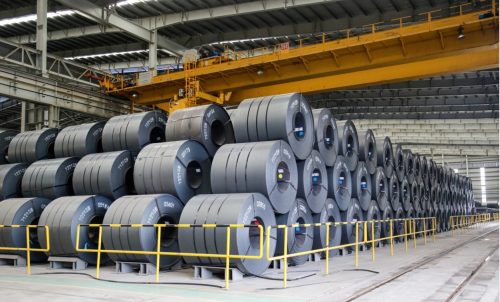
Individual coil weights may reach several tens of tons, but no single standard weight applies to all products. Businesses should verify the load capacity of lifting equipment, transportation vehicles, and uncoiling lines before placing an order.
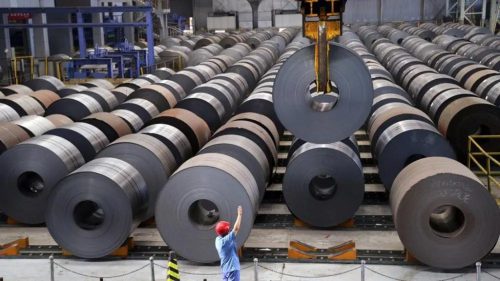
The selection of HRC steel grades should be based on load-bearing requirements, weldability, forming characteristics, and design standards. Each steel grade has specific requirements regarding chemical composition, mechanical properties, and intended applications.
Common HRC steel grades include:
Steel grades with similar mechanical properties should not automatically be considered fully interchangeable. When substituting materials, businesses must compare the applicable standards, chemical composition, yield strength, tensile strength, elongation, and acceptance requirements.

Visual inspection is only the initial step in quality assessment. To verify the quality of hot-rolled steel coils, businesses should compare the information on coil labels with the technical documentation accompanying each shipment.
Important information includes:
For products intended for precision processing, additional inspections of flatness, edge camber, thickness deviations, and surface condition are recommended. Implementing quality control upon receipt helps minimize processing defects, reduce material waste, and prevent the use of incorrect materials.

HRC steel is widely used because it supports various processing methods and offers cost efficiency in large-scale manufacturing. However, properties such as strength, ductility, and impact resistance differ among steel coils and depend directly on the steel grade and manufacturing process.
Hot-rolled steel can meet requirements ranging from general fabrication to load-bearing structural applications when the appropriate steel grade is selected. Low-carbon steel grades generally offer favorable formability, while high-strength structural steels are used for components requiring greater load-bearing capacity.
The material’s performance also depends on thickness, loading conditions, operating temperature, and joining methods. Therefore, HRC steel should not be evaluated solely on the general assumption that it offers high strength.
For critical load-bearing components, engineers must determine the required yield strength, tensile strength, and impact toughness. These requirements should be specified in the design documentation and verified against the product’s material certificates.
One important advantage of HRC steel coils is their compatibility with various processing methods. The material can be slit, cut into sheets, press-brake formed, bent, drilled, welded, or shaped into mechanical components.
In continuous manufacturing, steel coils can be fed directly into production lines without joining multiple individual sheets. This provides advantages for manufacturers of steel pipes, hollow steel sections, stamped components, and other flat steel products.
However, bending performance and weldability depend on chemical composition, thickness, bending radius, and processing procedures. Businesses should determine these parameters before selecting materials to minimize edge cracking and weld defects.
Compared with cold-rolled steel of a similar material category under equivalent purchasing conditions, HRC steel generally offers a processing cost advantage because it does not require all the additional cold-rolling and surface-finishing operations.
Supply in coil form also provides several operational benefits:
Nevertheless, steel coils are heavy and require appropriate support, securing, and transportation arrangements. Actual cost efficiency must account for cutting losses, processing costs, handling, storage, and transportation to the manufacturing facility.
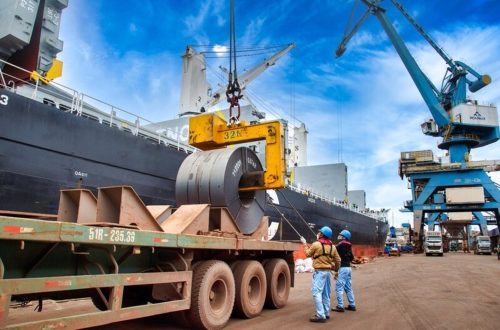
Thanks to its versatility in downstream processing, HRC steel serves as an essential raw material in finished steel production, construction, mechanical engineering, and heavy industry. Each application requires the appropriate steel grade, thickness, and technical standards.
In the flat steel production chain, HRC is an important raw material for manufacturing products with more demanding surface quality and thickness requirements. After pickling to remove surface scale, the steel strip can undergo further cold rolling to achieve the desired specifications.
The processed steel can then serve as a substrate for products such as:
Not all coated steel products use untreated HRC directly. Manufacturing processes and substrate materials are selected according to specific technical requirements. Businesses can explore the coated steel product portfolio to identify suitable materials.
In mechanical engineering, HRC steel is commonly used to manufacture welded steel pipes, hollow steel sections, machine frames, structural components, supports, equipment parts, and products fabricated from steel sheets or strips.
In industrial construction, hot-rolled steel coils can be slit or cut into plates to manufacture connection plates, welded structural components, and other supporting parts. Wide steel strips may also be used to fabricate built-up structural members when they meet the relevant design requirements.
It is important to distinguish HRC steel from integral hot-rolled structural sections. H-, I-, U-, and V-shaped steel sections may be manufactured on dedicated section-rolling lines using suitable steel billets or other feedstock, rather than being produced directly from HRC coils.
For applications requiring thicker materials or steel supplied in plate form, businesses can consider hot-rolled steel plates based on the required design specifications.
HRC steel is also used to manufacture transportation components, vehicle bodies, chassis, shipping containers, heavy machinery, and various load-bearing structures.
In the automotive industry, the material can be used to produce structural parts and components that do not require highly refined surface finishes. In container manufacturing, suitable steel grades are selected to meet requirements for strength, formability, and operating conditions.
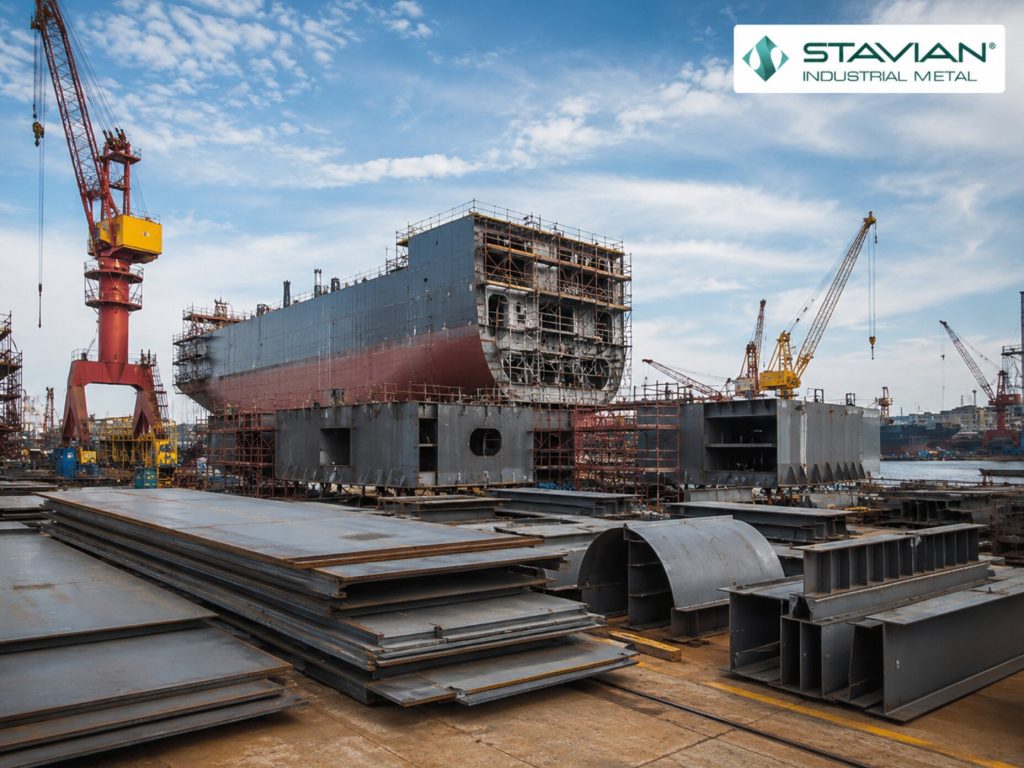
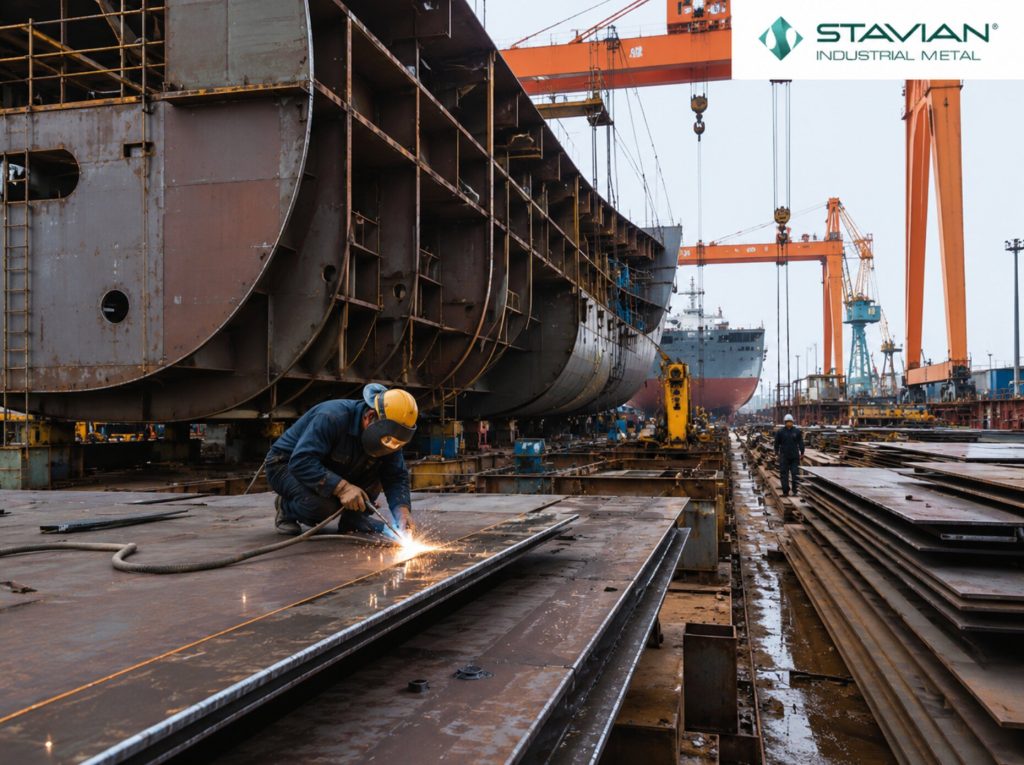
The shipbuilding industry extensively uses hot-rolled steel plates and structural sections to manufacture hulls, decks, bulkheads, and reinforcing structures. These materials must meet the relevant technical standards and classification society requirements and cannot be arbitrarily replaced with general-purpose HRC steel.
Stavian Industrial Metal offers a range of shipbuilding steel products designed to meet specialized requirements in the maritime and heavy industrial sectors.
HRC steel prices play an important role in raw material purchasing plans for manufacturers and mechanical engineering businesses. However, hot-rolled steel coils do not have a single fixed price applicable to all grades, specifications, and delivery conditions.
Businesses can refer to the following product categories when preparing quotation requests. These categories represent manufacturers and markets commonly encountered in industrial steel supply activities.
| HRC Steel Category | Reference Steel Grades | Price (VND/kg) | Price (VND/ton) |
|---|---|---|---|
| Hoa Phat HRC Steel | SAE 1006, SS400 | To be confirmed | To be confirmed |
| Formosa HRC Steel | SAE 1006, SS400 | To be confirmed | To be confirmed |
| Imported HRC Steel from Japan, South Korea, and India | Depending on the manufacturer and ordering specifications | To be confirmed | To be confirmed |
| Imported HRC Steel from China and Southeast Asia | Depending on the manufacturer and ordering specifications | To be confirmed | To be confirmed |
Note: The table above does not constitute an official price quotation or confirmation of inventory availability. Steel grades, origins, and supply availability must be verified for each purchase request. Official quotations should clearly specify VAT, transportation costs, payment terms, and delivery schedules.
When comparing quotations, businesses should ensure that all offers use consistent units of measurement and comparable commercial terms. Ex-works prices, warehouse delivery prices, and FOB, CFR, or CIF quotations cannot be directly compared without accounting for the relevant costs.
Stavian Industrial Metal operates in the industrial metal trading sector, offering a diverse portfolio of steel products to meet manufacturing and construction needs in Vietnam and international markets.
For hot-rolled steel products, Stavian Industrial Metal supplies steel coils and plates in common grades such as SS400, Q235B, Q345B, Q355B, A36, and A572. Its product portfolio is supported by connections with domestic and international manufacturers, addressing a wide range of dimensional and technical requirements.
Through its domestic supply solutions in Vietnam, Stavian Industrial Metal helps customers access raw material sources and organize trading and logistics activities in line with their manufacturing needs.
Stavian Industrial Metal also develops international trading solutions, connecting industrial metal supply and demand through the Stavian Group ecosystem’s partner network spanning more than 100 countries and territories.
For consultation on HRC steel specifications, grades, supply conditions, and quotations tailored to specific orders, businesses can contact Stavian Industrial Metal through its official communication channels.
HRC steel is a fundamental material in flat steel production, mechanical engineering, construction, and heavy industry. With its versatile processing capabilities, diverse specifications, and cost efficiency, hot-rolled steel coils meet a broad range of manufacturing requirements. To maximize their effectiveness, businesses should select the appropriate steel grades, verify material certificates, and confirm prices based on actual order requirements. Stavian Industrial Metal supports businesses by connecting them with suitable industrial material supply sources.
Related Articles:
Address
Website: https://stavianmetal.com
Email: info@stavianmetal.com