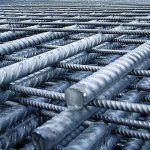
Deformed steel bar (also known as ribbed steel bar or reinforcing steel rebar) is a construction material featuring raised surface ribs that enhance bonding with concrete. Thanks to its tensile strength and suitable mechanical properties, this material is widely used in foundations, columns, beams, slabs, and other load-bearing structures. Stavian Industrial Metal provides an overview of the characteristics, classifications, technical standards, weight tables, and prices of deformed steel bars.
Deformed steel bar is a type of reinforcing steel manufactured in long bar form, with transverse and longitudinal ribs rolled onto its surface according to the manufacturer’s design. These ribs create a mechanical bond with concrete, facilitating load transfer between the two materials and limiting relative slippage within the structure.
In reinforced concrete structures, concrete performs well under compression but has limited tensile strength. Deformed steel bars are embedded to resist tensile forces while improving flexural performance and controlling cracking. The material is generally manufactured from carbon steel or low-alloy steel, with mechanical properties varying according to the steel grade.
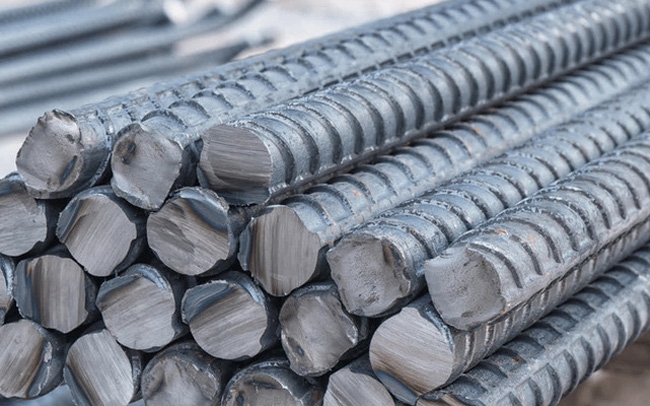
Deformed reinforcing steel bars are commonly classified according to their nominal diameter, indicated by D or Φ followed by a numerical value in millimeters. For example, D16 rebar has a nominal diameter of 16 mm, while D20 rebar has a nominal diameter of 20 mm.
Commonly available sizes include D10, D12, D14, D16, D18, D20, D22, D25, D28, and D32. Larger diameters may be used in specialized construction projects, depending on manufacturing capabilities and technical requirements.
| Diameter Category | Common Sizes | Typical Applications |
|---|---|---|
| Small diameters | D10 – D12 | Slabs, secondary structural components, stirrups, and residential construction |
| Medium diameters | D14 – D20 | Beams, columns, foundations, residential buildings, and factories |
| Large diameters | D22 – D32 | Heavy-load foundations, high-rise buildings, bridges, and transportation infrastructure |
| Special diameters | Above D32 | Industrial construction and infrastructure projects with specific technical requirements |
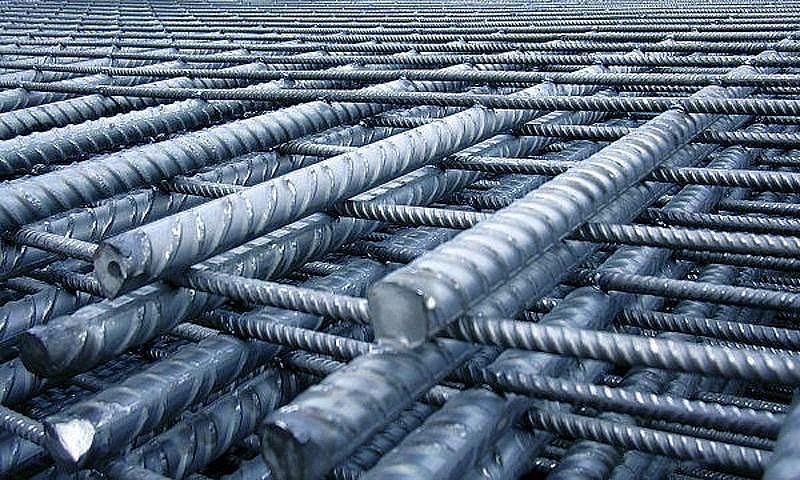
Deformed steel bar grades indicate the strength classification and mechanical property requirements of the material. In Vietnam, commonly used grades include CB300-V, CB400-V, and CB500-V. Additionally, TCVN 1651-2:2018 specifies the CB600-V grade.
In the designation CB400-V, “CB” refers to reinforcing steel for concrete, “400” indicates the specified yield strength in MPa, and “V” identifies deformed steel bars.
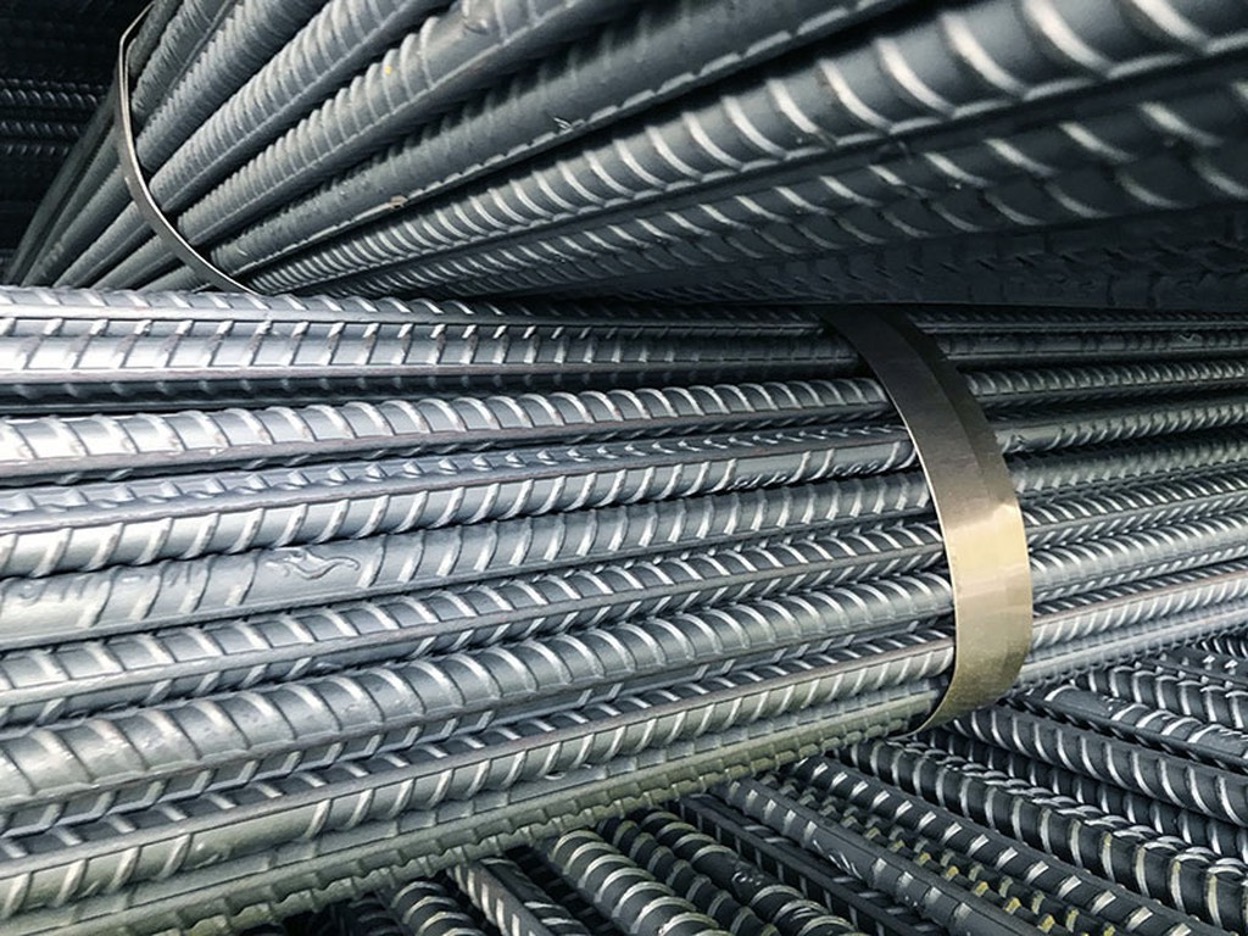
Deformed steel bar standards provide the basis for evaluating material quality before reinforcing steel is incorporated into load-bearing structures. Depending on project requirements, products may be manufactured and inspected according to Vietnamese standards or international standards specified in the design documentation.
These standards typically regulate chemical composition, yield strength, tensile strength, elongation, rib geometry, and testing methods. Compliance helps maintain consistency between production batches while supporting material acceptance procedures and traceability.
In the Vietnamese market, TCVN 1651-2:2018 is the national standard applicable to deformed steel bars used as reinforcement in concrete structures. It specifies requirements for CB300-V, CB400-V, CB500-V, and CB600-V steel grades.
In addition to TCVN, construction projects with international technical requirements may apply JIS, ASTM, or BS standards according to design specifications and acceptance conditions.
| Standard | Scope of Application | Reference Steel Grades |
|---|---|---|
| TCVN 1651-2:2018 | Deformed steel bars for concrete reinforcement | CB300-V, CB400-V, CB500-V, CB600-V |
| JIS G3112 | Steel bars for concrete reinforcement under Japanese standards | SD295, SD390, SD490 |
| ASTM A615/A615M | Carbon steel bars for concrete reinforcement | Grades specified in the applicable edition of the standard |
| ASTM A706/A706M | Low-alloy steel bars for concrete reinforcement | Strength grades specified in the standard |
| BS 4449 | Steel reinforcing bars for concrete under British standards | Steel grades according to the applicable technical requirements |
To determine whether steel meets load-bearing requirements, its mechanical properties must be evaluated rather than relying solely on its external appearance. Three important parameters are yield strength, tensile strength, and elongation.
Yield strength indicates the stress level at which steel begins to undergo plastic deformation, while tensile strength represents the maximum tensile stress the material can withstand during testing. Elongation indicates the material’s ability to deform before fracture.
| Steel Grade | Minimum Yield Strength (MPa) | Minimum Tensile Strength (MPa) | Minimum Elongation (%) |
|---|---|---|---|
| CB300-V | 300 | 450 | 16 |
| CB400-V | 400 | 570 | 14 |
| CB500-V | 500 | 650 | 14 |
The deformed steel bar weight table is an essential reference for calculating material quantities, preparing construction cost estimates, and controlling deliveries at construction sites. The theoretical weight of reinforcing steel depends on its nominal diameter and bar length.
For commercially supplied straight reinforcing bars, 11.7 meters is a common standard length in Vietnam. However, businesses may also encounter products of different lengths depending on the manufacturer, market, and specific order requirements.
The following table presents reference theoretical weights for 11.7-meter deformed steel bars in commonly used sizes. Actual weights may vary within permitted tolerances and according to the product specifications of individual manufacturers.
| Size | Nominal Diameter (mm) | Weight (kg/m) | Weight (kg per 11.7 m bar) |
|---|---|---|---|
| D10 | 10 | 0.617 | 7.22 |
| D12 | 12 | 0.888 | 10.39 |
| D14 | 14 | 1.210 | 14.16 |
| D16 | 16 | 1.580 | 18.49 |
| D18 | 18 | 2.000 | 23.40 |
| D20 | 20 | 2.470 | 28.90 |
| D22 | 22 | 2.980 | 34.87 |
| D25 | 25 | 3.850 | 45.05 |
Note: The number of steel bars per bundle is not fixed across all manufacturers. Businesses should verify bundling specifications, weights indicated on product labels, and delivery documentation, particularly for orders calculated by the ton.
When a quick estimate of material quantities is required, the theoretical weight can be calculated using the nominal diameter and bar length. This method is particularly useful for procurement planning, construction cost estimation, and preliminary checks of reinforcing steel quantities.
Reference Formula:
Weight (kg) ≈ D² × L / 162.2
Where:
For example, a D16 steel bar measuring 11.7 meters in length has a theoretical weight of approximately 16² × 11.7 / 162.2 ≈ 18.47 kg. The result of this quick calculation may differ slightly from the manufacturer’s rounded weight table.
Deformed steel bars are among the primary materials used to form the reinforcement system in reinforced concrete structures. Thanks to their tensile strength and ability to bond with concrete, they are widely used in residential construction, transportation infrastructure, and industrial projects.
For each structural component, engineers must select the appropriate steel grade and diameter based on structural calculations. Factors such as loading conditions, ground conditions, operating environment, and construction methods all influence the reinforcement arrangement.
In townhouses, villas, apartment buildings, and other residential structures, deformed reinforcing steel bars are installed in foundations, columns, beams, slabs, staircases, and other load-bearing components. The selected diameter varies according to the structural design and function of each component.
D10 to D20 reinforcing bars are commonly used in many residential construction projects. However, steel selection for a particular structural element should not be based solely on experience or the number of building floors. Reinforcement arrangements must comply with structural drawings, including the number of bars, spacing, anchorage lengths, and reinforcement splices.
In transportation infrastructure, deformed steel bars are used in reinforced concrete structures such as bridges, culverts, tunnels, retaining walls, bridge pier foundations, and other infrastructure components.
These projects typically require strict quality control because they must withstand substantial loads, dynamic loading, and environmental exposure. Therefore, in addition to tensile strength, reinforcing steel must meet requirements for ductility, anchorage performance, processability, and consistent quality.
In industrial construction, deformed steel bars are used in machinery foundations, factory floors, load-bearing concrete structures, equipment foundations, and numerous other industrial facility components. For industrial floors, appropriate reinforcement placement helps control cracking and maintain load-bearing capacity under operating equipment loads.
In hydraulic engineering and energy projects, deformed steel bars are used in reinforced concrete structures such as retaining walls, structural foundations, water channels, hydropower plants, and shoreline protection works.
Deformed steel bar prices depend on diameter, steel grade, manufacturer, distribution region, and delivery conditions. Prices may be quoted per kilogram, per ton, or per bar of a specified length.
The following price list is based on steel bars measuring 11.7 meters in length and includes CB300-V, CB400-V, and CB500-V strength grades. Prices are expressed in Vietnamese dong (VND) per bar to support material cost estimation for construction projects.
| Size | CB300-V (VND/bar) | CB400-V (VND/bar) | CB500-V (VND/bar) |
|---|---|---|---|
| D10 | 102,596 | 105,556 | 105,556 |
| D12 | 147,641 | 149,719 | 149,719 |
| D14 | 202,629 | 204,045 | 204,045 |
| D16 | 264,591 | 266,440 | 266,440 |
| D18 | 334,854 | 337,194 | 337,194 |
| D20 | 413,559 | 416,449 | 416,449 |
Note: The table presents reference prices for Northern Vietnam in 2026. VAT, transportation costs, and delivery conditions have not been fully confirmed. Businesses should obtain and verify specific quotations before incorporating these prices into procurement documents or official cost estimates.
For large-volume orders, deformed steel bar prices per kilogram are commonly used for raw material procurement planning. Market prices may vary between brands and regions due to distribution conditions and transportation costs.
| Brand | Product | Reference Price (VND/kg) |
|---|---|---|
| Hoa Phat | D10 CB300 | 14,210 |
| Viet Duc | D10 CB300 | 13,950 |
| Viet Y | D10 CB300 | 13,940 |
| Viet My (VAS) | D10 CB300 | 13,840 |
These prices are provided for reference only and reflect specific regions and reporting periods. They do not represent the prices of all products, steel grades, or orders.
Stavian Industrial Metal operates in the industrial metal trading sector, supplying a diverse range of steel products to meet the needs of construction, manufacturing, and infrastructure development in Vietnam and international markets.
Within its construction steel portfolio, Stavian Industrial Metal supplies deformed steel bars in grades such as CB300-V, CB400-V, CB500-V, SD295, SD390, SD490, and other grades conforming to applicable international standards. The product capability profile covers nominal diameters ranging from D06 to D50 mm, depending on supply sources and availability conditions.
Through its domestic trading solutions, Stavian Industrial Metal helps businesses access raw material supply sources, organize trading activities, manage logistics, and develop supply plans aligned with project schedules.
Beyond Vietnam, Stavian Industrial Metal develops international trading solutions, connecting industrial metal supply sources across markets while supporting cross-border trading, logistics, and supply chain risk management.
For deformed steel bar orders, clearly specifying the steel grade, applicable standards, diameter, quantity, and delivery requirements enables Stavian Industrial Metal to develop suitable supply arrangements. Businesses can contact Stavian Industrial Metal to discuss technical specifications and commercial terms for their projects.
Deformed steel bars are essential materials in reinforced concrete structures, contributing to improved tensile strength and structural stability. Selecting the correct diameter, steel grade, and technical standards while controlling material weight helps ensure construction quality and optimize material costs. With its supply network spanning Vietnam and international markets, Stavian Industrial Metal supports businesses in accessing steel products that meet their specific project requirements.
Related Articles:
Address
Website: https://stavianmetal.com
Email: info@stavianmetal.com