In heavy industry, the choice of steel plate suppliers directly affects project safety, fabrication efficiency, total procurement cost, and delivery certainty. Steel plate is not a generic commodity when it is used for shipbuilding, pressure vessels, bridges, offshore structures, tanks, mining equipment, heavy machinery, energy facilities, and industrial infrastructure. Each plate must match a precise combination of grade, thickness, dimensional tolerance, impact toughness, weldability, surface condition, testing requirement, and certification package. A small mistake in grade selection, mill traceability, or inspection documentation can delay production, increase rework, or create serious compliance risks for contractors and asset owners.
The importance of reliable steel plate suppliers has increased as the global steel market becomes more volatile. Industry data released in 2026 shows that world crude steel production reached about 1,849.4 million tonnes in 2025, while global steel demand is forecast at approximately 1,724 million tonnes in 2026 and 1,762 million tonnes in 2027. At the same time, global steelmaking capacity reached around 2,445 million tonnes in 2025, with excess capacity estimated at roughly 640 million tonnes and projected to rise toward 745 million tonnes by 2028. These figures show a market where supply is abundant in theory, but buyers still face practical risks related to origin restrictions, trade measures, uneven quality, freight disruption, and fluctuating lead times.
For industrial buyers, the best steel plate suppliers are not simply companies that can quote a low price. They must understand the technical application, verify mill capability, control documentation, coordinate logistics, and help customers reduce procurement risk across the full order cycle. This guide explains how steel plate supply works, what specifications matter most, how to compare suppliers, and why Stavian Industrial Metal is positioned to support industrial customers that require dependable steel plate sourcing for demanding projects.
Professional steel plate suppliers act as a technical and commercial bridge between steel mills, stockholders, fabricators, EPC contractors, shipyards, equipment manufacturers, and project owners. Their role begins before the purchase order is issued. A qualified supplier reviews the requested grade, standard, thickness, width, length, delivery condition, inspection level, and end-use requirement to ensure the material is technically suitable. For example, a structural steel plate for a warehouse frame has different performance requirements from a normalized pressure vessel plate or a high-strength shipbuilding plate for marine structures.
In industrial procurement, supplier capability is measured by accuracy, not only availability. The supplier must confirm whether the order requires hot rolled plate, normalized plate, thermomechanically controlled processed plate, quenched and tempered plate, or plate with additional ultrasonic testing. It must also clarify whether the customer needs EN 10204 3.1 mill test certificates, third-party inspection, classification society approval, Charpy impact testing, through-thickness properties, or special surface inspection. These details determine whether the material can be accepted during fabrication and final project handover.
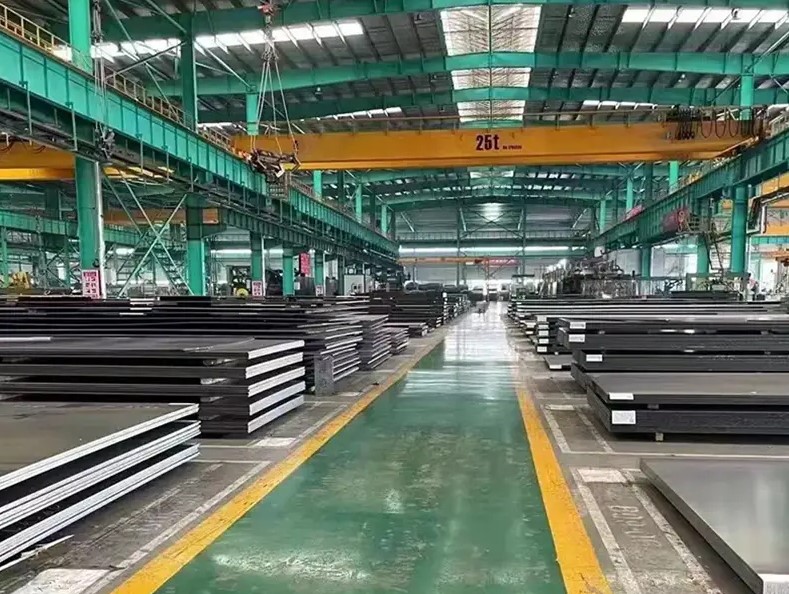
Steel plate is often used in components that carry load, pressure, impact, abrasion, or corrosion exposure. Poor supplier selection may result in plates that meet only basic chemical composition but fail to meet practical performance requirements in cutting, bending, welding, forming, machining, or long-term operation. For instance, two plates with the same nominal grade may perform differently if they come from mills with different rolling practices, heat treatment control, sulfur content, inclusion control, flatness tolerance, and testing discipline.
Reliable steel plate suppliers help buyers prevent hidden costs. A cheaper plate can become expensive if it causes excessive weld repair, lamination defects, wrong marking, missing certificates, rejected inspection, delayed customs clearance, or inconsistent dimensional tolerance. In large projects, material delays can affect crane schedules, fabrication manpower planning, blasting and painting sequence, assembly lines, and site installation milestones. Therefore, supplier evaluation should consider technical compliance, financial reliability, logistics control, communication quality, and the ability to support repeat orders over time.
The global steel market in 2026 is characterized by moderate demand recovery, regional imbalance, and significant excess capacity. World steel demand is forecast to grow by only about 0.3% in 2026 before accelerating to roughly 2.2% in 2027. This indicates that demand is stabilizing rather than booming. However, stable global demand does not mean easy procurement. Steel plate buyers must still manage price volatility, currency movement, anti-dumping measures, safeguard quotas, origin rules, changing freight costs, and project-specific documentation requirements.
For steel plate suppliers, this market environment demands stronger sourcing discipline. When excess capacity is high, many mills compete aggressively, but not every mill can consistently meet industrial-grade requirements. Buyers may receive attractive offers from unfamiliar sources, yet the real risk lies in whether the plate can satisfy mechanical testing, ultrasonic examination, impact values, welding performance, and third-party inspection. In regulated sectors such as shipbuilding, oil and gas, pressure equipment, and infrastructure, the ability to prove compliance is as important as the physical plate itself.
Overcapacity is one of the most important factors shaping steel plate procurement. With global steelmaking capacity at about 2,445 million tonnes in 2025 and excess capacity around 640 million tonnes, international markets are facing pressure from oversupply. Planned capacity additions of up to approximately 139 million tonnes through 2028 may further intensify competition. This can create opportunities for buyers to source competitively, but it also increases trade friction. Import quotas, safeguard duties, anti-dumping investigations, and origin restrictions can change the landed cost and availability of steel plate quickly.
Industrial buyers should therefore work with steel plate suppliers that understand both technical specifications and international trade conditions. A supplier must be able to identify suitable origins, review commercial terms, and coordinate documentation such as certificates of origin, packing lists, mill test certificates, inspection reports, and shipping documents. For cross-border projects, procurement teams should evaluate not only the ex-mill price but also duty exposure, freight route, port congestion, inland transport, customs clearance, and the possibility of schedule changes caused by policy updates.
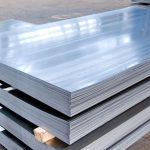
Carbon steel plate is one of the most widely used products supplied by steel plate suppliers. It is commonly used in general fabrication, construction machinery, storage tanks, base plates, platforms, frames, brackets, industrial flooring, and welded structures. Typical standards include ASTM A36, ASTM A283, ASTM A572, EN S235, EN S275, EN S355, JIS SS400, and equivalent regional grades. These plates are selected based on yield strength, tensile strength, elongation, weldability, and thickness range.
For general structural applications, ASTM A36 is often specified with a minimum yield strength of about 36 ksi, equivalent to roughly 250 MPa. For higher-strength applications, ASTM A572 Grade 50 and EN S355 are widely used, with minimum yield strength around 345 MPa and 355 MPa respectively, depending on thickness and standard conditions. The correct grade should be selected according to load design, fabrication method, service temperature, and applicable engineering code. Professional suppliers help buyers match equivalent grades carefully because similar names across standards do not always mean identical chemical or mechanical properties.
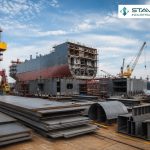
Shipbuilding steel plates are used for hull structures, decks, bulkheads, offshore modules, pontoons, barges, marine equipment, and floating structures. These plates often require approval from classification societies such as ABS, DNV, LR, BV, KR, NK, or equivalent bodies depending on the project. Common grades include A, B, D, E, AH32, AH36, DH36, EH36, and higher-strength variants. AH36, for example, is widely used in marine structures because it offers higher strength, good weldability, and suitability for demanding marine fabrication.
In this segment, steel plate suppliers must pay close attention to certification and traceability. Shipyards and offshore fabricators usually require plates with clear heat numbers, mill certificates, classification approval, dimensional control, and sometimes impact testing at specified temperatures. Incorrect paperwork can result in material rejection even when the physical plate appears acceptable. Stavian Industrial Metal’s relevant product offering includes shipbuilding steel plates designed for marine and offshore applications where classification, weldability, and supply reliability are critical.
Pressure vessel and boiler steel plates are used in tanks, boilers, heat exchangers, separators, reactors, pressure drums, LPG vessels, and process equipment. These applications require strict control because the plate must perform under internal pressure, temperature variation, and sometimes corrosive media. Common standards include ASTM A516, ASTM A515, EN P265GH, EN P355GH, and related pressure equipment grades. ASTM A516 Grade 70 is one of the most widely recognized pressure vessel plate grades, typically selected for moderate and lower-temperature service due to its strength and notch toughness.
For pressure equipment, steel plate suppliers must verify the delivery condition and testing requirements carefully. Normalized delivery, Charpy impact testing, ultrasonic testing, and supplementary requirements may be necessary depending on design code and service conditions. The procurement team should never treat pressure vessel plate as interchangeable with ordinary structural plate. Even if the thickness and dimensions are similar, the chemical composition, heat treatment, impact toughness, and inspection requirements may be significantly different.
Heavy industries often require steel plates with specialized properties. High-strength low-alloy plates are used when designers need to reduce weight while maintaining load-bearing capacity. Wear-resistant plates are used in mining equipment, dump truck bodies, crushers, hoppers, chutes, buckets, and material handling systems. Quenched and tempered plates are selected for applications requiring high hardness, high yield strength, and abrasion resistance. Weathering steel plates may be used in bridges and outdoor structures where atmospheric corrosion resistance is important.
Special-purpose plates demand deeper technical review from steel plate suppliers. Hardness range, impact toughness, forming radius, preheating requirement, welding consumables, and machining behavior should be reviewed before purchase. For example, a wear-resistant plate may provide excellent abrasion life but require controlled cutting and welding procedures. A high-strength plate may reduce structural weight but demand tighter control of heat input during welding. The supplier’s value lies in helping customers avoid mismatches between material performance and fabrication capability.
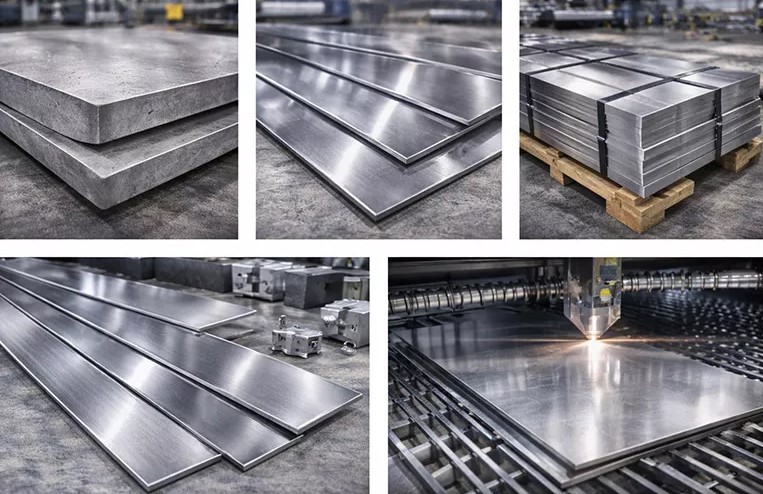
The first technical checkpoint is the grade and standard. Buyers should specify the exact material standard, grade, edition if required, and any project-specific supplementary conditions. A request for “S355 plate” is incomplete unless the buyer clarifies whether the requirement is S355JR, S355J0, S355J2, S355K2, or another variant. Each grade can differ in impact testing temperature, delivery condition, and performance expectations. Similarly, ASTM A572 Grade 50 should not automatically be substituted with another grade unless the engineer approves the equivalence.
Experienced steel plate suppliers help customers avoid unsafe substitutions. Equivalent grades should be compared by chemical composition, yield strength, tensile strength, elongation, impact requirement, thickness limitation, and applicable design code. A material may appear equivalent in strength but fail to meet impact toughness or certification requirements. This is especially important in export projects, offshore fabrication, public infrastructure, pressure equipment, and projects governed by international engineering consultants.
Steel plate dimensions affect fabrication yield and project cost. Thickness determines strength, weight, weld volume, cutting time, and forming behavior. Width and length influence nesting efficiency, scrap rate, transport arrangement, and crane handling. Flatness is especially important for automated cutting, robotic welding, panel assembly, and precision fabrication. A plate that meets grade requirements but has poor flatness can reduce productivity and increase correction work.
When comparing steel plate suppliers, buyers should ask whether the quoted tolerance follows ASTM, EN, JIS, or mill-specific tolerance rules. Standard tolerance may be acceptable for general fabrication, but tighter requirements may be needed for machinery bases, large panels, pressure vessels, or automated production lines. Buyers should also confirm whether the weight is calculated by theoretical weight or actual weight, because this affects commercial value and inventory planning. The theoretical weight of carbon steel plate is commonly calculated using density of approximately 7.85 g/cm³.
Mill test certificates are essential for industrial steel plate procurement. A proper certificate should identify the manufacturer, heat number, plate number or batch number, chemical composition, mechanical test results, delivery condition, standard, grade, dimensions, and inspection status. For many projects, EN 10204 3.1 certification is required. In more critical applications, customers may request EN 10204 3.2 certification with independent third-party or classification society involvement.
Reliable steel plate suppliers maintain traceability from mill production to warehouse storage, cutting, delivery, and final handover. Traceability is not only paperwork; it is a quality control system. Heat numbers and markings must remain identifiable after loading, unloading, blasting, cutting, and distribution. If a project experiences a quality issue, traceability allows engineers to isolate the affected heat or batch instead of questioning the entire shipment. This reduces risk and protects the customer’s production schedule.
Steel plate pricing is influenced by raw material costs, steelmaking route, grade complexity, thickness, width, heat treatment, testing, order volume, and market conditions. Standard carbon steel plate is typically more cost-efficient than alloy, normalized, quenched and tempered, or pressure vessel plate. Very thick plates, extra-wide plates, and special-length plates may require specific mill capability and longer production lead time. The cost also increases when the order requires impact testing, ultrasonic testing, third-party inspection, or classification society approval.
Professional steel plate suppliers help buyers compare total cost rather than headline unit price. A low ex-works price may become less competitive after adding freight, port charges, duties, testing fees, documentation costs, inland transport, and potential delay risk. Buyers should evaluate landed cost per tonne, usable yield after cutting, fabrication performance, and the probability of rejection. For large fabrication projects, even a small improvement in nesting efficiency or weld productivity can offset a higher purchase price.
Steel prices vary by region because of raw material costs, energy prices, demand levels, currency exchange, import policies, and local supply conditions. In 2026, steel buyers are operating in a market where global demand is only gradually recovering, while trade policy continues to reshape flows. Some regions may experience price pressure from oversupply, while others face higher landed costs due to duties, quotas, or restricted origins. This creates a complex environment for project procurement teams.
Buyers should ask steel plate suppliers to separate base material price from logistics, duties, inspection, and processing charges. This makes quotations easier to compare and helps identify the real source of price differences. It is also useful to define quotation validity because steel prices can move within short periods. For project tenders, buyers may need price validity, escalation formulas, or phased shipment terms to manage risk between bid submission and actual material purchase.
| Steel Plate Type | Common Grades or Standards | Typical Applications | Key Buying Focus |
|---|---|---|---|
| Carbon structural plate | ASTM A36, ASTM A572, EN S235, EN S275, EN S355, JIS SS400 | Buildings, frames, platforms, machinery bases, general fabrication | Yield strength, weldability, dimensional tolerance, certificate accuracy |
| Shipbuilding plate | Grade A, B, D, E, AH32, AH36, DH36, EH36 | Hull structures, decks, offshore modules, marine equipment | Classification approval, impact toughness, traceability, flatness |
| Pressure vessel plate | ASTM A516, ASTM A515, EN P265GH, EN P355GH | Boilers, tanks, reactors, separators, heat exchangers | Heat treatment, Charpy testing, ultrasonic testing, design code compliance |
| Wear-resistant plate | AR grades, quenched and tempered grades | Mining equipment, chutes, hoppers, buckets, crushers | Hardness, impact resistance, cutting method, welding procedure |
| High-strength plate | HSLA grades, quenched and tempered grades | Cranes, heavy equipment, bridges, load-bearing structures | Strength-to-weight ratio, toughness, forming limits, weld heat input |
Stavian Industrial Metal is an industrial metal materials trading and solutions provider established with the goal of developing a transparent, efficient, and sustainable industrial metal market. Stavian Industrial Metal focuses on connecting manufacturers, markets, and industrial customers through a professional supply model that supports steel, aluminum, copper, zinc, and related industrial metal products. With the broader international network of Stavian Group, Stavian Industrial Metal is positioned to participate in cross-border supply chains and serve customers that require reliable sourcing, market access, and structured procurement support.
For buyers searching for steel plate suppliers, Stavian Industrial Metal offers relevant product capabilities in hot rolled steel plates, carbon steel plates, shipbuilding steel plates, and related hot rolled steel products in coils and plates. These products are suitable for sectors such as construction, mechanical fabrication, shipbuilding, offshore structures, industrial equipment, infrastructure, energy, and heavy manufacturing. Stavian Industrial Metal’s role is not limited to product distribution; it also supports customers with industrial metal trading solutions, product matching, supply coordination, and documentation-oriented procurement.
Stavian Industrial Metal’s steel plate portfolio is aligned with the needs of industrial buyers that require dependable material for fabrication and project execution. Carbon steel plates can support general structural and machinery applications. Hot rolled plates are suitable for welded structures, frames, components, and industrial fabrication. Shipbuilding steel plates are especially relevant for marine, shipyard, and offshore customers that need steel designed for harsh operating conditions and strict project acceptance criteria.
In the context of global steel procurement, Stavian Industrial Metal can be considered by customers looking for steel plate suppliers that understand both product requirements and supply chain discipline. For industrial projects, the ideal supplier must combine market access, technical awareness, document control, and the ability to coordinate across mills, logistics providers, and customers. This is particularly valuable when projects require multiple grades, phased delivery schedules, or material packages that include both plates and complementary steel products.
In construction and infrastructure, steel plates are used in base plates, gusset plates, bridge components, connection plates, diaphragms, stiffeners, bearing plates, and fabricated structural members. The main requirements are strength, weldability, dimensional accuracy, and compliance with structural design codes. For bridges and public infrastructure, impact toughness, weather resistance, or special inspection may also be required depending on climate and design life.
Steel plate suppliers serving infrastructure projects must understand schedule pressure. Project sites depend on timely delivery because steel plate is often needed before fabrication, blasting, painting, assembly, and erection. A delay in plate supply can push back the entire construction sequence. Therefore, infrastructure buyers should prioritize suppliers that can provide clear lead times, accurate documentation, and consistent material quality across repeated shipments.
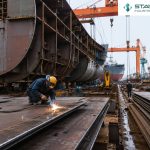
Marine applications place heavy demands on steel plate. Ship hulls, decks, bulkheads, offshore platforms, pontoons, and marine equipment are exposed to dynamic loads, saltwater environments, vibration, and fatigue. Shipbuilding grades must meet classification requirements and often require impact testing at defined temperatures. Flatness, surface quality, and weldability are also important because shipyards rely on efficient cutting, forming, panel assembly, and welding operations.
For shipbuilding and offshore projects, steel plate suppliers must maintain strict traceability. Heat numbers, plate markings, certificates, and classification documents must remain consistent from receipt to final installation. Any mismatch can trigger inspection delays. Stavian Industrial Metal’s shipbuilding steel plate offering is relevant for this segment because marine projects require suppliers that understand both industrial quality and documentation discipline.
Energy and process industries use steel plates in storage tanks, pressure vessels, boilers, pipelines components, heat exchangers, and processing equipment. These applications may involve pressure, temperature, corrosive media, and long service life expectations. Material selection must follow engineering codes and project specifications. In many cases, buyers need normalized plates, impact-tested plates, ultrasonic-tested plates, or plates with special supplementary requirements.
Suppliers serving this sector must treat compliance as a core requirement. The right steel plate suppliers help customers verify not only grade and thickness but also delivery condition, testing scope, certificate type, and traceability. This reduces the risk of non-conforming material entering pressure equipment fabrication, where rejection can be expensive and schedule-sensitive.
Choosing the right steel plate suppliers is a strategic decision for industrial buyers. Steel plate performance depends on much more than thickness and price. Buyers must evaluate grade, standard, mechanical properties, delivery condition, testing, certificate type, traceability, mill origin, logistics, and supplier reliability. In a 2026 market shaped by moderate demand growth, large excess capacity, and evolving trade measures, procurement teams need suppliers that can combine competitive sourcing with technical discipline and documentation control.
The most dependable steel plate suppliers help customers reduce risk from inquiry to delivery. They clarify specifications, source from suitable mills, verify certificates, coordinate inspection, manage logistics, and support project schedules. For applications such as construction, shipbuilding, offshore engineering, pressure equipment, energy, mining, and heavy machinery, this level of supplier capability can determine whether a project runs smoothly or faces costly delays.
Stavian Industrial Metal is relevant to this procurement landscape as an industrial metal materials trading and solutions provider offering hot rolled steel plates, carbon steel plates, shipbuilding steel plates, and related industrial metal products. With a focus on professional supply coordination and industrial market development, Stavian Industrial Metal can support customers seeking structured, reliable, and technically informed steel plate sourcing for demanding industrial applications.
Read more
Address
Website: https://stavianmetal.com
Email: info@stavianmetal.com