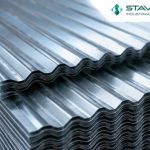
3mm steel plate is one of the most widely used thin-gauge steel plate products in industrial fabrication, machinery parts, enclosures, flooring details, light structural components, vehicle bodies, HVAC fabrication, ship repair, and general manufacturing. Although 3mm is considered a relatively thin thickness compared with heavy structural plate, it plays a critical role in projects that require a balance of formability, weldability, strength, weight control, and cost efficiency. Choosing the right 3mm steel plate is not simply a matter of thickness; buyers must also evaluate steel grade, manufacturing route, dimensional tolerance, surface condition, flatness, corrosion protection, and applicable standards.
In industrial purchasing, even a small difference in steel grade or tolerance can affect fabrication output, cutting performance, welding quality, coating adhesion, and final component durability. A 3mm plate may be used as a mild steel plate for general fabrication, a carbon steel plate for machinery and construction details, a stainless steel plate for corrosion-resistant environments, or a coated steel plate for roofing, cladding, and equipment panels. This article explains the essential specifications, calculations, applications, quality checks, and sourcing considerations for 3mm steel plate, with a practical focus on industrial decision-making.
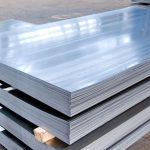
3mm steel plate refers to flat steel material with a nominal thickness of 3 millimeters. In many industrial markets, 3mm sits at the border between sheet and plate classification. Some suppliers classify materials below 3mm as sheet and 3mm or above as plate, while others use broader commercial categories such as steel sheet, steel plate, coil plate, or cut-to-size plate depending on production route and end-use. For buyers, the most important point is not the label alone, but whether the material meets the required grade, thickness tolerance, width, length, surface finish, and mechanical properties.
At 3mm thickness, the product is thin enough to be cut, punched, bent, rolled, and welded efficiently, yet thick enough to provide stronger rigidity than 1.5mm or 2mm sheets. This makes 3mm steel plate suitable for medium-duty panels, machine guards, equipment casings, ducts, brackets, base covers, light platforms, and reinforcement parts. In steel processing centers, 3mm plate can be supplied from hot rolled coil, cold rolled coil, galvanized coil, stainless steel coil, or pre-cut plate stock. Each production route creates different performance characteristics, especially in surface quality, dimensional precision, and forming behavior.
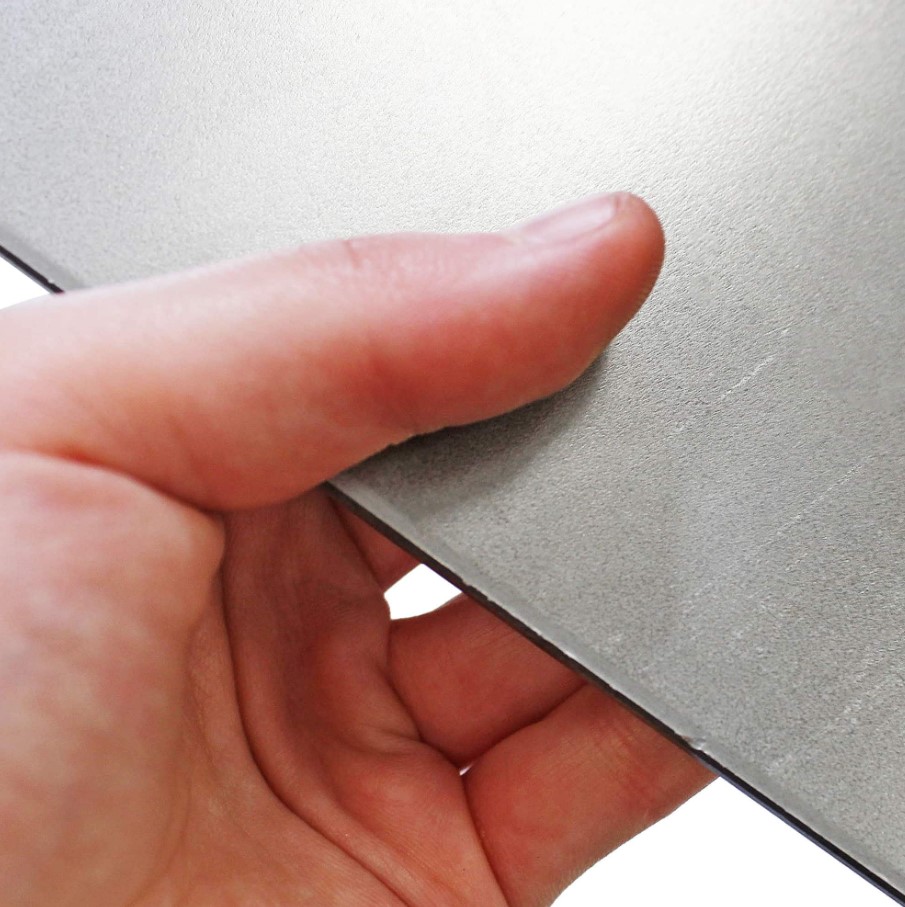
The theoretical weight of carbon steel is commonly calculated using a density of 7,850 kg/m³. For a 3mm steel plate, the standard theoretical weight is approximately 23.55 kg per square meter. The formula is simple: thickness in millimeters × 7.85 = kg/m². Therefore, 3 × 7.85 = 23.55 kg/m². This figure is useful for estimating transportation cost, loading plan, quotation comparison, structural dead load, and warehouse handling capacity. For stainless steel, the density may vary depending on grade, commonly around 7,900 to 8,000 kg/m³ for many austenitic grades, so the weight can be slightly higher.
For example, a 3mm carbon steel plate measuring 1,220mm × 2,440mm has an area of 2.9768 m² and a theoretical weight of about 70.1 kg per sheet. A 1,500mm × 3,000mm plate has an area of 4.5 m² and a theoretical weight of about 106.0 kg per sheet. These figures are theoretical and may differ slightly from actual weight because of rolling tolerance, edge trimming, surface coating, and grade-specific density. In industrial procurement, buyers should request theoretical weight basis, actual weighing method, and tolerance reference before confirming large orders.
| Nominal Size | Area | Theoretical Weight of 3mm Carbon Steel | Typical Use |
|---|---|---|---|
| 1,000mm × 2,000mm | 2.00 m² | 47.10 kg/sheet | Small fabrication, panels, covers |
| 1,220mm × 2,440mm | 2.9768 m² | 70.10 kg/sheet | General manufacturing, cabinets, guards |
| 1,500mm × 3,000mm | 4.50 m² | 105.98 kg/sheet | Industrial cutting, equipment panels |
| 1,500mm × 6,000mm | 9.00 m² | 211.95 kg/sheet | Large panels, ducting, fabrication lines |
The correct grade of 3mm steel plate depends on the working environment and fabrication requirement. For general-purpose mild steel, common grades include ASTM A36, SS400, Q235, S235JR, and equivalent commercial-quality carbon steel grades. These grades are often selected because they offer good weldability, moderate strength, and cost-effective performance for brackets, frames, covers, machine components, and construction-related fabrication. For applications requiring higher strength, buyers may consider S275, S355, Q345, or similar structural grades, subject to availability at 3mm thickness.
For corrosion-resistant applications, stainless steel grades such as 304 and 316 are common options. 304 stainless steel plate is widely used in food processing, architectural panels, tanks, and indoor corrosion-resistant equipment. 316 stainless steel plate contains molybdenum, which improves resistance to chloride environments, making it more suitable for marine, chemical, coastal, and high-humidity applications. For outdoor cost-sensitive use, galvanized 3mm steel plate may be selected when zinc coating protection is more economical than stainless steel. The grade should always be confirmed with mill test certificates, not only supplier description.
Mechanical properties determine how a 3mm steel plate behaves under load, bending, welding, cutting, vibration, and service conditions. The most important values include yield strength, tensile strength, elongation, hardness, and impact performance where applicable. Yield strength indicates the stress level at which the steel begins to deform permanently. Tensile strength shows the maximum stress the material can resist before fracture. Elongation measures ductility and is especially important for bending, forming, stamping, and press-brake operations.
For general structural carbon steel, yield strength commonly ranges from around 235 MPa to 355 MPa depending on grade, while tensile strength may range from roughly 360 MPa to more than 500 MPa. Mild steel grades are usually easier to form and weld, while higher-strength grades can reduce component weight but may require tighter bending radius and more controlled welding procedures. When the plate is intended for laser-cut components, machinery guards, panels, or fabricated assemblies, buyers should check not only strength, but also flatness, residual stress, and surface scale condition.
| Material Type | Typical Grade Examples | General Strength Range | Typical Application |
|---|---|---|---|
| Mild carbon steel | A36, SS400, Q235, S235JR | Moderate strength, high weldability | General fabrication, brackets, covers |
| Higher-strength structural steel | S275, S355, Q345 | Higher yield strength | Load-bearing parts, frames, industrial supports |
| Stainless steel | 304, 316 | Corrosion-resistant, grade-dependent strength | Food, chemical, marine, architectural use |
| Galvanized steel | Commercial zinc-coated grades | Base-steel dependent | Outdoor panels, ducts, housings |
For 3mm steel plate, tolerance control is particularly important because thin plates can be more sensitive to waviness, camber, coil memory, and thermal distortion. A thickness deviation of only 0.1mm can affect weight calculation, bending behavior, slot fit-up, and component assembly. In mass production, inconsistent tolerance may lead to higher scrap rate, unstable punching clearance, poor weld gap control, and variation in final product weight. Therefore, buyers should specify thickness tolerance, width tolerance, length tolerance, diagonal tolerance, and flatness requirement clearly in the purchase order.
Flatness matters especially for laser cutting, CNC plasma cutting, automatic welding, enclosure manufacturing, cabinet production, and precision panels. Hot rolled 3mm material may have more scale and slightly less smooth surface than cold rolled material, but it is often more economical and widely available for industrial fabrication. Cold rolled 3mm steel can offer better surface finish and tighter dimensional control, but it may cost more and may not be necessary for hidden structural parts. When appearance is important, surface finish should be defined before production rather than inspected only after delivery.
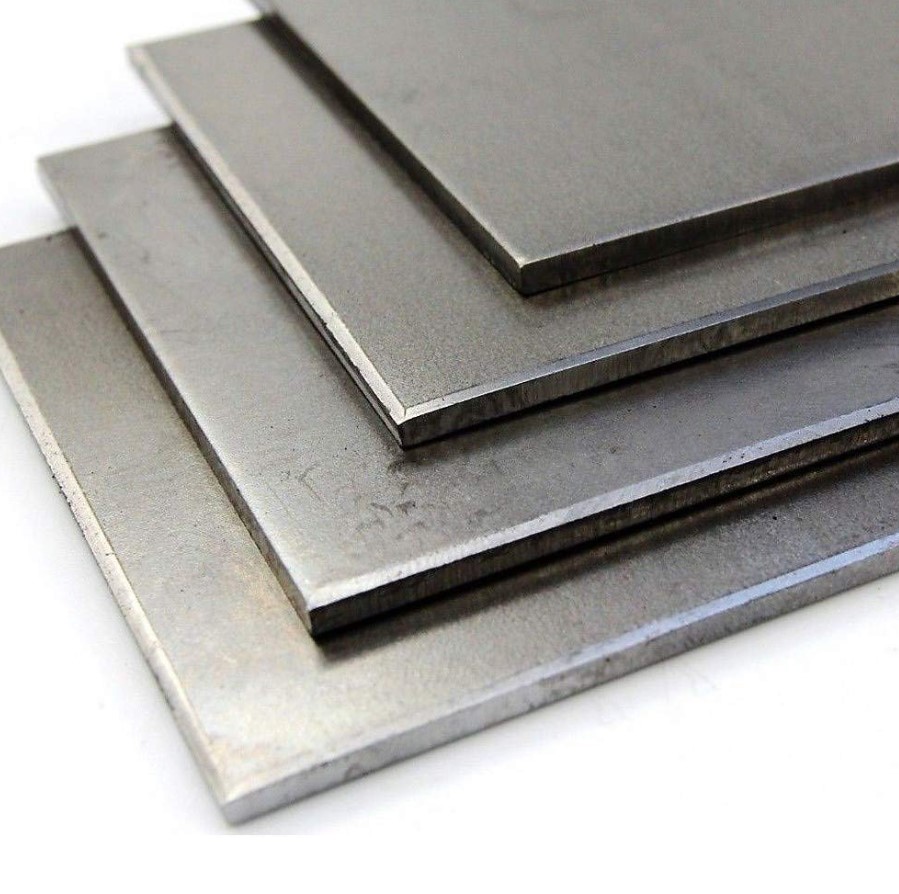
Hot rolled 3mm steel plate is produced by rolling steel at elevated temperatures above the recrystallization range. This process allows large volumes of flat steel to be produced efficiently, making hot rolled material a practical choice for construction, general fabrication, machinery parts, brackets, frames, and industrial panels. Hot rolled steel normally has a darker mill scale surface unless it is pickled and oiled. The mill scale can provide temporary protection during storage, but it may need to be removed before painting, galvanizing, or precision welding.
One advantage of hot rolled 3mm plate is cost efficiency. For many industrial applications where surface appearance is not the primary requirement, hot rolled material provides a strong balance between price, availability, and workability. However, fabricators should consider descaling, shot blasting, pickling, or grinding if the final product requires paint adhesion or clean weld areas. For projects involving repetitive bending, buyers should also request information about rolling direction and minimum bend radius. In many workshops, hot rolled 3mm plate is the default choice for utility components, supports, and non-decorative panels.
Cold rolled 3mm steel plate is processed at or near room temperature after hot rolling and pickling, giving it a smoother surface, tighter thickness control, and improved dimensional precision. It is commonly selected for applications where appearance, form accuracy, or surface preparation is more demanding. Examples include electrical cabinets, precision covers, appliance parts, furniture components, machine housings, and painted visible panels. Cold rolled steel may also provide better consistency for stamping and bending, depending on the grade and temper.
However, cold rolled steel is not automatically better for every use. It can be more expensive than hot rolled material, and its availability at 3mm thickness may vary by market and mill capability. Some cold rolled products may have higher residual stresses, which can influence flatness after laser cutting or slitting. Buyers should evaluate whether the extra surface quality and tolerance justify the cost. For visible products, cold rolled plate is often preferred. For heavy-duty industrial components where surface appearance is secondary, hot rolled or pickled and oiled steel may provide better economic value.
When corrosion resistance is required, buyers often compare galvanized, painted, aluminum-zinc coated, and stainless 3mm steel plate. Galvanized steel uses a zinc coating to protect the base steel from atmospheric corrosion. It is widely used for outdoor equipment housings, ventilation systems, roofing accessories, cable trays, agricultural equipment, and light industrial structures. The coating mass should be selected according to exposure level, expected service life, forming operation, and painting requirement. Heavy forming may crack thick zinc coating if the grade and bend radius are not properly matched.
Stainless steel plate is more suitable for environments where coating damage would create unacceptable corrosion risk. 304 stainless steel is a strong general-purpose option for indoor, food-grade, decorative, and moderately corrosive environments. 316 stainless steel is better for marine atmosphere, chloride exposure, chemical processing, and coastal industrial projects. While stainless 3mm steel plate has a higher initial cost, it may reduce lifecycle cost by lowering maintenance, repainting, and replacement frequency. Buyers should make decisions based on total service conditions, not only material price per ton.
In construction-related fabrication, 3mm steel plate is used for secondary steelwork, connection covers, access panels, stiffeners, decorative steel details, wall protection, duct supports, brackets, and temporary works. It is not normally selected as the primary heavy structural member in large load-bearing systems, but it can perform effectively in non-critical and medium-duty details when designed properly. The relatively light weight of 23.55 kg/m² makes it easier to handle, transport, cut, and install than thicker plates such as 6mm, 8mm, or 10mm.
For infrastructure projects, 3mm plate may appear in drainage covers, service boxes, cable management systems, protective casings, signage structures, and architectural metalwork. When exposed outdoors, carbon steel must be painted, galvanized, powder-coated, or otherwise protected against corrosion. Engineers should account for exposure category, water accumulation, edge condition, and maintenance access. Thin steel plate can corrode faster at cut edges, bolt holes, and weld seams if coating is not properly applied. Therefore, coating specification is as important as base material selection in long-service construction environments.
Machinery manufacturers use 3mm steel plate for guards, access doors, machine covers, equipment frames, light-duty bases, conveyor side panels, fan casings, hoppers, chutes, and protective shields. The material provides sufficient stiffness for many enclosure and covering applications without creating unnecessary weight. For moving equipment or modular systems, reducing plate thickness from 5mm to 3mm can lower total mass significantly, improve installation efficiency, and reduce transportation cost. However, designers must confirm vibration behavior, dent resistance, and fastening strength.
In production environments, 3mm plate is compatible with laser cutting, shearing, punching, press braking, MIG welding, TIG welding, resistance welding, and powder coating. For high-volume production, consistency of thickness and flatness directly influences machine productivity. Laser cutting requires a flat surface and stable chemistry to reduce dross and maintain clean edges. Punching requires proper clearance to avoid burrs and deformation. Bending requires the correct radius to prevent cracking. A well-specified 3mm steel plate can improve throughput, reduce rework, and support repeatable industrial manufacturing quality.
The transport sector uses thin steel plates in vehicle bodies, trailers, containers, truck panels, toolboxes, floor accessories, and reinforcement details. A 3mm steel plate can provide a practical balance between strength and weight for non-primary structural elements. In trailers and truck bodies, it may be used for side panels, mudguard supports, underbody covers, storage compartments, and equipment mounting plates. For applications subject to road vibration, impact, and weather exposure, grade selection and coating performance are critical.
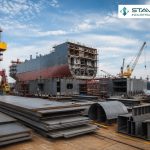
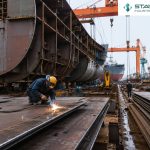
In marine and ship repair applications, 3mm plate may be used for light bulkhead details, equipment covers, interior structures, ducting, small repairs, and non-critical steelwork where approved by the project specification. Marine environments are highly corrosive, so buyers should not assume that ordinary mild steel is sufficient unless coating, painting, and inspection procedures are clearly defined. For shipbuilding or offshore-related procurement, classification requirements, traceability, and mill certification become more important. Stainless or coated alternatives may be preferred in areas exposed to salt spray, humidity, or chemicals.
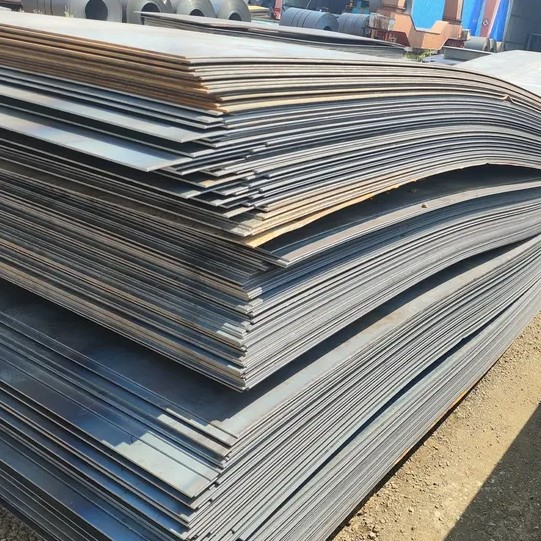
The most common calculation for 3mm steel plate weight is: length × width × thickness × density. In metric form, when length and width are measured in meters and thickness is measured in millimeters, the simplified formula for carbon steel is: length × width × thickness × 7.85 = weight in kilograms. For one sheet measuring 1.5m × 3m × 3mm, the calculation is 1.5 × 3 × 3 × 7.85 = 105.975 kg. This formula is widely used in quotations, logistics planning, and fabrication estimates.
When calculating full project quantity, buyers should also include cutting loss, edge trimming, nesting efficiency, rejected parts, testing samples, and spare material. For laser-cut components, nesting efficiency may range from high to moderate depending on part geometry. Simple rectangular parts can achieve better yield, while irregular parts may create higher scrap. A practical procurement plan may add 3% to 10% extra material depending on fabrication complexity. For large industrial projects, a cutting layout should be prepared before purchase so that sheet size and plate size match the required component dimensions.
The purchase price of 3mm steel plate is usually quoted by ton, sheet, kilogram, or square meter. However, the lowest unit price does not always create the lowest total cost. Buyers should consider grade availability, surface finish, tolerance, cutting method, packaging, inland transport, export documentation, payment terms, and delivery reliability. For example, a cheaper hot rolled plate may require shot blasting and heavy surface preparation before painting, while a pickled and oiled or cold rolled plate may reduce downstream processing cost.
Logistics also matters. A 20-foot container can carry a large quantity of 3mm plates by weight, but packing must prevent deformation, moisture exposure, edge damage, and shifting during transport. Thin plate can be more vulnerable to bending or corner damage than thick plate. For export orders, proper bundling, waterproof wrapping, wooden supports, steel straps, and clear labeling help reduce claims. Buyers should evaluate total landed cost, not only ex-works price. Reliable supply planning can be more valuable than a small price difference when production lines depend on continuous material availability.
Compared with 2mm steel, 3mm steel plate provides approximately 50% more thickness and theoretical weight per square meter. A 2mm carbon steel sheet weighs around 15.70 kg/m², while a 3mm plate weighs around 23.55 kg/m². This increase improves stiffness, dent resistance, weld strength, and durability in many applications. For equipment guards, access panels, and brackets, the added thickness can make the final part feel more robust and reduce vibration. However, it also increases weight, cost, and forming force requirements.
Designers often choose 2mm steel when weight reduction, easy forming, and cost savings are priorities. They choose 3mm when the component needs better rigidity, stronger fixing points, or improved resistance to deformation during handling. For panels with large unsupported spans, 2mm may flex too much unless stiffeners are added. In such cases, a 3mm plate may reduce the need for extra reinforcement. The best choice depends on load, span, fastening method, surface finish, and service environment.
Compared with 5mm or 6mm plate, 3mm steel plate is easier to cut, bend, drill, and handle. A 5mm carbon steel plate weighs about 39.25 kg/m², while a 6mm plate weighs about 47.10 kg/m². This means 6mm steel is twice as heavy as 3mm steel per square meter. For large panels, that weight difference can significantly affect manual handling, lifting equipment, transportation cost, and installation speed. Therefore, using 3mm plate can be advantageous when heavy structural capacity is not required.
However, 5mm and 6mm plates provide higher load capacity, better impact resistance, and stronger threaded engagement where tapping is required. They are more suitable for base plates, heavy brackets, platforms, equipment mounts, and structural reinforcement. A 3mm plate should not be substituted for thicker plate in load-bearing applications without engineering verification. In cost optimization, the question is not whether thinner is cheaper, but whether thinner still satisfies mechanical, safety, and durability requirements.
Carbon 3mm steel plate requires proper surface protection when used in humid, outdoor, chemical, or coastal environments. Painting and powder coating are common solutions for machinery covers, panels, cabinets, frames, and architectural components. Good coating performance begins with surface preparation. Oil, rust, mill scale, dust, and moisture must be removed before coating. For hot rolled steel, shot blasting or pickling may be required to achieve strong adhesion. For cold rolled steel, degreasing and phosphating may be sufficient depending on coating system.
Coating thickness should be selected according to exposure and expected service life. Indoor equipment may need a lighter coating system, while outdoor industrial components require stronger corrosion protection. Edges, holes, weld seams, and corners should receive special attention because coatings tend to be thinner at sharp edges. If the plate is laser cut before coating, dross and oxide should be removed to improve adhesion. A well-coated 3mm plate can last for years in appropriate environments, while poorly prepared steel may show rust quickly even with expensive paint.
Galvanized 3mm steel plate is widely used when zinc coating is needed for atmospheric corrosion resistance. It is suitable for cable trays, ducts, outdoor housings, agricultural equipment, ventilation parts, and construction accessories. Buyers should specify zinc coating mass, spangle requirement, surface treatment, passivation, and painting compatibility. If the plate will be welded after galvanizing, zinc fumes and coating damage must be managed with proper ventilation, safety procedures, and post-weld repair coating.
Stainless steel is the preferred option when corrosion risk is high, hygiene is required, or long-term appearance matters. Although stainless steel has a higher initial price, it can reduce maintenance cost in food processing, marine, chemical, pharmaceutical, and architectural applications. The choice between galvanized carbon steel and stainless steel should consider exposure level, cleaning chemicals, temperature, abrasion, design life, and maintenance schedule. For some projects, coated carbon steel is economical. For others, stainless steel is the more reliable lifecycle solution.
Stavian Industrial Metal is an industrial metal materials company providing comprehensive solutions in the trading and supply of metal products for domestic and international markets. Established with the goal of building a transparent, dynamic, and sustainable industrial metal materials market, Stavian Industrial Metal supplies a diversified product portfolio including steel, aluminum, copper, stainless steel, zinc products, construction steel, coated steel, and shipbuilding steel. With a focus on clear origin, professional supply capability, and industrial customer requirements, Stavian Industrial Metal supports buyers who need stable sourcing for manufacturing, construction, infrastructure, and export projects.
For customers searching for 3mm steel plate, Stavian Industrial Metal can align suitable product options with project requirements such as hot rolled steel plate for general fabrication, coated steel for outdoor or architectural applications, stainless steel for corrosion-resistant environments, and shipbuilding-related steel products for marine and industrial uses where specification control is important. Instead of treating 3mm plate as a simple commodity, Stavian Industrial Metal approaches it as a technical material that must match grade, processing method, surface quality, documentation, and delivery needs.
For general industrial fabrication, Stavian Industrial Metal may recommend 3mm mild carbon steel plate or hot rolled steel plate in commercial grades such as SS400, Q235, S235JR, ASTM A36, or equivalent grades depending on project standard and regional availability. This option is suitable for brackets, panels, covers, machine guards, ducting, and non-critical structural details. It provides good weldability, practical strength, and cost-effective performance. If better surface condition is required for painting or precision fabrication, pickled and oiled or cold rolled options may be considered.
For outdoor applications, Stavian Industrial Metal may recommend galvanized or coated 3mm steel plate when corrosion resistance and cost control are both important. For marine, chemical, food-grade, or high-humidity environments, stainless steel 304 or 316 may be more appropriate. For buyers involved in ship repair, offshore fabrication, or maritime supply chains, Stavian Industrial Metal’s shipbuilding steel-related product capability can support projects requiring stronger traceability and standard alignment. The final product recommendation should always be based on operating environment, design load, fabrication process, coating system, and documentation requirement.
3mm steel plate can be strong enough for many light-duty and medium-duty structural details, but it is not automatically suitable for primary load-bearing structures. Its suitability depends on grade, span, load, support condition, welding design, corrosion allowance, and safety factor. For example, a 3mm plate may work well as a bracket cover, stiffener, guard, or panel, but it may be inadequate as a heavy base plate or main support member. Engineers should calculate stress, deflection, vibration, and connection strength before using it in structural applications.
In practical fabrication, 3mm plate is often selected for components where rigidity and moderate strength are needed without excessive weight. If higher stiffness is required, designers may add bends, ribs, flanges, or stiffeners instead of simply increasing thickness. This can improve strength-to-weight efficiency. However, safety-critical applications should always follow engineering standards and project specifications.
Yes, 3mm steel plate can usually be bent using a press brake, roll bending machine, or forming equipment, provided the steel grade has adequate ductility and the bending radius is appropriate. Mild steel grades are generally easier to bend than high-strength grades. Stainless steel can also be bent, but it may require higher forming force and proper tooling because of work hardening behavior. The inside bend radius should be selected based on grade, rolling direction, tooling, and final angle.
For consistent bending results, fabricators should check grain direction, surface condition, and elongation values. Sharp bends may cause cracking, especially in higher-strength or low-ductility material. If the product requires repeated bending or tight radius forming, sample testing is recommended before mass production. Proper tooling and controlled bending parameters can significantly improve dimensional repeatability.
Yes, 3mm steel plate can be welded by common processes such as MIG, TIG, resistance welding, and manual arc welding depending on grade and application. For carbon steel, MIG welding is widely used because it offers good productivity and strong joints. TIG welding may be selected when clean, precise welds are required. Stainless steel requires suitable filler material, shielding gas, and heat control to prevent distortion, discoloration, or loss of corrosion resistance.
Because 3mm plate is relatively thin, excessive heat input can cause warping or burn-through. Fixtures, tack welds, welding sequence, and controlled travel speed are important. For visible panels, heat distortion can be a major quality issue. For painted components, weld spatter and oxidation should be cleaned before coating. Good welding practice helps ensure that the final assembly maintains both strength and appearance.
The theoretical weight of carbon 3mm steel plate is approximately 23.55 kg/m². This is calculated using the standard density of carbon steel at 7,850 kg/m³. The formula is thickness in millimeters × 7.85. Therefore, 3 × 7.85 = 23.55 kg/m². A 1,220mm × 2,440mm sheet weighs about 70.1 kg, while a 1,500mm × 3,000mm sheet weighs about 106.0 kg.
Actual weight can differ slightly because of rolling tolerance, trimming, coating, surface oil, or grade density. Stainless steel may be slightly heavier than carbon steel. For logistics and costing, theoretical weight is normally used for quotation, but actual weighing may be used for final shipment. Buyers should confirm the weight basis with the supplier before order confirmation.
3mm steel plate is a versatile industrial material that combines manageable weight, practical strength, good fabricability, and broad availability. It is widely used in manufacturing, construction accessories, machinery covers, equipment panels, transport components, ducting, brackets, guards, coated products, and corrosion-resistant applications. However, thickness alone does not define performance. Buyers must evaluate grade, manufacturing route, tolerance, surface finish, flatness, corrosion protection, documentation, and application environment before making a purchasing decision.
For carbon steel applications, 3mm mild steel plate offers cost-effective weldability and forming performance. For outdoor service, galvanized or coated steel may provide improved corrosion resistance. For marine, food-grade, chemical, or high-humidity environments, stainless steel grades such as 304 or 316 may be more suitable. The theoretical weight of 23.55 kg/m² gives buyers a reliable basis for cost estimation and logistics planning, while careful inspection helps avoid fabrication problems and project delays.
Stavian Industrial Metal supports industrial buyers by supplying suitable steel and metal material solutions aligned with project specifications, fabrication processes, and market requirements. For customers sourcing 3mm steel plate, Stavian Industrial Metal can provide product direction across hot rolled steel, coated steel, stainless steel, and application-specific steel materials, helping buyers achieve the right balance of quality, cost, delivery, and technical performance.
Read more
Address
Website: https://stavianmetal.com
Email: info@stavianmetal.com