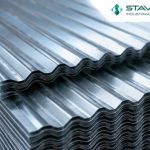
A 5mm steel plate is one of the most practical medium-thin steel plate options used across fabrication, machinery, construction, transport equipment, storage systems, ship repair, agricultural machinery, and general industrial manufacturing. At 5 millimeters thick, the plate provides a useful balance between formability, weldability, load-bearing capacity, and cost efficiency. It is thicker and more rigid than common sheet steel, yet still easier to cut, bend, punch, roll, and weld than heavy plate. This makes it suitable for projects where engineers need structural reliability without adding unnecessary dead weight.
In industrial procurement, the importance of a 5mm steel plate is not limited to thickness. Buyers must also evaluate steel grade, yield strength, tensile strength, dimensional tolerance, surface condition, delivery form, flatness, coating option, cutting method, and certification. A plate with the same nominal thickness can perform very differently depending on whether it is ASTM A36, EN S235JR, EN S275JR, EN S355JR, JIS SS400, JIS SM490, Q235, Q355, hot rolled, pickled and oiled, galvanized, or cold rolled. Selecting the correct specification helps reduce fabrication defects, improve welding quality, control project weight, and ensure predictable performance in service.
Stavian Industrial Metal provides industrial metal material solutions for manufacturers, contractors, fabricators, and trading partners that require stable sourcing, consistent quality, and professional supply coordination. For projects related to 5mm steel plate, Stavian Industrial Metal can supply suitable hot rolled steel plates, cold rolled steel plates, galvanized steel plates, and common structural steel grades depending on technical requirements, end-use environment, and processing needs. With a focus on industrial steel distribution and global supply networks, Stavian Industrial Metal supports customers in selecting steel plates that match mechanical properties, dimensional requirements, documentation standards, and practical fabrication conditions.
A 5mm steel plate is a flat steel product with a nominal thickness of 5 millimeters, equivalent to 0.005 meters or approximately 0.197 inches. In many markets, steel products around this thickness may be described as steel plate, sheet, or coil-derived plate depending on local standards and supply form. Technically, the term “plate” is often used when the material is supplied in cut-to-length flat form and intended for structural, fabrication, or equipment applications. The exact classification may vary by region, mill practice, and commercial convention.
The key point for buyers is that 5mm thickness sits in a useful transition range. It is thin enough for efficient processing but thick enough to provide better rigidity than 1.5mm, 2mm, or 3mm sheets. Compared with 6mm, 8mm, or 10mm plates, a 5mm steel plate reduces material weight and may lower fabrication cost when the design does not require heavier sections. For this reason, 5mm plate is widely used in panels, machine covers, brackets, base plates, equipment frames, light-duty platforms, guards, stiffeners, and enclosure components.
Engineers often choose a 5mm steel plate because it offers a strong balance between strength, workability, and weight. A 5mm plate has a theoretical mass of about 39.25 kg per square meter when calculated with the standard carbon steel density of 7,850 kg/m³. This means a standard 1,500mm x 6,000mm plate weighs approximately 353.25 kg before tolerance, coating, or cutting loss. For industrial buyers, this weight level is still manageable for workshop handling, CNC cutting, palletized delivery, and downstream fabrication.
From a fabrication perspective, 5mm steel can usually be plasma cut, laser cut, guillotine sheared, drilled, punched, bent, rolled, and welded with conventional equipment, depending on grade and surface condition. It provides more resistance to denting and deformation than thinner sheets, making it useful in parts exposed to vibration, handling, abrasion, or moderate impact. However, it is not automatically suitable for heavy structural load-bearing applications unless the selected grade, design calculation, support spacing, and welding details are properly verified.
The most common formula for calculating the weight of a 5mm steel plate is: weight = length x width x thickness x density. When all dimensions are converted into meters and density is taken as 7,850 kg/m³, the result is expressed in kilograms. For a 5mm plate, the thickness is 0.005 meters. Therefore, one square meter weighs 1 x 1 x 0.005 x 7,850 = 39.25 kg. This is a theoretical value and may vary slightly due to thickness tolerance, rolling tolerance, coating weight, rust prevention oil, and actual chemical composition.
For procurement and logistics, theoretical weight is essential because steel is commonly priced by metric ton. Even a small difference in plate size or thickness tolerance can affect total shipment weight, freight cost, unloading plan, and warehouse storage capacity. For example, 100 pieces of 1,500mm x 6,000mm x 5mm steel plate can have a theoretical mass of more than 35 metric tons. This is why buyers should confirm nominal dimensions, tolerance class, actual weighing method, and delivery quantity before finalizing a purchase order.
| Plate Size | Area | Theoretical Weight per Piece | Typical Use |
|---|---|---|---|
| 1,000mm x 2,000mm x 5mm | 2.00 m² | 78.50 kg | Small fabrication panels, covers, guards |
| 1,220mm x 2,440mm x 5mm | 2.98 m² | 116.82 kg | General workshop fabrication, equipment panels |
| 1,500mm x 3,000mm x 5mm | 4.50 m² | 176.63 kg | Machinery parts, frames, structural components |
| 1,500mm x 6,000mm x 5mm | 9.00 m² | 353.25 kg | Industrial cutting, construction fabrication |
| 2,000mm x 6,000mm x 5mm | 12.00 m² | 471.00 kg | Large panels, tanks, equipment shells |
This table uses theoretical mass and should be treated as a planning reference. In real supply, mills may deliver plates with positive thickness tolerance, meaning the actual weight can be higher than the calculated nominal weight. For projects requiring strict weight control, such as transport equipment or modular structures, buyers should request actual mill weight, thickness measurement records, and applicable tolerance standards. For projects focused on cost, the purchasing team should compare price per metric ton, yield loss during cutting, and usable nesting ratio rather than only comparing price per plate.
The most widely used 5mm steel plate grades are carbon structural steels. These grades are selected for general fabrication, construction components, machinery bases, brackets, supports, and welded structures. Popular examples include ASTM A36, JIS SS400, EN S235JR, EN S275JR, Q235, and similar regional equivalents. These steels usually provide good weldability, adequate strength, and competitive pricing. They are suitable for non-critical to moderate-duty applications where high strength, low temperature toughness, or special corrosion resistance is not the primary requirement.
ASTM A36 is commonly associated with a minimum yield strength of about 250 MPa for many plate thickness ranges, while SS400 and S235JR are also frequently selected for general structural purposes. For buyers, it is important not to assume that all “mild steel” plates are identical. Chemical composition limits, carbon equivalent, elongation, tensile range, impact testing, and inspection documents may differ between grades. If the plate will be welded, bent, or exposed to dynamic loading, the purchasing specification should clearly state the required standard, grade, certificate type, and delivery condition.
When a project requires better strength-to-weight performance, a 5mm steel plate may be specified in higher-strength grades such as EN S355JR, S355J2, ASTM A572 Grade 50, JIS SM490, Q355, or equivalent. These grades typically provide higher yield strength than basic mild steel, allowing engineers to design lighter structures or increase safety margin without increasing thickness. For example, S355-grade steel is commonly associated with a minimum yield strength around 355 MPa for thinner sections, depending on the exact standard and thickness range.
Higher-strength grades are useful in transport frames, lifting equipment parts, industrial platforms, trailers, containers, heavy machinery guards, and welded structures subject to higher stress. However, stronger steel is not always the best choice. It may require stricter control of bending radius, welding parameters, heat input, preheat conditions, and forming direction. If the plate is used in repeated bending or high-volume stamping, buyers should verify elongation, bend test requirements, surface quality, and flatness tolerance before production begins.
For outdoor or corrosive environments, a standard uncoated 5mm steel plate may need additional protection. Common options include hot-dip galvanized steel plate, pre-painted steel, zinc-coated steel, primer-coated plate, or weather-resistant steel depending on application. Galvanized 5mm steel plate is often selected for outdoor equipment, guard plates, drainage covers, agricultural machinery, and infrastructure accessories where improved corrosion resistance is needed. The zinc layer acts as a protective barrier and can provide sacrificial protection to the base steel.
Weather-resistant steel, such as grades designed to form a stable protective oxide layer, may be suitable for architectural structures, bridges, containers, and outdoor panels. However, it requires suitable atmospheric conditions and correct detailing to avoid water trapping. For marine, chemical, or highly humid environments, stainless steel or specialized coating systems may be more appropriate. In every case, corrosion performance depends not only on steel grade but also on edge protection, weld area treatment, coating thickness, surface preparation, installation environment, and maintenance practice.
The mechanical performance of a 5mm steel plate is primarily defined by yield strength, tensile strength, and elongation. Yield strength indicates the stress level at which steel begins to deform permanently. Tensile strength indicates the maximum stress the steel can withstand before fracture. Elongation shows ductility, which is important for bending, forming, and energy absorption. A general-purpose mild steel plate may be sufficient for simple fabrication, while higher-strength steel may be required for equipment frames, structural supports, or components subject to higher loads.
For industrial buyers, these values should be confirmed through the mill test certificate. A purchase order that states only “5mm steel plate” is incomplete because thickness alone does not define performance. The same 5mm thickness can be supplied in low-carbon steel, high-strength low-alloy steel, abrasion-resistant steel, stainless steel, or galvanized steel. Each type has different strength, ductility, weldability, and price. Clear technical specification helps prevent disputes, production delays, and unexpected failures in service.
Hardness becomes important when a 5mm steel plate is used in wear-exposed parts such as liners, chutes, hoppers, guards, sliding surfaces, and agricultural machinery. Standard mild steel is easy to fabricate but may wear quickly in abrasive conditions. If the component is exposed to sand, stone, ore, cement, coal, scrap, or other abrasive materials, the buyer may need abrasion-resistant steel rather than ordinary structural steel. Abrasion-resistant grades are typically specified by hardness level, such as 400 HBW or 450 HBW, although availability at 5mm thickness depends on mill capability.
However, higher hardness usually reduces formability and may require special cutting and welding procedures. For thin wear plates, designers must balance abrasion resistance against cracking risk, weldability, and cost. In some cases, using a standard 5mm plate with a replaceable liner design may be more economical than purchasing high-hardness material. In other cases, the downtime cost of frequent replacement justifies the use of abrasion-resistant steel. The best choice depends on wear mechanism, impact level, replacement cycle, and maintenance strategy.
Impact toughness is sometimes overlooked when buying 5mm steel plate, but it can be critical in low-temperature environments, dynamic structures, and safety-related applications. Some steel grades are supplied with impact testing at specified temperatures, such as 0°C, -20°C, or lower. A plate used in a warm indoor workshop may not need the same toughness requirement as a plate used in outdoor structures, cold storage equipment, marine repairs, or transport systems operating in winter conditions.
For this reason, grades such as S355J2 may be preferred over S355JR when low-temperature impact performance is required. The suffix and standard details matter because they define testing conditions and minimum absorbed energy. Buyers should not replace one grade with another based only on yield strength. A technically equivalent substitution should consider chemical composition, mechanical properties, impact requirements, delivery condition, welding procedure, and design code acceptance.
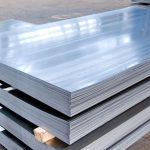
Hot rolled 5mm steel plate is produced by rolling steel at elevated temperatures, typically above the recrystallization temperature. This process enables efficient production, good availability, and lower cost compared with cold rolled products. Hot rolled plate is commonly used in construction, structural fabrication, machinery, base frames, vehicle parts, and general industrial applications where surface finish and tight dimensional control are not the highest priority. It normally has a mill scale surface unless pickled, blasted, or further treated.
The main advantages of hot rolled 5mm plate are cost efficiency, broad grade availability, weldability, and suitability for heavy fabrication. Its surface may be dark, oxidized, or slightly rough due to mill scale. For parts that will be painted, welded, or used in structural assemblies, this is usually acceptable after proper surface preparation. However, for precision parts, exposed decorative components, or applications requiring clean surface condition, buyers may request pickled and oiled material or consider cold rolled steel if available in the required thickness and grade.
Cold rolled 5mm steel plate is processed at or near room temperature after hot rolling, resulting in improved surface finish, tighter dimensional tolerance, and better flatness in many cases. It is often preferred for parts requiring better appearance, accurate dimensions, or cleaner processing. Cold rolled material may be used in machinery covers, cabinets, precision panels, furniture frames, electrical enclosures, automotive components, and formed parts where surface quality affects the final product.
At 5mm thickness, cold rolled availability may be more limited than thinner gauges, depending on supplier and market. It can also be more expensive than hot rolled plate. The correct choice depends on the final application. If the part will be welded into a heavy frame and painted after blasting, hot rolled steel may be the practical option. If the part requires close tolerance, smooth surface, or high-quality forming, cold rolled or pickled and oiled steel may offer better value despite a higher initial price.
Pickled and oiled steel is often a useful option when buyers need cleaner surface quality than standard hot rolled 5mm steel plate but do not require the full surface characteristics of cold rolled material. Pickling removes mill scale through acid treatment, and oiling helps protect the surface against short-term corrosion during storage and transportation. This makes the plate easier to laser cut, weld, paint, and process in automated fabrication lines.
For manufacturers producing visible parts, painted panels, machinery shells, or components requiring consistent cutting quality, pickled and oiled 5mm plate can reduce surface preparation time. It may also improve coating adhesion compared with untreated mill scale surfaces, provided that the oil is properly cleaned before painting. Buyers should specify surface condition clearly because “hot rolled plate” may otherwise be supplied with standard mill scale.
Thickness tolerance is one of the most important quality parameters for a 5mm steel plate. A nominal 5mm plate may not measure exactly 5.00mm across the entire surface. Rolling standards usually permit positive and negative deviations depending on thickness range, width, grade, and applicable standard. In some commercial practices, plates are supplied with positive tolerance, which increases actual weight. In precision fabrication, variation in thickness can affect bending angle, fit-up, welding gap, machining allowance, and final assembly accuracy.
For ordinary fabrication, standard mill tolerance may be acceptable. For laser cutting, robotic welding, press brake bending, or modular assembly, tighter tolerance may be required. Buyers should define the applicable tolerance standard, inspection frequency, measuring method, and acceptance criteria. For high-volume production, it is useful to request sample approval before mass delivery. A small deviation in thickness can become a major issue when thousands of parts are cut, bent, and assembled in automated production.
Flatness is especially important for 5mm steel plate because medium-thin plate can warp during rolling, cutting, welding, or thermal processing. Poor flatness increases cutting problems, reduces welding accuracy, and creates difficulty in assembly. For CNC plasma or laser cutting, uneven plate may cause inconsistent focal distance, poor edge quality, or collision risk. For structural fabrication, poor flatness may lead to fit-up gaps and excessive correction work.
Surface condition should also be inspected carefully. Common surface issues include mill scale, rust, scratches, laminations, dents, pitting, edge cracks, and oil contamination. For general industrial fabrication, minor surface marks may be acceptable if they do not affect function. For painted or exposed parts, surface quality must be stricter. Buyers should specify whether the plate needs to be hot rolled black, pickled and oiled, shot blasted, primed, galvanized, or supplied with protective film. Clear specification reduces rework and improves production consistency.
A reliable 5mm steel plate supply should be supported by appropriate documentation. The mill test certificate usually includes heat number, steel grade, standard, chemical composition, mechanical properties, dimensions, production route, and inspection results. For structural or export projects, documentation may be required for compliance with design codes, customer audits, and traceability systems. Without proper documentation, it becomes difficult to verify whether the delivered plate matches the requested grade.
Industrial buyers should align documentation requirements before ordering. For standard commercial fabrication, a basic mill certificate may be enough. For pressure-related, marine, structural, railway, or export applications, stricter certification and third-party inspection may be required. Heat number traceability is especially important when plates are cut into smaller parts because the identity of the original material can be lost if marking is not controlled. Good traceability reduces risk and supports quality assurance throughout the fabrication chain.
A 5mm steel plate is widely used in construction-related fabrication where moderate strength and manageable weight are required. Common applications include gusset plates, stiffeners, base covers, connection parts, wall brackets, access panels, handrail components, light-duty platforms, embedded plates, support frames, and architectural steelwork. While 5mm plate is not normally chosen for major load-bearing members in heavy structures, it is highly useful for secondary steel components that contribute to stability, protection, or assembly.
In construction procurement, grade selection should follow engineering design. For general brackets and non-critical components, mild steel grades may be sufficient. For welded structural parts subject to higher loads, higher-strength grades or specific structural grades may be required. Surface protection is also essential. Outdoor construction components made from 5mm plate often require galvanizing, painting, powder coating, or other anti-corrosion systems. The plate must be designed with drainage, edge protection, and proper coating access to avoid premature corrosion.
Machinery manufacturers frequently use 5mm steel plate for equipment frames, mounting plates, protective guards, machine covers, conveyor parts, motor bases, side panels, brackets, and fabricated housings. The thickness is strong enough to resist vibration and handling damage while remaining practical for cutting and forming. It is also suitable for welded assemblies where a thinner sheet may distort too easily during welding. For equipment builders, repeatability and flatness are often as important as nominal strength.
When used in machinery, 5mm plate should be selected based on processing route. Laser-cut parts require good flatness and consistent thickness. Bent parts require suitable ductility and minimum bend radius. Welded frames require controlled carbon equivalent and good fit-up. Painted equipment requires clean surface preparation. For moving machinery, weight reduction may also be a design priority. In these cases, a higher-strength 5mm plate may replace a thicker mild steel plate if engineering calculations support the substitution.
A 5mm steel plate is often found in trailers, truck bodies, container components, agricultural transport equipment, chassis accessories, ramps, guards, toolboxes, and reinforcement parts. In transport equipment, every kilogram matters because excess steel weight reduces payload efficiency and increases fuel or energy consumption. A 5mm plate can provide useful rigidity without the mass penalty of thicker plate, especially when supported by formed profiles or welded frames.
For trailers and vehicle-related components, high-strength steel may be preferred to improve load capacity while controlling weight. However, forming and welding procedures must be properly managed. Plate parts may be exposed to water, mud, salt spray, stone impact, and vibration. This means corrosion protection and fatigue resistance are important. Galvanized steel, painted steel, or high-quality coating systems may be required depending on operating conditions. Designers should also avoid sharp corners, water traps, and weld details that increase fatigue risk.
In marine-related fabrication, a 5mm steel plate may be used for non-primary structural panels, covers, cabinets, small platforms, ducting, walkways, equipment bases, repair patches, and auxiliary components. Marine environments are aggressive because saltwater accelerates corrosion, especially at cut edges, weld seams, and poorly drained areas. Therefore, material selection must consider grade, coating system, and inspection requirements. For class-related shipbuilding parts, marine-grade steel and approved documentation may be required.
Not every 5mm plate is acceptable for marine use. If the part is subject to classification society requirements, the buyer must specify the approved grade, certificate, testing, and traceability. For non-class auxiliary parts, a properly coated structural steel plate may be acceptable. Surface preparation is critical because coating failure in marine environments can lead to rapid corrosion. Welds and cut edges should be cleaned, primed, and coated according to the protection system specified by the project.
A 5mm steel plate is suitable for many fabricated tanks, bins, ducts, hoppers, chutes, and industrial enclosures where moderate stiffness and weldability are needed. It can be rolled or formed into curved sections depending on bending equipment, grade, and required radius. It is thick enough for many welded shell structures while still being easier to handle than heavier plate. For dry bulk handling, the plate may be used in covers, side walls, liners, or structural reinforcement.
For tanks and containers, the internal medium must be considered carefully. Ordinary carbon steel may be suitable for dry materials but not for corrosive liquids or chemical exposure. If the tank stores water, chemicals, food-related materials, or high-temperature substances, special grades, linings, coatings, or stainless steel may be necessary. For pressure vessels, 5mm structural steel plate should not be used unless it meets the applicable pressure vessel standard and design approval. The correct material must match both mechanical load and corrosion environment.
A 5mm steel plate can be cut using several industrial methods. Laser cutting is widely used when high precision, narrow kerf, clean edges, and complex shapes are required. It is suitable for machinery parts, brackets, panels, and high-volume production. Plasma cutting is often used for general fabrication and can be cost-effective for medium accuracy requirements. Oxy-fuel cutting is more common for thicker carbon steel and may not be the preferred method for 5mm plate due to heat input and edge quality considerations.
Cutting quality depends on surface condition, flatness, steel grade, machine settings, and operator control. Mill scale on hot rolled plate can affect laser cutting consistency, while poor flatness can reduce cut accuracy. Heat-affected zones may need grinding or edge preparation before welding or coating. For parts with tight dimensional requirements, buyers should consider pickled and oiled plate or specify cut-to-size material from suppliers with suitable processing capability.
Bending is a common process for 5mm steel plate, especially in brackets, frames, covers, cabinets, equipment guards, and transport components. The required bending force is significantly higher than thinner sheet, so press brake capacity and tooling must be checked. The minimum bend radius depends on steel grade, tensile strength, elongation, grain direction, plate quality, and bending angle. Mild steel usually bends more easily than high-strength steel, while abrasion-resistant steel may require larger radii and special procedures.
Before mass production, fabricators should perform bending trials to confirm springback, cracking risk, and final dimensions. Bending across the rolling direction can produce different results compared with bending parallel to it. Surface defects or edge notches can initiate cracks during forming. For critical parts, laser-cut edges may need deburring or grinding before bending. Good material selection and process control help reduce scrap, rework, and production delays.
Welding a 5mm steel plate is generally straightforward for low-carbon structural grades, but good practice is still required. Common welding methods include MIG/MAG, TIG, stick welding, and submerged arc welding for specific applications. The correct filler metal, joint preparation, heat input, travel speed, and interpass temperature depend on grade and design. Excessive heat input can cause distortion, especially with 5mm thickness. Poor fit-up can lead to lack of fusion, burn-through, or excessive weld reinforcement.
For standard mild steel, preheating is often not required in normal workshop conditions, but this depends on carbon equivalent, joint restraint, ambient temperature, and thickness combination. For high-strength steel, welding procedures should be more carefully controlled to avoid hydrogen cracking and property degradation. After welding, plates may require grinding, straightening, inspection, and coating. If the final part is galvanized or painted, weld areas must be cleaned properly to ensure coating adhesion.
For general industrial projects, Stavian Industrial Metal can provide hot rolled 5mm steel plate in common structural grades suitable for cutting, welding, forming, and fabrication. This product type is appropriate for machinery parts, construction accessories, frames, supports, brackets, guards, panels, agricultural equipment, and general steel structures. Hot rolled plate is typically the most economical choice when surface appearance is less critical or when the final part will be blasted, painted, or coated after fabrication.
Stavian Industrial Metal can support customers in selecting grades such as commercial mild steel, SS400, S235, S275, S355, Q235, Q355, ASTM A36, or equivalent options depending on the required standard and availability. For buyers that need stable fabrication results, Stavian Industrial Metal recommends confirming mechanical properties, weldability, tolerance, and certificate requirements before order placement. This helps ensure that the supplied 5mm plate is aligned with both design requirements and workshop processing conditions.
For applications requiring better surface quality, more consistent appearance, or improved cutting performance, Stavian Industrial Metal can advise on cold rolled or pickled and oiled 5mm steel plate options where available. These materials are suitable for machinery covers, cabinets, precision panels, equipment enclosures, visible parts, and fabrication lines that require cleaner surfaces than standard hot rolled black plate. Pickled and oiled steel is often a practical solution for reducing mill scale-related processing issues.
When customers need a smoother surface for painting or laser cutting, Stavian Industrial Metal can help evaluate whether cold rolled, pickled and oiled, or surface-treated hot rolled material is the best fit. The recommendation depends on part geometry, volume, coating system, tolerance requirement, and cost target. By matching material condition to the production process, buyers can reduce rework and improve final product quality.
For outdoor structures, agricultural equipment, infrastructure parts, and corrosion-exposed components, Stavian Industrial Metal can provide suitable galvanized steel plate solutions or advise on coating-ready 5mm carbon steel plate. Galvanized 5mm steel plate is useful when customers need longer service life in humid or outdoor environments. It can be used for covers, brackets, walkways, frames, barriers, support components, and equipment exposed to rain or industrial atmosphere.
Stavian Industrial Metal recommends that customers define whether galvanizing is required before or after fabrication. Post-fabrication hot-dip galvanizing may provide better edge and weld protection, while pre-galvanized material can be efficient for certain cut-and-form applications. The final decision should consider cut edges, weld seams, part size, appearance, and installation conditions. Proper design and coating selection are essential to achieving reliable corrosion performance.
A 5mm steel plate is a highly versatile industrial material that offers a practical balance of strength, rigidity, processability, and cost efficiency. With a theoretical weight of approximately 39.25 kg per square meter, it is suitable for many applications where thinner sheet steel lacks stiffness and heavier plate adds unnecessary weight. It is widely used in construction fabrication, machinery manufacturing, transport equipment, marine support parts, tanks, ducts, hoppers, guards, brackets, and industrial enclosures.
However, choosing the right 5mm steel plate requires more than selecting thickness. Buyers should evaluate grade, standard, yield strength, tensile strength, elongation, impact toughness, hardness, surface condition, dimensional tolerance, coating requirement, weldability, forming behavior, certificate, and logistics plan. Hot rolled plate is economical and widely available, cold rolled or pickled material improves surface and processing quality, while galvanized or coated plate provides better corrosion resistance for outdoor applications.
Stavian Industrial Metal supports industrial customers with suitable steel plate solutions for different fabrication and project requirements, including hot rolled steel plates, cold rolled steel plates, galvanized steel plates, and common structural steel grades. By combining technical material selection with reliable supply coordination, Stavian Industrial Metal helps customers control quality, reduce procurement risk, and improve efficiency across industrial steel projects involving 5mm steel plate.
Read more
Address
Website: https://stavianmetal.com
Email: info@stavianmetal.com