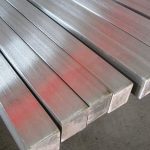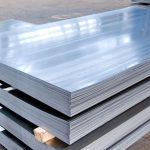
V4 angle steel, also known as V40 steel, V40 angle steel, or V40x40 angle steel, is an equal angle steel with two nominally 40 mm-wide legs positioned perpendicular to each other. Thanks to its compact dimensions, variety of thicknesses, and ease of cutting, drilling, welding, and bolting, V40 steel is used for mechanical frames, supports, secondary structures, canopies, railings, and many civil construction applications. When selecting V4 angle steel, it is necessary to specify the thickness, length, steel grade, standard, and surface condition.

V4 angle steel is a common commercial name for V-shaped steel with two 40 mm-wide legs. In technical documentation, the product is usually designated as V40x40xt, where “t” represents the leg thickness. For example, V40x40x3 has two 40 mm legs and a nominal thickness of 3 mm, while V40x40x4 still has 40×40 mm legs but with an increased thickness of 4 mm.
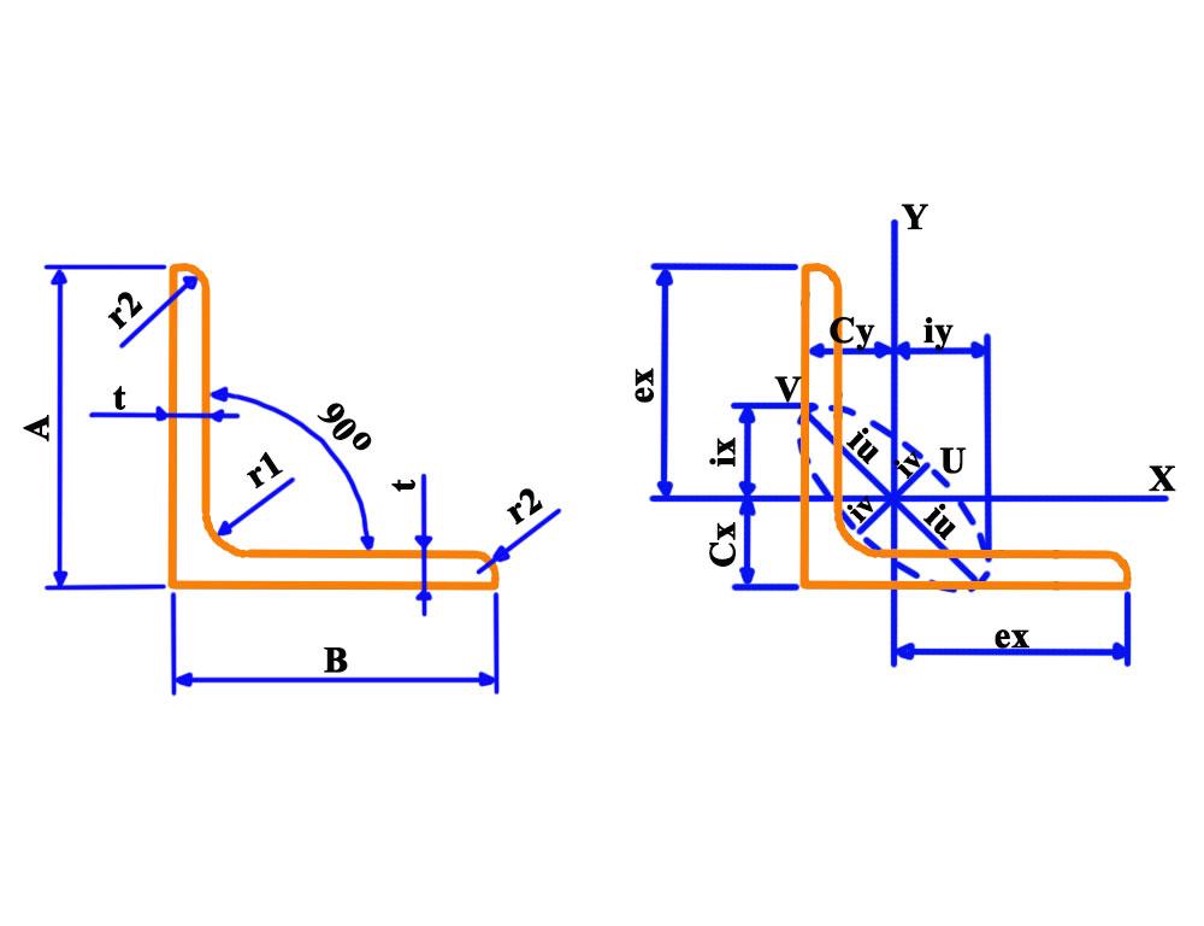
Structurally, the two legs of V40 angle steel intersect at a right angle, while the internal corner of hot-rolled products has a specified fillet radius. Therefore, the actual cross-section is not exactly the same as two flat steel plates joined together. This detail affects the cross-sectional area, nominal weight, and geometric properties of the steel bar. For accurate structural calculations, specifications from the applicable standard or the manufacturer’s catalogue should be used.
One point that can easily cause confusion is that the number “4” in the term V4 steel does not mean that the product is always 4 mm thick. V4 is commonly used to indicate a leg size of approximately 40 mm. The thickness must be specified separately after the dimensions of the two legs. Therefore, V40x40x2, V40x40x3, and V40x40x4 all belong to the V40 steel group but have different cross-sections and weights.
In BOQs, drawings, purchase orders, and delivery documents, Stavian Industrial Metal recommends using the full designation instead of simply writing “V4”. Designations such as V40x40x3x6000 mm or V40x40x4x6000 mm help all parties accurately identify the quantity of material, reduce specification confusion, and make weight verification more convenient.
V40 angle steel has two leg surfaces forming a right angle, making it convenient to connect with gusset plates, steel plates, steel box sections, or other structural components. The product can be cut, drilled, welded, punched, or bolted depending on the fabrication method. This is an important advantage when V40 is used for secondary frames, bracing members, supports, and components that require assembly in workshops or at construction sites.
The load-bearing capacity of V40x40 angle steel cannot be determined solely from its 40 mm leg dimensions. Leg thickness, steel grade, member length, connection position, load direction, and stability conditions all have an influence. Particularly with angle sections, eccentric loading may create more complex structural behavior than in symmetrical members. Therefore, load-bearing components must be selected based on structural design calculations.
Depending on environmental conditions and application requirements, V4 steel can be used in its hot-rolled surface condition or undergo additional treatment to improve protection of the base steel. Three common categories are black V4 steel, electro-galvanized V4 steel, and hot-dip galvanized V4 steel. Each option has different coating characteristics, fabrication properties, and suitable operating environments.
When ordering materials, it is not advisable to specify only “galvanized V40”. Electro-galvanizing and hot-dip galvanizing are two different methods that produce coatings with different properties. For projects with specific technical requirements, the treatment method, coating thickness, and acceptance standard should be clearly specified in the purchasing documentation.
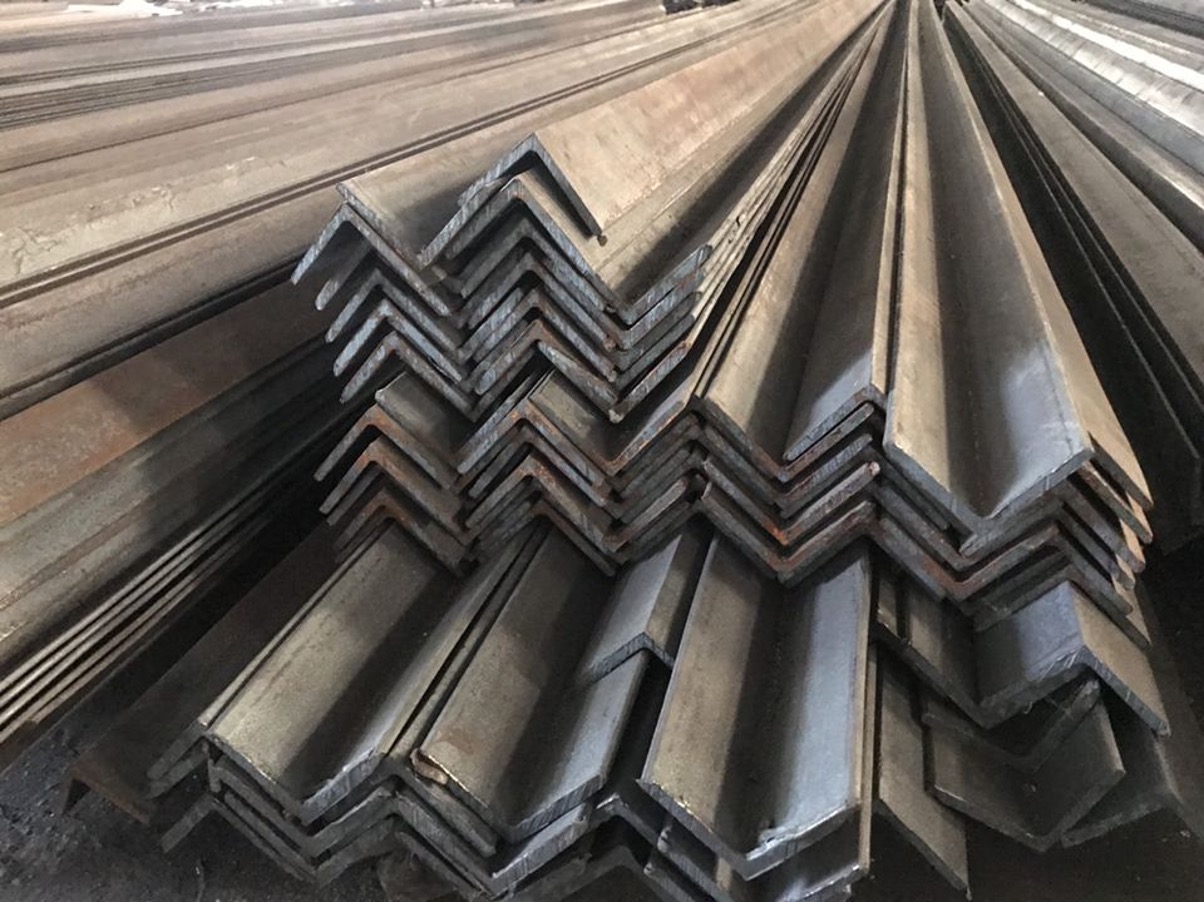
Black V4 steel is angle steel without a protective metallic coating. The surface of hot-rolled steel is typically dark, dark gray, or bluish-black and may retain a characteristic oxide scale formed during the rolling process. This type is suitable for many mechanical frames, indoor structures, and components that will subsequently be cleaned, primed, painted, or coated for corrosion protection after cutting, drilling, and welding have been completed.
Unprotected carbon steel can oxidize when exposed to moisture and outdoor environments. Therefore, black V40 steel should be properly stored, supported, and protected before fabrication. For outdoor applications, a suitable paint system or surface protection method should be selected according to the operating conditions of the project.
Electro-galvanized V4 steel, commonly referred to as zinc-plated V40, is coated with zinc through an electrochemical process. For V angle steel, the electro-galvanized coating is commonly used within a reference range of approximately 20–30 μm. The finished surface tends to be bright and relatively smooth, making it suitable for components requiring a combination of base-steel protection and surface finishing.
Corrosion resistance depends not only on the presence of a zinc coating but also on coating thickness, surface preparation quality, and operating environment. Therefore, electro-galvanizing should not be selected solely because of its bright appearance. Components intended for long-term outdoor use or highly corrosive environments should be assessed separately before the protection method is determined.
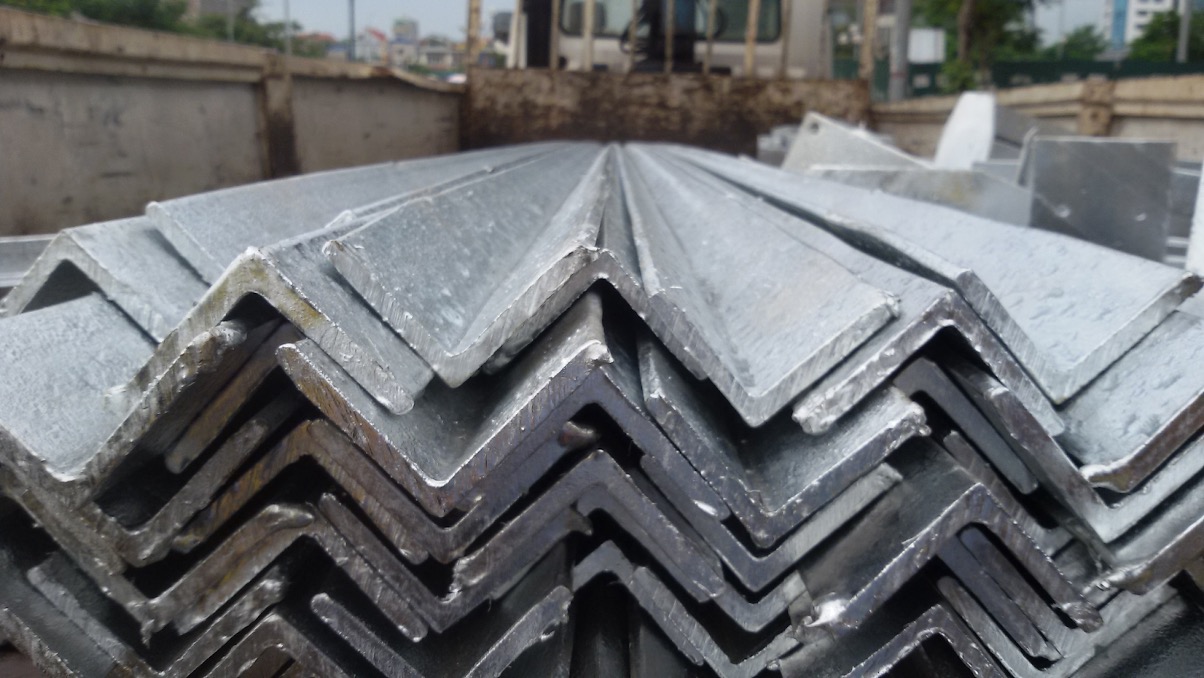
Galvanized V steel processed by hot-dip galvanizing is treated to form a zinc coating over the base steel. For V angle steel, the hot-dip galvanized coating may have a reference thickness of approximately 70–90 μm depending on technical requirements. This method is commonly considered for frames, supports, railings, and structures installed outdoors or in areas requiring a higher level of surface protection.
It should not be assumed that all hot-dip galvanized V4 steel has the same coating thickness or service life. The level of protection depends on the galvanizing standard, environment, surface preparation quality, and treatment of areas affected by cutting, drilling, or welding. Therefore, a fixed service life of 20–30 years cannot be applied to every project without fully identifying the operating conditions.

V40 or V4 steel describes only the shape and dimensions of the cross-section, not the material grade. A V40 angle can be manufactured from different steel grades depending on the standard, manufacturer, and project requirements. Therefore, two material batches both designated V40x40x4 may not necessarily be interchangeable if their steel grades and applicable standards differ.
In Stavian Industrial Metal’s steel section portfolio, material grades used for steel sections may include SS400, SS490, A36, A572, and other options depending on the product type and source of supply. Common standard systems include JIS, ASTM, KS, BS, and EN. When purchasing materials for a project, the final specifications must be checked against the BOQ, drawings, and technical documentation of the material batch.
SS400 V4 steel is V40 angle steel manufactured using the SS400 grade under the relevant standard system. SS400 is widely used for structural steel products and is included in Stavian Industrial Metal’s steel section portfolio. For documents specifying SS400, inspection should not stop at the V40 dimensions but should also verify material certificates, steel grade, and relevant mechanical properties.
SS400 steel cannot be accurately identified solely by its color or external appearance. Therefore, for structures requiring technical acceptance, material certificates and batch traceability are important. Specifications should simultaneously state V40x40xt, SS400 grade, applicable standard, and required length.
A36 is also a commonly used material grade in structural steel. If the design specifies V40 A36 steel, the purchase order should clearly state the geometric dimensions, thickness, and corresponding ASTM standard. Specifying only V40 A36 without the thickness is still insufficient to calculate the weight or accurately determine the amount of material.
SS400 and A36 may appear in similar application groups, but they should not automatically be considered completely interchangeable materials. Any change in steel grade should be checked against mechanical property requirements, chemical composition, design standards, and project documentation before use.
The basic specification of V4 steel is a 40×40 mm leg size. In commercial specification tables, V40 is available in various thicknesses ranging from approximately 2 mm to 5 mm. A length of 6 m is commonly available for this size group, while the specific length of each shipment must be confirmed according to the standard, source of supply, and purchase order requirements.
Common specifications include V40x40x2, V40x40x2.5, V40x40x3, V40x40x3.5, V40x40x4, and V40x40x5. As the thickness increases, the cross-sectional area and bar weight also increase. However, thickness should not be selected according to the assumption that “thicker is always better”; the appropriate specification should be based on structural calculations and application requirements.
| Parameter | Reference value |
|---|---|
| Leg dimensions | 40 x 40 mm |
| Common thicknesses | 2 mm; 2.5 mm; 3 mm; 3.5 mm; 4 mm; 5 mm |
| Common commercial length | 6 m; other lengths should be confirmed according to availability and purchase order requirements |
| Cross-section type | Equal angle steel |
| Surface condition | Black, electro-galvanized, or hot-dip galvanized |
The weight of V4 steel depends directly on thickness, cross-sectional geometry, and bar length. Two bars with the same 40×40 mm leg dimensions, such as V40x40x2 and V40x40x5, contain significantly different quantities of material. This is why thickness and the kg/m unit weight should be checked before preparing cost estimates or comparing prices per bar.
The table below presents a group of reference weights commonly used for 6 m-long V40 steel. These values should not be regarded as the only applicable weight schedule for all mills. For actual orders, the applicable standard, manufacturer’s weight table, and the agreed method of weight calculation in the contract should be checked.
| V4 steel specification | Thickness | Reference weight (kg/m) | Reference weight per 6 m bar |
|---|---|---|---|
| V40x40x2 | 2 mm | Approx. 1.25 kg/m | Approx. 7.5 kg/bar |
| V40x40x2.5 | 2.5 mm | Approx. 1.42 kg/m | Approx. 8.5 kg/bar |
| V40x40x3 | 3 mm | Approx. 1.67 kg/m in some commercial weight schedules | Approx. 10 kg/bar |
| V40x40x3.5 | 3.5 mm | Approx. 1.92 kg/m | Approx. 11.5 kg/bar |
| V40x40x4 | 4 mm | Approx. 2.08 kg/m in some commercial weight schedules | Approx. 12.5 kg/bar |
| V40x40x5 | 5 mm | Approx. 2.95 kg/m | Approx. 17.7 kg/bar |
For V40x40x3, some other specification tables may indicate a weight of approximately 1.85 kg/m; for V40x40x4, approximately 2.42 kg/m; and for V40x40x5, approximately 2.97 kg/m. Differences between tables may be related to cross-sectional geometry standards, fillet radii, manufacturing tolerances, and mill-specific data.
Therefore, for projects involving large total quantities, an arbitrary weight schedule should not be used for acceptance or payment. The appropriate approach is to specify in the contract whether the weight will be calculated according to a standard weight schedule, the manufacturer’s weight schedule, or actual weighing. The V steel specification and weight table can also be consulted to compare V40 with other size groups.
Once the weight per meter is known, the quickest and least confusing method is to multiply the kg/m value by the actual length. For example, if a V40 product has a unit weight of 1.67 kg/m, a 6 m-long bar has a converted weight of approximately 10.02 kg. The final value used for delivery and acceptance should still be based on the weight schedule applicable to the specific product.
If only a preliminary estimate is required and no reference table is available, an approximate formula based on the two legs of the section can be used:
W ≈ (2A - t) × t × L × 0.00785
This formula provides only an approximation because it does not fully account for the fillet radius of the rolled section. For more accurate technical requirements, the cross-sectional area should include the fillet area; the weight per meter can then be calculated using the formula P = 0.785 × a, where a is the cross-sectional area in cm².
With 40×40 mm dimensions and multiple thickness options, V4 steel can be adapted to a wide range of fabrication methods. The product is commonly used in mechanical engineering, civil construction, secondary structures, and support systems. Its two perpendicular legs provide convenient surfaces for installing gusset plates, bolt holes, or welds.
However, the V40 designation alone cannot be used to determine allowable loads. Each application should consider thickness, steel grade, span length, connection method, static or dynamic loads, and environmental conditions. For load-bearing structures, engineering design should always take priority over material-selection experience.
In civil construction, V40 angle steel can be used for canopy frames, fences, railings, secondary frames, staircase components, and structures with suitable loads. Its compact dimensions make the material convenient to transport, cut, and assemble into frames using welded or bolted connections.
For components installed outdoors, corrosion protection must also be considered. Black V40 can be cleaned and painted using a suitable protective coating system; when zinc protection is required, electro-galvanized or hot-dip galvanized V40 may be considered depending on the environment and technical requirements.
V40x40 steel can be used for light bracing, trims, secondary frames, or connection components in structural steel systems when supported by appropriate calculations. Its two leg surfaces make V-shaped bars convenient to connect with gusset plates and other components, particularly in structural systems requiring many angle-shaped details.
For compression members, attention should be paid to effective length and the risk of buckling. Under eccentric loading, angle sections may also experience complex bending and torsional behavior. Therefore, V40 should not be used for primary load-bearing members solely based on construction experience or because the specification is widely available on the market.
In mechanical engineering, V4 steel can be used to manufacture machine frames, equipment protection frames, workbenches, carts, support bases, and many auxiliary components. The ready-made angle section reduces some angle-forming operations during frame fabrication while providing convenient surfaces for arranging connections.
V40 can be cut, drilled, and welded according to requirements. For frames requiring high dimensional accuracy, assembly and welding sequences must be controlled to reduce thermal deformation. If the equipment operates in humid or outdoor environments or is exposed to corrosive agents, the painting or galvanizing method should be determined after considering the entire fabrication process.
V40x40 angle steel can be used in pipe support systems, suspended frames, MEP equipment supports, and certain supporting structures for technical systems when the loads are appropriate. The two perpendicular legs make it convenient to install cross members, gusset plates, or connections to walls and primary structures.
For outdoor systems or high-humidity areas, in addition to load-bearing capacity, attention should be paid to drainage at the angle of the section and protection of areas where the coating is damaged by cutting, drilling, or welding. These factors directly affect the ability of the protective layer to remain effective during operation.
V40 is also used in supports, shelving systems, greenhouse frames, plant-growing structures, fences, and many applications serving agricultural production. For these structures, the main advantages of angle steel are its compact cross-section, ease of assembly, and ability to be combined with steel plates, box sections, or other steel members.
It is important to distinguish hot-rolled V40 steel from multipurpose 40×40 perforated V angle steel. Perforated V steel is typically formed from steel strip, pre-punched with holes, and widely used for modular shelving, whereas hot-rolled V40 is a structural angle steel with a solid cross-section produced through rolling. The two products should not be considered equivalent in load-bearing design.
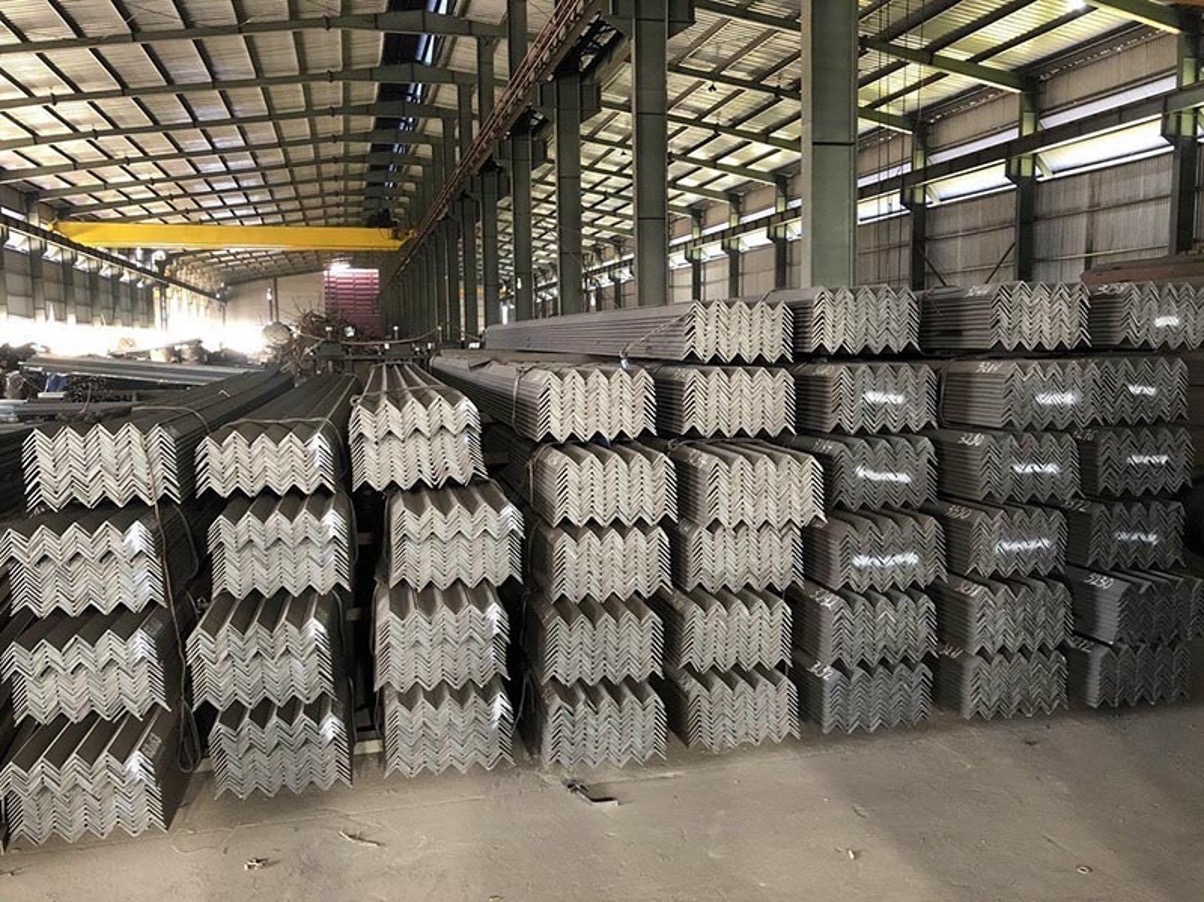
The price of V4 steel or V40x40 steel does not have a single fixed rate for every specification. V40x40x2, V40x40x3, and V40x40x5 have the same leg dimensions but different weights per bar, so their prices per bar also vary accordingly. In addition to thickness, surface condition is a significant factor creating price differences between black V40, electro-galvanized V40, and hot-dip galvanized V40.
For the V25–V100 steel group, the current reference price range is approximately VND 17,000–21,000/kg for black V steel, VND 21,000–27,000/kg for electro-galvanized V steel, and VND 25,000–29,000/kg for hot-dip galvanized V steel. Based on these unit-price ranges and the weight of V steel, a reference budget can be calculated for each 6 m-long V40 bar.
| Specification | Reference weight | Reference unit price | Estimated price per 6 m bar |
|---|---|---|---|
| V40x40x2 | Approx. 7.5 kg/bar | VND 17,000–21,000/kg | VND 127,500–157,500/bar |
| V40x40x2.5 | Approx. 8.5 kg/bar | VND 17,000–21,000/kg | VND 144,500–178,500/bar |
| V40x40x3 | Approx. 10.0 kg/bar | VND 17,000–21,000/kg | VND 170,000–210,000/bar |
| V40x40x3.5 | Approx. 11.5 kg/bar | VND 17,000–21,000/kg | VND 195,500–241,500/bar |
| V40x40x4 | Approx. 12.5 kg/bar | VND 17,000–21,000/kg | VND 212,500–262,500/bar |
| V40x40x5 | Approx. 17.7 kg/bar | VND 17,000–21,000/kg | VND 300,900–371,700/bar |
| Specification | Reference weight | Reference unit price | Estimated price per 6 m bar |
|---|---|---|---|
| V40x40x2 | Approx. 7.5 kg/bar | VND 21,000–27,000/kg | VND 157,500–202,500/bar |
| V40x40x2.5 | Approx. 8.5 kg/bar | VND 21,000–27,000/kg | VND 178,500–229,500/bar |
| V40x40x3 | Approx. 10.0 kg/bar | VND 21,000–27,000/kg | VND 210,000–270,000/bar |
| V40x40x3.5 | Approx. 11.5 kg/bar | VND 21,000–27,000/kg | VND 241,500–310,500/bar |
| V40x40x4 | Approx. 12.5 kg/bar | VND 21,000–27,000/kg | VND 262,500–337,500/bar |
| V40x40x5 | Approx. 17.7 kg/bar | VND 21,000–27,000/kg | VND 371,700–477,900/bar |
| Specification | Reference weight | Reference unit price | Estimated price per 6 m bar |
|---|---|---|---|
| V40x40x2 | Approx. 7.5 kg/bar | VND 25,000–29,000/kg | VND 187,500–217,500/bar |
| V40x40x2.5 | Approx. 8.5 kg/bar | VND 25,000–29,000/kg | VND 212,500–246,500/bar |
| V40x40x3 | Approx. 10.0 kg/bar | VND 25,000–29,000/kg | VND 250,000–290,000/bar |
| V40x40x3.5 | Approx. 11.5 kg/bar | VND 25,000–29,000/kg | VND 287,500–333,500/bar |
| V40x40x4 | Approx. 12.5 kg/bar | VND 25,000–29,000/kg | VND 312,500–362,500/bar |
| V40x40x5 | Approx. 17.7 kg/bar | VND 25,000–29,000/kg | VND 442,500–513,300/bar |
Note: The V4 steel price table above uses reference weights to convert the price range per kilogram into the estimated price of a 6 m bar. Some standards or manufacturers may use different V40 weight schedules, so actual weights and prices may vary. This price table is not a fixed commercial quotation from Stavian Industrial Metal and should primarily be used for preliminary budgeting purposes.
Stavian Industrial Metal supplies project steel for infrastructure, civil, and industrial projects. The portfolio includes construction steel, steel wire, structural steel, steel sections, and many other material groups. The steel section category includes L40–L150, C8–C16, I10–I15, as well as steel sections, pipes, box sections, and purlins suited to different project requirements.
For V4 steel requirements, the order should clearly specify V40x40 together with the thickness, length, material grade, standard, and surface requirements. Standardizing these specifications from the outset allows design, purchasing, logistics, and inspection teams to use the same set of parameters and minimizes differences between commercial names and technical specifications.
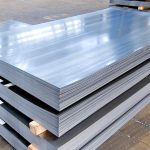
In addition to steel sections, Stavian Industrial Metal supplies hot-rolled steel in coil and plate form. The current portfolio includes steel coils with thicknesses from 3–16 mm, steel plates from 3–40 mm, and cutting services according to customer requirements. Material grades include SS400, Q345B, A36, Q235B, Q355B, A572, and other options depending on availability.
In a structural system using V40 steel, hot-rolled steel plates can be used for gusset plates, base plates, stiffeners, or connection components when suitable for the design. Compatibility of steel grades and standards between angle sections and related components should be considered from the design and material scheduling stages.
Stavian Industrial Metal also develops a portfolio of coated steel, including GI, GL, PPGI, and PPGL products in coil, slit coil, or sheet form. These are flat steel products with protective coatings that serve a wide range of construction and industrial manufacturing requirements.
It is important to distinguish coated steel coils and sheets from finished galvanized V4 steel. Galvanized V40 is angle steel that undergoes surface treatment after forming, whereas GI, GL, PPGI, and PPGL belong to the flat steel category with different product structures and applications. Clearly distinguishing these groups helps prevent errors when preparing material schedules.
V4 steel, or V40x40 steel, is equal angle steel with nominal dimensions of 40×40 mm and is widely used in mechanical frames, secondary structures, supports, canopies, railings, shelving systems, and many construction applications. Common thicknesses include 2 mm, 2.5 mm, 3 mm, 3.5 mm, 4 mm, and 5 mm, with each specification having a different weight and range of applications.
When selecting V4 steel, thickness, length, weight, steel grade, standard, surface treatment method, and operating conditions should all be considered. Material decisions should not be based solely on the V4 designation or the price per bar. Stavian Industrial Metal supplies steel sections, project steel, hot-rolled steel, coated steel, and a wide range of industrial metal material solutions, enabling businesses to develop coordinated material solutions according to the requirements of each project.
See more related articles
Address
Website: https://stavianmetal.com
Email: info@stavianmetal.com