V6 angle steel is a common market term for the group of V-shaped steel sections with approximately 60 mm-wide legs. In technical documents, quotations, or purchase orders, the product should be fully specified as V60x60 steel together with its thickness, for example V60x60x5 mm. This is a clearer designation that helps avoid confusion between the leg dimensions and the steel thickness.
Structurally, V60 steel section belongs to the angle steel category, with two perpendicular legs. For equal angle V steel, both legs have the same nominal dimension of 60 mm. Although the cross-section is simple, it provides convenient surfaces for welded or bolted connections. As a result, V steel is used in framing systems, trusses, bracing members, machinery supports, factories, and many auxiliary industrial structures.
In actual material selection, specifying only V6 steel is not sufficient. Buyers should simultaneously verify the leg width, thickness, bar length, weight, steel grade, manufacturing standard, surface condition, and documentation requirements. Stavian Industrial Metal distributes project steel for civil construction, infrastructure, industrial parks, and factories; its steel section portfolio includes L-section specifications and many other structural steel products.

Within the scope of this article, V6 steel refers to equal angle steel with nominal dimensions of 60×60 mm, commonly designated as V60x60 or L60x60. The letter V describes the shape of the cross-section when viewed transversely, while the number 60 indicates the nominal width of each leg. To identify the product accurately, the thickness must also be specified, for example V60x60x5.
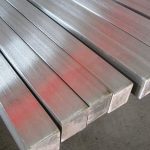
V steel belongs to the V-shaped steel section category and has two perpendicular legs. Compared with simply using steel plate and fabricating it into an angle, V steel is rolled directly into its section during production, making it convenient for use in frames, bracing members, or connection components. The actual structural performance of a member still depends on the steel grade, thickness, effective length, loading, and connection configuration.
An important point is that structural V6 steel should not be confused with perforated V angle used for shelving systems. Structural V steel is solid-section angle steel selected according to load-bearing requirements and technical standards. Perforated V angle, on the other hand, is punched with holes to facilitate the assembly of shelves or lightweight frames and has a different structure and intended use.
The designation V60x60x5 can be read as follows: the first leg is 60 mm wide, the second leg is 60 mm wide, and the nominal thickness is 5 mm. When both legs are equal, the product is classified as equal angle steel. This complete designation is particularly important when requesting quotations because changing the thickness of the same V60 section significantly changes its cross-sectional area, weight, and structural performance.
The commercial length of V-shaped steel sections may vary depending on the specification and source of supply. Stavian Industrial Metal’s technical portfolio shows V-shaped steel sections with lengths ranging from 6,000 – 12,000 mm. In reference weight tables, V60x60x5 is commonly calculated based on a 6 m bar. When ordering, the actual length should be confirmed in the quotation and documentation for the material batch.
| Item | Information |
|---|---|
| Common names | V6 steel, V60 steel, V60x60 steel, L60x60 angle steel |
| Shape | Two perpendicular legs, equal legs for V60x60 |
| Nominal leg dimensions | 60 x 60 mm |
| Reference length | 6 m or 12 m depending on the source of supply, specification, and purchase order |
| Specification published by Stavian Industrial Metal in its weight table | V60 x 60 x 5 mm |
| Weight of V60 x 60 x 5, 6 m bar | Approx. 27.42 kg/bar |
For other thicknesses of V60 steel, the weight of V60x60x5 should not be applied automatically. Weight varies according to thickness and cross-sectional geometry. In addition to the basic geometric section, actual weight is also affected by the fillet radius and manufacturing tolerances. Therefore, the manufacturer’s weight schedule or shipment documentation should always be prioritized during acceptance.
Buyers can also refer to the V steel specifications and weight table to compare V60 with sizes such as V30, V40, V50, V75, V100, and other angle steel specifications.
For the specification published by Stavian Industrial Metal, a 6 m-long V60x60x5 steel bar has a reference weight of approximately 27.42 kg/bar. This is useful information for material cost estimation, calculating total transportation loads, determining the number of bars from a total weight, and comparing quotations among suppliers.
It is necessary to distinguish between theoretical weight and actual delivered weight. Weight schedules provide a quick calculation basis, but rolled steel products always have certain dimensional and weight tolerances according to the applicable standard. For projects requiring strict material management, purchasing teams should compare specification tables with quality certificates, packing lists, weighing records, or delivery documents for each batch.
For equal angle steel, a simple geometric formula can be used to estimate the weight before an official weight schedule is available:
Theoretical weight (kg/m) ≈ (2B – t) × t × 0.00785
Where B is the width of one leg in mm, t is the thickness in mm, and 0.00785 is the conversion factor based on the nominal steel density of approximately 7.85 g/cm³. For example, for V60x60x5, the simple geometric formula gives a result of approximately 4.51 kg/m. However, Stavian Industrial Metal’s weight table records V60x60x5 at approximately 27.42 kg for a 6 m bar, equivalent to approximately 4.57 kg/m.
A small difference between the geometric calculation and the weight schedule may occur because the actual cross-section is not formed by two perfectly intersecting rectangles. Angle steel has a fillet radius at the junction between the two legs and may have other geometric characteristics depending on the rolling standard. Therefore, the formula above is suitable for preliminary estimation, while weight used for ordering and acceptance should be based on the technical data of the specific product.
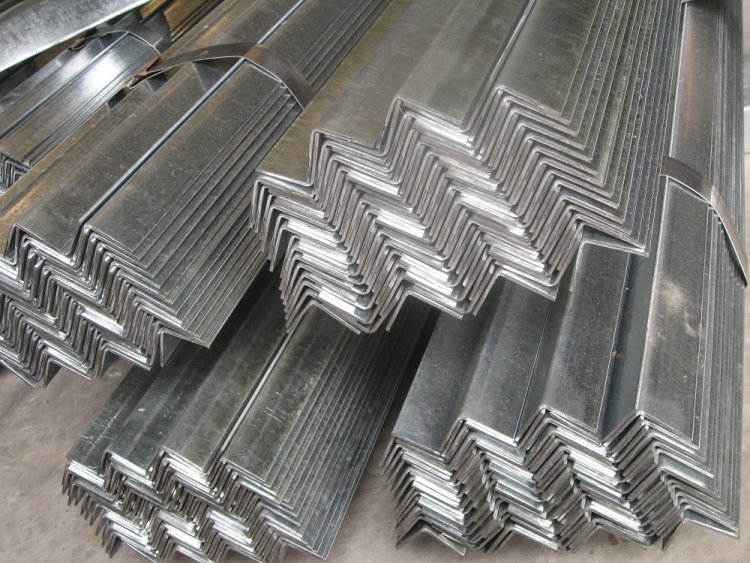
Not all V6 steel products have the same mechanical properties. The 60×60 dimensions only describe the geometry of the cross-section, while load-bearing performance is also directly related to the steel grade and manufacturing standard. For V-shaped steel sections, Stavian Industrial Metal’s technical portfolio includes grades such as A36, SS400, Q235B, S235JR, GR.A, and GR.B.
Standards applicable to V steel may include TCVN, EN 10025-2, KS D3503, GB/T 700, ASTM, JIS G3101, and A131, depending on the product, origin, and project requirements. Because each standard system has its own methods for specifying mechanical properties, chemical composition, tolerances, and testing, steel grades should not be substituted for one another solely because they have similar yield strength values.
| Steel grade | Published yield strength | Published tensile strength |
|---|---|---|
| A36 | ≥ 245 MPa | 400 – 550 MPa |
| SS400 | ≥ 245 MPa | 400 – 510 MPa |
| Q235B | ≥ 235 MPa | 370 – 500 MPa |
| S235JR | ≥ 235 MPa | 360 – 510 MPa |
| GR.A | ≥ 235 MPa | 400 – 520 MPa |
| GR.B | ≥ 235 MPa | 400 – 520 MPa |
The values above help illustrate the differences among material groups but do not replace design requirements. When V60 steel is used as a load-bearing member, engineers should specify the steel grade and standard in the drawings or technical documents and then verify the certificates of the delivered material.
For the same V60x60 specification, different surface treatment methods may be selected depending on the operating environment. V steel without a zinc coating is commonly referred to as black V steel. When improved protection of the base steel against oxidation is required, the product may be electro-galvanized or hot-dip galvanized.
Surface treatment should be selected independently from the cross-section design. The zinc coating protects the surface but is not a basis for increasing or reducing the load-bearing section. The correct dimensions and steel grade must first be selected for the load; the appropriate corrosion-protection solution can then be determined according to the operating environment.
Black V6 steel is the common name for angle steel without a protective zinc coating. The product is suitable for many mechanical and construction structures, particularly when the component will subsequently be painted or used in an environment where a dedicated surface-protection system has been designed.
One advantage of black V steel is that it is convenient for cutting, drilling, welding, and fabrication before surface finishing. However, base steel exposed to moisture and oxygen may corrode, so painting or anti-rust treatment should be considered according to the design service life and operating environment.
Galvanized V steel produced by electro-galvanizing is coated with zinc through an electrolytic process. For V-shaped steel sections, Stavian Industrial Metal publishes a reference electro-galvanized coating thickness of approximately 20 – 30 μm. The resulting surface is generally relatively bright and smooth.
Electro-galvanizing is suitable for applications requiring a protective coating while also emphasizing surface finish. However, long-term protection still depends on coating thickness, substrate preparation quality, operating environment, and acceptance standards.
With the hot-dip process, a surface-prepared steel component is immersed in molten zinc to form a protective coating. Stavian Industrial Metal indicates a reference coating thickness of approximately 70 – 90 μm for the hot-dip galvanized V steel group.
Because of its thicker coating, hot-dip galvanizing is commonly considered for outdoor structures and applications requiring a higher level of corrosion protection. The 70 – 90 μm figure is only reference data for the published product group; the coating thickness for an actual order must be determined according to the applicable standard, base material thickness, and specific technical requirements.
| Criteria | Black V steel | Electro-galvanized V steel | Hot-dip galvanized V steel |
|---|---|---|---|
| Surface | No protective zinc coating | Zinc coating applied by electroplating | Zinc coating applied by hot-dip galvanizing |
| Reference coating thickness | Not applicable | Approx. 20 – 30 μm | Approx. 70 – 90 μm |
| Recommended use | Structures with a dedicated painting or protection system | Applications requiring a finished surface and protection against oxidation | Structures requiring higher corrosion protection, especially outdoors |
V60 steel is a medium-size angle section and is suitable for many connection configurations. However, V60 should not automatically be assumed to be suitable for every structure. A long bracing member, support column, vibration-bearing machine support, and railing component may have completely different loading conditions even if all of them use V-shaped steel sections.
Therefore, V60x60 should be regarded as a geometric specification rather than a fixed load-bearing capacity. Its application should be based on structural calculations, effective length, loading, connection method, corrosive environment, and the safety factors of the project.
In factories and steel structures, angle steel can be used for bracing systems, secondary frames, roof trusses, connection components, and support systems. The two perpendicular legs provide convenient contact surfaces for connections to gusset plates or other components by welding or bolting.
The Stavian Industrial Metal project steel portfolio includes L40 – L150 steel sections, C8 – C16 steel, I10 – I15 steel, as well as steel sections, pipes, box sections, and black or galvanized purlins for industrial parks and steel-structure factories.
V6 steel can be used to form secondary frames, supports, or reinforcement members in mechanical fabrication. The angle section makes it easy to arrange bolted mounting surfaces, gusset plates, and welds at various positions. This is a significant advantage when designing framing systems with relatively complex geometry while still using standardized materials.
For equipment supports, dynamic loads, vibration, deflection, and connection conditions should be checked in addition to static loads. When machinery generates cyclic loads, the V60 thickness should not be selected solely based on experience but should be determined through appropriate calculations.
Angle steel is widely used in truss systems because of its flexible connection capability. Depending on the design, V60 can function independently or be combined into members with larger cross-sections. Some structures use two symmetrically paired angle sections to improve stability or facilitate connection to gusset plates.
For compression members, buckling must be calculated based on member length and connection conditions. Therefore, even if the material has a high yield strength, an excessively long V60 member may still fail to meet requirements if its slenderness exceeds the allowable limit.
Thanks to its ease of cutting, welding, and assembly, V steel can be used for railings, fences, canopies, and many auxiliary civil or industrial applications. For components regularly exposed to weather, selecting galvanized steel or developing a suitable protective coating system helps reduce the effects of oxidation.
In outdoor environments, particularly in areas with high humidity, corrosion protection requirements should be considered from the design stage. If cutting, drilling, or welding is performed after galvanizing, areas where the coating has been damaged must also be treated according to technical requirements.
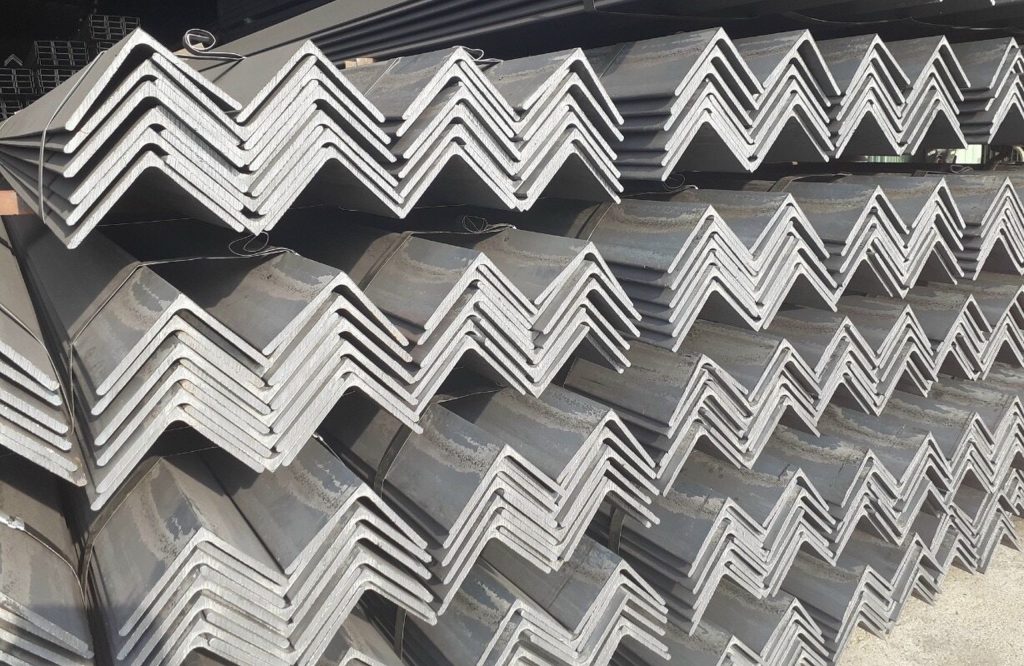
Similar naming sometimes causes V6 steel to be confused with perforated V angle used for shelving systems. These two products operate on different principles. Structural V60 is solid-section angle steel selected according to the material grade, thickness, and load-bearing requirements of the project.
Perforated V angle has holes punched along its length to facilitate bolting, adjustment of horizontal-member positions, and disassembly of shelving systems. This product group is suitable for storage racks, filing shelves, or lightweight modular frames. The designations V60 or V6 should not be used as a basis for directly substituting one material type for the other.
| Criteria | Structural V6 steel | Perforated V angle |
|---|---|---|
| Structure | Solid-section angle steel | Angle steel with holes punched along its length |
| Main selection parameters | Leg dimensions, thickness, steel grade, standard | Dimensions, thickness, hole spacing, and assembly capability |
| Typical applications | Structures, frames, bracing, supports, mechanical engineering | Shelving and lightweight modular framing systems |
Stavian Industrial Metal operates in the industrial metal materials trading sector with a portfolio including steel, aluminum, copper, and zinc. Within the steel product category, Stavian Industrial Metal develops multiple material lines for construction, mechanical engineering, industrial manufacturing, infrastructure, and the maritime industry.
For customers looking for V6 steel and other steel sections, the project steel category is directly relevant. In addition, Stavian Industrial Metal also supplies hot-rolled steel, cold-rolled steel, coated steel, steel billets, and shipbuilding steel to meet different raw-material and finished-material requirements.
Project steel from Stavian Industrial Metal includes D6 – D32 construction steel, D6 – D12 wire steel, structural steel plates, steel sections, pre-painted steel sheets, and many specialized steel products. The steel section category includes L40 – L150 steel, C8 – C16 steel, I10 – I15 steel, as well as pipes, box sections, and black or galvanized purlins.
Products in this category are intended for civil construction, transportation infrastructure, ports, industrial parks, steel-structure factories, and industrial manufacturing sectors. When specifying V60 requirements, businesses should provide complete information on dimensions, steel grade, standard, quantity, and surface requirements so that the appropriate source of supply can be identified more accurately.
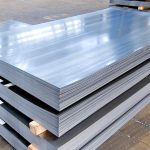
Hot-rolled steel supplied by Stavian Industrial Metal includes coil and plate products. The published portfolio includes steel coils with thicknesses of 3 – 16 mm, steel plates from 3 – 40 mm, and cutting services according to customer requirements.
Published steel grades include SS400, Q345B, A36, Q235B, Q355B, A572, 1004, and products manufactured under standards such as JIS, ASTM, SAE, TIS, EN, MS, and GB. This is an important material group for structures, mechanical engineering, and many metal fabrication activities.
Cold-rolled steel is supplied by Stavian Industrial Metal in coil, sheet, and slit-strip forms according to requirements. The published coil thickness range is 0.2 – 6 mm, with standards including JIS, ASTM, EN, JFS, AS, and related standard systems.
Cold-rolled steel is suitable for applications emphasizing fabrication capability and surface accuracy. This product line differs in form and manufacturing process from roll-formed V60 steel, but both commonly appear within the same raw-material supply chain of mechanical engineering and industrial manufacturing businesses.
Coated steel from Stavian Industrial Metal includes GI galvanized steel, GL aluminum-zinc coated steel, and PPGI/PPGL pre-painted steel. Products are supplied in coil, slit-coil, or sheet form with different coatings and thickness ranges depending on the material group.
This coated coil product group should be distinguished from galvanized V steel. Although both use metallic coatings to protect the base steel, their product forms, manufacturing technologies, and applications are different.
Steel billets are semi-finished products in the steel production chain. Stavian Industrial Metal supplies sections of 120×120 mm, 130×130 mm, and 150×150 mm, with lengths of 6 m or 12 m; published grades include CT5, 3SP, 4SP, 5SP, and SD295(A).
Steel billets are entirely different from finished V-shaped steel sections but play an important role in the metallurgical and rolled-steel production chain. Supplying multiple product groups enables Stavian Industrial Metal to serve a diverse range of raw-material and industrial-material requirements.
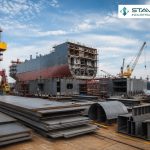
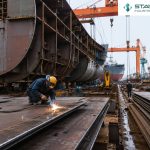
Shipbuilding steel from Stavian Industrial Metal includes steel plates, steel sections, and materials for the maritime industry. This material group has stringent requirements for mechanical properties, toughness, weldability, and classification certification depending on the application.
In ship and marine structures, steel sections also play an important role alongside steel plates. However, materials used for shipbuilding must meet the requirements of the design documentation and the relevant classification society and should not be directly substituted with conventional structural steel without technical evaluation.
See more related content
V6 steel, when understood as the V60x60 steel specification, is an angle steel group with two nominal 60 mm-wide legs and is used in many structural applications, bracing systems, secondary frames, machinery supports, and mechanical fabrication. To accurately identify the material, the V6 designation should be supplemented with thickness, length, steel grade, standard, and surface-treatment requirements.
For a 6 m-long V60x60x5 specification, the reference weight published by Stavian Industrial Metal is approximately 27.42 kg/bar. Steel grades used in the V-shaped steel section category may include A36, SS400, Q235B, S235JR, GR.A, and GR.B, together with different standard systems depending on technical requirements.
For each project, the selection of V60 steel should be based on load calculations and design documentation rather than solely on leg dimensions. At the same time, the operating environment should be considered when selecting between black steel, electro-galvanized steel, and hot-dip galvanized steel. With an industrial steel portfolio including project steel, hot-rolled steel, cold-rolled steel, coated steel, steel billets, and shipbuilding steel, Stavian Industrial Metal provides a wide range of material options for construction, mechanical engineering, infrastructure, and industrial projects.
Address
Website: https://stavianmetal.com
Email: info@stavianmetal.com