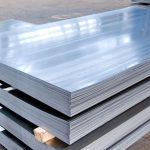
What Is A36 Steel Plate?
A36 steel plate is a structural carbon steel product classified under the ASTM A36 steel grade. It is commonly used in construction projects and industrial manufacturing. This type of steel is typically produced through the hot rolling process, in which steel slabs are heated to an appropriate temperature and passed through rolling mills to achieve the required thickness and dimensions.
ASTM A36 specifies the requirements for structural carbon steel, including chemical composition, yield strength, tensile strength, and elongation. In addition to steel plates, the standard also covers certain structural shapes and bars. For steel plates, the key advantages include the ability to meet common structural strength requirements and the ease of cutting, drilling, welding, and fabricating steel components.
In practice, A36 steel is used in a wide range of applications, including:
- Industrial construction: Fabrication of connection plates, built-up beams, factory frames, warehouses, and pre-engineered steel buildings.
- Mechanical engineering: Manufacturing of machine frames, equipment bases, structural components, and mechanical parts.
- Shipbuilding: Fabrication of auxiliary structures and components where conventional structural steel is permitted by the design requirements.
- Automotive industry: Production of suitable support frames, brackets, and structural components.
- Storage tank fabrication: Manufacturing of tank components, storage structures, and auxiliary supports where the design specifications permit.
With its versatile applications, A36 steel plate is a practical option for businesses seeking structural materials with consistent mechanical properties and good fabrication characteristics. However, A36 steel should be distinguished from specialized steel grades used for pressure vessels, certified shipbuilding structures, or equipment operating under demanding conditions. Such applications may require different material standards and inspection procedures.

How to Identify ASTM A36 Steel Plate
ASTM A36 steel plates typically have a flat, rectangular shape and are available in various thicknesses, widths, and lengths. Hot rolled products usually have a dark gray or bluish-black surface, sometimes covered with an oxide layer formed during high-temperature processing. However, surface appearance alone is insufficient to identify the steel grade because many hot rolled carbon steel products have similar characteristics.
To determine whether a steel plate complies with ASTM A36, it is necessary to check its product markings, technical documentation, and corresponding material certificates. In industrial procurement, a material test certificate or manufacturer’s quality certificate provides essential information for verifying chemical composition, mechanical properties, heat number, and actual product dimensions.
Chemical Composition of A36 Steel Plate
The chemical composition of A36 steel is controlled to achieve a balance between strength, ductility, and weldability. Iron (Fe) is the primary constituent, combined with carbon and other elements such as manganese, silicon, phosphorus, and sulfur. The proportion of each element directly influences the material’s properties during fabrication and throughout its service life.
The chemical composition requirements of ASTM A36 may vary depending on product form and thickness. Therefore, a single set of chemical limits should not be applied to every A36 steel plate. The following table summarizes representative chemical composition requirements for steel plates to help customers understand the material specifications.
ASTM A36 Steel Chemical Composition Chart
| Element | Symbol | Reference Composition Limits | Role in the Material |
| Carbon | C | Maximum 0.25% for plates up to 40 mm thick; limits vary for thicker plates | Influences strength, hardness, and weldability |
| Silicon | Si | Maximum 0.40% for thickness categories where this limit applies | Contributes to deoxidation and influences mechanical properties |
| Manganese | Mn | Typically 0.80–1.20% for certain plate thickness categories above 20 mm | Helps improve strength and metallurgical properties |
| Phosphorus | P | Maximum 0.040% | Must be controlled to minimize adverse effects on ductility and toughness |
| Sulfur | S | Maximum 0.050% | Must be controlled to limit adverse effects on machinability and ductility |
| Copper | Cu | Minimum 0.20% when copper content is specifically required in the order | May contribute to improved atmospheric corrosion resistance |
Note: Chemical composition limits should be verified against the applicable edition of ASTM A36/A36M, product thickness, and the material certificate for each batch. In particular, copper is not subject to a universal maximum limit of 0.20% for all A36 steel products.
Mechanical and Physical Properties of A36 Steel
The mechanical properties of A36 steel plate are essential when selecting materials for load-bearing structural components. The most important parameters include yield strength, tensile strength, and elongation. These properties help engineers evaluate the load-bearing capacity and deformation behavior of the material under external forces.
In addition to mechanical properties, physical parameters such as density, Young’s modulus, and Poisson’s ratio are used in engineering calculations. It is important to distinguish mandatory ASTM A36 requirements from typical reference values commonly used for structural carbon steel calculations.
Mechanical Properties of A36 Steel Plate
| Property | Value | Unit |
| Tensile strength | 400–550 | MPa |
| Minimum yield strength, thickness up to 200 mm | 250 | MPa |
| Minimum yield strength, thickness above 200 mm | 220 | MPa |
| Minimum elongation over a 200 mm gauge length | 20 | % |
| Minimum elongation over a 50 mm gauge length | 23 | % |
| Reference Brinell hardness | 119–162 | HB |
Note: Yield strength and elongation requirements are subject to specific conditions depending on product form, thickness, and test specimen dimensions. The Brinell hardness range above is provided for reference only and is not a universal mandatory acceptance criterion under ASTM A36.
Yield strength represents the stress level at which a material begins to undergo significant plastic deformation. For most commonly used A36 steel plate thicknesses, the minimum yield strength of 250 MPa is an important structural design parameter. Meanwhile, the tensile strength range of 400–550 MPa indicates the material’s ability to withstand tensile stress before fracture.
Elongation reflects the ability of steel to undergo plastic deformation before failure. This property is important when evaluating formability and the behavior of structural components under loading. However, plate thickness, dimensions, and structural configurations must still be determined through engineering calculations rather than relying on a single mechanical property.
Physical Properties of A36 Steel Plate
| Parameter | Reference Value | Unit |
| Density | 7.85 | g/cm³ |
| Converted density | 7,850 | kg/m³ |
| Young’s modulus | Approximately 200 | GPa |
| Shear modulus | Approximately 77–80 | GPa |
| Poisson’s ratio | Approximately 0.26–0.30 | Dimensionless |
| Reference melting temperature range | Approximately 1,425–1,538 | °C |
The values above represent typical properties of structural carbon steel and are intended for reference and preliminary calculations. For engineering design, the selected values must comply with the applicable design standards and actual operating conditions.
Among these parameters, a density of 7,850 kg/m³ is commonly used to calculate A36 steel plate weight. This value helps businesses determine material quantities, transportation loads, and lifting equipment requirements before fabrication.
ASTM A36 Standard and Commonly Compared Steel Grades
ASTM A36/A36M is an American standard for structural carbon steel. It establishes the technical requirements that materials must satisfy for appropriate structural applications. For each batch, material certificates should be checked to verify chemical composition, mechanical properties, and the applicable manufacturing standard.
In the steel market, A36 is frequently compared with grades such as SS400, Q235B, Q345B, and A572. However, steel grades governed by different standards are not automatically interchangeable, even when they are used for similar construction applications.
Comparison of A36 Steel with SS400, Q235B, and A572
| Steel Grade | Standard | Main Characteristics | Selection Considerations |
| ASTM A36 | ASTM A36/A36M | Structural carbon steel with tensile strength of 400–550 MPa | Suitable for many common structural and mechanical applications |
| SS400 | JIS G3101 | General structural steel | Mechanical properties and chemical composition must be verified before substituting for A36 |
| Q235B | GB/T 700 | Structural carbon steel with thickness-dependent strength requirements | Not automatically fully equivalent to A36 |
| Q345B | Applicable GB/T standard for the corresponding material designation and edition | Belongs to a structural steel category with higher strength than A36 under many conditions | The standard edition and design requirements must be checked |
| ASTM A572 | ASTM A572/A572M | High-strength low-alloy structural steel available in several strength grades | Selection depends on the specific grade and load-bearing requirements |
Steel grades such as A515, A516, and SKD11 serve different applications and have technical requirements distinct from ASTM A36. Therefore, they should not be considered directly equivalent materials. Any material substitution must be evaluated based on design standards, loading conditions, welding requirements, and the required product characteristics.
For businesses seeking information about hot rolled steel plate standards, understanding the correct standard system is essential for selecting suitable materials and minimizing risks during quality inspection and acceptance.
Common A36 Steel Plate Sizes and Specifications
A36 steel plate dimensions are typically expressed in the following order: thickness × width × length, measured in millimeters. For example, a 10 × 1500 × 6000 steel plate is 10 mm thick, 1,500 mm wide, and 6,000 mm long. This designation allows customers to compare products with engineering drawings, determine material weight, and plan procurement requirements.
Steel plates are available in various dimensional categories. Common sizes used for reference include:
- Thickness: 2, 3, 4, 5, 6, 8, 10, 12, 16, 20, 25, 30, 40, and 50 mm.
- Width: 1,250, 1,500, and 2,000 mm.
- Length: 2,500, 3,000, 6,000, and 12,000 mm.
- Weight measurement: kg per plate or metric tons per shipment.
These dimensions are provided for reference and do not constitute a guarantee of stock availability. The hot rolled steel product portfolio of Stavian Industrial Metal includes steel plates with thicknesses from 3 to 40 mm and grades such as A36, SS400, Q235B, Q345B, Q355B, and A572. Availability of specific widths, thicknesses, and cutting requirements must be confirmed for each order.
How to Calculate A36 Steel Plate Weight
Calculating A36 steel plate weight helps businesses determine raw material quantities, estimate costs, and select suitable transportation methods. The calculation is based on the conventional density of carbon steel, 7,850 kg/m³, combined with the geometric volume of each plate.
When length and width are measured in meters and thickness is measured in millimeters, the theoretical weight can be calculated using the following formula:
Weight (kg) = Length (m) × Width (m) × Thickness (mm) × 7.85
Where:
- Length: The longitudinal dimension of the steel plate, measured in meters.
- Width: The transverse dimension of the steel plate, measured in meters.
- Thickness: The nominal plate thickness, measured in millimeters.
- 7.85: The conversion factor corresponding to a steel density of 7,850 kg/m³.
Example: Calculating the Weight of a 10 mm A36 Steel Plate
Consider an A36 steel plate with a thickness of 10 mm, a width of 1,500 mm, and a length of 6,000 mm. First, convert the width to 1.5 m and the length to 6 m. Then apply the theoretical weight formula.
Weight = 6 × 1.5 × 10 × 7.85 = 706.5 kg/plate.
Therefore, an A36 steel plate measuring 10 × 1500 × 6000 mm has a theoretical weight of approximately 706.5 kg. For 20 plates of the same size, the total calculated weight is 14,130 kg, equivalent to 14.13 metric tons. This information supports material estimation and the selection of appropriate lifting and transportation equipment.
The following tables use the same calculation formula. Values are rounded to two decimal places where necessary. Actual weight may vary due to thickness tolerances, dimensional tolerances, and manufacturing characteristics.
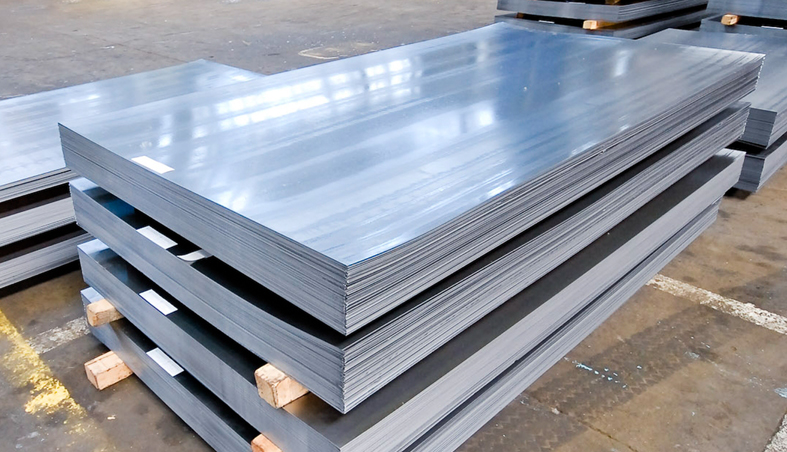
A36 Steel Plate Weight Chart by Size
The following A36 steel plate weight charts provide theoretical weights for commonly referenced plate dimensions. The tables are organized by plate size to simplify selection, comparison, and material calculations. The ASTM A36 grade designation is consistently used throughout the tables to identify the steel material being evaluated.
All weights are theoretical values calculated using nominal dimensions. Sizes not included in the current product portfolio should be confirmed separately before being used for procurement planning.
A36 Steel Plate Weight Chart – 1500 × 6000 mm
A36 steel plates measuring 1500 × 6000 mm are suitable for various structural fabrication requirements, connection plates, and large mechanical components. The 6 m length supports efficient material layout and cutting plans for different fabrication applications.
| Dimensions (mm) | Thickness (mm) | Steel Grade | Weight (kg/plate) |
| 2 × 1500 × 6000 | 2 | ASTM A36 | 141.30 |
| 3 × 1500 × 6000 | 3 | ASTM A36 | 211.95 |
| 4 × 1500 × 6000 | 4 | ASTM A36 | 282.60 |
| 5 × 1500 × 6000 | 5 | ASTM A36 | 353.25 |
| 6 × 1500 × 6000 | 6 | ASTM A36 | 423.90 |
| 8 × 1500 × 6000 | 8 | ASTM A36 | 565.20 |
| 10 × 1500 × 6000 | 10 | ASTM A36 | 706.50 |
| 12 × 1500 × 6000 | 12 | ASTM A36 | 847.80 |
| 16 × 1500 × 6000 | 16 | ASTM A36 | 1,130.40 |
| 20 × 1500 × 6000 | 20 | ASTM A36 | 1,413.00 |
| 25 × 1500 × 6000 | 25 | ASTM A36 | 1,766.25 |
| 30 × 1500 × 6000 | 30 | ASTM A36 | 2,119.50 |
| 40 × 1500 × 6000 | 40 | ASTM A36 | 2,826.00 |
| 50 × 1500 × 6000 | 50 | ASTM A36 | 3,532.50 |
For a plate measuring 1,500 mm wide and 6,000 mm long, each additional millimeter of thickness adds approximately 70.65 kg to its theoretical weight. This allows customers to estimate the weight of thicknesses not listed in the table. For example, a 14 mm thick plate weighs approximately 989.1 kg.
A36 Steel Plate Weight Chart – 2000 × 6000 mm
A36 steel plates measuring 2000 × 6000 mm provide a greater width than 1,500 mm plates, making them suitable for manufacturing components that require larger material surfaces. When selecting this size, businesses should optimize cutting layouts to minimize waste and assess transportation and lifting requirements within the workshop.
| Dimensions (mm) | Thickness (mm) | Steel Grade | Weight (kg/plate) |
| 2 × 2000 × 6000 | 2 | ASTM A36 | 188.40 |
| 3 × 2000 × 6000 | 3 | ASTM A36 | 282.60 |
| 4 × 2000 × 6000 | 4 | ASTM A36 | 376.80 |
| 5 × 2000 × 6000 | 5 | ASTM A36 | 471.00 |
| 6 × 2000 × 6000 | 6 | ASTM A36 | 565.20 |
| 8 × 2000 × 6000 | 8 | ASTM A36 | 753.60 |
| 10 × 2000 × 6000 | 10 | ASTM A36 | 942.00 |
| 12 × 2000 × 6000 | 12 | ASTM A36 | 1,130.40 |
| 16 × 2000 × 6000 | 16 | ASTM A36 | 1,507.20 |
| 20 × 2000 × 6000 | 20 | ASTM A36 | 1,884.00 |
| 25 × 2000 × 6000 | 25 | ASTM A36 | 2,355.00 |
| 30 × 2000 × 6000 | 30 | ASTM A36 | 2,826.00 |
| 40 × 2000 × 6000 | 40 | ASTM A36 | 3,768.00 |
| 50 × 2000 × 6000 | 50 | ASTM A36 | 4,710.00 |
A 20 mm thick A36 steel plate measuring 2000 × 6000 mm has a theoretical weight of 1,884 kg. Compared with a 1500 × 6000 mm plate of the same thickness, the weight increases in proportion to the larger surface area. Therefore, selecting an appropriate width affects not only material consumption but also fabrication and transportation planning.
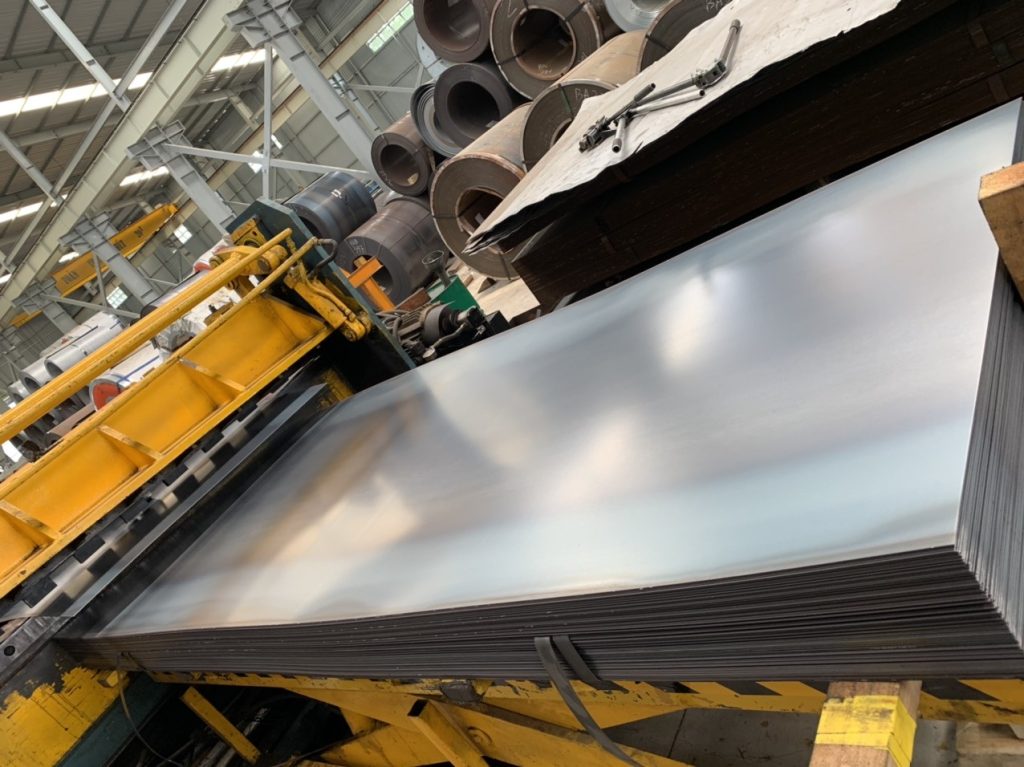
Hot rolled steel plates serve as raw materials for a wide range of structural and mechanical fabrication applications.
A36 Steel Plate Weight Chart – 1500 × 3000 mm
A36 steel plates measuring 1500 × 3000 mm have a surface area of 4.5 m², half that of a 1500 × 6000 mm plate. Their shorter length can be advantageous when manufacturing small and medium-sized components, particularly where full-length plates are unnecessary.
| Dimensions (mm) | Thickness (mm) | Steel Grade | Weight (kg/plate) |
| 2 × 1500 × 3000 | 2 | ASTM A36 | 70.65 |
| 3 × 1500 × 3000 | 3 | ASTM A36 | 105.98 |
| 4 × 1500 × 3000 | 4 | ASTM A36 | 141.30 |
| 5 × 1500 × 3000 | 5 | ASTM A36 | 176.63 |
| 6 × 1500 × 3000 | 6 | ASTM A36 | 211.95 |
| 8 × 1500 × 3000 | 8 | ASTM A36 | 282.60 |
| 10 × 1500 × 3000 | 10 | ASTM A36 | 353.25 |
| 12 × 1500 × 3000 | 12 | ASTM A36 | 423.90 |
| 16 × 1500 × 3000 | 16 | ASTM A36 | 565.20 |
| 20 × 1500 × 3000 | 20 | ASTM A36 | 706.50 |
| 25 × 1500 × 3000 | 25 | ASTM A36 | 883.13 |
| 30 × 1500 × 3000 | 30 | ASTM A36 | 1,059.75 |
| 40 × 1500 × 3000 | 40 | ASTM A36 | 1,413.00 |
| 50 × 1500 × 3000 | 50 | ASTM A36 | 1,766.25 |
For mechanical workshops producing connection plates, base plates, and relatively short components, the 1500 × 3000 mm size can support efficient material layout. However, actual material utilization depends on the finished component dimensions and cutting arrangement.
A36 Steel Plate Weight Chart – 1250 × 3000 mm
Steel plates measuring 1250 × 3000 mm have a surface area of 3.75 m². This size is commonly included in mechanical material calculation tables and helps determine the steel quantity required for components with relatively limited width requirements.
| Dimensions (mm) | Thickness (mm) | Steel Grade | Weight (kg/plate) |
| 2 × 1250 × 3000 | 2 | ASTM A36 | 58.88 |
| 3 × 1250 × 3000 | 3 | ASTM A36 | 88.31 |
| 4 × 1250 × 3000 | 4 | ASTM A36 | 117.75 |
| 5 × 1250 × 3000 | 5 | ASTM A36 | 147.19 |
| 6 × 1250 × 3000 | 6 | ASTM A36 | 176.63 |
| 8 × 1250 × 3000 | 8 | ASTM A36 | 235.50 |
| 10 × 1250 × 3000 | 10 | ASTM A36 | 294.38 |
| 12 × 1250 × 3000 | 12 | ASTM A36 | 353.25 |
| 16 × 1250 × 3000 | 16 | ASTM A36 | 471.00 |
| 20 × 1250 × 3000 | 20 | ASTM A36 | 588.75 |
| 25 × 1250 × 3000 | 25 | ASTM A36 | 735.94 |
| 30 × 1250 × 3000 | 30 | ASTM A36 | 883.13 |
| 40 × 1250 × 3000 | 40 | ASTM A36 | 1,177.50 |
| 50 × 1250 × 3000 | 50 | ASTM A36 | 1,471.88 |
For a plate measuring 1250 × 3000 mm, a thickness of 10 mm results in an approximate weight of 294.38 kg. When calculating large quantities, businesses should use unrounded values in the total weight formula to minimize cumulative rounding errors. If high accuracy is required, actual weight should be verified using weighing records or delivery documentation.
A36 Steel Plate Weight Chart – 1250 × 2500 mm
A36 steel plates measuring 1250 × 2500 mm have a surface area of 3.125 m² and are useful for planning the production of medium-sized mechanical components. Compared with plates measuring 6 m or 12 m in length, shorter plates may be easier to store and handle during certain internal transportation operations.
| Dimensions (mm) | Thickness (mm) | Steel Grade | Weight (kg/plate) |
| 2 × 1250 × 2500 | 2 | ASTM A36 | 49.06 |
| 3 × 1250 × 2500 | 3 | ASTM A36 | 73.59 |
| 4 × 1250 × 2500 | 4 | ASTM A36 | 98.13 |
| 5 × 1250 × 2500 | 5 | ASTM A36 | 122.66 |
| 6 × 1250 × 2500 | 6 | ASTM A36 | 147.19 |
| 8 × 1250 × 2500 | 8 | ASTM A36 | 196.25 |
| 10 × 1250 × 2500 | 10 | ASTM A36 | 245.31 |
| 12 × 1250 × 2500 | 12 | ASTM A36 | 294.38 |
| 16 × 1250 × 2500 | 16 | ASTM A36 | 392.50 |
| 20 × 1250 × 2500 | 20 | ASTM A36 | 490.63 |
| 25 × 1250 × 2500 | 25 | ASTM A36 | 613.28 |
| 30 × 1250 × 2500 | 30 | ASTM A36 | 735.94 |
| 40 × 1250 × 2500 | 40 | ASTM A36 | 981.25 |
| 50 × 1250 × 2500 | 50 | ASTM A36 | 1,226.56 |
It is important to distinguish the dimensions used for weight calculations from commercially available plate specifications. A plate cut from a larger sheet can achieve the desired dimensions, but processing costs, material waste, and dimensional tolerance requirements will affect the total cost.
A36 Steel Plate Weight Chart – 2000 × 12000 mm
A36 steel plates measuring 2000 × 12000 mm have a surface area of 24 m² and are often considered for large structural fabrication projects. Due to their considerable length and weight, using these plates requires suitable transportation, loading, unloading, and workshop handling arrangements.
| Thickness (mm) | Weight (kg/plate) | Standard |
| 2.0 | 376.80 | ASTM A36 |
| 2.3 | 433.32 | ASTM A36 |
| 3.0 | 565.20 | ASTM A36 |
| 4.0 | 753.60 | ASTM A36 |
| 5.0 | 942.00 | ASTM A36 |
| 6.0 | 1,130.40 | ASTM A36 |
| 8.0 | 1,507.20 | ASTM A36 |
| 9.0 | 1,695.60 | ASTM A36 |
| 10.0 | 1,884.00 | ASTM A36 |
| 12.0 | 2,260.80 | ASTM A36 |
| 14.0 | 2,637.60 | ASTM A36 |
| 16.0 | 3,014.40 | ASTM A36 |
| 18.0 | 3,391.20 | ASTM A36 |
| 20.0 | 3,768.00 | ASTM A36 |
| 22.0 | 4,144.80 | ASTM A36 |
| 25.0 | 4,710.00 | ASTM A36 |
| 30.0 | 5,652.00 | ASTM A36 |
| 32.0 | 6,028.80 | ASTM A36 |
| 36.0 | 6,782.40 | ASTM A36 |
| 40.0 | 7,536.00 | ASTM A36 |
For example, a 14 mm thick A36 steel plate measuring 2000 × 12000 mm has a theoretical weight of 2,637.6 kg. At 20 mm thickness, the weight increases to 3,768 kg per plate. These values are particularly important when calculating lifting equipment capacity, support arrangements, and warehouse storage requirements.
For large steel plates, additional considerations include flatness, thickness tolerances, surface condition, and delivery requirements. Long plates require appropriate transportation vehicles and securing methods to minimize deformation during handling and transit.
Reference A36 Steel Plate Prices
A36 steel plate prices depend on several factors, including thickness, dimensions, origin, manufacturer, order quantity, and market conditions at the time of purchase. Therefore, a fixed price per kilogram cannot accurately represent every specification and supply arrangement.
To assist with preliminary budgeting, the following table summarizes theoretical weight per square meter for commonly used thicknesses. Prices are presented as subject to quotation confirmation rather than using an unverified market price range.
ASTM A36 Steel Plate Price Chart by Thickness
| Thickness (mm) | Theoretical Weight (kg/m²) | Unit Price (VND/kg) | Steel Grade |
| 2.0 | 15.70 | Request a quotation | ASTM A36 |
| 3.0 | 23.55 | Request a quotation | ASTM A36 |
| 4.0 | 31.40 | Request a quotation | ASTM A36 |
| 6.0 | 47.10 | Request a quotation | ASTM A36 |
| 8.0 | 62.80 | Request a quotation | ASTM A36 |
| 10.0 | 78.50 | Request a quotation | ASTM A36 |
| 12.0 | 94.20 | Request a quotation | ASTM A36 |
| 16.0 | 125.60 | Request a quotation | ASTM A36 |
| 20.0 | 157.00 | Request a quotation | ASTM A36 |
| 25.0 | 196.25 | Request a quotation | ASTM A36 |
| 30.0 | 235.50 | Request a quotation | ASTM A36 |
| 40.0 | 314.00 | Request a quotation | ASTM A36 |
Note: The table above provides weight reference information and does not constitute a confirmed selling price or inventory availability statement. Customers can explore additional information about steel plate pricing to better understand the factors affecting material costs.
Factors Affecting A36 Steel Plate Prices
Steel plate prices are influenced not only by material weight but also by supply conditions and production requirements. Two orders using the same ASTM A36 grade may have different total costs due to variations in dimensions, quantities, or fabrication requirements.
- Thickness and plate dimensions: Affect weight, availability, and fabrication requirements.
- Manufacturer: Steel mills may apply different pricing structures and delivery conditions.
- Country of origin: Influences logistics costs and commercial terms.
- Order quantity: May affect the unit price and transportation costs per product.
- Fabrication services: CNC cutting, plasma cutting, drilling, bending, and surface treatment may involve additional charges.
- Purchase timing: Steel prices fluctuate based on supply and demand, raw material costs, and market developments.
- Delivery location: Transportation distance and handling requirements influence the overall cost.
When comparing purchasing options, businesses should evaluate materials with equivalent standards, dimensions, delivery conditions, and fabrication requirements. This approach provides a more accurate assessment of total costs rather than focusing exclusively on the price per kilogram.
Applications of A36 Steel Plate in Construction and Industry
ASTM A36 steel plate is widely used because of its combination of strength, ductility, and fabrication characteristics. In structural design, it is commonly selected for components whose required mechanical properties fall within the capabilities of the steel grade and applicable design standards.
Each industry has different requirements regarding thickness, dimensions, tolerances, and operating conditions. Therefore, A36 steel should be selected based on the intended function of the component rather than simply because the grade is widely available.
Applications in Industrial Buildings and Pre-Engineered Steel Structures
In industrial construction, A36 steel plates can be used to manufacture connection plates, column base plates, stiffeners, and structural components. For built-up steel beams and columns, plates can be cut to the required dimensions and welded into complete structural members.
An important advantage of A36 steel in these applications is its ability to meet common mechanical requirements while supporting welded and bolted connections. However, plate thickness, weld dimensions, and connection configurations must be designed according to the actual loads applied to the structure.
Applications in Mechanical Engineering and Fabrication
In mechanical engineering, A36 steel is used to manufacture equipment bases, machine frames, brackets, and structural components that do not require the specialized properties of tool steels or high-alloy materials. Its suitability for cutting, drilling, and welding makes it compatible with many conventional fabrication processes.
For components requiring high dimensional accuracy, additional factors such as surface condition, flatness, residual stress, and post-cutting machining must be considered. Using A36 steel does not automatically ensure compliance with requirements for hardness, wear resistance, or fatigue strength.
Applications in Shipbuilding and Storage Tank Fabrication
A36 steel plates may be used for certain auxiliary structures in shipbuilding and tank fabrication. Components such as equipment supports, access platforms, and secondary structures may be manufactured from this material when permitted by the relevant design requirements.
For class-certified ship hulls, pressure vessels, chemical storage tanks, or equipment operating under special technical conditions, materials must comply with the corresponding specialized standards. ASTM A36 cannot automatically replace certified shipbuilding steel or plates specifically designed for pressure equipment.
Advantages and Limitations of A36 Steel Plate
Understanding the advantages and limitations of A36 steel plate helps businesses determine its appropriate applications. Although this steel grade is versatile, it is not necessarily the best choice for every loading condition or operating environment.
Key Advantages of ASTM A36 Steel Plate
- Good weldability: Suitable for various structural welding processes when appropriate procedures are selected and followed.
- Ease of fabrication: Can be cut, drilled, formed, and machined to meet production requirements.
- Suitable mechanical properties: Meets the needs of many common load-bearing applications in construction and manufacturing.
- Versatile applications: Used in industrial buildings, mechanical engineering, equipment manufacturing, and other industrial structures.
- Established technical specifications: Supported by recognized standards and engineering parameters for design and inspection.
One notable advantage of A36 steel is its ability to be fabricated into many types of structural components. Starting with a steel plate, manufacturers can perform operations such as cutting connection plates, drilling bolt holes, and welding built-up structures. This flexibility allows the material to support diverse manufacturing requirements.
Limitations to Consider
A36 is a conventional structural carbon steel, not stainless steel or a specialized corrosion-resistant grade. When used outdoors or in humid environments, the steel surface may oxidize unless suitable protective measures, such as painting or a specified corrosion protection system, are applied.
Additionally, A36 steel should not be selected solely based on static strength when a project has special requirements for low-temperature impact toughness, wear resistance, corrosion resistance, or pressure containment. In such cases, specialized steel grades and additional testing requirements should be evaluated.
Important Considerations When Selecting and Inspecting A36 Steel Plates
To use A36 steel plates effectively, customers should clearly define their technical requirements before selecting materials. Essential information includes steel grade, standard, thickness, dimensions, quantity, fabrication methods, and operating conditions.
Material inspection should address both certification documents and the actual condition of the products. Visual inspection alone is insufficient to confirm material quality because chemical composition and mechanical properties cannot be accurately determined through appearance.
Check Material Certificates and Manufacturing Standards
For industrial projects, material certificates are important documents for verifying the origin and technical characteristics of steel. Information that should be checked includes:
- The steel grade and applicable ASTM A36/A36M standard.
- Manufacturer information and heat number.
- Verified chemical composition.
- Mechanical test results corresponding to the product.
- Thickness, dimensions, and batch information.
- Additional testing requirements specified in the contract, if applicable.
For materials used in critical structural components, certificates should be compared with the technical requirements stated in engineering drawings and project documentation. Where necessary, independent testing may be conducted in accordance with the approved quality control procedure.
Inspect Plate Thickness, Dimensions, and Surface Condition
Actual thickness directly affects the weight and load-bearing capacity of a steel plate. During inspection, appropriate measuring equipment should be used to compare the plate dimensions with the permitted tolerances under the relevant product standard and contractual requirements.
In addition, inspectors should look for conditions that could affect fabrication, such as excessive warping, damaged edges, cracks, or unacceptable surface defects. Assessment must be based on the applicable technical requirements, since not every surface characteristic of hot rolled steel constitutes a product defect.
Select Plate Dimensions That Match Fabrication Requirements
Choosing appropriate plate dimensions can help reduce material waste after cutting. For example, if a finished component has a width close to 1,500 mm, selecting a 2,000 mm wide plate may generate significant scrap depending on the cutting layout. Conversely, some large components require wider plates to minimize welded joints.
Therefore, cutting layouts and material utilization rates should be evaluated before finalizing plate dimensions. For large orders, aligning dimensional requirements with steel plate availability and suitable cutting arrangements helps businesses improve production planning.
A36 Steel Plates at Stavian Industrial Metal
Stavian Industrial Metal supplies a range of hot rolled steel coils and plates for construction, mechanical fabrication, and industrial manufacturing. Its hot rolled steel plate portfolio includes thicknesses from 3 to 40 mm and common grades such as A36, SS400, Q235B, Q345B, Q355B, and A572.
Products are sourced from domestic and international steel manufacturers, including Hoa Phat, Formosa, TATA Steel, Nippon Steel, Hyundai Steel, and other manufacturing partners. Selecting suitable supply sources helps meet different requirements for technical standards, quantities, and project schedules.
Stavian Industrial Metal’s Hot Rolled Steel Product Portfolio
| Category | Product Information |
| Product group | Hot rolled steel coils and plates |
| Hot rolled steel coils | Thickness: 3–16 mm |
| Hot rolled steel plates | Thickness: 3–40 mm, with cutting options available upon request |
| Steel grades | SS400, Q345B, A36, Q235B, Q355B, A572, and other grades in the product portfolio |
| Standards | JIS, ASTM, SAE, TIS, EN, MS, GB |
| Applications | Structural construction, mechanical fabrication, and industrial manufacturing |
For A36 steel plates, key specifications that should be confirmed before procurement include thickness, width, length, quantity, and material documentation requirements. This information helps ensure that the selected steel plates match engineering drawings and practical production plans.
Stavian Industrial Metal also provides information about hot rolled steel plates, related products, and industrial applications. Depending on project requirements, businesses may consider full-size steel plates or custom-cut dimensions for their fabrication operations.
Frequently Asked Questions About A36 Steel Plate
Is A36 Steel a Low-Carbon Steel?
ASTM A36 belongs to the structural carbon steel category, with carbon content limits determined by product form and thickness. For commonly used steel plates, the permitted carbon content is relatively low compared with many higher-carbon steel grades. This is one of the factors contributing to the material’s weldability and fabrication characteristics.
However, weldability cannot be assessed solely from carbon content. For thick steel plates or highly restrained structures, carbon equivalent, welding procedures, and relevant thermal control requirements must also be considered.
Can A36 Steel Plate Be Welded?
A36 steel plate offers good weldability and is widely used in welded structural fabrication. The material can be processed using various industrial welding methods when suitable filler materials and welding parameters are selected.
For critical load-bearing welds, welding procedures must comply with the project’s technical standards. Requirements for preheating, interpass temperature control, and weld inspection depend on material thickness, structural configuration, and operating conditions.
How Much Does a 10 mm A36 Steel Plate Weigh?
The weight of a 10 mm A36 steel plate depends on its width and length. A plate measuring 1500 × 6000 mm has a theoretical weight of 706.5 kg, while a 2000 × 6000 mm plate weighs approximately 942 kg.
When calculated by surface area, a 10 mm thick A36 steel plate has a theoretical weight of 78.5 kg/m². This value is useful when the exact plate dimensions have not yet been determined.
Are A36 Steel and SS400 Steel the Same?
ASTM A36 and SS400 are both structural steel grades commonly used in construction and mechanical engineering. However, A36 is governed by the American ASTM standard, while SS400 follows the Japanese JIS G3101 standard. Although they share similarities in their applications, their technical requirements are not identical.
When substituting A36 with SS400 or vice versa, mechanical properties, chemical composition, thickness, welding requirements, and design conditions must be evaluated. Any material substitution must comply with the technical specifications of the project.
Does A36 Steel Plate Rust?
A36 steel plate is a conventional carbon steel product and may oxidize or develop rust when exposed to moisture, water, or corrosive environments. This characteristic must be considered when the material is used outdoors or in high-humidity conditions.
To reduce corrosion, suitable protective measures such as painting, surface treatment, or other specified corrosion protection methods may be applied. The selection of a protective system should reflect the operating environment and expected service life of the structure.
Can A36 Steel Replace Pressure Vessel Steel?
A36 steel should not automatically be substituted for steel grades specifically designed for pressure equipment. Pressure vessel steels generally need to satisfy additional requirements regarding chemical composition, mechanical properties, impact toughness, performance at specified temperatures, and certification documentation.
For storage tanks or pressure-containing equipment, materials must comply with the relevant design standards. Any change in steel grade should undergo technical evaluation and approval in accordance with the project’s engineering procedures.
Conclusion
A36 steel plate is a structural carbon steel material offering good weldability, ease of fabrication, and suitability for a wide range of construction, mechanical engineering, and industrial applications. Understanding the ASTM A36 standard, chemical composition, mechanical properties, dimensions, and weight calculations enables businesses to make more informed material selections. Stavian Industrial Metal supplies hot rolled steel products, including the A36 grade, to support industrial projects with diverse technical specifications and dimensional requirements.
Related Articles
- What Is Hot Rolled Steel Plate? Advantages, Applications and Pricing
- Hot Rolled Steel Products at Stavian Industrial Metal
- Steel Plate Prices and Standard Size Charts
- Hot Rolled Steel Plate Standards and Selection Guidelines
- Steel Density and Steel Plate Weight Charts
- Hot Rolled Steel: Properties, Manufacturing Process and Applications
- Hot Rolled Steel Coils: Applications and Manufacturing Process
- Understanding the Hot Rolled Steel Manufacturing Process