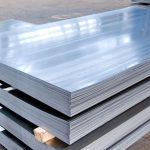
V5 angle steel is the common name for V50 steel or V50x50 angle steel, which is angle steel with two nominal 50 mm-wide legs positioned perpendicular to each other. The product belongs to the V-shaped steel category, is commonly manufactured by hot rolling, and is used in steel structures, bracing systems, support frames, shelving, mechanical fabrication, and many industrial applications. When selecting V5 angle steel, it is necessary to specify the thickness, length, steel grade, standard, and surface requirements instead of relying solely on the V5 designation.
V5 angle steel is generally understood as 50×50 mm equal angle steel. In material trading, the product may also be referred to as V50 steel, V5 iron angle, 50×50 angle steel, L50 steel, or V50x50 angle steel. However, the V5 designation only indicates the nominal leg dimensions and does not specify the material thickness. Two V50 bars with thicknesses of 4 mm and 6 mm will differ significantly in cross-sectional area, weight, and structural performance.
Geometrically, equal angle steel consists of two legs of equal width intersecting at a right angle. For hot-rolled products, the internal corner has a fillet radius rather than being formed by two flat steel plates joined at a perfectly sharp angle. This characteristic affects the cross-sectional area, theoretical weight, and geometric properties of the section. Therefore, when accurate structural calculations are required, the section-property tables of the applicable standard or the manufacturer’s catalogue should be used instead of relying solely on a simple geometric formula.
The complete designation of V5 angle steel usually takes the form V50x50xt, where “t” represents the leg thickness. For example, V50x50x5 steel has two nominally 50 mm-wide legs and a nominal thickness of 5 mm. If the length also needs to be specified, V50x50x5x6000 mm may be used for a 6 m-long bar.
Using the complete designation is particularly important in BOQs, drawings, purchase orders, and acceptance documents. Specifying only “V5” can lead to confusion because products with the same 50×50 mm leg dimensions but different thicknesses will have completely different weights. For projects with strict technical requirements, the steel grade and applicable standard should also be stated together with the dimensions.
V50x50 angle steel has a compact cross-section, with two perpendicular leg surfaces that provide convenient areas for welding, drilling holes, or bolting to gusset plates and other structural components. This is one of the reasons V angle steel is widely used for bracing members, secondary frames, supports, and connection components. Its specific load-bearing capacity cannot be evaluated solely from its V-shaped geometry, as it also depends on thickness, steel grade, effective length, load direction, and the connection configuration.
Most structural angle steel belongs to the hot-rolled steel section category. The rolling process produces a solid cross-section with a fillet radius at the junction between the two legs. This is also an important consideration when comparing genuine hot-rolled V angle steel with products fabricated from steel plates or angle components assembled by other methods: their section geometry, tolerances, and performance characteristics are not necessarily the same.
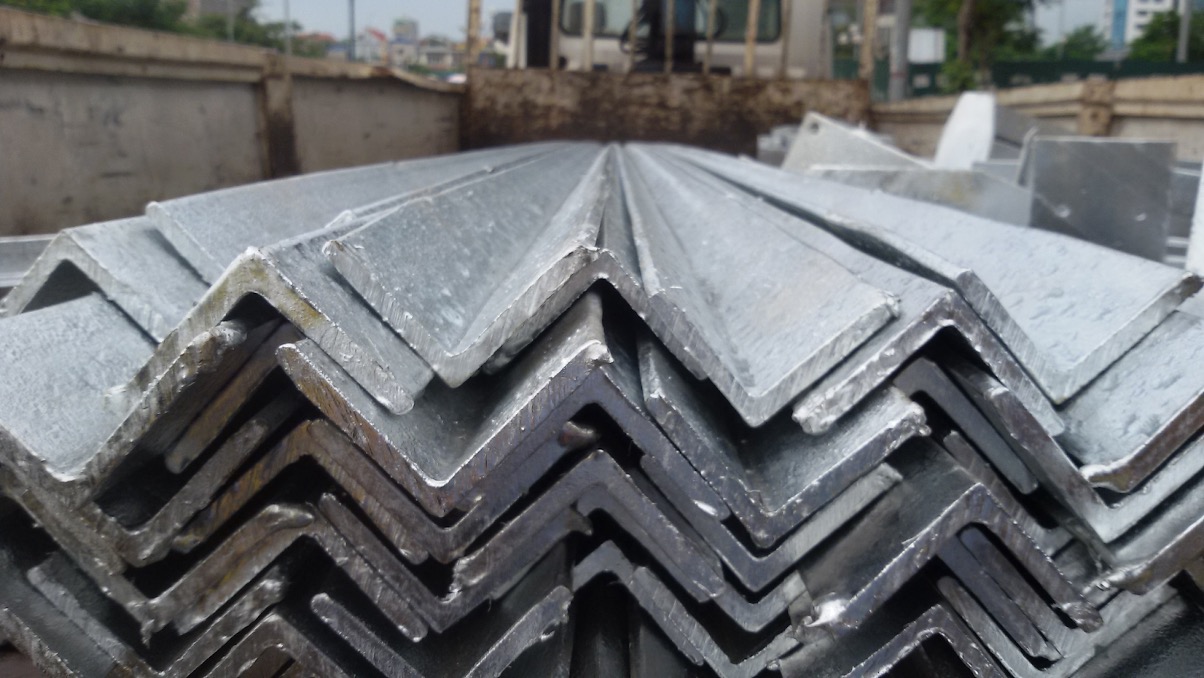
Depending on the operating environment, V5 steel can be used in its hot-rolled surface condition or protected with a zinc coating. The three commonly considered groups are black V5 steel, electro-galvanized steel, and hot-dip galvanized V5 steel. The choice is not only related to appearance but also directly affects the level of surface protection against moisture and corrosive agents.
It should not be assumed that all products described as galvanized V steel have the same coating thickness. The galvanizing method, acceptance standard, base steel thickness, and requirements of each order may differ. For engineering projects, the coating specifications should be clearly stated in the material requirements.
Black V5 steel is hot-rolled angle steel without a zinc coating. Its surface typically has the characteristics of hot-rolled steel, including a dark color and an oxide layer formed during production. It is suitable for many indoor structures or components that will subsequently be cleaned, coated with anti-rust paint, or protected with another coating system after fabrication.
One advantage of black V steel is that it is convenient for cutting, drilling, welding, and structural fabrication before surface finishing. However, unprotected carbon steel may oxidize when frequently exposed to water, humidity, or corrosive environments. Therefore, outdoor applications should be accompanied by an appropriate surface protection solution based on actual operating conditions.
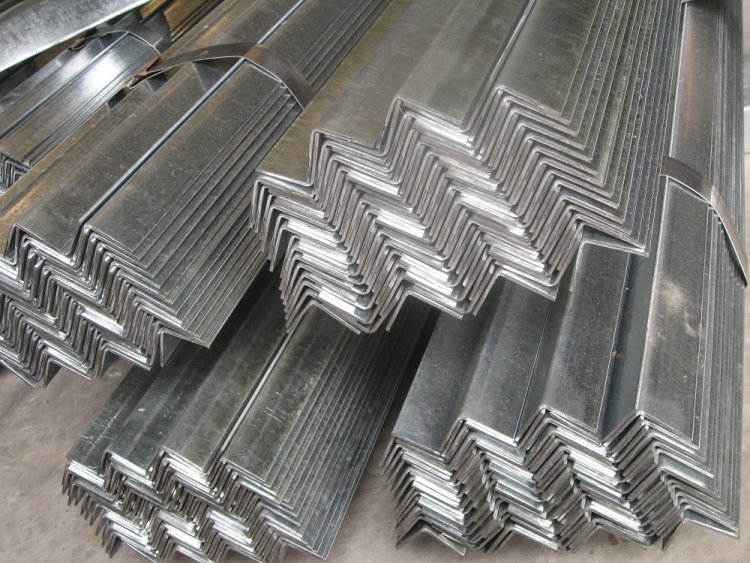
Electro-galvanized V5 steel, commonly referred to as zinc-plated V5, is coated with zinc through an electroplating process. For V angle steel, the electro-galvanized coating may have a reference thickness of approximately 20–30 μm depending on product requirements. The surface is generally bright and relatively smooth, making it suitable for components that require both surface protection and an aesthetically finished appearance.
Because the coating is usually thinner than a hot-dip galvanized layer, this type is more suitable for environments that are not highly corrosive. For structures frequently exposed to rain, high humidity, or environments with a high corrosion risk, the material should not be selected solely based on surface brightness; coating standards and environmental durability requirements should be evaluated separately.
Hot-dip galvanized V5 steel undergoes surface preparation before being immersed in molten zinc to form a protective layer over the base steel. For V-shaped steel sections, the hot-dip galvanized coating may have a reference thickness of approximately 70–90 μm depending on the applicable standard and specific requirements. Compared with electro-galvanizing, the thicker coating generally provides an advantage for structures operating outdoors or in humid environments.
It should be noted that the actual coating thickness should not be assumed to be a fixed value for every manufacturer or order. Cutting, drilling, or welding after galvanizing may also disrupt the protective coating, so fabrication methods and post-fabrication protection should be included in the technical requirements from the outset.
| Type of V5 steel | Surface characteristics | Recommended application |
|---|---|---|
| Black V5 steel | Hot-rolled surface without zinc coating | Indoor structures or components that will be painted/coated for protection |
| Electro-galvanized V5 steel | Reference coating thickness of approximately 20–30 μm, relatively bright and smooth surface | Applications requiring surface finishing in environments with moderate corrosion exposure |
| Hot-dip galvanized V5 steel | Reference coating thickness of approximately 70–90 μm, with a thicker protective layer | Outdoor structures, humid areas, or applications requiring a higher level of surface protection |
When purchasing V5 steel, the geometric standard and material grade should be clearly distinguished. The geometric standard defines dimensions, fillet radius, tolerances, section properties, and theoretical weight, while the steel grade determines requirements related to chemical composition and mechanical properties. Two V50x50x5 products manufactured under different material standards should not automatically be considered completely equivalent.
For equal angle steel in Vietnam, TCVN 7571-1:2019 is an important standard for hot-rolled equal angle steel used in general structures, welded structures, or building structures. In addition, the market also uses systems such as JIS, ASTM, EN, and GB/T depending on the source of supply and design documentation.
TCVN 7571-1:2019 specifies the shape, dimensions, section properties, tolerances, and related requirements for hot-rolled equal angle steel. Within this system, designation groups include AGS for angle steel used in general structures, AWS for welded structures, and ABS for building structures. For example, AGS 400 has a nominal minimum tensile strength of 400 MPa according to the classification of the standard.
For the 50×50 mm size, the section-property table in TCVN 7571-1:2019 lists thicknesses of 4 mm, 5 mm, and 6 mm. Dimensions not listed in the standard table may be supplied by agreement between the manufacturer and customer. This is why not every commercially available V50 thickness should be assumed to use the same weight schedule.
SS400 steel belongs to the JIS G3101 system and is widely used in structural steel applications. ASTM A36/A36M is a standard for structural carbon steel, including steel sections, plates, and bars used in various welded, bolted, or riveted structures. Q235B belongs to the Chinese standard system and is also commonly used for structural materials.
SS400, A36, and Q235B may be used in similar application areas, but they should not be substituted for one another solely on the assumption that they are “approximately equivalent.” When changing the steel grade, the yield strength, tensile strength, chemical composition, elongation, and specific requirements of the design standard must be checked. For projects requiring formal acceptance documentation, the material grade must be consistent with the drawings, BOQ, and documentation of the supplied batch.
The primary identifying dimension of V5 steel is its nominal 50×50 mm legs. Thickness should be specified together with the dimensions, for example V50x50x4, V50x50x5, or V50x50x6. Common commercial lengths are 6 m and 12 m. TCVN 7571-1:2019 specifically specifies a supply length range from 6 m to 15 m according to the dimensional increments stated in the standard, while other lengths may be supplied by agreement.
In actual commercial transactions, V50 products with thicknesses outside the 4–6 mm range may be available depending on the manufacturer and supply arrangement. In such cases, the weight of V50x50x4 or V50x50x5 should not be mechanically applied to other thicknesses. Specifications, tolerances, and weight should be checked against the exact standard or catalogue applicable to the material batch.
For the V50x50 group shown in the section-property table of TCVN 7571-1:2019, the weight per meter is 3.06 kg/m for a thickness of 4 mm, 3.77 kg/m for 5 mm, and 4.47 kg/m for 6 mm. Converting these figures to 6 m bars helps estimating teams determine preliminary material quantities before preparing purchasing and transportation plans.
| Specification | Thickness | Nominal weight | Converted weight per 6 m bar |
|---|---|---|---|
| V50x50x4 | 4 mm | 3.06 kg/m | Approx. 18.36 kg/bar |
| V50x50x5 | 5 mm | 3.77 kg/m | Approx. 22.62 kg/bar |
| V50x50x6 | 6 mm | 4.47 kg/m | Approx. 26.82 kg/bar |
Among these, V50x50x5 steel is a commonly considered specification thanks to its medium dimensions and nominal weight of approximately 3.77 kg/m, equivalent to about 22.62 kg for a 6 m bar. However, this figure is based on the standard section weight schedule; actual measured weight may vary within the applicable tolerances.
If TCVN 7571-1:2019 is applied and weight tolerance is specified, equal angle steel with a thickness below 10 mm has a mass tolerance of ±5%, while steel with a thickness of 10 mm or more has a tolerance of ±4%. The applicable tolerance conditions should still be clearly specified in the purchase order and acceptance process rather than assuming one common tolerance for all V angle steel products on the market.
When a quick estimate is required and no reference table is available, a simple geometric formula can be used to estimate the weight of V50 angle steel. For carbon steel with a conventional density of approximately 7,850 kg/m³, the approximate formula, excluding the fillet radius at the corner, can be written as follows:
W ≈ (2A - t) × t × L × 0.00785
For example, for a 6 m-long V50x50x5 bar, the simplified formula gives a result of approximately 22.37 kg/bar. This figure is lower than the 22.62 kg/bar weight specified by TCVN 7571-1:2019 because the simplified calculation does not fully account for the fillet radius at the corner and the actual geometry of the section.
In technical calculations, TCVN uses the cross-sectional area including the fillet radius to determine the weight per meter. Therefore, the above formula is suitable for quick estimates, while design, delivery, and acceptance should use the standard weight schedule or data provided by the specific manufacturer.
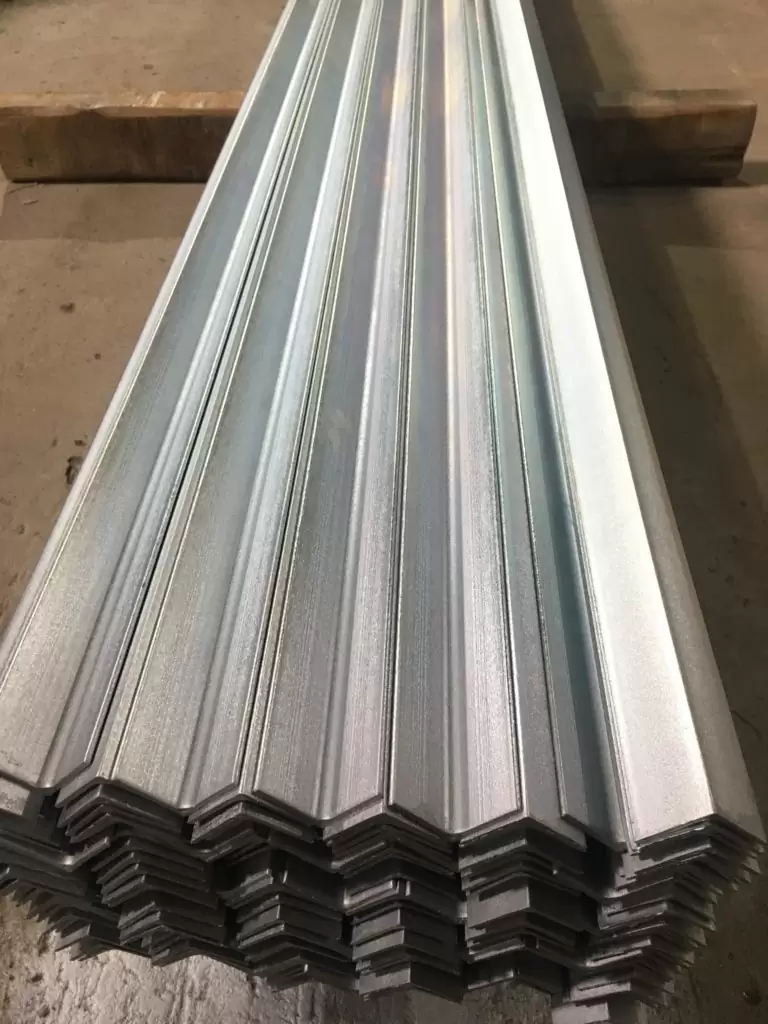
With 50 mm-wide legs, V50x50 steel belongs to the medium-size angle steel category and is suitable for many auxiliary components in construction and mechanical engineering. One of the strengths of the section is its two perpendicular legs, which make connections to gusset plates, beams, columns, or other structural members relatively convenient. However, allowable loads must be determined by engineers based on thickness, steel grade, effective length, connection conditions, and loading state.
In factories and steel structures, V5 steel can be used for bracing members, secondary framing systems, structural edging, roof frames, supports, or connection components. V50 is suitable for positions that do not require very large cross-sections but still need a shaped steel member that is convenient to fabricate and connect.
For pre-engineered steel buildings, it should not be assumed that V50 can replace primary beam or column sections. Each position must be calculated based on the actual internal forces. The most effective use of angle steel is to select the correct role within the structural system rather than relying solely on commonly available dimensions or construction experience.
V50 angle steel is used in various technical support systems, suspended frames, secondary structures for MEP systems, fire protection systems, railings, technical ladders, and pipe-support assemblies. In certain tower or column systems, angle steel may also be used as structural members when designed in accordance with the loads and standards applicable to the project.
For outdoor applications, corrosion resistance requirements should be considered together with structural performance. Hot-dip galvanized V5 steel is often preferred over black steel when a higher level of surface protection is required; however, coating thickness, galvanizing standards, and treatment of fabricated areas must be clearly specified in the technical documentation.
In mechanical engineering, V5 steel is suitable for manufacturing machine frames, support legs, workbenches, protective frames, equipment supports, and reinforcing components. The two perpendicular legs make it convenient to arrange welds or bolt holes, allowing the member to be easily combined with steel plates, box sections, and other types of steel sections.
When the product is subjected to vibration, dynamic loads, or eccentric loads, the connection design should be calculated instead of simply increasing the thickness based on experience. Angle sections have their own geometric characteristics and may experience flexural-torsional behavior under certain loading configurations, so the orientation of the V member is also an important factor in structural stability.
V50 is also used to manufacture racks, storage frames, fences, greenhouse frames, livestock structures, and many auxiliary structures in agricultural production. For outdoor projects, galvanized steel or a suitable protective coating system helps reduce the direct effects of moisture on the base steel.
For warehouse racks or storage frames, load-bearing capacity should not be determined solely from the V50 dimensions. Column spacing, rack height, number of levels, connection method, load per level, and anchoring conditions all affect safety. The V5 steel specification is only one part of the overall structural solution.
The price of V5 steel depends on thickness, bar weight, steel grade, standard, source of supply, and surface treatment method. For the V-shaped steel group from V25 to V100, the current reference price range is approximately VND 17,000–21,000/kg for black V steel, approximately VND 21,000–27,000/kg for electro-galvanized V steel, and approximately VND 25,000–29,000/kg for hot-dip galvanized V steel.
For V5 steel, or V50x50 specifically, the price per bar varies significantly among V50x50x4, V50x50x5, and V50x50x6 because of their different material weights. The table below is converted from the nominal weight of a 6 m bar and the reference price range per kilogram, making it suitable for preliminary budgeting. Actual transaction prices should be reconfirmed based on the time of order, quantity, manufacturer, delivery location, and technical requirements.
| Specification | Reference weight | Reference unit price | Estimated price per 6 m bar |
|---|---|---|---|
| V50x50x4 | Approx. 18.36 kg/bar | VND 17,000–21,000/kg | VND 312,120–385,560/bar |
| V50x50x5 | Approx. 22.62 kg/bar | VND 17,000–21,000/kg | VND 384,540–475,020/bar |
| V50x50x6 | Approx. 26.58 kg/bar | VND 17,000–21,000/kg | VND 451,860–558,180/bar |
Electro-galvanized V5 steel has a protective zinc coating and a higher reference price than black V steel. For the V25–V100 group, the current unit-price range used for preliminary budgeting is VND 21,000–27,000/kg.
| Specification | Reference weight | Reference unit price | Estimated price per 6 m bar |
|---|---|---|---|
| V50x50x4 | Approx. 18.36 kg/bar | VND 21,000–27,000/kg | VND 385,560–495,720/bar |
| V50x50x5 | Approx. 22.62 kg/bar | VND 21,000–27,000/kg | VND 475,020–610,740/bar |
| V50x50x6 | Approx. 26.58 kg/bar | VND 21,000–27,000/kg | VND 558,180–717,660/bar |
Hot-dip galvanized V steel has a higher reference price because of the additional surface treatment process and protective zinc coating. For the V25–V100 group, the current reference price range is approximately VND 25,000–29,000/kg.
| Specification | Reference weight | Reference unit price | Estimated price per 6 m bar |
|---|---|---|---|
| V50x50x4 | Approx. 18.36 kg/bar | VND 25,000–29,000/kg | VND 459,000–532,440/bar |
| V50x50x5 | Approx. 22.62 kg/bar | VND 25,000–29,000/kg | VND 565,500–655,980/bar |
| V50x50x6 | Approx. 26.58 kg/bar | VND 25,000–29,000/kg | VND 664,500–770,820/bar |
Note: The V5 steel price table above is for reference only and is converted from nominal weights and reference unit-price ranges per kilogram. It is not a fixed commercial quotation. Actual prices may vary depending on the steel grade, standard, manufacturer, origin, weight tolerance, order quantity, galvanizing method, delivery location, and transaction date.
When selecting V5 steel, factors to consider include not only the leg dimensions but also thickness, weight, steel grade, standard, tolerance, length, and surface treatment method. Clearly specifying all parameters in the purchasing documentation helps reduce specification errors, supports weight control, and ensures that the material meets design requirements. For applications with a risk of corrosion, the galvanizing method and coating requirements should be clearly specified instead of using only the general term “galvanized V steel”.
See more related articles
Address
Website: https://stavianmetal.com
Email: info@stavianmetal.com