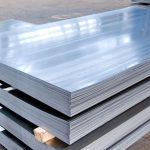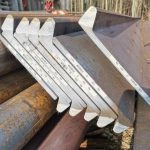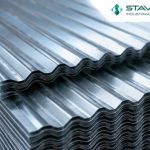
U-channel steel is a structural steel section with a U-shaped cross-section, consisting of a web and two flanges positioned on the same side. The product is also referred to as U-shaped steel, U steel, or U-channel. Its distinctive cross-sectional configuration makes the material widely used in construction, factory structures, mechanical fabrication, machine frames, supports, vehicle structures, infrastructure, and many industrial applications.
In addition to differences in section height, U-shaped steel sections also vary in flange width, web thickness, flange thickness, corner radius, weight per linear meter, and steel grade. Therefore, when selecting materials for a project, designations such as U100, U150, or U200 provide only preliminary information. Actual performance should be evaluated based on the complete technical specifications and applicable standards.
Within its range of project steel, Stavian Industrial Metal supplies various materials for civil, industrial, and infrastructure projects, including structural steel and steel sections. The following content focuses on the structure, U-channel steel specifications, weight, geometric properties, chemical composition, mechanical properties, and factors that should be checked before use.
U-channel steel is a steel section consisting of one web and two flanges, forming a shape similar to the letter U. For commonly used structural products, U-channel steel is generally manufactured by hot rolling and then cut to lengths appropriate to the applicable standard or order requirements.
The cross-sectional shape makes U-channel suitable for many bending members, edge members, secondary beams, machine frames, and support systems. The flat surfaces of the web and flanges also facilitate drilling, welding, bolting, or connection with gusset plates. This is one of the reasons U-channel steel is commonly used in both construction and mechanical fabrication.
A U-shaped steel section is generally described using the parameters H, B, t1, t2, r1, and r2. H represents the overall section height, B is the flange width, t1 and t2 indicate the web and flange thicknesses, while r1 and r2 represent the radii at the transition areas of the section.
In addition to geometric dimensions, engineers also consider cross-sectional area, weight per linear meter, centroid coordinates, moments of inertia, radii of gyration, and section moduli. These are essential data for structural calculations, deformation checks, and determining the performance of structural members.
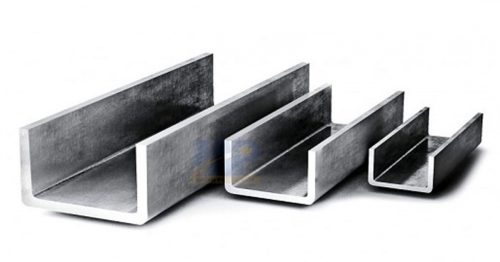
U-channel steel offers versatility in applications, from optimizing performance to enhancing the aesthetics of architectural and engineering structures
U-channel steel is widely used because of its relatively simple structure and its ability to form rigid structural members when correctly oriented relative to the applied loads. Depending on the specification, the material can be used in frame systems, secondary beams, support structures, or combined with steel plates and other steel sections.
The load-bearing capacity of U-channel steel does not depend only on the H × B dimensions. Web thickness, flange thickness, sectional properties, steel grade, connection conditions, and section orientation all have a direct impact. Therefore, two products both designated as U200 but having different detailed specifications should not be considered structurally equivalent.
Hot-rolled U-channel steel can be cut, drilled, welded, or bolted depending on the design. Its open section makes connection surfaces easy to access, particularly in machine frames, supports, working platforms, and prefabricated structural systems.
However, weldability and fabrication methods should be determined based on the steel grade, thickness, and material standard. For critical load-bearing members, welding procedures, welding consumables, edge preparation, and weld inspection should be considered together with the base material.
U-channel steel specifications vary widely, ranging from smaller sections such as U49, U50, U65, and U75 to larger sections such as U200, U250, U300, or U400. Designations based on section height provide only preliminary identification; accurate ordering and calculation require complete section dimensions, length, and unit weight.
Businesses can also refer to Stavian Industrial Metal’s steel section specifications and steel section reference tables when comparing U, H, I, C, or V steel sections.
The table below retains the specifications, lengths, and weights as originally presented for convenient reference. The kg/m and kg/piece values should be verified against the applicable standard, manufacturer, and documentation for the actual shipment before being used for acceptance inspection or settlement.
| U-channel steel specification | Length | Reference weight (kg/m) | Reference weight (kg/piece) |
|---|---|---|---|
| U49 × 24 × 2.5 | 6 m | 2.33 | 14.00 |
| U64.3 × 30 × 3.0 | 6 m | 2.83 | 16.98 |
| U75 × 40 × 3.8 | 6 m | 5.30 | 31.80 |
| U80 × 40 × 4.2 | 6 m | 5.08 | 30.48 |
| U100 × 42.5 × 3.3 | 6 m | 5.16 | 30.96 |
| U120 × 50 × 4 | 6 m | 6.92 | 41.52 |
| U125 × 65 × 6 | 12 m | 13.40 | 160.80 |
| U160 × 62 × 6 × 7 | 12 m | 14.00 | 168.00 |
| U180 × 64 × 6.0 | 12 m | 15.00 | 180.00 |
| U200 × 76 × 5.2 | 12 m | 18.40 | 220.80 |
| U300 × 82 × 7 | 12 m | 31.02 | 372.24 |
| U400 × 100 × 10.5 | 12 m | 58.93 | 707.16 |
For a designation such as U200 × 80 × 7.5 × 11, the numbers represent the primary section dimensions according to the convention used in the relevant table or by the manufacturer. When interpreting a specification, it is necessary to clearly identify the height H, flange width B, web thickness, and flange thickness. These values should not be inferred solely from the commercial designation.
This is particularly important for imported orders, engineering drawings, or projects that use multiple standard systems, where a common product designation may not be sufficient to identify the exact section. Purchasing documents should clearly specify the dimensions, length, steel grade, standard, and quantity.
A U-channel steel reference table provides not only H × B dimensions and weight in kg/m but also design data such as cross-sectional area, centroid coordinates, moments of inertia, radii of gyration, and section moduli. These parameters are particularly important when evaluating bending resistance and section stiffness.
In the table, Cx and Cy are the centroid coordinates; Ix and Iy represent the moments of inertia; ix and iy are the radii of gyration; and Wx and Wy are the section moduli about the respective axes. The symbol “—” indicates that no value is provided for that parameter.
| H × B (mm) | t1 | t2 | r1 | r2 | Cross-sectional area (cm²) | Weight (kg/m) | Cx (cm) | Cy (cm) | Ix (cm⁴) | Iy (cm⁴) | ix (cm) | iy (cm) | Wx (cm³) | Wy (cm³) |
|---|---|---|---|---|---|---|---|---|---|---|---|---|---|---|
| U65 × 32 | 4 | 6 | 7 | 3.5 | 6.088 | 4.78 | 0 | 1.02 | 39.01 | 5.374 | — | — | — | — |
| U75 × 40 | 5 | 7 | 8 | 4 | 8.818 | 6.92 | 0 | 1.28 | 75.3 | 12.2 | 2.92 | 1.17 | 20.1 | 4.47 |
| U100 × 50 | 5 | 7.5 | 8 | 4 | 11.92 | 9.36 | 0 | 1.54 | 188 | 26 | 3.97 | 1.48 | 37.6 | 7.52 |
| U125 × 65 | 6 | 8 | 8 | 4 | 17.11 | 13.4 | 0 | 1.90 | 424 | 61.8 | 4.98 | 1.90 | 67.8 | 13.4 |
| U150 × 70 | 6 | 8.5 | 9 | 4.5 | 20.09 | 15.8 | 0 | 2.00 | — | — | — | — | — | — |
| U150 × 75 | 6.5 | 10 | 10 | 5 | 23.71 | 18.6 | 0 | 2.28 | 861 | 117 | 6.03 | 2.22 | 115 | 22.4 |
| U150 × 75 | 9 | 12.5 | 15 | 7.5 | 30.59 | 24 | 0 | 2.31 | 1050 | 147 | 5.86 | 2.19 | 140 | 28.3 |
| U180 × 75 | 7 | 10.5 | 11 | 5.5 | 27.2 | 21.4 | 0 | 2.13 | 1380 | 131 | 7.12 | 2.19 | 153 | 24.3 |
| U180 × 90 | 7.5 | 12.5 | 13 | 6.5 | 34.57 | 27.1 | 0 | 2.85 | 1840 | 258 | 7.29 | 2.73 | 204 | 42 |
| U200 × 80 | 7.5 | 11 | 12 | 6 | 31.33 | 24.6 | 0 | 2.21 | 1950 | 168 | 7.88 | 2.32 | 195 | 29.1 |
| U200 × 90 | 8 | 13.5 | 14 | 7 | 38.65 | 30.3 | 0 | 2.74 | 2490 | 277 | 8.02 | 2.68 | 249 | 44.2 |
| U220 × 77 | 7 | 11.5 | 11.5 | 5.7 | 31.84 | 24.99 | — | — | — | — | — | — | — | — |
| U250 × 80 | 8 | 12.5 | 14 | 7 | 38.51 | 30.2 | 0 | 2.11 | 3630 | 210 | 9.71 | 2.34 | 291 | 35.7 |
| U250 × 90 | 9 | 13 | 14 | 7 | 44.07 | 34.6 | 0 | 2.40 | 4180 | 294 | 9.74 | 2.58 | 334 | 44.5 |
| U250 × 90 | 11 | 14.5 | 17 | 8.5 | 51.17 | 40.2 | 0 | 2.40 | 4680 | 329 | 9.56 | 2.54 | 374 | 49.9 |
| U280 × 100 | 9 | 13 | 14 | 7 | 49.37 | 38.8 | 0 | 2.64 | 5930 | 428 | 11.0 | 2.95 | 423 | 58.2 |
| U280 × 100 | 11.5 | 16 | 18 | 9 | 61.37 | 48.2 | 0 | 2.68 | 7150 | 515 | 10.8 | 2.90 | 510 | 70.4 |
| U300 × 90 | 9 | 13 | 14 | 7 | 48.57 | 38.1 | 0 | 2.22 | 6440 | 309 | 11.5 | 2.52 | 429 | 45.7 |
| U300 × 90 | 10 | 15.5 | 19 | 9.5 | 55.74 | 43.8 | 0 | 2.34 | 7410 | 360 | 11.5 | 2.54 | 494 | 54.1 |
| U300 × 90 | 12 | 16 | 19 | 9.5 | 61.90 | 48.6 | 0 | 2.28 | 7870 | 379 | 11.3 | 2.48 | 525 | 56.4 |
| U380 × 100 | 10.5 | 16 | 18 | 9 | 69.39 | 54.5 | 0 | 2.41 | 14500 | 535 | 14.5 | 2.78 | 763 | 70.5 |
| U380 × 100 | 13 | 16.5 | 18 | 9 | 78.96 | 62 | 0 | 2.33 | 15600 | 565 | 14.1 | 2.67 | 823 | 73.6 |
| U380 × 100 | 13 | 20 | 24 | 12 | 85.71 | 67.3 | 0 | 2.54 | 17600 | 655 | 14.3 | 2.76 | 926 | 87.8 |
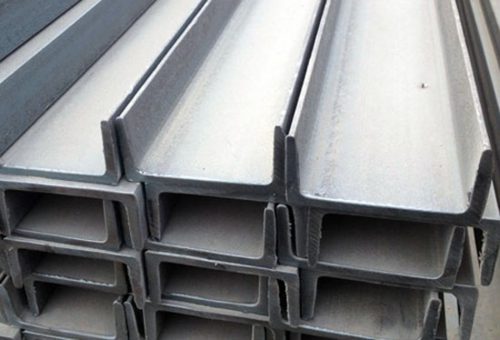
U-channel steel is a prominent type of steel known for its rigidity, strength, and high durability
Weight is a particularly important parameter when purchasing U-channel steel, as it directly affects order value, transportation costs, handling requirements, and structural calculations. In practice, two U100 sections with the same overall height but different web and flange thicknesses may have different weights per linear meter.
In international trade, orders are often calculated by tonnage, while structural engineers work with linear meters and load-bearing capacity. Buyers should therefore compare theoretical weight tables, mill certificates, and the actual quantities received. This is especially important for projects requiring strict material consumption control or weight-based tendering.
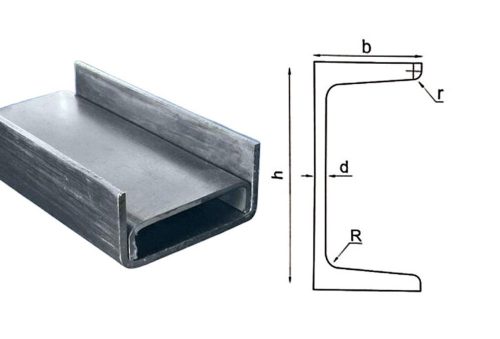
The division of U-channel steel into five main dimensional parameters, measured in mm as b, h, d, r, and R, helps investors select suitable products according to specific requirements
U-channel steel can be manufactured according to various standard systems depending on the market, mill, and project requirements. Common steel grades in the structural steel category include SS400, SS490, A36, and corresponding material groups under different technical standards.
When selecting a steel grade, the chemical composition, yield strength, tensile strength, elongation, and requirements relating to weldability or impact resistance should be checked. Two steel grades under different standard systems should not automatically be considered equivalent unless all relevant technical parameters have been thoroughly compared.
For hot-rolled U-channel steel, TCVN 7571-11:2019 specifies requirements relating to classification, chemical composition, mechanical properties, shape, dimensions, tolerances, and testing methods. Some related referenced standards include:
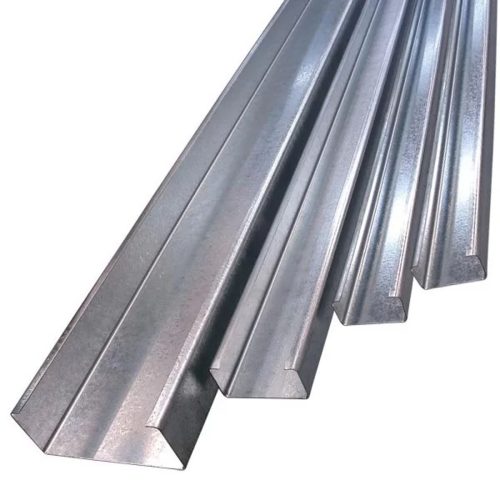
U-channel steel offers several notable advantages, including effective fire resistance, low cost, and consistent quality
The chemical composition of U-channel steel affects its mechanical properties, weldability, and in-service performance. Commonly controlled elements include carbon C, silicon Si, manganese Mn, phosphorus P, and sulfur S. For certain steel grades, carbon equivalent Ceq and PCM are also limited.
The table below shows the chemical composition limits corresponding to the USGS, USWS, and USBS groups. The symbol “—” indicates that no requirement is specified for the relevant parameter.
| Steel type | Maximum C | Maximum Si | Mn | Maximum P | Maximum S | Maximum Ceq | Maximum PCM |
|---|---|---|---|---|---|---|---|
| USGS 400 | — | — | — | 0,050 | 0,050 | — | — |
| USGS 490 | — | — | — | 0,050 | 0,050 | — | — |
| USGS 540 | 0,30 | — | ≤ 1,60 | 0,040 | 0,040 | — | — |
| USWS 400A | 0,23 | — | ≥ 2,5 × C | 0,035 | 0,035 | — | — |
| USWS 400B | 0,20 | 0,35 | 0,60 – 1,50 | 0,035 | 0,035 | — | — |
| USWS 400C | 0,18 | 0,35 | 0,60 – 1,50 | 0,035 | 0,035 | — | — |
| USWS 490A | 0,20 | 0,55 | ≤ 1,65 | 0,035 | 0,035 | — | — |
| USWS 490B | 0,18 | 0,55 | ≤ 1,65 | 0,035 | 0,035 | — | — |
| USWS 490C | 0,18 | 0,55 | ≤ 1,65 | 0,035 | 0,035 | — | — |
| USWS 520B | 0,20 | 0,55 | ≤ 1,65 | 0,035 | 0,035 | — | — |
| USWS 520C | 0,20 | 0,55 | ≤ 1,65 | 0,035 | 0,035 | — | — |
| USWS 570 | 0,18 | 0,55 | ≤ 1,70 | 0,035 | 0,035 | 0,44 | 0,28 |
| USBS 400A | 0,24 | — | — | 0,050 | 0,050 | — | — |
| USBS 400B | 0,20 | 0,35 | 0,60 – 1,50 | 0,030 | 0,015 | 0,36 | 0,26 |
| USBS 400C | 0,20 | 0,35 | 0,60 – 1,50 | 0,020 | 0,008 | 0,36 | 0,26 |
| USBS 490B | 0,18 | 0,55 | ≤ 1,65 | 0,030 | 0,015 | 0,44 | 0,29 |
| USBS 490C | 0,18 | 0,55 | ≤ 1,65 | 0,020 | 0,008 | 0,44 | 0,29 |
Ceq is the carbon equivalent, while PCM is the weldability-sensitive carbon equivalent index. These two parameters are particularly useful when assessing the weldability of structural steel, in addition to the composition of individual elements.
The mechanical properties of U-channel steel provide the basis for evaluating the load-bearing performance of the material. Commonly controlled parameters include yield strength, tensile strength, elongation, energy absorbed in Charpy impact testing, and bendability.
Material thickness may affect the required yield strength or elongation. Therefore, when reading a mechanical properties table, both the steel grade and the thickness range t should be considered rather than applying one general value to the entire product range.
| Steel grade designation | Minimum yield strength (MPa) | Tensile strength (MPa) | Minimum elongation (%) | Charpy impact test (t ≥ 12 mm) | Bend test | |||||
|---|---|---|---|---|---|---|---|---|---|---|
| t ≤ 16 | 16 < t ≤ 40 | t ≤ 5 | 5 < t ≤ 16 | 16 < t ≤ 50 | Temperature (°C) | Minimum absorbed energy (J) | Bend angle | Bend radius | ||
| USGS 400 | 245 | 235 | 400-510 | 21 | 17 | 21 | — | — | 180° | 1,5 × t |
| USGS 490 | 285 | 275 | 490-610 | 19 | 15 | 19 | — | — | 180° | 2,0 × t |
| USGS 540 | 400 | 390 | ≥ 540 | 16 | 13 | 17 | — | — | 180° | 2,0 × t |
| USWS 400A | 245 | 235 | 400-510 | 23 | 18 | 22 | — | — | — | — |
| USWS 400B | 245 | 235 | 400-510 | 23 | 18 | 22 | 0 | 27 | — | — |
| USWS 400C | 245 | 235 | 400-510 | 23 | 18 | 22 | 0 | 47 | — | — |
| USWS 490A | 325 | 315 | 490-610 | 22 | 17 | 21 | — | — | — | — |
| USWS 490B | 325 | 315 | 490-610 | 22 | 17 | 21 | 0 | 27 | — | — |
| USWS 490C | 325 | 315 | 490-610 | 22 | 17 | 21 | 0 | 47 | — | — |
| USWS 520B | 365 | 355 | 520-640 | 19 | 15 | 19 | 0 | 27 | — | — |
| USWS 520C | 365 | 355 | 520-640 | 19 | 15 | 19 | 0 | 47 | — | — |
| USWS 570 | 460 | 450 | 570-720 | 19 (t ≤ 16) | 26 (16 < t ≤ 20) | 20 (t > 20) | -5 | 47 | — | — |
| USBS 400A | 235 (6 < t ≤ 40) | 400-510 | — | 17 (6 ≤ t ≤ 16) | 21 | — | — | — | — | |
| USBS 400B | 235 (6 ≤ t < 12) | 235-355 (12 ≤ t ≤ 40) | 400-510 | — | 18 (6 ≤ t ≤ 16) | 22 (16 < t ≤ 40) | 0 | 27 | — | — |
| USBS 400C | — | 235-355 (16 ≤ t ≤ 40) | 400-510 | — | 18 (6 ≤ t ≤ 16) | 22 (16 < t ≤ 40) | 0 | 27 | — | — |
| USBS 490B | 325 (6 ≤ t < 12) | 325-445 (12 ≤ t ≤ 40) | 490-610 | — | 17 (6 ≤ t ≤ 16) | 21 (16 < t ≤ 40) | 0 | 27 | — | — |
| USBS 490C | — | 325-445 (16 ≤ t ≤ 40) | 490-610 | — | 17 (6 ≤ t ≤ 16) | 21 (16 < t ≤ 40) | 0 | 27 | — | — |
In the table above, t is the thickness at the sampling location and is measured in millimeters. For the Charpy parameter, absorbed energy is determined using the applicable test specimen system. When applying the data to technical documentation, the exact material grade and thickness range must be verified.
In addition to classification by steel grade and structural application, U-channel steel can also be distinguished by forming method. The two common categories are hot-rolled U-channel steel and press-brake-formed U sections made from steel plate or strip.
These two methods may produce sections with relatively similar external shapes, but they should not automatically be assumed to have the same structural characteristics. For load-bearing members, any substitution should be evaluated based on sectional properties, base material, and design requirements.
Hot-rolled U-channel steel is formed during rolling at high temperatures. The sections are generally manufactured according to dimensions and tolerances specified by the relevant standard. This category is widely used in structural steelwork, mechanical fabrication, and large-volume projects.
One advantage of hot-rolled U-channel steel is the standardization of its specifications, which facilitates design, quantity takeoff, and material management. However, different mills and standard systems may offer different dimensional ranges.
Press-brake-formed U-channel steel is produced by bending steel plate or steel strip into the required shape. This method is suitable when the required dimensions are not available within standard hot-rolled U-channel ranges or when section height, flange width, and thickness need to be customized according to drawings.
For press-brake-formed U sections, corner radius, tolerances, base material quality, and formability are factors that must be controlled. When the member serves a load-bearing function, a press-brake-formed U section should not be directly substituted for a hot-rolled U-channel solely on the basis of external dimensions.
Galvanized U-channel steel is a product with a protective zinc coating on the surface of the base steel. The primary purpose of the coating is to reduce the effects of the environment on the steel surface. Depending on the manufacturing method, the section may be formed from pre-galvanized material or galvanized after the U-shaped member has been fully fabricated.
The appropriate coating type depends on the operating environment, service-life requirements, fabrication methods, and project standards. Coating quality should not be evaluated solely by the color or brightness of the surface.
With hot-dip galvanizing, the fabricated component undergoes surface preparation and is immersed in molten zinc to form a zinc coating. This method is commonly considered for outdoor applications or environments with a risk of corrosion.
When designing members that will be galvanized after fabrication, component dimensions, drainage holes, connections, and coating requirements should be taken into account. Galvanizing quality must be assessed according to the technical standards applicable to the project.
Electro-galvanizing is the process of applying a zinc coating using an electrochemical method. Compared with hot-dip galvanizing, the coating is generally thinner, and the surface may be suitable for applications requiring a relatively uniform finish.
However, the scope of use should be determined based on the corrosiveness of the environment. Electro-galvanizing and hot-dip galvanizing should not be regarded as completely equivalent solutions.
At Stavian Industrial Metal, we are proud to be a leading trusted partner in Vietnam’s industrial metal materials trading sector. With professionalism and a strong commitment to quality, we have established our position not only in supplying U-channel steel but also across our entire product portfolio.
Every product supplied by Stavian Industrial Metal undergoes a rigorous quality inspection process to ensure that it meets or exceeds the highest quality standards. This enables us to provide customers with reliable and safe products for a wide range of applications.
We understand that time is important to our customers. Therefore, our workforce and vehicle fleet are always ready to provide 24/7 delivery services. With our commitment to speed and punctuality, we help customers save time and optimize their construction processes.

Stavian Industrial Metal is proud to be a leading trusted partner in Vietnam’s industrial metal materials trading sector
Stavian Industrial Metal not only provides confidence in product quality and value but also demonstrates sincerity in its relationships with customers. In addition to U-channel steel, we supply a wide range of other products such as H-beam steel, I-beam steel, V-angle steel, and more to meet the diverse needs of customers nationwide.
Every order placed with Stavian Industrial Metal is supported by a pre-payment inspection policy. Customers have the right to inspect the products before making payment, helping ensure satisfaction and product quality.
U-channel steel is an important structural material used across many sectors, including construction, mechanical fabrication, infrastructure, logistics, and energy. Thanks to its U-shaped cross-section, the product offers good load-bearing performance, ease of fabrication, convenient installation, and suitability for a wide range of technical requirements.
To select U-channel steel effectively, buyers should consider specifications, weight, steel grade, manufacturing standards, quality certificates, surface condition, corrosion protection methods, and supplier capabilities. In the context of a global steel market facing oversupply pressure, price competition, and increasingly complex trade regulations, selecting the right supplier has become a critical factor.
Stavian Industrial Metal aims to provide transparent, professional industrial metal solutions that meet international trade requirements. For U-channel steel orders, the right approach is not merely to purchase steel, but to ensure the correct standard, correct application, correct delivery schedule, and optimized long-term utilization efficiency for each project.
LEARN MORE
Address
Website: https://stavianmetal.com
Email: info@stavianmetal.com