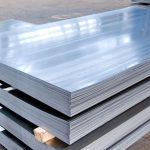
Structural steel price is one of the most important cost variables in construction, infrastructure, industrial fabrication and engineering projects. For contractors, EPC companies, fabricators and international steel buyers, even a relatively small change in the price of beams, channels, angles or structural plates can have a significant impact on project budgets, tender competitiveness and final margins.
The steel market in 2026 remains highly dynamic. Prices are influenced not only by steelmaking costs, but also by iron ore, scrap, coking coal, electricity, mill utilization, trade measures, freight, regional inventory and construction demand. In the United States, for example, hot-rolled coil benchmarks were around USD 1,170–1,200 per short ton in August 2026, while published market indications for an 8×8 wide-flange structural beam reached approximately USD 1,700 per short ton ex-works after another round of mill increases. Steel plate benchmarks were also around USD 1,330 per short ton during August. These figures demonstrate why buyers should not rely on an early-2026 quotation when budgeting a project several months later.
At the same time, there is no single worldwide structural steel price per ton. An ASTM A36 plate shipped to Southeast Asia, an SS400 H-beam purchased in Vietnam and an A992 wide-flange beam delivered to a project in North America can have materially different price structures. Stavian Industrial Metal therefore recommends evaluating structural steel on a specification, origin, quantity and delivery basis rather than using one headline market number. Through its construction steel portfolio, Stavian Industrial Metal supplies structural steel, section steel, rebar, wire rod, structural plate and related products for infrastructure, civil and industrial applications.
The structural steel price in 2026 varies substantially depending on market, product type and purchasing channel. Early-2026 North American mill-order indications for common wide-flange sections were often discussed around USD 900–1,150 per ton, while service-center orders could reach approximately USD 1,100–1,400 per ton. By August 2026, however, the market had strengthened. Published U.S. mill list indications showed selected wide-flange beam products reaching approximately USD 1,700 per short ton ex-works.
This change illustrates an important principle in steel procurement: a structural steel cost table should always be associated with a specific date. Prices published six months earlier may no longer represent the replacement cost of material. During August 2026, U.S. HRC market references were broadly around USD 1,170–1,200 per short ton, while steel plate market references were approximately USD 1,330 per short ton. Planned mill outages, limited spot availability and longer lead times were supporting higher prices in parts of the North American market.
For HSS, angles, channels, I-beams, H-beams and plates, actual quotations depend on dimensions and grade. Common sections manufactured continuously generally benefit from higher availability and more efficient production. Heavy beams, uncommon channels, special-strength grades and non-standard dimensions can carry significant premiums. Buyers should therefore treat the following levels as market context rather than a binding quotation.
| Structural Steel Product | Indicative 2026 Market Context | Main Pricing Variables |
|---|---|---|
| Wide-flange / H-beam | Strong regional variation; selected U.S. mill list prices reached about USD 1,700/short ton in August 2026 | Section size, grade, mill, availability, order volume |
| HSS / structural tube | Usually carries a processing premium over basic commodity sections | Wall thickness, shape, grade, coating, production route |
| Angles and channels | Commodity sizes generally lower than specialty or heavy sections | Dimensions, origin, rolling schedule, quantity |
| Structural steel plate | U.S. reference plate prices around USD 1,330/short ton in August 2026 | Grade, thickness, width, testing, processing |
| Hot-rolled coil | Approximately USD 1,170–1,200/short ton in U.S. August 2026 market references | Regional supply, imports, mill capacity, inventory |
For an actual project quotation, buyers should provide a bill of quantities or section list including material standard, grade, dimensions, length, total tonnage, coating requirement, inspection documents and delivery destination.
H-beam steel price is particularly important for warehouses, factories, high-rise buildings, bridges, platforms and heavy industrial structures. H-beams provide a favorable relationship between sectional efficiency, bending resistance and structural weight, making them one of the most widely specified products in structural engineering.
Pricing depends heavily on flange width, web thickness, unit weight and steel grade. Standard H100, H150, H200 or H300 sections may be easier to source than exceptionally heavy or project-specific beams. A larger beam is therefore not automatically priced at exactly the same rate per ton as a smaller beam. Production availability, rolling campaign and inventory turnover all influence the quotation.
Buyers evaluating H-section specifications can review Stavian Industrial Metal’s technical guide to H-beam steel, including common dimensions, weights, grades and international standards.
I-beam steel price is generally quoted per kilogram, metric ton or individual length. Total cost is calculated from the theoretical or actual unit weight multiplied by the quantity required. Because different I-sections can have significantly different kg/m values, comparing only the price per piece can be misleading.
For example, specifications such as I250, I300 and I400 have different flange, web and unit-weight characteristics. Buyers should compare price per ton together with the structural design requirement rather than simply choosing the section with the lowest price per bar. Stavian Industrial Metal provides additional dimensional and commercial references for I300 steel and other structural sections.
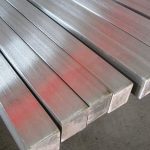
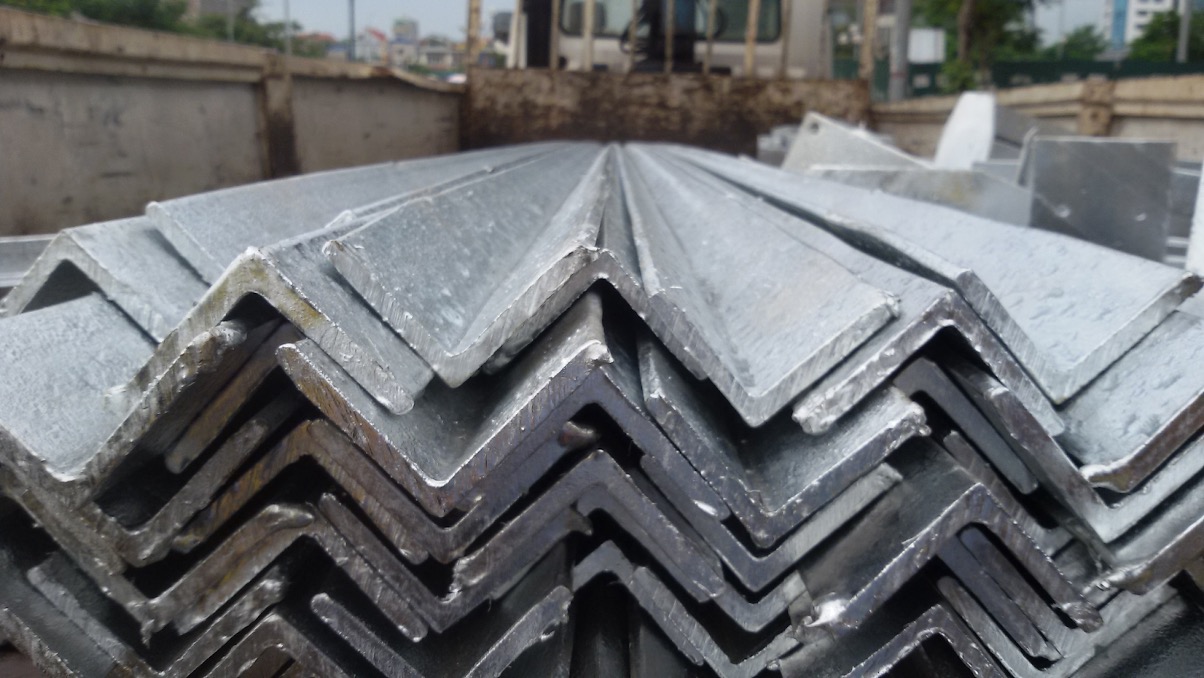
Channel steel and angle steel are widely used for secondary framing, bracing, supports, machinery structures, platforms and connection details. Standard sizes can often be purchased economically through distributors, while uncommon dimensions or higher-strength grades may need to be sourced directly through mills or specialized supply channels.
In the U.S. market, merchant bar mills announced additional increases during August 2026 for several angle and channel products. This is another example of how section-specific pricing can move independently from flat steel benchmarks. A contractor should therefore avoid applying one generic percentage increase to every line item in a structural steel bill of materials.
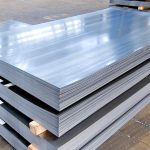
Structural steel plate price depends on grade, thickness, width, length, production route and additional testing. Typical structural grades include ASTM A36, ASTM A572, JIS SS400, Q235, Q345, Q355 and EN structural grades such as S235, S275 and S355, depending on project requirements.
Plate thickness is especially important. Thin and medium plate can follow different production economics from heavy plate. Cut-to-size requirements, edge preparation, shot blasting, primer application and ultrasonic testing can increase the final delivered cost. For a detailed overview of grades, standards and purchasing considerations, buyers can refer to Stavian Industrial Metal’s steel plate guide.
The purchase price of steel is only one component of the final cost of a structural frame. A project that purchases USD 1,200 per ton of raw steel cannot assume that its completed structure will cost USD 1,200 per ton. Fabrication, welding, drilling, cutting, coating, engineering, freight and erection can add as much or more than the raw material itself.
For budgeting purposes, North American structural fabrication projects have historically shown large differences according to project complexity. A repetitive warehouse frame with simple bolted connections can sit near the lower end of the cost range, whereas hospitals, high-rise buildings, industrial plants or structures containing moment connections and complex geometry can require significantly more fabrication hours per ton.
| Cost Component | Typical Cost Consideration | Main Variables |
|---|---|---|
| Raw structural steel | Material price per ton | Section, grade, origin, mill/service center |
| Cutting and fabrication | Shop labor and machine time | Connection complexity, holes, coping, welding |
| Engineering and shop drawings | Detailing and coordination | Project complexity and BIM requirements |
| Surface protection | Primer, paint or galvanizing | Coating system and environment |
| Inspection | NDT, dimensional checks and documentation | Project specification |
| Freight | Mill-to-shop and shop-to-site logistics | Distance, length, load configuration, fuel |
| Erection | Site labor and equipment | Crane requirements, access, project height |
Consequently, procurement teams should distinguish between raw structural steel price, fabricated steel price and installed structural steel cost. Mixing these metrics is a common reason why two quotations appear dramatically different even when their actual scope is not comparable.
Global steel supply remains substantial, but availability is not evenly distributed across regions or product categories. China produced 76.93 million metric tons of crude steel in July 2026, down 3.6% year on year. Production during the first seven months of 2026 declined approximately 3.1% year on year to 577.04 million tons. Lower production can influence export availability, raw-material purchasing and regional steel prices.
At the same time, steel inventories and downstream demand do not move uniformly. Weakness in one construction market can coexist with strong infrastructure, energy, manufacturing or export demand elsewhere. This divergence is one reason global steel prices do not necessarily move in one direction at the same time.
Iron ore price, ferrous scrap and coking coal remain major inputs into steelmaking economics. Their importance depends on whether steel is produced through the blast furnace/basic oxygen furnace route or an electric arc furnace route. In mid-2026, iron ore continued trading in a relatively contained range around the USD 90–100 per ton area, while coking coal costs became a major pressure point for several blast-furnace producers.
India provides a useful example. Coking coal accounts for a substantial proportion of blast-furnace steelmaking cost, and Indian mills were facing rising input costs in 2026 because of supply disruptions and higher freight and insurance expenses. Changes in raw-material costs do not always pass into finished steel immediately, but prolonged increases eventually place pressure on mill margins and offer prices.
Trade policy has become an increasingly important component of the structural steel price. Tariffs, anti-dumping duties, safeguard mechanisms, quotas and country-of-origin restrictions can change the economics of imported material within weeks.
The U.S. market in 2026 illustrates this effect clearly. Reduced import competitiveness and tight domestic spot availability supported higher steel prices, while buyers increasingly compared domestic mill offers with imported alternatives. International procurement teams must therefore calculate landed steel cost rather than simply comparing FOB mill prices.
Lead time matters because price and availability are interconnected. When mills have large order backlogs or maintenance shutdowns, buyers requiring immediate material may need to source through distributors or service centers, often at a premium.
In the U.S., planned steel mill outages between September and December 2026 were expected to affect more than one million short tons of hot-rolled coil production. Market reports in August also indicated spot lead times of approximately 8–12 weeks in parts of the market. While HRC is not identical to structural beams, these conditions reflect broader tightness in the steel supply chain and affect sentiment across related steel products.
Steel is a high-density product, which makes logistics a meaningful proportion of landed cost. The same structural section can have a very different delivered price depending on whether the buyer is located close to a producing mill, distribution warehouse, seaport or inland project site.
International quotations should therefore specify Incoterms and destination clearly. A USD/MT FOB offer cannot be compared directly with a delivered duty-paid quotation. Ocean freight, port handling, import taxes, trucking, storage and finance costs must all be considered when determining the real structural steel cost per ton.
For projects with long lead times, a material escalation mechanism can protect both contractor and buyer from abnormal price movements. The contract may establish a base steel price, a recognized index, a percentage threshold and a defined adjustment method.
This approach is particularly relevant when bidding a project six to twelve months before material procurement. Without an escalation clause, the contractor may effectively be speculating on future steel prices.
During stable market conditions, a structural steel quotation may remain workable for several weeks. In volatile periods, however, suppliers may shorten validity to seven, fifteen or thirty days, particularly for imported or mill-direct material.
The purchaser should also check whether the quotation protects the price after purchase order confirmation or only after mill acceptance. This distinction is important when the mill is adjusting its list prices frequently.
Early procurement can reduce exposure to both price escalation and availability risk. For long-lead beams, heavy plates or special grades, securing mill allocation soon after design freeze can provide more predictable project execution.
However, early purchasing must be coordinated carefully with engineering. Buying material before the structural design is sufficiently mature can create excess inventory, unusable lengths or expensive rework. Procurement timing therefore requires cooperation between engineering, estimating, fabrication and commercial teams.
Material price risk receives substantial attention, but quantity error can be equally costly. Assume a project requires 300 tons of structural steel at USD 1,300 per ton. A 5% underestimate equals 15 tons of unbudgeted steel, equivalent to USD 19,500 in raw material before fabrication, coating and freight.
Accurate takeoffs should include primary members, secondary members, plates, stiffeners, connection materials, bolts, waste, cutting allowances and project-specific accessories. A quotation built around precise quantities will always provide better margin control than one based only on an approximate tonnage-per-square-meter assumption.
Heavy structural sections may have a higher steel price per ton because they are produced less frequently, require more specialized rolling schedules and may have lower distributor inventory. A common H200 section and a very heavy column section should not automatically be budgeted at the same rate.
When the project uses high-strength grades such as ASTM A572 Grade 50 or EN S355, buyers must also check whether the required section is routinely available in that grade. Material substitution without engineering approval should never be used simply to reduce procurement cost.
Structural beams are commonly supplied in standard commercial lengths, but project designs may require longer members. Extremely long sections can increase mill-order restrictions, loading complexity and transportation cost.
In some cases, a designer may compare one long member with a shorter section plus a field or shop splice. The optimum solution must consider material price, connection cost, welding, erection and structural performance together.
A buyer purchasing several hundred tons of common structural steel may have access to different commercial conditions from a customer purchasing five or ten tons. Low-volume requirements often move through distributor or service-center inventory and include handling, storage and smaller-order margins.
Combining compatible material requirements into consolidated orders can improve purchasing efficiency. However, buyers should not purchase excessive stock solely to obtain a lower nominal price per ton because inventory financing and storage also have costs.
The 2026 structural steel market remains difficult to forecast using a single direction. Several supply-side factors support firm pricing in markets such as North America, including limited spot availability, mill maintenance and trade restrictions. At the same time, weaker construction conditions in parts of Asia and substantial global steelmaking capacity continue to limit unlimited price escalation.
China’s crude steel output declined during the first seven months of 2026, while construction-related demand remained under pressure. Meanwhile, other sectors such as automotive manufacturing and technology-related investment provided stronger demand. Globally, this combination creates a market characterized by regional divergence rather than a synchronized steel cycle.
For procurement managers, the practical conclusion is that trying to predict the exact lowest point of the steel market is less reliable than developing a disciplined purchasing strategy. Buyers should monitor relevant regional benchmarks, obtain updated supplier offers, identify critical long-lead sections and compare alternative origins while maintaining full compliance with technical requirements.
Stavian Industrial Metal provides comprehensive industrial metal trading and supply solutions for customers in Vietnam and international markets. As part of Stavian Group’s broader ecosystem, Stavian Industrial Metal benefits from an extensive business and distribution network connecting partners across more than 100 countries and territories.
For construction and structural applications, Stavian Industrial Metal supplies a diversified construction steel product portfolio suitable for civil construction, transportation infrastructure, ports, industrial parks, factories and steel structures.
Stavian Industrial Metal supplies structural steel plate in common grades including SS400, Q235, Q345, Q355, ASTM A36 and ASTM A572, depending on specification and supply availability. Products can support infrastructure, industrial buildings, mechanical fabrication, factories and other structural applications.
Plate requirements should clearly define grade, thickness, dimensions, quantity and certification. Buyers with general fabrication requirements can also refer to Stavian Industrial Metal’s 5mm steel plate guide for information on common grades and applications.
Section steel is an essential component of industrial and commercial structural systems. Stavian Industrial Metal’s construction steel portfolio includes L sections, C sections, I sections and other structural shapes, tubes, box sections and purlins depending on project demand.
Typical applications include factory frames, warehouse structures, industrial platforms, equipment supports, infrastructure and steel structure projects. Customers can specify product dimensions, standard, grade, required length and destination to obtain a project-specific supply solution.
Hot-rolled steel provides the feedstock and structural material required across construction, fabrication and industrial manufacturing. Stavian Industrial Metal’s portfolio covers hot-rolled coils and plates in common grades such as Q235, Q195, SAE 1006, SAE 1008, SS400, Q355, A36 and A572, subject to project specifications and availability.
Its hot-rolled product range supports international standards including JIS, ASTM, SAE, EN and GB-related specifications, enabling buyers to match material to local engineering and fabrication requirements.
For applications exposed to humidity, weather or corrosive conditions, galvanized and coated products provide an alternative to unprotected carbon steel. Zinc coating improves corrosion resistance and can reduce maintenance requirements over the service life of the structure.
Stavian Industrial Metal supplies galvanized steel products and other coated steel solutions for construction and industrial applications, with product selection based on base grade, coating mass, dimensions and intended environment.
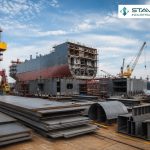
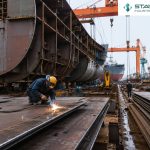
Structural steel requirements extend beyond buildings. Marine and offshore projects require specialized plates and sections with stringent toughness, welding and certification requirements. Stavian Industrial Metal is also a large-scale supplier of shipbuilding steel, including plates, sections and bulb flats for marine applications.
This broader steel portfolio enables Stavian Industrial Metal to support customers operating across construction, shipbuilding, infrastructure, manufacturing, mechanical engineering and heavy industry.
Structural steel price in 2026 is influenced by a combination of raw-material costs, mill capacity, tariffs, regional demand, inventory, freight and product-specific availability. The U.S. market strengthened materially during 2026, with August benchmarks showing HRC around USD 1,170–1,200 per short ton, plate around USD 1,330 per short ton and selected wide-flange beam list prices reaching approximately USD 1,700 per short ton. These market references also demonstrate why steel prices should always be evaluated by date, geography and exact specification.
For contractors, EPC companies, fabricators and industrial buyers, successful procurement requires more than finding the lowest steel price per ton. Accurate quantity takeoffs, appropriate grades, certification, realistic freight calculations, quotation validity, lead-time management and total landed cost are equally important to protecting project margins.
Stavian Industrial Metal provides comprehensive solutions across structural steel, construction steel and industrial steel products, including section steel, structural plates, hot-rolled products, coated steel and specialized materials. With an extensive international network and experience in industrial metal trading, Stavian Industrial Metal supports customers in selecting appropriate specifications and building reliable supply solutions for infrastructure, factories, warehouses, mechanical fabrication, shipbuilding and other demanding industrial projects.
Address
Website: https://stavianmetal.com
Email: info@stavianmetal.com