Galvanized steel price is an important factor when selecting materials for construction projects, factories and mechanical manufacturing. Prices can vary significantly depending on steel thickness, zinc coating mass, dimensions and brand. In addition to cost, buyers should also consider material quality and corrosion resistance. In this article, Stavian Industrial Metal provides reference price lists and examines the characteristics, classifications and applications of galvanized steel.
Galvanized steel prices in 2026 vary between products used in residential construction and industrial manufacturing. Corrugated galvanized roofing sheets are commonly priced per linear meter or square meter, while galvanized steel coils intended for fabrication may be quoted per kilogram, metric ton or linear meter, depending on specifications and supplier policies.
For residential galvanized roofing sheets with commonly used thicknesses ranging from 0.24 to 0.50 mm, reference prices are approximately 40,000 – 105,000 VND/m². This range is intended for preliminary cost estimation rather than representing a fixed price for every product. Actual prices depend on zinc coating grade, actual steel thickness, brand, processing requirements and delivery location.
Below is a 2026 galvanized steel reference price list for commonly used construction specifications. Prices are calculated per square meter and exclude VAT.
| Nominal Thickness (mm) | Common Commercial Designation | Reference Price (VND/m²) |
|---|---|---|
| 0.24 | 2.4 dem | 40,000 – 45,000 |
| 0.27 | 2.7 dem | 43,000 – 48,000 |
| 0.30 | 3 dem | 46,000 – 55,000 |
| 0.32 | 3.2 dem | 48,000 – 58,000 |
| 0.35 | 3.5 dem | 51,000 – 63,000 |
| 0.38 | 3.8 dem | 54,000 – 68,000 |
| 0.40 | 4 dem | 57,000 – 74,000 |
| 0.43 | 4.3 dem | 62,000 – 81,000 |
| 0.45 | 4.5 dem | 68,000 – 88,000 |
| 0.48 | 4.8 dem | 71,000 – 95,000 |
| 0.50 | 5 dem | 75,000 – 105,000 |
| 0.58 | 5.8 dem | 92,000 – 120,000 |
Note: This galvanized steel price list is provided for general market reference only and does not represent a direct sales quotation from Stavian Industrial Metal. Prices may change depending on the purchasing date, origin, brand, zinc coating mass, product specifications and order quantity. Some thicknesses listed above belong to the broader residential roofing market and are not necessarily included in Stavian Industrial Metal’s GI steel product portfolio.
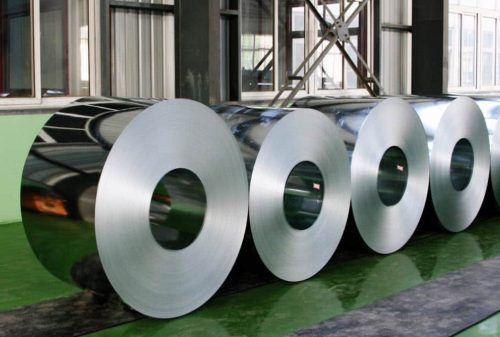
Galvanized steel prices depend on thickness, product specifications, zinc coating and supply form.
For corrugated galvanized steel sheets, many distributors quote prices per linear meter. However, this pricing method is meaningful only when the sheet width is clearly specified, particularly the original material width and the effective cover width after roll forming.
Two roofing sheets with the same length but different widths contain different amounts of material and therefore have different costs.
The following reference price list applies to selected corrugated steel profiles with an effective cover width of approximately 1,070 mm.
| Thickness (mm) | Reference Weight (kg/m) | Reference Price (VND/m) |
|---|---|---|
| 0.30 | 2.40 | 68,000 – 82,000 |
| 0.35 | 2.80 | 78,000 – 92,000 |
| 0.40 | 3.20 | 88,000 – 105,000 |
| 0.45 | 3.60 | 99,000 – 118,000 |
| 0.50 | 4.00 | 112,000 – 132,000 |
| 0.55 | 4.40 | 123,000 – 145,000 |
| 0.60 | 4.80 | 135,000 – 158,000 |
Note: These figures are historical reference prices for corrugated galvanized roofing sheets and have not been confirmed as valid for October 2026. The listed weights are indicative commercial specifications and should not be treated as universal theoretical weights for all galvanized steel products.
When comparing the galvanized steel price per linear meter, buyers should also verify the developed sheet width, overlap allowance, base steel thickness and corrugation profile. This approach helps prevent confusion between the material price and the actual roofing area that can be covered.
Galvanized steel coil prices are determined according to the requirements of industrial production and fabrication. Manufacturers generally select materials based on thickness, width, coil weight, zinc coating grade, mechanical properties and applicable product standards.
For this reason, galvanized steel coil prices should not be compared directly with prices for finished corrugated roofing sheets.
In the industrial steel market, quotations per kilogram or metric ton provide a clearer indication of material quantity. In addition to the steel substrate price, costs are influenced by zinc coating mass and surface treatment requirements.
For orders requiring slitting or cut-to-length processing, fabrication charges and material losses should also be included in the total budget.
Customers can refer to Stavian Industrial Metal’s information on galvanized steel coils to compare material specifications and available supply forms.
Galvanized steel, also known as zinc-coated steel or GI galvanized steel, is steel covered with a protective zinc layer to improve corrosion resistance. In steel sheet and coil manufacturing, hot-dip galvanizing is widely used to create a protective coating on the steel surface.
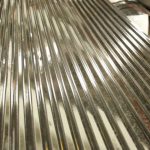
Unlike color coated steel, standard galvanized steel does not necessarily have a colored finishing paint layer. Its surface may have a characteristic metallic appearance, with surface patterns varying according to coating composition and manufacturing conditions.
Galvanized steel can be used directly or further processed into other products.
The basic structure of galvanized steel consists of a steel substrate and a protective zinc coating. In hot-dip galvanized products, alloy layers associated with the galvanizing process may form at the interface between the steel substrate and the zinc coating.
Depending on product requirements, additional surface treatments may be applied after galvanizing to improve storage characteristics or processing performance.
The main components include:
Galvanized steel quality depends not only on zinc coating mass but also on the properties of the base steel and coating adhesion.
A product with a suitable zinc coating may still encounter difficulties during bending, stamping or roll forming if its mechanical characteristics do not meet the application requirements.
Zinc protects steel through two primary mechanisms. First, the coating creates a physical barrier that reduces direct contact between the steel substrate and the external environment.
Second, zinc is more electrochemically active than iron and can oxidize preferentially, helping protect exposed steel in areas where the coating has been locally interrupted.
However, galvanized coatings cannot completely prevent all forms of corrosion. In environments with high humidity, salt spray or corrosive chemicals, coating deterioration may occur more rapidly.
Actual durability should be evaluated based on the zinc coating grade, installation location, operating conditions and maintenance practices.
Galvanized steel uses a protective zinc coating to shield the steel substrate from corrosive environmental factors.
Galvanized steel specifications are essential for determining material suitability and cost. Important parameters include thickness, width, zinc coating grade, steel grade, coil weight and manufacturing standards.
For orders intended for industrial manufacturing, selecting the correct specifications from the beginning helps minimize waste during slitting, cutting and forming operations.
This is especially important for manufacturers requiring continuous raw material supply or producing standardized components.
Galvanized steel is available in a wide range of thicknesses. For residential corrugated roofing sheets, commonly considered options include 0.30 mm, 0.35 mm, 0.40 mm, 0.45 mm and 0.50 mm, depending on roofing or partition requirements.
Within Stavian Industrial Metal’s GI galvanized steel product portfolio, steel thickness ranges from 0.30 to 3.0 mm, while the coated steel product group offers widths from 600 to 1,500 mm.
These specifications support various industrial manufacturing and fabrication applications.
Manufacturers and buyers commonly evaluate galvanized steel quality according to applicable product standards. Several standards relating to hot-dip galvanized steel sheets and coils include:
Each standard establishes its own requirements for material composition, mechanical properties, tolerances and coatings. Therefore, different standards should not be considered automatically equivalent without comparing their technical requirements.
For projects subject to specific acceptance criteria, the appropriate standard and material grade should be determined during the product selection stage.
Zinc coating grade is an important parameter when comparing material quality and galvanized steel prices.
Designations such as Z100, Z180 and Z275 generally indicate the combined zinc coating mass on both sides of the steel sheet, expressed in grams per square meter, according to the conventions of the applicable standard.
For example, Z275 represents a nominal total zinc coating mass of 275 g/m² across both sides of the steel sheet.
This is a measurement of coating mass, not the thickness of the steel substrate. Buyers should select a zinc coating grade appropriate to the service environment and intended application. A higher coating mass does not automatically guarantee the same service life under all environmental conditions.
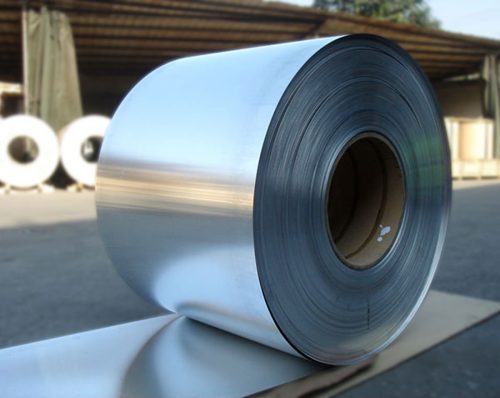
Galvanized steel products are classified according to several characteristics. Among them, the mechanical properties of the steel substrate and the finished product form are two common criteria used when selecting materials for construction and manufacturing.
Depending on fabrication requirements, buyers may encounter commercial descriptions such as hard galvanized steel and soft galvanized steel.
However, material hardness is not determined by thickness alone. It also depends on steel composition, rolling processes, heat treatment and mechanical grade.
These two categories can generally be understood as follows:
In industrial manufacturing, steel grade and mechanical properties should take priority over general commercial labels such as hard or soft.
Two steel sheets with the same thickness may have significantly different forming characteristics if they belong to different material grades.
Flat galvanized steel sheets have a flat surface and have not been roll-formed into corrugated profiles or other specialized shapes.
They can be supplied as pre-cut sheets or cut from galvanized steel coils according to required dimensions.
Flat galvanized sheets are used in equipment housings, electrical cabinets, mechanical accessories, ventilation systems and other sheet-metal products.
For applications requiring high flatness or further stamping and forming, buyers should consider mechanical properties, dimensional tolerances, flatness and surface condition.
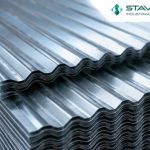
Trapezoidal corrugated galvanized steel sheets are zinc-coated steel sheets roll-formed into profiles with defined ribs.
The corrugated profile improves the geometric stiffness of the sheet, making it suitable for roofing and wall cladding applications.
Common types include:
The dimensions of each type depend on the roll-forming equipment and incoming material specifications.
Therefore, when calculating roofing coverage, buyers should distinguish between overall width and effective cover width rather than assuming that all sheets with the same number of ribs have identical dimensions.
Galvanized steel coils are important raw materials for industrial manufacturing lines.
After galvanizing, the steel is recoiled for convenient storage, transportation and subsequent processing through slitting, cut-to-length, corrugation or forming lines.
This material category should be selected according to thickness, width, coil inner diameter, coil weight, zinc coating grade and mechanical properties.
For manufacturers using automated production equipment, compatibility between coil specifications and the input requirements of the processing line directly affects production efficiency.
Corrosion resistance and fabrication flexibility allow galvanized steel to be used across various industries.
Depending on the application, the material may be used directly as sheets or further processed into products with more complex shapes.
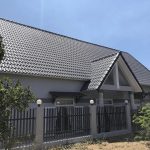
In construction, galvanized steel is used for canopies, factory roofs, warehouse roofs and partition walls.
When roll-formed into corrugated profiles, the ribs improve geometric stiffness and support water drainage across the roof surface according to the design.
For outdoor roofing, steel thickness and zinc coating grade should be selected according to environmental conditions.
The purlin system, roof slope and connections must also be designed correctly to ensure adequate load-bearing performance and minimize water leakage.
Galvanized steel can be used to manufacture equipment housings, machine frames, electrical cabinets, ventilation equipment and certain household electrical appliance components.
These applications generally require appropriate flatness, surface quality and forming characteristics.
For products undergoing repeated stamping or bending, steel grade selection is especially important.
Unsuitable mechanical properties may increase the risk of cracking, deformation or reduced finished-product quality.
In mechanical engineering, galvanized steel is used to manufacture sheet-metal components, protective housings, assembly accessories and auxiliary structural parts.
The zinc coating reduces direct exposure of the steel substrate to the surrounding environment, helping preserve product quality during use.
Manufacturing operations may include cutting, bending, stamping and forming according to engineering drawings.
For components requiring welding, appropriate procedures for galvanized steel should be followed, including controlling exposure to welding fumes. Areas where the protective coating is affected during fabrication should be treated when required.
Galvanized steel is used to manufacture air ducts, ventilation system housings and related enclosure components.
Its cutting and forming capabilities allow steel sheets to be fabricated into various sizes and cross-sections according to project designs.
For drainage components such as gutters, important considerations include corrosion resistance, material thickness and fastening methods.
Projects in highly corrosive environments should undergo separate technical evaluation to select appropriate materials and protective coatings.
Galvanized steel is also used to manufacture rolling shutters, sliding doors, signboards, cabinet housings and various household products made from steel sheets.
The zinc coating helps protect the steel during use while allowing additional finishing operations where required.
For products that need painting after fabrication, surface quality and pretreatment methods affect paint adhesion.
Therefore, materials should be selected according to production-line compatibility rather than raw material price alone.
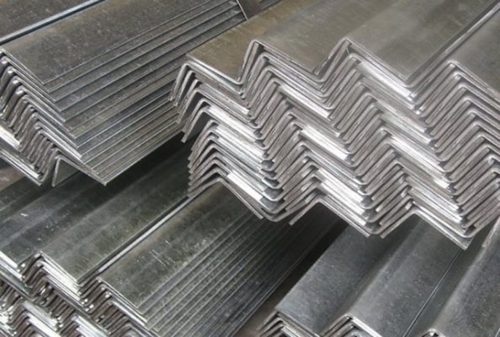
Galvanized steel supports a wide range of construction, mechanical engineering and equipment manufacturing applications.
Stavian Industrial Metal supplies GI galvanized steel, GL aluminum-zinc alloy-coated steel and PPGI/PPGL color coated steel.
The product portfolio supports material requirements for construction, mechanical fabrication, insulated panel manufacturing, roofing and suitable structural components.
For GI galvanized steel, multiple thicknesses, widths and zinc coating grades are available.
Product specifications should be selected according to the intended application, service environment and technical requirements of each project or manufacturing line.
Stavian Industrial Metal’s GI galvanized steel portfolio includes the following main specifications:
| Category | Specifications |
|---|---|
| Product Type | GI Galvanized Steel |
| Steel Thickness | 0.30 – 3.0 mm |
| Zinc Coating Grade | Z40 – Z350 g/m² |
| Width | 600 – 1,500 mm |
| Product Form | Coils, slit coils or sheets |
| Applicable Standards | JIS, EN, ASTM and other applicable standards |
| Applications | Roofing sheets, panels, industrial fabrication and structural components |
The available range of thicknesses and coating grades allows materials to be selected according to fabrication requirements and service conditions.
For applications involving bending, stamping or component manufacturing, identifying the appropriate steel grade and mechanical properties is just as important as selecting thickness.
In addition to GI galvanized steel, Stavian Industrial Metal supplies GL aluminum-zinc alloy-coated steel with thicknesses ranging from 0.18 to 2.0 mm and coating grades from AZ30 to AZ200 g/m².
This material uses an aluminum-zinc alloy coating to protect the steel substrate and is suitable for corresponding fabrication and end-use applications.
The PPGI/PPGL color coated steel product group has thicknesses ranging from 0.28 to 1.20 mm, with paint systems including PE, ME, EP, PVDF and textured coatings.
These products are suitable for applications requiring finished surfaces and specific colors.
More detailed information is available on the Stavian Industrial Metal coated steel product page.
When purchasing steel for construction projects, material selection should be based on technical requirements and planned usage.
Parameters such as thickness, width, zinc coating grade, product form and quality standards directly affect fabrication capabilities and total costs.
Stavian Industrial Metal supplies a diverse range of industrial metal materials, including GI galvanized steel in coil, slit-coil and sheet forms.
Businesses can determine suitable specifications according to manufacturing requirements, material consumption and individual project schedules.
Galvanized steel price depends on thickness, zinc coating mass, product specifications, manufacturing standards, brand and delivery conditions.
To select materials effectively, buyers should compare prices based on equivalent technical specifications while also evaluating corrosion resistance and practical fabrication requirements.
Stavian Industrial Metal offers a comprehensive range of GI galvanized steel products alongside GL, PPGI and PPGL coated steel materials, supporting construction, mechanical engineering and industrial manufacturing applications.
READ MORE RELATED ARTICLES
Address
Website: https://stavianmetal.com
Email: info@stavianmetal.com