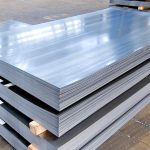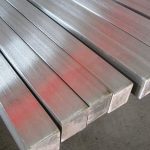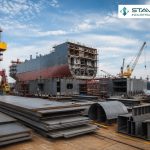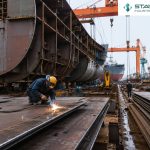
Galvanized steel sheet, also commonly known as galvanized sheet metal or zinc-coated steel, is a steel material covered with a protective zinc layer to improve resistance to oxidation and corrosion. By combining the mechanical properties of steel with the protective characteristics of zinc, this material meets a wide range of requirements in construction, mechanical engineering, equipment manufacturing, auxiliary structures and industrial fabrication.
When selecting galvanized steel sheet, steel thickness is not the only factor to consider. Zinc coating mass, base steel grade, manufacturing standards, formability, dimensions and environmental conditions all directly influence material performance. For industrial projects or large-volume fabrication orders, determining the correct technical specifications from the beginning is often more important than simply comparing unit prices.
Within its industrial metal materials portfolio, Stavian Industrial Metal supplies coated steel products, including GI galvanized steel, GL aluminum-zinc coated steel and PPGI/PPGL pre-painted steel. GI galvanized steel is available in several forms, including coils, slit coils and sheets, to accommodate different fabrication and manufacturing requirements.
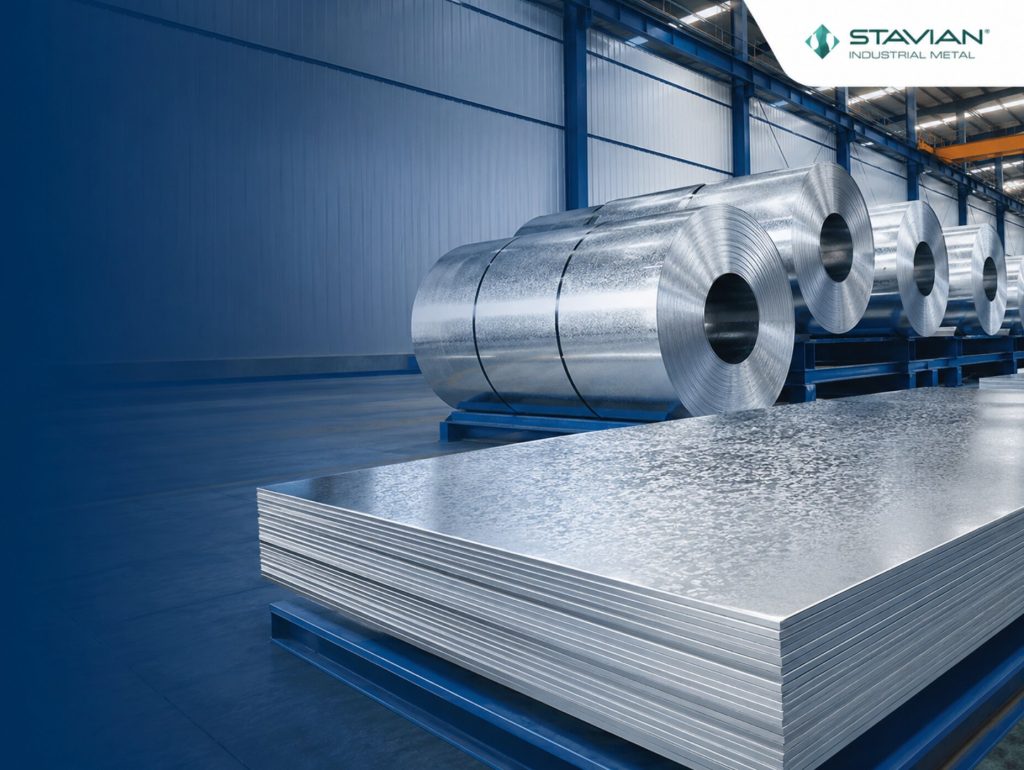
Galvanized steel sheet is a steel product coated with zinc to create a protective layer between the base metal and the surrounding environment. Various galvanizing methods can be used in steel manufacturing, with hot-dip galvanizing being one of the most common technologies for producing galvanized steel sheets and coils.
The zinc layer does more than form a physical barrier against oxygen and moisture. Because zinc is more electrochemically active than iron, the coating can also provide sacrificial protection to the underlying steel around minor scratches or exposed cut edges under certain service conditions.
This is one reason why GI galvanized steel is widely used in roofing, wall cladding, purlins, ventilation ducts, cable trays, mechanical components and numerous other products requiring improved corrosion resistance compared with untreated steel.
It is important to distinguish galvanized steel sheet from aluminum-zinc coated steel and pre-painted steel. GI uses zinc as its primary protective coating, while GL uses an aluminum-zinc alloy coating. PPGI and PPGL feature an additional paint system applied over a metallic-coated steel substrate. Each material has distinct characteristics and should be selected according to its intended environment, aesthetic requirements, fabrication process and design service life.
Structurally, a galvanized steel sheet generally consists of a steel substrate covered with a protective zinc coating. The steel substrate determines important mechanical properties such as tensile strength, hardness, load-bearing characteristics, bendability and formability. Meanwhile, the zinc coating primarily protects the surface against environmental exposure.
Depending on the product and manufacturing requirements, additional surface treatments may be applied after galvanizing to reduce oxidation, minimize fingerprints, improve processability or prepare the material for subsequent manufacturing operations.
Therefore, when evaluating the quality of galvanized steel sheets, buyers should not rely solely on whether the surface appears bright or dull. Steel grade, manufacturing standard, coating mass, mechanical properties and dimensional tolerances should all be assessed.
Stavian Industrial Metal supplies GI galvanized steel with zinc coating masses ranging from Z40 to Z350 g/m², steel thicknesses from 0.30 to 3.0 mm and widths from 600 to 1,500 mm. The exact specifications of each shipment should be determined according to the applicable standard and purchase requirements.
When reviewing galvanized steel specifications, buyers commonly encounter coating designations such as Z80, Z100, Z180 and Z275. These designations indicate the nominal zinc coating mass, expressed in grams per square meter across both sides of the product, according to the applicable standard.
For example, Z275 represents a higher nominal zinc coating mass than Z100.
Zinc coating mass is one of the factors directly influencing corrosion protection under typical service conditions. However, a heavier coating is not automatically the optimal choice for every application. Material selection should balance environmental exposure, expected service life, bending and stamping requirements, surface quality and overall material cost.
For components requiring extensive stamping, bending or roll forming, the mechanical properties of the steel substrate and coating adhesion are particularly important. An unsuitable material may experience excessive coating deformation around bends or create difficulties during subsequent fabrication.
For hot-dip galvanized steel sheets, the steel substrate must undergo surface preparation before galvanizing. This preparation removes oil, dust and other contaminants that could affect the bonding between the steel surface and the zinc coating. The quality of surface preparation significantly influences the uniformity of the finished product.
In a typical continuous galvanizing process, steel may undergo cleaning and heat treatment before passing through a bath of molten zinc. The amount of zinc deposited on the surface is then controlled using suitable equipment.
After galvanizing, the material is cooled, undergoes surface treatment and is inspected against relevant technical requirements before being recoiled or processed into sheets.
Within the coated steel manufacturing supply chain, cold-rolled steel is an important material associated with galvanizing production lines. Stavian Industrial Metal supplies cold-rolled steel in coils, sheets and slit strips, with applicable standards including JIS, ASTM, EN, JFS and AS, supporting a variety of industrial fabrication and manufacturing needs.
Zinc is an essential raw material in the galvanizing supply chain. Its composition and quality must be controlled according to the manufacturing standards of each production line and the technical requirements of the finished product.
In addition to steel products, Stavian Industrial Metal supplies zinc ingots with a zinc purity of 99.995%. These ingots are used as raw materials in galvanizing and electroplating industries and meet the stated standards, including BS EN 1179:2003, ISO 752:2004, ASTM B6-12 and GB/T 470-2008.
The relationship between steel substrates and zinc raw materials highlights the importance of viewing galvanized steel as a complete material system. Final product quality depends on the steel substrate, coating material, surface preparation and control of key galvanizing process parameters.
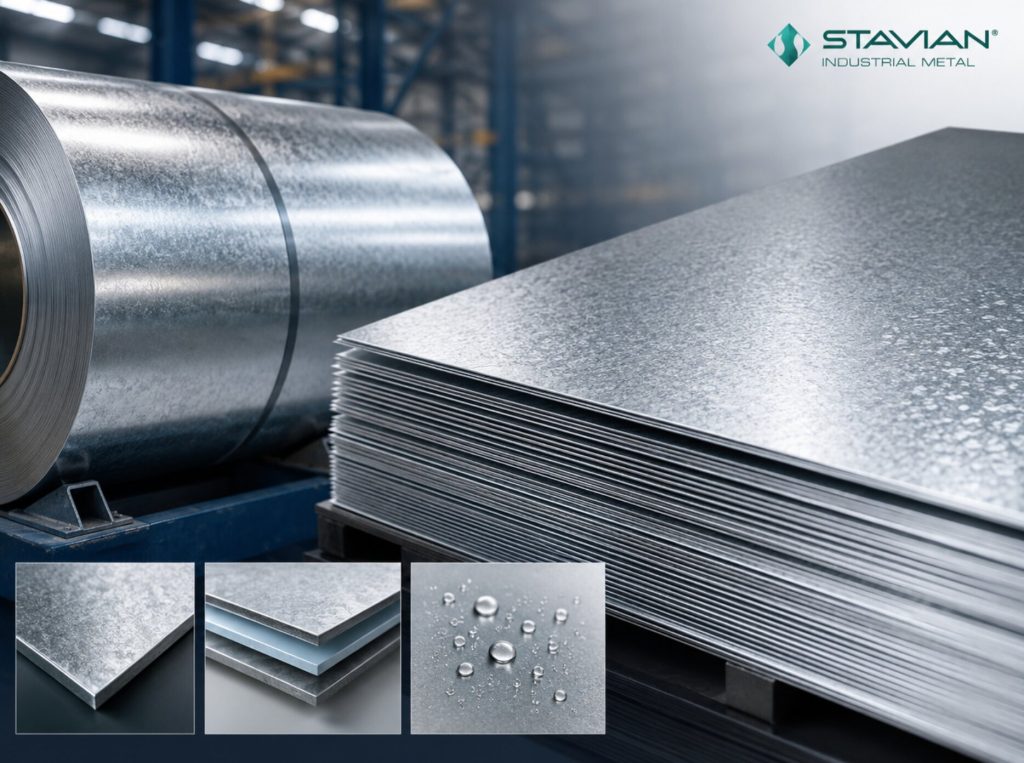
When purchasing galvanized steel sheets, a clearly defined technical specification helps prevent confusion between materials that may appear similar. Important requirements include substrate type, thickness, width, coating grade, applicable standard, supply form and any further fabrication requirements.
For GI galvanized steel within Stavian Industrial Metal’s coated steel product portfolio, the stated specifications include steel thicknesses from 0.30 to 3.0 mm, widths from 600 to 1,500 mm and zinc coating masses from Z40 to Z350 g/m².
Products are available in coil, slit-coil or sheet form.
| Specification | Reference Specifications for GI Galvanized Steel |
|---|---|
| Product Form | Coil, slit coil or sheet |
| Coating Type | Zinc |
| GI Coating Mass | Z40 – Z350 g/m² |
| GI Steel Thickness | 0.30 – 3.0 mm |
| Width | 600 – 1,500 mm |
| Applicable Standards | JIS, EN, ASTM and other applicable requirements depending on product type |
In practice, the dimensions and specifications of galvanized steel sheets can vary depending on the manufacturer and processing method. Buyers should prioritize the specifications stated in technical documentation, quality certificates and engineering designs instead of relying solely on commercial product names or nominal thickness.
Galvanized steel sheet can be manufactured according to different standards depending on its country of origin and target market. Within Stavian Industrial Metal’s coated steel portfolio, JIS, EN and ASTM are commonly applied standard systems. Certain specialized products on the market may also follow Australian AS standards.
A manufacturing standard is more than an abbreviation appearing on a certificate. Each standard may define steel grades, chemical composition, mechanical properties, dimensional tolerances, zinc coating mass, test methods and acceptance criteria.
Therefore, two galvanized steel coils with the same thickness but different steel grades or applicable standards may not have identical mechanical properties or fabrication performance.
For projects with specific technical documentation, the applicable standard and steel grade should be confirmed before placing an order. Material substitution should only be considered after equivalent specifications have been thoroughly verified against the design requirements.
The most significant advantage of galvanized steel sheet is its zinc coating, which reduces direct contact between the steel substrate and moisture or oxygen. Under comparable service conditions, this helps control rust formation more effectively than steel without a protective surface coating.
Zinc’s electrochemical protection mechanism also provides benefits around small scratches and cut edges. However, the actual protection depends on the size of the exposed steel area, zinc coating mass and environmental conditions.
Cutting, drilling, welding and heavily fabricated areas may still require appropriate technical treatment when high corrosion resistance is necessary.
This is why GI galvanized steel is used for roofing, cladding, purlins, mechanical accessories, air ducts, cable trays and components where frequent protective painting, as may be required for uncoated steel, is undesirable.
Galvanized steel can be supplied in coils for continuous production lines, slit into narrow strips or cut into sheets according to customer requirements. Depending on the steel grade and mechanical properties, the material can subsequently be roll-formed, bent, stamped or fabricated into specific components.
Multiple supply formats make galvanized steel suitable for manufacturers using ready-cut steel sheets as well as factories requiring raw materials for automated production lines.
The choice between coil and sheet form should therefore consider production equipment, output requirements, material waste and the logistics arrangements of each business.
For products requiring deep drawing or bending with small radii, the elongation characteristics of the steel substrate and the adhesion of the zinc coating should be carefully evaluated. Not all galvanized steel sheet products are interchangeable in stamping or forming operations.
Although zinc coating improves corrosion resistance, galvanized steel does not have an unlimited service life in every environment. Highly corrosive conditions, frequent chemical exposure, salt exposure or specialized operating environments may require alternative coatings, heavier zinc coating masses or additional protective measures.
Thermal insulation and soundproofing are not primary functions of a zinc coating. When galvanized steel roofing sheets are used in buildings requiring temperature or noise control, the roofing system should incorporate appropriate insulation, acoustic materials or panel structures.
In addition, cutting, welding or grinding can remove the protective coating around processed areas. Cut edges and welded joints should be assessed and treated according to actual operating conditions, particularly in outdoor buildings or high-humidity environments.
Galvanized steel coil is suitable for manufacturers requiring continuous processing, slitting, cut-to-length operations, roll forming or downstream product fabrication.
Coil-form material helps improve productivity in large-scale manufacturing lines while providing greater flexibility in determining finished product lengths.
Within Stavian Industrial Metal’s portfolio, coated steel is available in coil, slit-coil and sheet forms. For GI products, the stated steel thickness ranges from 0.30 to 3.0 mm, with widths from 600 to 1,500 mm.
Buyers should also specify coil weight, inner diameter, edge conditions and relevant tolerances whenever production equipment has particular limitations.
For more information, explore Stavian Industrial Metal’s guide to galvanized steel coils and other galvanized steel products for industrial processing.
Flat galvanized steel sheet is suitable for manufacturers requiring material cut to specific dimensions for bending, stamping, laser cutting, machine enclosures, cabinets, equipment housings or other sheet-metal components.
Compared with purchasing steel coils, ready-cut sheets may help some manufacturers reduce processing steps when production volumes are relatively small.
Available sheet dimensions depend on material thickness and the processing capabilities of each supplier. Therefore, sheet length, width and order quantity should be determined according to finished-product drawings to optimize cutting plans and reduce material waste.
Additional information on flat steel products can be found in Stavian Industrial Metal’s galvanized steel sheet guide.
Corrugated galvanized steel sheets are produced by passing zinc-coated steel through roll-forming equipment. The corrugated profile increases the sheet’s geometric stiffness and supports drainage when used for roofing or wall cladding.
Different profiles are available on the market, including trapezoidal corrugations and other configurations designed for specific construction applications.
Some commonly referenced profiles include:
These values refer to particular product profiles and should not automatically be considered the effective cover widths of all corrugated galvanized steel sheets.
When selecting corrugated sheets, buyers should verify the effective width after overlapping, rib height, corrugation pitch, actual steel thickness and required purlin spacing. These factors directly influence installation requirements and material consumption.
Galvanized steel sheet is commonly used in roofing, wall cladding, purlins, protective panels, auxiliary structures, fencing and various industrial building components.
In areas exposed to moisture, the zinc coating provides additional surface protection compared with uncoated steel.
For roofing and cladding, galvanized steel can be roll-formed into corrugated profiles to improve geometric stiffness and facilitate drainage.
In auxiliary structural systems, galvanized steel may be formed into purlins, supporting members and other fabricated components. The appropriate steel thickness and coating grade should be selected according to the project’s technical requirements.
For large industrial projects, Stavian Industrial Metal also supplies a wide range of industrial steel materials for construction, fabrication and manufacturing, helping customers coordinate material procurement across different project requirements.
In mechanical engineering, galvanized steel sheets are commonly used for products that require the mechanical strength of steel while minimizing direct exposure of the substrate to the surrounding environment.
Typical applications include machine housings, technical cabinets, protective panels, enclosures, trays and mechanical accessories.
Flat sheets are convenient for cutting, punching, bending and assembly, while coils are suitable for continuous roll-forming or stamping lines.
When designing components, engineers should consider steel grade formability and bending radius to control coating performance in areas undergoing deformation.
When a product does not require a zinc coating or must undergo a separate surface treatment process, manufacturers may also consider hot-rolled steel or cold-rolled steel, depending on surface, thickness and mechanical requirements.
The formability and protective surface coating of galvanized steel sheet make it suitable for various household appliances, electrical equipment and refrigeration components.
Depending on the finished product’s requirements, the material may undergo cutting, stamping, bending or additional painting after fabrication.
Surface quality is particularly important in these applications because steel sheets may become visible parts of equipment housings or other components.
Flatness, coating condition and the adhesion of subsequent paint layers can therefore be just as important as steel thickness.
For equipment requiring a finished colored surface directly from the raw material, PPGI/PPGL color coated steel may be considered instead of using GI galvanized steel followed by an additional painting operation.
Ventilation ducts, cable trays, protective panels and various technical accessories commonly use galvanized steel sheets because the material offers relatively convenient fabrication and a protective coating against oxidation.
Coils or sheets can be selected according to the manufacturing process.
In HVAC systems, material thickness depends on duct dimensions, rigidity requirements, operating pressure and reinforcement design. Selecting thickness solely based on another project’s common practice may be inappropriate because different systems can have different technical requirements.
For outdoor trays and structures, additional attention should be given to water accumulation, cut edges and fastening points. Effective drainage design and minimizing areas where moisture remains trapped can significantly support the material’s corrosion resistance.
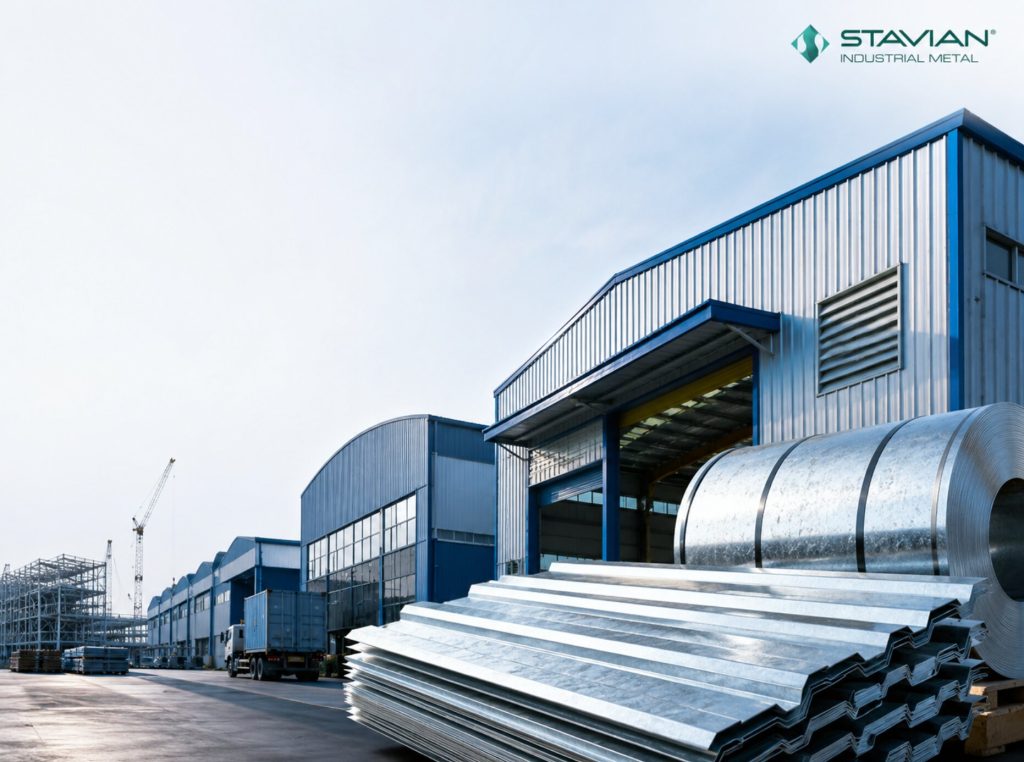
Many manufacturers and suppliers offer galvanized steel sheets in different thicknesses and dimensions. Buyers seeking quotations for 2 mm galvanized steel sheets, 0.8 mm galvanized steel sheets or other specifications should contact suppliers directly to obtain prices based on the required product parameters.
Below is a reference price list. Actual selling prices may change depending on market conditions.
| THICKNESS (dem – mm) | WEIGHT (kg/m) | PRICE (VND/m) |
| Galvanized sheet 3 dem 20 | 2.60 | 42,000 |
| Galvanized sheet 3 dem 50 | 3.00 | 45,000 |
| Galvanized sheet 3 dem 80 | 3.25 | 47,000 |
| Galvanized sheet 4 dem 00 | 3.50 | 51,000 |
| Galvanized sheet 4 dem 30 | 3.80 | 57,000 |
| Galvanized sheet 4 dem 50 | 3.95 | 63,000 |
| Galvanized sheet 4 dem 80 | 4.15 | 65,000 |
| Galvanized sheet 5 dem 00 | 4.50 | 68,000 |
Note: These prices are provided for historical reference only and have not been verified as current market quotations. The commercial thickness descriptions are retained from the original data. Actual product thicknesses, weights and prices should be confirmed with the supplier.
Stavian Industrial Metal’s coated steel portfolio includes GI galvanized steel, GL aluminum-zinc coated steel and PPGI/PPGL color coated steel.
Products are supplied as coils, slit coils or sheets in various specifications for construction, mechanical fabrication, factories and industrial manufacturing.
For GI products, Stavian Industrial Metal offers zinc coating masses from Z40 to Z350 g/m² and steel thicknesses from 0.30 to 3.0 mm.
GL products are available in thicknesses from 0.18 to 2.0 mm with coating masses from AZ30 to AZ200 g/m². PPGI/PPGL products have steel thicknesses ranging from 0.28 to 1.20 mm and are available with several paint systems.
The diversity of GI, GL and PPGI/PPGL materials allows manufacturers and contractors to select products based on specific applications instead of using the same steel type for every component in a project.
Cold-rolled steel is an important material for sheet-metal fabrication and can serve as the substrate for galvanizing, aluminum-zinc coating or color coating production lines.
Stavian Industrial Metal supplies cold-rolled steel coils with thicknesses ranging from 0.2 to 6 mm, as well as sheets and slit strips according to customer requirements.
Available standard systems include JIS, ASTM, EN, JFS and AS, along with product types suitable for specific manufacturing needs.
Cold-rolled steel is suitable for manufacturers requiring controlled surface characteristics and dimensional tolerances for more precise fabrication processes.
When choosing between uncoated cold-rolled steel and galvanized steel sheet, the main considerations are the subsequent manufacturing process and corrosion resistance requirements of the finished product.
Stavian Industrial Metal supplies hot-rolled steel in coil and sheet forms, with various commonly used steel grades.
Hot-rolled steel coils are available in thicknesses ranging from 3 to 16 mm, while steel plates range from 3 to 40 mm and may be cut according to customer requirements.
These products serve various structural, mechanical and industrial manufacturing applications.
Within the flat steel processing supply chain, hot-rolled steel may undergo additional processing to produce materials with surface properties and dimensions suitable for downstream applications.
The choice between hot-rolled, cold-rolled and galvanized steel should therefore depend on the final product requirements rather than differences in raw material prices alone.
Stavian Industrial Metal supplies zinc ingots with a purity of 99.995%, available in ingot form with dimensions corresponding to the manufacturer’s standards.
These products are used as raw materials in galvanizing and electroplating industries.
The stated standards include BS EN 1179:2003, ISO 752:2004, ASTM B6-12 and GB/T 470-2008.
Together with the company’s steel portfolio, zinc products allow Stavian Industrial Metal to serve different stages of the industrial metal materials supply chain.
Customers seeking a broader selection of steel, aluminum, copper and zinc materials can explore the industrial steel product portfolio and other available materials from Stavian Industrial Metal.
READ MORE ABOUT GALVANIZED STEEL AND COATED STEEL
Galvanized steel sheet is a zinc-coated steel material designed to improve corrosion resistance and expand the range of applications for steel in construction, mechanical fabrication and industrial manufacturing.
The material can be supplied in coils, slit coils and flat sheets or further roll-formed into various finished products.
To select the right galvanized steel sheets, buyers should consider steel substrate thickness, steel grade, zinc coating mass, width, applicable standards, fabrication methods and the intended service environment.
Coating designations such as Z100, Z180 and Z275 should be understood as nominal zinc coating mass classifications rather than merely commercial product names. Steel thickness should also be selected according to actual mechanical and engineering requirements.
Within Stavian Industrial Metal’s product portfolio, GI galvanized steel is supplied alongside GL and PPGI/PPGL materials, as well as cold-rolled steel, hot-rolled steel and zinc ingots.
This diverse product portfolio supports a wide range of requirements throughout the industrial metal manufacturing, processing and trading supply chain.
Address
Website: https://stavianmetal.com
Email: info@stavianmetal.com