In global steel procurement, carbon steel plate remains one of the most important materials for construction, shipbuilding, machinery, pressure equipment, energy infrastructure, mining, transportation, and industrial fabrication. Buyers choose it because it offers a strong balance of mechanical performance, availability, weldability, formability, and cost efficiency compared with many alloy or stainless steel alternatives.
For importers, fabricators, EPC contractors, and manufacturers, selecting the right carbon steel plate is not simply a matter of thickness and price. It requires understanding grades, standards, chemical composition, mechanical properties, inspection documents, logistics, origin, lead time, and the real market conditions behind global steel supply. According to the World Steel Association, global crude steel production reached 1,885 million tonnes in 2024, while global apparent steel use was 214.7 kg per person, showing how deeply steel remains embedded in modern industry.
Stavian Industrial Metal approaches carbon steel plate supply from the perspective of export-ready industrial metal solutions. With a portfolio covering steel, aluminum, copper, and zinc, and with international business capabilities supported by Stavian Group’s global network, Stavian Industrial Metal focuses on reliable origin, international compliance, efficient logistics, and practical support for large-scale industrial projects.
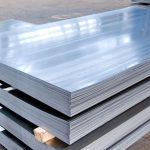
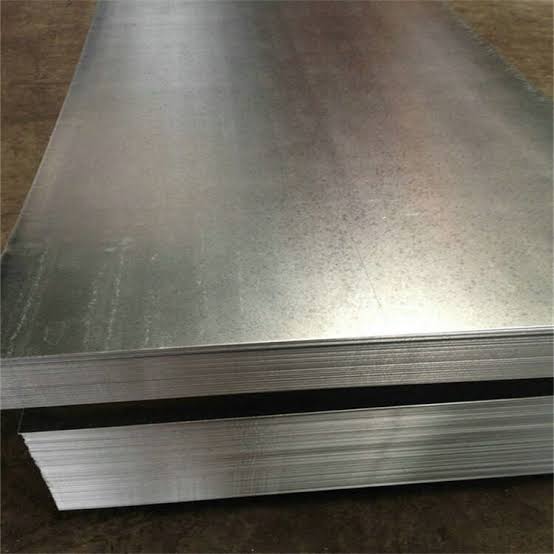
Carbon steel plate is a flat-rolled steel product made primarily from iron and carbon, with relatively limited additions of other alloying elements. It is produced in plate form rather than coil or sheet form, usually for applications that require higher thickness, structural strength, impact resistance, or fabrication stability. In practical purchasing terms, steel plate is commonly ordered by grade, thickness, width, length, surface condition, delivery state, and applicable standard.
The defining feature of carbon steel is that carbon is the main strengthening element. As carbon content increases, the steel generally becomes stronger and harder, but less ductile and less easy to weld. This is why buyers must not treat all carbon steel plate as the same product. A mild steel plate for general fabrication, a pressure vessel plate, and a high-strength structural plate may all belong to the carbon steel family, but their performance requirements and inspection expectations can be very different.
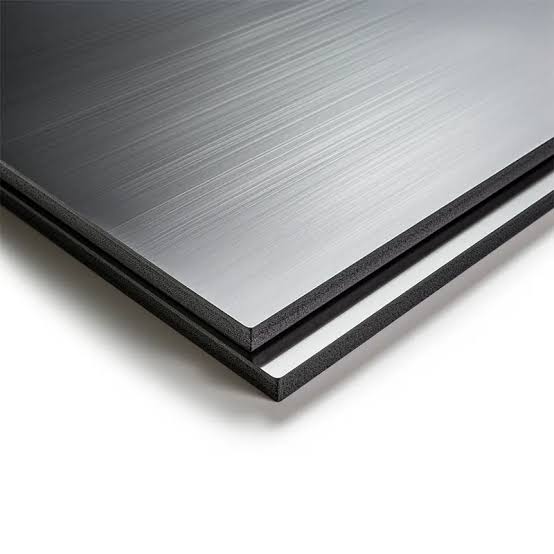
The main difference between carbon steel plate and alloy steel plate lies in chemical design. Carbon steel relies mainly on carbon and manganese for strength, while alloy steel includes deliberate additions such as chromium, molybdenum, nickel, vanadium, or other elements to achieve special performance. Alloy steel may offer better heat resistance, hardenability, corrosion resistance, or high-temperature strength, but it is usually more expensive and may require more controlled fabrication.
For many industrial projects, carbon steel plate is the preferred choice because it delivers dependable strength without unnecessary alloy cost. It is widely used in base frames, bridges, tanks, platforms, buckets, machinery structures, ship components, general pressure equipment, and welded structures. When the environment is not highly corrosive and the design does not demand special alloy performance, carbon steel plate often provides the most economical and technically suitable solution.
International trade in carbon steel plate depends heavily on recognized standards. The most common standards include ASTM, ASME, EN, JIS, GB, and equivalent national or project-specific specifications. These standards define chemical composition, tensile strength, yield strength, elongation, impact testing, dimensional tolerances, heat treatment, testing methods, and marking requirements.
For export projects, buyers should always clarify the exact standard before placing an order. A plate described only as “mild steel plate” may not be sufficient for technical approval, customs documentation, or third-party inspection. A clearer specification such as ASTM A36, ASTM A516 Grade 70, EN 10025 S275JR, EN 10025 S355JR, JIS G3101 SS400, or an equivalent approved grade helps reduce commercial and engineering risk.
| Grade | Typical Use | Key Buying Consideration |
|---|---|---|
| ASTM A36 | General structural fabrication | Common, weldable, widely available |
| ASTM A283 | Low and intermediate tensile structural use | Suitable for general-purpose applications |
| ASTM A516 Gr. 60/65/70 | Pressure vessels and boilers | Requires strict mechanical and impact property control |
| EN S275 | Structural steelwork | Good balance of strength and formability |
| EN S355 | Higher-strength structural applications | Higher yield strength than S275 |
| JIS SS400 | General structures and fabrication | Common in Asian supply chains |
These grades are not automatically interchangeable. Even when mechanical properties look similar, chemical limits, testing rules, tolerances, and certification requirements may differ. Stavian Industrial Metal recommends that buyers define the required standard, grade, thickness tolerance, inspection level, and certificate type at the quotation stage to avoid mismatch between project documents and delivered material.
The performance of carbon steel plate is closely linked to carbon content. Low-carbon steel generally offers better weldability and ductility, making it suitable for structural fabrication and forming. Medium-carbon steel provides higher strength and wear resistance but may require more control during welding and heat treatment. Higher-carbon steel can reach greater hardness but becomes less suitable for general welded structures unless proper procedures are used.
In export procurement, carbon equivalent is often more useful than carbon content alone. Carbon equivalent estimates how chemical composition affects weldability. When carbon equivalent is high, the plate may require preheating, controlled interpass temperature, low-hydrogen consumables, or post-weld heat treatment. This is especially important for thick plates, restrained joints, pressure equipment, offshore structures, and heavy machinery components.
Most carbon steel plate is used in welded fabrication. Poor grade selection can lead to cracking, distortion, delayed inspection failure, or costly rework. Weldability depends on carbon level, manganese content, plate thickness, heat treatment condition, surface cleanliness, and welding procedure. Buyers should not evaluate plate only by yield strength or price; they should also consider how easily the material can be cut, beveled, welded, bent, drilled, and inspected.
For large export orders, it is advisable to request mill test certificates, chemical composition, mechanical test results, ultrasonic testing requirements if applicable, and confirmation of delivery condition. For critical uses, third-party inspection from agencies such as SGS, BV, TUV, or equivalent organizations may be required depending on the project and destination market.
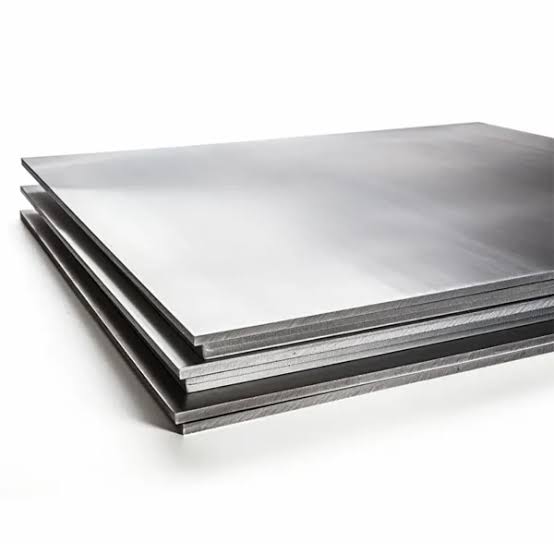
Carbon steel plate is widely used in building frames, bridges, base plates, gusset plates, columns, beams, connection plates, platforms, and industrial structures. Its strength-to-cost ratio makes it a preferred material for projects that require high load-bearing capacity without the cost of specialized alloy steel. In many construction markets, grades such as ASTM A36, EN S275, EN S355, and JIS SS400 are standard choices.
For structural use, dimensional accuracy, flatness, thickness tolerance, and traceability are important. A low-cost plate with poor flatness may create problems during cutting, welding, and assembly. Similarly, unclear origin can delay approval in international projects. Stavian Industrial Metal supports customers by focusing on plates with clear documentation, internationally recognized standards, and logistics coordination suitable for export shipment.
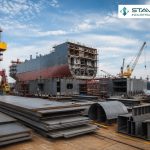
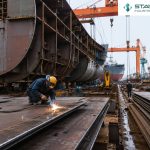
Marine and offshore applications require plates that can withstand dynamic loads, impact conditions, humidity, salt exposure, and strict welding requirements. While shipbuilding often uses classification-approved marine steel grades, many supporting structures, temporary works, jigs, frames, and non-critical components still use carbon steel plate. The key is to match the material grade to the design requirement and environmental condition.
For marine-related export orders, buyers should pay close attention to certificate type, surface condition, shot blasting and painting options, and packing protection. Steel plate exposed to long sea freight routes must be handled carefully to reduce rust, edge damage, and moisture-related issues. Professional export packaging and warehouse control can directly influence the final condition of the material upon arrival.
Heavy machinery manufacturers use carbon steel plate for frames, brackets, housings, equipment bases, hoppers, guards, conveyors, buckets, and fabricated assemblies. In mining and bulk material handling, plates may be used in combination with wear-resistant steel, alloy steel, or abrasion-resistant liners. Carbon steel often serves as the structural backbone of the equipment.
In this segment, cutting performance and consistency are important. CNC cutting, plasma cutting, oxy-fuel cutting, drilling, bending, and machining all depend on plate quality. Buyers should define whether they need as-rolled plate, normalized plate, pickled surface, cut-to-size service, or additional processing. A supplier that understands both trading and fabrication requirements can help reduce waste, processing time, and unexpected production delays.
For tanks, boilers, and pressure equipment, carbon steel plate must meet more demanding standards than general fabrication material. ASTM A516, for example, is commonly associated with pressure vessel applications because it is designed for moderate and lower-temperature service. Such applications typically require strict chemical control, tensile testing, impact testing where specified, and reliable certification.
In energy infrastructure, carbon steel plate appears in storage tanks, pipelines supports, power plant structures, wind tower components, utility equipment, and industrial modules. The growing focus on energy transition does not eliminate the need for steel. Instead, it increases the importance of documented, traceable, and efficiently sourced steel materials for large-scale infrastructure deployment.
The market for carbon steel plate is linked to broader steel production, construction cycles, manufacturing demand, infrastructure investment, shipbuilding activity, and energy projects. Global crude steel production remained high at 1,885 million tonnes in 2024, although production has been broadly stable since 2020. This stability at a high volume shows that steel remains essential, but the growth pattern is no longer uniform across regions.
Asia continues to play a central role in steel production and consumption, while India and Southeast Asia are increasingly important demand centers. At the same time, global buyers face price volatility caused by raw material costs, energy prices, freight rates, trade measures, excess capacity, and regional policy changes. This makes supplier selection more strategic than simply comparing unit prices.
The OECD has warned that global steel excess capacity remains a major issue. Its latest steel outlook indicates that excess capacity could rise to 745 million tonnes by 2028, while global demand growth is projected to remain sluggish at around 0.9% per year through 2030.
For carbon steel plate buyers, excess capacity can create short-term opportunities through competitive pricing, but it can also increase risk. Low prices may come with inconsistent quality, unclear origin, unstable delivery, or trade remedy exposure such as anti-dumping and countervailing duties. Professional buyers should evaluate not only price per tonne but also compliance, documentation, supplier reputation, trade route, mill approval, and delivery reliability.
Steel is also under growing sustainability pressure. The OECD states that the steel sector accounts for about 8% of global CO2 emissions, and World Steel Association data shows an average emissions intensity of 1.92 tonnes of CO2 per tonne of crude steel cast in 2023.
This matters for carbon steel plate procurement because more buyers now request environmental documentation, responsible sourcing information, recycled content data, or supplier ESG policies. While not every project currently requires carbon reporting, the trend is clear: documentation quality will become increasingly important in export markets, especially for infrastructure, energy, public procurement, and multinational manufacturing supply chains.
A complete carbon steel plate inquiry should include more than product name and quantity. Clear specifications reduce back-and-forth communication, prevent wrong quotations, and help suppliers confirm availability accurately. For international trade, even small differences in thickness tolerance, inspection requirement, or delivery condition can affect price and lead time.
When buyers provide these details, Stavian Industrial Metal can evaluate suitable supply options more effectively and align product, documentation, and logistics with project needs.
In export steel trading, certificates are not administrative details; they are part of the product value. A mill test certificate confirms chemical composition, mechanical properties, heat number, size, standard, and production details. For some markets, the certificate is necessary for customs clearance, project approval, quality audit, or final acceptance by the end user.
Traceability is especially important for pressure vessels, infrastructure, energy equipment, and government-funded projects. Buyers should ensure that the heat number on the plate matches the certificate, the standard matches the contract, and any additional testing is clearly stated before shipment. Strong documentation discipline can prevent expensive disputes after the material arrives.
For carbon steel plate, dimensional tolerance affects fabrication yield and assembly accuracy. Thickness deviation can influence structural strength calculations, while width and length deviation can increase cutting waste. Flatness is also important for automated cutting and welding. Plates that are excessively wavy may reduce productivity and create fit-up problems during assembly.
Surface quality should also be reviewed based on the final application. Light mill scale may be acceptable for many structural uses, but severe rust, lamination, pitting, cracks, scabs, or rolled-in defects may not be acceptable. For painted or coated structures, surface preparation such as shot blasting and primer coating may be requested before export.
Mechanical testing commonly includes tensile strength, yield strength, elongation, and sometimes impact testing. For critical carbon steel plate applications, Charpy V-notch impact testing may be required at specific temperatures. Ultrasonic testing may also be specified to detect internal discontinuities, especially in thicker plates used for pressure equipment, offshore structures, or heavy machinery.
Inspection requirements should be defined before production or shipment. If the buyer requests third-party inspection after the material is ready, the process may become more complicated and costly. A well-managed supplier will confirm inspection scope, acceptance criteria, certificate format, and marking requirements early in the order cycle.
Stavian Industrial Metal supplies industrial metals including steel, aluminum, copper, and zinc, supported by business solutions and integrated trading capabilities. The company was established in 2021 with a vision to build a transparent industrial metal materials market and contribute to sustainable development in Vietnam and globally.
For carbon steel plate, this means customers can work with a supplier that understands not only product sourcing but also international documentation, origin control, logistics coordination, and project-based requirements. Stavian Industrial Metal is positioned to serve importers, distributors, contractors, fabricators, and manufacturers that need reliable steel materials for cross-border supply chains.
Stavian Industrial Metal can introduce carbon steel plate solutions for general structural fabrication, industrial manufacturing, machinery, steel structures, tanks, construction projects, and export distribution. Depending on customer requirements, product discussions may cover common grades, thickness ranges, cutting requirements, surface treatment, packing, shipment planning, and certificate expectations.
The company leverages Stavian Group’s financial foundation, international partnership network in more than 100 countries and territories, over 30 international branches, and warehouse and office presence in Hanoi, Hai Phong, and Ho Chi Minh City. This network supports product quality, clear origin, international-standard compliance, and logistics efficiency for large-scale projects.
For international buyers, the main challenge is not only finding carbon steel plate, but finding the right plate at the right time, with the right documentation, at a competitive total landed cost. A lower factory price may not be the best option if it creates risk in inspection, shipment, customs, or project approval.
Stavian Industrial Metal’s value lies in connecting product sourcing with trade execution. This includes supporting specification clarification, grade matching, export documentation, shipment coordination, and practical communication throughout the order cycle. For buyers operating in competitive markets, this combination can reduce procurement uncertainty and improve supply chain reliability.
The most common mistake in carbon steel plate procurement is choosing only the lowest price. While price competitiveness is important, plate quality, origin, certificate reliability, dimensional tolerance, and delivery performance can have a larger impact on total project cost. A shipment with documentation errors or inconsistent quality may delay fabrication and create penalties far beyond the initial saving.
Buyers should evaluate supplier credibility, previous export experience, product traceability, and the ability to respond to technical questions. In steel trading, a professional supplier should understand grade equivalence, inspection terms, packing standards, logistics constraints, and project documentation requirements.
Another frequent mistake is sending inquiries such as “carbon steel plate 10 mm, best price” without grade, standard, size tolerance, destination, or certificate requirement. This makes accurate quotation difficult and increases the risk of receiving unsuitable material. A supplier may quote a cheaper grade that does not match the final application.
Clear specifications protect both buyer and supplier. They make quotations comparable, reduce disputes, and help ensure the delivered carbon steel plate meets engineering expectations. For repeat orders, buyers should maintain a standard material inquiry template to improve procurement consistency.
Carbon steel plate continues to be one of the most practical and widely used steel products in the global market. Its popularity comes from a strong combination of strength, weldability, availability, versatility, and cost efficiency. From construction and machinery to tanks, shipbuilding support, mining equipment, and energy infrastructure, carbon steel plate supports the physical foundation of modern industrial development.
However, successful purchasing requires more than selecting a thickness and comparing prices. Buyers need to understand grade standards, chemical composition, mechanical properties, weldability, inspection requirements, certificates, market volatility, and export logistics. With global steel markets facing excess capacity, sustainability pressure, and uneven demand growth, reliable sourcing and documentation are becoming more important than ever.
Stavian Industrial Metal provides export-oriented industrial metal solutions for customers seeking dependable carbon steel plate and related metal products. By combining product knowledge, international trade capability, clear origin control, and logistics coordination, Stavian Industrial Metal supports buyers who need quality materials for demanding industrial and infrastructure projects.
Read More
Address
Website: https://stavianmetal.com
Email: info@stavianmetal.com