An aluminum alloy ingot is a solid cast block of aluminum combined with controlled amounts of alloying elements such as silicon, copper, magnesium, zinc, manganese or other metals. Compared with commercially pure aluminum, an alloy ingot is engineered to achieve specific mechanical, casting, thermal, corrosion-resistance and machining characteristics required by modern manufacturing industries.
Aluminum alloy ingots are among the most important raw materials for die casting, gravity casting and other downstream aluminum processing operations. Depending on chemical composition, they can be transformed into automotive housings, engine components, electrical enclosures, consumer electronics, machinery parts and many other precision cast products. Alloys such as ADC12 aluminum ingot, A360 and A413 are widely selected where high fluidity, dimensional stability and efficient mass production are required.
Stavian Industrial Metal supplies a broad range of aluminum ingot products for domestic and international customers. The portfolio includes high-purity primary aluminum such as Al99.90, Al99.85, Al99.70 and Al99.60, together with alloy grades including Al96, ADC-6, ADC-12, A413 and A360. Standard ingots are typically supplied at approximately 20–25 kg per piece, depending on the manufacturer’s specification.
An aluminum alloy ingot is produced by melting aluminum and carefully introducing one or more alloying elements until the required chemical composition is achieved. The molten alloy is subsequently refined, filtered and cast into solid ingot form for convenient transportation, storage and remelting at foundries or component manufacturing plants.
The purpose of alloying is not simply to change the chemical composition of aluminum. Each added element modifies material behavior. Silicon can improve molten-metal fluidity and reduce solidification shrinkage. Copper can increase strength and hardness. Magnesium can enhance mechanical strength and corrosion performance in selected alloys, while zinc is commonly used in higher-strength aluminum systems.
This distinction is important when comparing aluminum alloy ingot with primary or commercially pure aluminum ingot. Primary aluminum grades with aluminum content around 99–99.9% are commonly used as feedstock for further alloying, rolling, extrusion and electrical applications. By contrast, alloyed ingots such as ADC12 are already formulated for specific casting processes and end-use requirements.
Although both products may be supplied in similar physical ingot formats, their metallurgical functions are different. Pure aluminum ingot prioritizes high aluminum content and inherent characteristics such as electrical conductivity, corrosion resistance and ductility. Aluminum alloy ingot, on the other hand, prioritizes engineered performance through controlled chemical additions.
| Criteria | Pure Aluminum Ingot | Aluminum Alloy Ingot |
|---|---|---|
| Typical aluminum content | Approximately 99–99.9% or higher depending on grade | Lower Al content depending on alloy formulation |
| Main purpose | Base metal for further processing or alloying | Designed for specific casting or engineering applications |
| Key alloying elements | Minimal | Si, Cu, Mg, Zn, Mn and others |
| Mechanical strength | Generally lower | Can be significantly higher |
| Castability | Depends on purity and process | Optimized in casting alloys such as ADC12 |
| Typical applications | Extrusion feedstock, electrical uses, alloy production | Automotive, machinery, electronics, die-cast components |
For buyers, identifying whether the required material is unalloyed aluminum or aluminum alloy is essential because the chemical specification, customs classification, processing behavior and market price can differ considerably.
Pure aluminum has many desirable properties, including low density, good corrosion resistance, high thermal conductivity and excellent formability. However, commercially pure aluminum does not always provide sufficient hardness or strength for structural, mechanical and high-load applications. Alloying allows manufacturers to modify aluminum for more demanding operating environments.
The main advantages of aluminum alloys include:
The result is a family of materials that can be engineered around specific production requirements. A die-casting manufacturer, for example, may prioritize molten-metal fluidity and mold filling, while an automotive component producer may prioritize strength, dimensional stability, weight reduction and production-cycle efficiency.
Silicon is one of the most important alloying elements in casting-grade aluminum. In Al-Si and Al-Si-Cu alloys, silicon improves fluidity, helps molten metal fill thin and complex mold cavities and reduces the tendency toward excessive shrinkage during solidification.
This is one reason silicon-rich grades such as ADC12 ingot are extensively used in high-pressure die casting. The combination of castability, dimensional stability and mechanical performance enables high-volume production of relatively complex components with limited post-processing.
Copper can increase hardness and mechanical strength, particularly in Al-Si-Cu casting systems. However, composition must be carefully controlled because excessive copper may influence corrosion behavior. Magnesium is used in numerous alloy families to enhance strength, while zinc is a major alloying element in certain high-strength aluminum grades.
The correct alloy therefore depends on the component’s operating temperature, corrosion exposure, mechanical loading, machining requirement, casting method and target production cost. Chemical composition should always be evaluated against the applicable specification rather than selecting material only by a commercial alloy name.
The production of aluminum alloy ingots requires tight control over raw material selection, furnace conditions, alloy chemistry, melt cleanliness and solidification. Whether the feedstock originates from primary aluminum or recycled aluminum scrap, the objective is to produce a homogeneous alloy whose composition remains within the specified limits.
A typical industrial manufacturing sequence includes the following stages.
Production begins with suitable aluminum feedstock. Depending on the targeted grade, manufacturers may use primary aluminum, secondary aluminum, clean scrap, returned process metal or a controlled combination of these sources. Incoming materials should be sorted and tested to identify aluminum content and undesirable residual elements.
This stage is particularly important for recycled casting alloys. Incorrect scrap segregation can increase iron, zinc, copper or other residuals beyond the allowable specification. For high-volume die-casting grades, disciplined scrap management is therefore directly linked to chemical consistency and casting reliability.
The selected metal is loaded into an appropriate melting furnace. Aluminum melts at approximately 660°C, although actual furnace operating temperatures are typically higher to maintain sufficient superheat and allow alloying, refining and transfer.
Temperature control is critical. Excessive melt temperature increases oxidation, energy consumption and hydrogen absorption, while insufficient temperature can reduce metal fluidity and interfere with alloy dissolution. Modern operations monitor melt temperature continuously to balance production efficiency with metallurgical quality.
After the base aluminum is molten, elements such as silicon, copper, magnesium and zinc are added according to the target chemistry. Master alloys may also be introduced to improve dosing accuracy or add trace elements efficiently.
Samples are then analyzed, commonly using optical emission spectrometry. If the melt falls outside specification, metallurgists adjust composition before casting. This is one of the most important control points in aluminum alloy ingot production, because even relatively small variations can influence fluidity, porosity formation, strength and machining behavior.
Molten aluminum can absorb hydrogen, which may subsequently form porosity as the metal solidifies. Degassing systems therefore introduce inert gases such as argon or nitrogen to reduce dissolved hydrogen and improve melt cleanliness.
Flux treatment may also be used to separate oxides and non-metallic inclusions. Effective melt treatment improves casting integrity, reduces internal defects and helps downstream foundries achieve more predictable production performance.
Filtration removes suspended oxide films and other inclusions from molten aluminum before casting. Depending on the production system, ceramic foam filters or other filtration technologies may be used.
This step is particularly valuable for alloys intended for precision or pressure-tight castings, where internal inclusions may impair mechanical performance, machining quality or leak resistance.
The treated molten alloy is poured into molds or transferred through an automated ingot casting line. The metal cools and solidifies into standardized shapes suitable for handling, stacking, storage and downstream remelting.
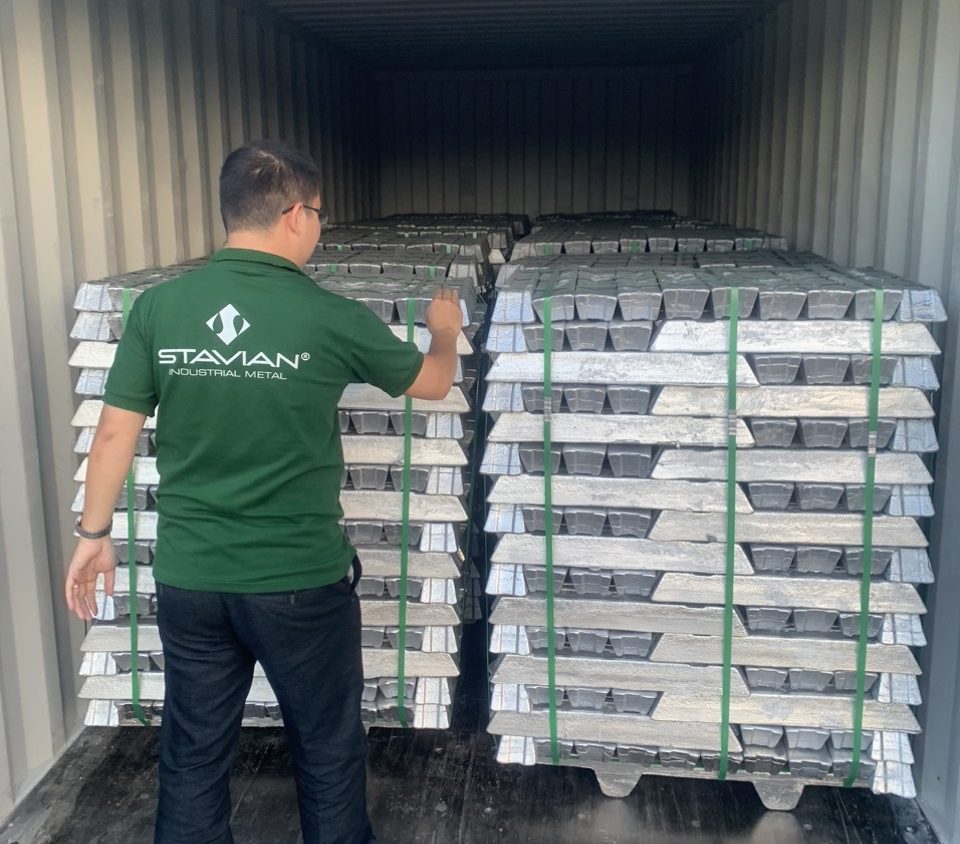
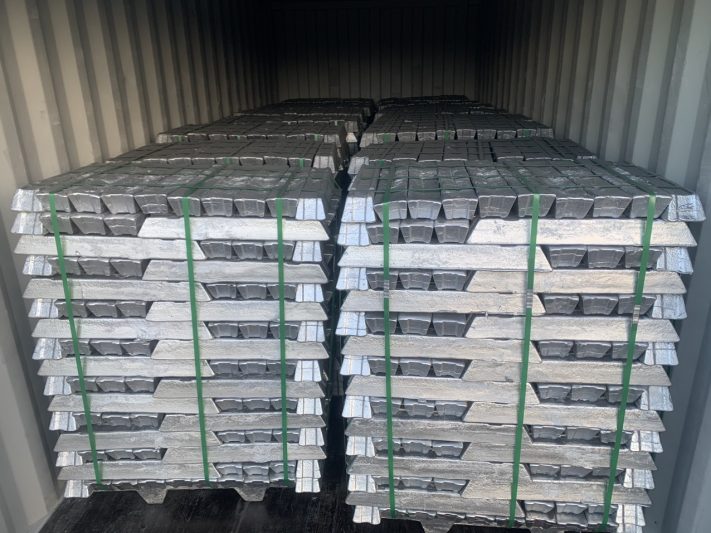
Stavian Industrial Metal’s aluminum ingot products are typically supplied in a silvery-white appearance and approximately 20–25 kg per ingot, although individual dimensions and weight can vary according to the standards of each producer.
After solidification, finished ingots are inspected and sampled. Chemical composition is the primary acceptance criterion for most casting alloy ingots, but dimensional appearance, contamination, inclusion level and other parameters may also be evaluated depending on customer requirements.
Professional industrial buyers should request appropriate quality documentation, such as chemical analysis, batch or heat identification, packing information and manufacturer certification. Traceability becomes particularly important when aluminum is used for automotive, electrical or export-oriented manufacturing programs.
Primary aluminum alloy ingot and secondary aluminum alloy ingot can both meet industrial specifications, but they originate from different raw-material routes. Primary aluminum starts from alumina and electrolytic reduction, while secondary aluminum is produced by remelting and refining recovered aluminum scrap.
Secondary aluminum is particularly important in casting alloys because many die-casting applications can effectively use recycled metal if chemistry and melt quality are properly controlled. Aluminum can be repeatedly recycled, and secondary production requires substantially less energy than producing primary aluminum from ore.
However, recycled content alone does not determine whether an ingot is suitable. For a casting plant, the decisive criteria remain chemical composition, impurity control, melt cleanliness, consistency and conformity with the required standard.
Decarbonization targets, circular manufacturing and increasing demand for low-carbon materials are accelerating the development of recycled aluminum supply chains. Automotive and electronics manufacturers in particular are increasingly evaluating both recycled content and product carbon footprint as part of material procurement.
Stavian Industrial Metal incorporates sustainable materials into its long-term strategy, including virgin green aluminum, green ingot, green billet, aluminum alloy and recycled aluminum. More information about this direction is available through Stavian Industrial Metal’s sustainable development strategy.
The term aluminum alloy ingot covers numerous grades, each formulated around different processing and performance requirements. Among casting alloys, ADC12 is particularly important in Asia and global die-casting supply chains, while A360 and A413 are also widely recognized specifications.
| Alloy Grade | Alloy Family / Characteristics | Typical Applications |
|---|---|---|
| ADC12 | Al-Si-Cu alloy with excellent castability and dimensional stability | Automotive housings, electronics, machinery, motorcycle parts |
| ADC6 | Al-Mg-based casting alloy with strong corrosion performance | Components requiring corrosion resistance |
| A360 | Die-casting alloy combining strength, corrosion resistance and pressure tightness | Automotive and industrial castings |
| A413 | High-silicon casting alloy with excellent fluidity | Thin-wall and pressure-tight die castings |
| Al96 | Commercial aluminum feedstock with approximately 96% Al depending on specification | Casting, household goods and alloy blending depending on chemistry |
Stavian Industrial Metal supplies aluminum ingot grades including Al99.90, Al99.85, Al99.70, Al99.60, Al99.50, Al99.00, Al99.7E and Al99.6E, as well as alloyed products such as Al96, ADC-6, ADC-12, A413 and A360, subject to supplier specifications and commercial availability.
ADC12 aluminum alloy ingot is one of the most widely used materials in high-pressure die casting. It belongs to the aluminum-silicon-copper family and is commonly specified under JIS H 5302. Representative composition ranges typically include approximately 9.6–12.0% silicon and 1.5–3.5% copper, with additional controlled levels of iron, magnesium, zinc, manganese and other residual elements.
The alloy’s relatively high silicon level promotes excellent molten-metal fluidity, allowing complex cavities and thin walls to be filled efficiently. Copper contributes to hardness and mechanical performance. These characteristics make ADC12 suitable for automotive components, motor housings, electronic enclosures, machinery parts and numerous consumer products.
For additional technical details, buyers can review Stavian Industrial Metal’s dedicated guide to ADC12 ingot properties, composition and applications.
A360 is another aluminum die-casting alloy used where good corrosion resistance, pressure tightness and mechanical performance are required. Its silicon and magnesium content supports casting performance and strength, making the material relevant to automotive and industrial components.
When comparing A360 with ADC12 or other casting alloys, buyers should evaluate not only mechanical properties but also mold-filling behavior, machining requirements, surface treatment, operating environment and regional alloy availability.
A413 is recognized for high silicon content and excellent fluidity. This characteristic makes it particularly effective for intricate die-cast components, thin sections and pressure-tight parts where complete mold filling is essential.
However, alloy selection should always be based on the complete engineering requirement. A grade with exceptional castability may not necessarily provide the optimum balance of ductility or post-casting machining performance required by every component.
One of the most important reasons manufacturers select aluminum alloys is their favorable strength-to-weight ratio. Aluminum has a density of approximately 2.7 g/cm³, roughly one-third that of steel. Alloying allows engineers to obtain considerably greater mechanical performance while maintaining the fundamental lightweight advantage of aluminum.
This characteristic is especially valuable in transportation. Lower component mass can reduce vehicle weight, improve energy efficiency and increase driving range in electric vehicles. Weight reduction is also critical for aerospace and mobile industrial equipment.
Many aluminum alloy ingots are specifically engineered for casting. Silicon-containing alloys can flow into complex die cavities, allowing high-pressure die-casting machines to manufacture intricate components at high production rates.
Good castability reduces incomplete filling and allows designers to create thin walls, ribs, bosses and integrated component geometries. This can consolidate multiple components into a single casting, reducing assembly operations and overall production cost.
Aluminum naturally develops a thin oxide film that helps protect the underlying metal against atmospheric corrosion. Alloy selection, however, affects the overall corrosion response. Some aluminum-magnesium grades offer particularly strong corrosion resistance, while copper-containing casting alloys may require additional protection in aggressive environments.
Surface treatments such as anodizing, painting, powder coating or conversion coatings can be applied where additional protection or specific aesthetics are required.
Although alloying generally lowers thermal conductivity compared with high-purity aluminum, many aluminum casting alloys still transfer heat effectively. This makes them attractive for heat sinks, motor housings, LED components, electronic enclosures and power-system equipment.
ADC12, for example, is commonly selected for electronic and automotive housings where structural performance and heat dissipation must be balanced.
Cast aluminum alloys can be drilled, milled, turned and tapped after casting. Controlled alloy composition and casting quality are important because internal porosity, hard inclusions or excessive variation in silicon and iron content may reduce machining consistency.
Manufacturers performing automated CNC operations often place strong emphasis on batch-to-batch chemistry consistency because tool life, chip formation and surface finish directly affect productivity.
The combination of low weight, castability, strength, corrosion performance and recyclability has made aluminum alloy ingot an essential raw material across automotive, electronics, construction, machinery and consumer manufacturing.
| Industry | Typical Applications | Important Material Requirements |
|---|---|---|
| Automotive & EV | Transmission housings, motor housings, brackets, structural castings, wheels | Low weight, castability, strength, dimensional stability |
| Electronics | Device enclosures, heat sinks, LED housings, communication equipment | Thermal management, surface finish, dimensional accuracy |
| Industrial machinery | Pump bodies, motor casings, covers, housings, brackets | Machinability, corrosion resistance, rigidity |
| Transportation | Motorcycle parts, commercial vehicle components, rail equipment | Weight reduction, mechanical performance |
| Construction | Hardware, fittings, architectural components | Corrosion resistance, appearance, dimensional consistency |
| Home appliances | Cookware components, appliance housings, internal structures | Castability, finish, cost efficiency |
The automotive industry is one of the largest users of casting-grade aluminum. Aluminum alloy ingots are remelted and die-cast into engine blocks, transmission housings, brackets, wheel components, pumps, structural nodes and increasingly electric powertrain components.
The transition toward electric vehicles is reinforcing aluminum demand. EV manufacturers must compensate for battery weight while maximizing vehicle range, encouraging the use of lightweight aluminum in motor housings, inverter housings, battery-related structures and chassis components.
High-pressure die casting and so-called giga-casting technologies are also increasing the size and complexity of aluminum components. These processes place additional emphasis on consistent alloy chemistry, melt cleanliness, fluidity and control of porosity.
Aluminum alloys are extensively used in electronics because they provide an effective combination of heat dissipation, low weight, corrosion resistance, electromagnetic shielding potential and aesthetic finishing.
Typical products include LED housings, heat sinks, computer components, telecommunications housings, power-electronics enclosures and household appliance parts. Precision die casting allows complex geometries to be produced at high volume with relatively low secondary-processing requirements.
Pump bodies, gearbox covers, motor housings, valve components and machinery brackets can all be produced from casting-grade aluminum alloys. Compared with heavier ferrous alternatives, aluminum components can reduce equipment mass while maintaining sufficient rigidity for many applications.
Proper alloy selection remains important where parts are subject to repetitive loads, high temperatures, aggressive chemicals or high-pressure fluid service.
Although extrusion billets are more commonly associated with window frames and architectural profiles, alloy ingots also support the production of cast construction hardware, connectors, brackets, decorative components and fastening systems.
For extruded aluminum products such as curtain wall profiles, interior profiles and solar-system components, manufacturers typically use billets from alloys such as 6061, 6063, 6005 and related grades. Stavian Industrial Metal supplies aluminum billet in multiple grades and diameters for extrusion applications.
Die-casting aluminum alloy ingot is formulated specifically for remelting and injection into permanent metal dies. High-pressure die casting can inject molten aluminum into a steel die under high pressure and create large quantities of components with complex geometry, relatively thin walls and excellent repeatability.
For this process, alloy properties that influence commercial performance include:
ADC12 is widely used because it provides an attractive balance of these factors. However, production engineers should evaluate whether ADC12, A360, A413 or another alloy offers the best technical and economic result for a specific component.
High-volume die-casting plants depend heavily on stable process conditions. If alloy chemistry changes significantly between batches, molten-metal viscosity, solidification, machining behavior and casting quality may also change.
This is why suppliers and foundries closely monitor silicon, copper, magnesium, iron, zinc and other controlled elements. Purchasing only by generic descriptions such as “recycled aluminum ingot” without specifying chemical limits can create considerable production risk.
The global use of aluminum alloy ingot continues to expand because the material provides manufacturers with a strong combination of engineering and commercial advantages.
Through alloy design, manufacturers can modify strength, hardness, ductility and thermal behavior according to application requirements. This makes aluminum far more versatile than relying only on commercially pure grades.
Casting alloys such as ADC12 can support short die-casting cycles and high-volume production. Excellent mold filling also enables complex shapes to be manufactured close to their final geometry, reducing machining and assembly operations.
The relatively low density of aluminum helps manufacturers reduce component and product weight. This provides direct benefits in vehicles, portable equipment, aircraft, electronics and machinery.
Appropriate aluminum grades provide good resistance to atmospheric corrosion, allowing aluminum components to operate effectively in numerous indoor and outdoor applications. Additional coatings can further enhance durability where needed.
Aluminum can be repeatedly recycled and returned to industrial use. Casting alloys are particularly compatible with circular production systems because end-of-life components and production scrap can be collected, sorted, remelted and adjusted back to specification.
The aluminum alloy ingot market in 2026 is being shaped by several simultaneous forces: automotive lightweighting, electric-vehicle production, growth in renewable energy and electrical infrastructure, geopolitical supply disruptions, trade measures and increasing demand for recycled and low-carbon aluminum.
One notable development during the first half of 2026 was a sharp increase in Chinese aluminum alloy exports. China’s exports of aluminum alloy nearly doubled year on year to approximately 238,500 metric tons during the first six months of 2026, while exports of semi-manufactured aluminum products rose about 18% to 3.2 million tons. This reflected changes in global supply availability as well as relatively weak domestic Chinese demand.
Market conditions also remain sensitive to energy because aluminum smelting is electricity intensive. Production disruptions in major supply regions can quickly influence the availability and price of primary aluminum, which subsequently affects the economics of alloy ingot production. At the same time, robust Chinese output and increasing availability of secondary aluminum can offset part of the supply pressure.
Carbon intensity is becoming an increasingly important procurement parameter in addition to price and chemical composition. Automotive, electronics, renewable energy and multinational industrial companies are progressively incorporating Scope 3 emissions targets into supplier qualification programs.
Stavian Industrial Metal identifies green aluminum as a strategic material category, including green alumina, green ingot, green billet and green aluminum wire. Its sustainability direction considers technologies and energy pathways designed to reduce the carbon footprint of aluminum production.
Stavian Industrial Metal’s green metal strategy includes virgin green aluminum, alloy products and recycled aluminum as part of its longer-term sustainable industrial metal ecosystem.
Secondary aluminum is becoming increasingly important because remelting scrap generally requires only a fraction of the energy needed for primary aluminum production. This creates both environmental and economic advantages, especially for casting alloys that can accommodate well-controlled recycled inputs.
Nevertheless, the rapid growth of recycled aluminum makes sorting, impurity management and traceability more important. Secondary ingot quality depends heavily on controlling scrap streams so that elements such as iron, zinc, copper, magnesium and lead remain within specification.
Manufacturers are increasingly diversifying sourcing beyond a single country or producer. Supply disruptions, freight volatility, tariffs and regional policy changes have reinforced the value of maintaining multiple qualified aluminum supply sources.
Stavian Industrial Metal continues to expand its international sourcing and partner network. In July 2026, Stavian Industrial Metal participated in Aluminium China 2026, where its delegation engaged with suppliers and reviewed developments across aluminum raw materials, alloys, semi-finished products, processing technology and manufacturing equipment. The activity supported continued diversification of supply sources and deeper participation in the global aluminum value chain.
The aluminum alloy ingot price cannot be determined only from the headline aluminum price because the final value includes the base aluminum market plus alloying, scrap, processing, energy, logistics and regional premiums.
Important price drivers include:
Buyers should therefore compare quotations on a consistent basis using the same grade, chemical specification, Incoterm, quantity, packaging, origin and delivery schedule.
Aluminum ingot and aluminum billet are often confused, but they serve different functions in the aluminum value chain. Ingot generally represents primary or alloyed cast metal for subsequent remelting and processing, while billet is a cylindrical semi-finished product mainly designed for extrusion.
| Product | Main Function | Typical Downstream Process |
|---|---|---|
| Aluminum alloy ingot | Raw material with specified alloy chemistry | Die casting, gravity casting, remelting |
| Primary aluminum ingot | High-purity base aluminum | Alloying, billet production, rolling, casting |
| Aluminum billet | Cylindrical semi-finished aluminum | Extrusion |
| Aluminum sheet / coil | Flat semi-finished product | Stamping, forming, fabrication |
| Aluminum profile | Extruded finished or semi-finished shape | Construction, automotive, solar, electronics |
Stavian Industrial Metal supplies aluminum billet in alloys such as 6005, 6063 and 6061, with diameters including approximately 89 mm, 120 mm, 127 mm, 152 mm, 178 mm and 202 mm, depending on customer requirements. These billets are used to manufacture architectural profiles, curtain-wall systems, heat-management components, solar structures and other extruded products.
Stavian Industrial Metal also provides finished and semi-finished aluminum products, including aluminum profiles, wire, sheets and coils for applications across construction, automotive, energy, electronics and household industries.
Stavian Industrial Metal provides comprehensive industrial metal supply and trading solutions for customers in Vietnam and international markets. As a member of Stavian Group, Stavian Industrial Metal has access to a broad global ecosystem, operating relationships across more than 100 countries and territories and an extensive network of partners, customers, offices and logistics capabilities.
For aluminum customers, Stavian Industrial Metal’s portfolio covers the full upstream-to-downstream chain, including alumina, aluminum ingot, aluminum billet and finished and semi-finished aluminum products. This allows industrial buyers to source different aluminum forms according to their production processes rather than working with a supplier limited to a single product category.
Stavian Industrial Metal supplies aluminum ingots in multiple grades, including Al99.90, Al99.85, Al99.70, Al99.60 and other commercially pure aluminum specifications, together with casting-oriented alloy grades such as Al96, ADC-6, ADC-12, A413 and A360.
This product diversity enables customers to source feedstock for alloy preparation, extrusion billet manufacturing, casting and other downstream processes according to their technical requirements.
Stavian Industrial Metal maintains relationships with domestic and international suppliers and partners, enabling flexible sourcing across different origins. Its 2026 company portfolio identifies global producers such as Rio Tinto, Alcoa, Vedanta and Press Metal among recognized sources associated with its aluminum ingot supply network.
Supply-source diversification is particularly valuable in periods of aluminum-market volatility because it allows procurement teams to evaluate availability, production schedules, freight routes and commercial terms across multiple markets.
Industrial aluminum purchasing requires more than selecting an alloy name. Stavian Industrial Metal can work with customers around grade, chemical composition, manufacturer specifications, quantity, destination and downstream application to identify suitable product options.
For customers operating die-casting plants, critical parameters may include Si, Cu, Fe, Mg and Zn limits, while extrusion customers may focus more heavily on billet alloy, diameter, homogenization and surface condition.
Beyond alloy ingots, Stavian Industrial Metal provides aluminum products covering alumina, aluminum ingot, aluminum billet and finished or semi-finished aluminum products.
This portfolio supports customers in automotive, construction, transportation, new energy, electrical equipment, electronics, industrial manufacturing and other markets that require reliable aluminum raw materials and semi-finished products.
Stavian Industrial Metal has identified green industrial materials as a strategic development direction. Its sustainability roadmap includes virgin green aluminum, green ingot, green billet, aluminum alloy and recycled aluminum, supporting the broader industry transition toward lower-carbon manufacturing and circular material flows.
The company’s strategy reflects the growing importance of carbon transparency in international aluminum trade, particularly as manufacturers increasingly evaluate the embodied emissions of raw materials throughout their supply chains.
An aluminum alloy ingot is a solid block of aluminum containing controlled quantities of alloying elements such as silicon, copper, magnesium, zinc or manganese. These elements modify properties such as strength, hardness, castability, corrosion resistance and machinability.
Aluminum ingot can refer broadly to cast aluminum raw material, including high-purity primary aluminum. Aluminum alloy ingot specifically contains alloying elements in controlled proportions to achieve a defined grade such as ADC12, A360 or A413.
ADC12 ingot is an Al-Si-Cu casting alloy widely used in high-pressure die casting. It typically contains approximately 9.6–12.0% silicon and 1.5–3.5% copper, together with controlled amounts of other elements. It provides excellent fluidity, castability and dimensional stability.
Major users include automotive, electric vehicles, electronics, machinery, transportation, construction, home appliances and general industrial casting. The exact alloy depends on the required combination of mechanical properties, corrosion resistance, casting behavior and processing cost.
Yes. Aluminum is highly recyclable and can be remelted repeatedly. Many casting alloys are produced partly or largely from secondary aluminum, provided scrap is correctly sorted and chemistry is carefully adjusted to meet specification.
Ingot dimensions vary by manufacturer and alloy. Stavian Industrial Metal’s aluminum ingot portfolio generally includes units weighing approximately 20–25 kg per ingot, or according to the individual producer’s specification.
The price generally reflects the base aluminum value, scrap market, alloying-element cost, energy, regional premium, processing, freight, import duties, quantity and technical specification. Casting alloys such as ADC12 may therefore trade differently from primary aluminum ingot.
No. ADC12 is an aluminum-silicon-copper alloy engineered for casting. Pure or commercially pure aluminum grades such as Al99.7 contain much higher aluminum content and are used as base metal for different downstream applications.
Buyers should verify alloy grade, chemical composition, applicable standard, supplier origin, production route, certificate, unit weight, packaging, order volume, delivery schedule and commercial terms. For recycled alloy ingots, chemistry consistency and traceability are particularly important.
Aluminum alloy ingot is an essential raw material for modern manufacturing, combining aluminum’s low density, corrosion resistance and recyclability with engineered characteristics created through alloying. Elements such as silicon, copper, magnesium and zinc allow manufacturers to optimize strength, castability, thermal performance, hardness and machining behavior for specific industrial applications.
Grades such as ADC12, ADC6, A360 and A413 play an important role in die casting and industrial component manufacturing, particularly across automotive, electric vehicles, electronics, machinery and consumer products. As manufacturing becomes increasingly focused on lightweighting, recycling and carbon reduction, demand is also expanding for secondary and low-carbon aluminum solutions.
Stavian Industrial Metal supplies a diversified aluminum ingot portfolio covering primary and alloyed grades, including Al99.90, Al99.85, Al99.70, Al99.60, Al96, ADC-6, ADC-12, A413 and A360, alongside aluminum billet and finished and semi-finished aluminum products. With an extensive international supply network and a strategic focus on sustainable industrial metals, Stavian Industrial Metal supports customers across the aluminum value chain with products aligned to diverse technical and commercial requirements.
Address
Website: https://stavianmetal.com
Email: info@stavianmetal.com