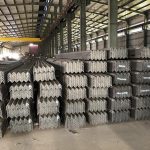
Steel angles are structural steel products featuring two perpendicular legs, offering good rigidity, load-bearing capacity, and fabrication flexibility. These materials are widely used in industrial building construction, mechanical fabrication, transportation infrastructure, and industrial manufacturing. In this article, Stavian Industrial Metal provides detailed information about steel angle types, dimensions, weight charts, applications, and important considerations when selecting suitable products.
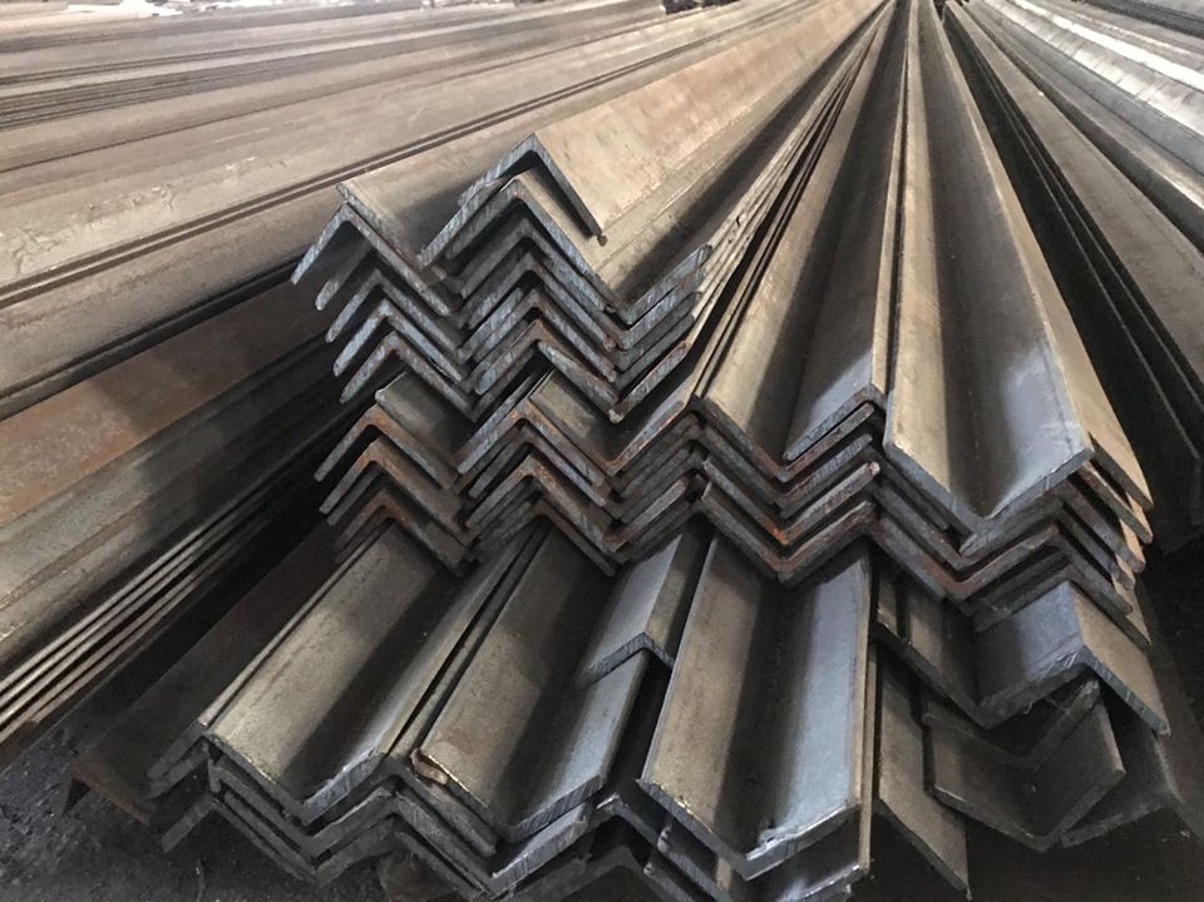
Steel angles, also known as angle steel or L-shaped steel, are steel products with a cross-section consisting of two legs forming a 90-degree angle. The two legs may have equal or unequal dimensions, depending on the design requirements and intended application of each structural component.
Steel angles are commonly manufactured through the hot-rolling process and are available in various leg widths, thicknesses, lengths, and steel grades. Their right-angle configuration facilitates connections with other structural components through welding or bolting, making them particularly suitable for framing systems, bracing, and industrial supports.
Steel angles are primarily classified according to their cross-sectional shape and surface treatment methods. Each type has distinct characteristics in terms of configuration, corrosion resistance, cost, and application range. Understanding the differences between these product categories helps businesses select suitable materials based on technical requirements and project budgets.
Based on the dimensions of their two legs, steel angles are divided into two main categories: equal-leg steel angles and unequal-leg steel angles.
Equal-leg steel angles are widely used due to their simple configuration and ease of fabrication. Meanwhile, unequal-leg steel angles offer greater flexibility for designs requiring two connecting surfaces of different dimensions. Product selection should be based on technical drawings rather than solely on the larger leg dimension.
Black steel angles are steel products without a protective metallic coating, retaining the characteristic surface color of steel after hot rolling. These materials offer cost advantages and are convenient for cutting, drilling, welding, and fabricating metal components across various manufacturing industries.
Without a protective zinc coating, black steel angles are susceptible to oxidation when frequently exposed to water, moisture, or corrosive agents. These products are suitable for indoor structures, machine frames, supports, and applications where appropriate protective painting systems can be applied.
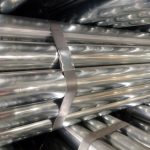
Electro-galvanized steel angles are coated with a layer of zinc through an electroplating process. The coating helps minimize oxidation while providing a bright and relatively smooth surface. These products are suitable for applications requiring an attractive appearance and an appropriate level of surface protection.
Compared with black steel angles, electro-galvanized steel angles offer better corrosion resistance under operating conditions compatible with the coating. However, since the coating is generally thinner than that produced by hot-dip galvanizing, businesses should carefully evaluate the operating environment before using these products in outdoor structures.
Hot-dip galvanized steel angles are manufactured by immersing surface-treated steel in a bath of molten zinc. This process creates a protective coating on the steel substrate, enhancing rust resistance and minimizing the effects of moisture and other corrosive agents.
These products are commonly selected for outdoor structures, power transmission systems, infrastructure projects, and industrial buildings with high humidity levels. For coastal environments or areas exposed to chemicals, businesses should determine the level of corrosivity, applicable coating standards, and additional protective measures to ensure the required design service life.

| Criteria | Black Steel Angles | Electro-Galvanized Steel Angles | Hot-Dip Galvanized Steel Angles |
|---|---|---|---|
| Surface Characteristics | Black or dark gray surface | Bright and smooth surface | Covered with a hot-dip zinc coating |
| Corrosion Resistance | Low without a protective coating | Suitable for less demanding corrosive environments | Higher corrosion resistance under suitable operating conditions |
| Relative Cost | Low | Generally higher than black steel angles | Generally higher than electro-galvanized steel angles |
| Applications | Machine frames and indoor structures | Furniture, supports, and secondary structures | Infrastructure, outdoor structures, and power transmission systems |
Businesses can learn more about galvanized steel angles to select a suitable surface treatment method based on operating conditions and project requirements.
Thanks to their distinctive angular cross-sectional configuration, steel angles meet various requirements for structural connections, fabrication, and assembly. These materials can be used independently or combined with steel plates, H-beams, I-beams, and U-channels to create complete framing systems for construction and industrial manufacturing.
The two perpendicular legs provide steel angles with a cross-sectional configuration offering suitable rigidity for various linear structural members. These materials are used as braces, struts, support frames, and reinforcement components to meet load transfer requirements within structural systems.
Actual load-bearing capacity depends on steel grade, thickness, leg dimensions, unsupported length, and connection arrangements. Therefore, structural components subjected to heavy loads must be selected and verified through specific engineering calculations.
Steel angles are commonly incorporated into bracing systems and reinforcement components to improve the stability of steel frames. When properly designed and installed, these materials help minimize displacement, deformation, and the effects of vibration on structural systems.
This characteristic is particularly important in industrial building construction, machine frame manufacturing, and industrial equipment support systems. However, the ability to minimize vibration depends on the overall structural design rather than solely on the steel angle cross-section.
Steel angles are available in various leg widths and thicknesses, ranging from smaller specifications such as V25, V30, and V40 to larger specifications such as V100, V150, and V200. This variety allows businesses to select suitable materials for different categories of structural components.
Smaller sizes are commonly used for secondary frames, supports, and mechanical components. Larger sizes may be selected for truss systems, industrial structures, and infrastructure projects, provided that they meet all applicable design requirements.
Steel angles feature a simple configuration that facilitates cutting, drilling, welding, bolting, and structural assembly. Their two perpendicular surfaces provide greater flexibility when arranging connection points with gusset plates, steel frames, or equipment.
For galvanized steel angles, areas affected by cutting or welding should receive appropriate protective treatment to maintain the corrosion resistance of structural components after fabrication.
When selecting steel angles, businesses should consider both leg dimensions, thickness, length, weight, steel grade, and manufacturing standards. These parameters are essential for determining material quantities, preparing cost estimates, controlling product quality, and verifying compliance with technical drawings.
Specific lengths, dimensions, and tolerances should be confirmed with the manufacturer or supplier. Products with special specifications may be supplied under separate agreements, depending on the production capabilities of each manufacturing mill.
Steel angle specifications are commonly expressed in the format V A x B x t, where A and B represent the widths of the two legs, while t represents the nominal steel thickness. These dimensional parameters are generally expressed in millimeters.
For example, a V50x50x5 steel angle has two legs measuring 50 mm in width and a nominal thickness of 5 mm. For a V75x50x6 steel angle, the two leg widths are 75 mm and 50 mm, respectively, with a nominal thickness of 6 mm. When placing an order, customers should also specify the length, steel grade, and surface treatment requirements.
Below is a reference steel angle weight chart covering several common equal-leg steel angle specifications, calculated based on a standard length of 6 m per bar. These figures are intended for preliminary cost estimation and do not replace technical specifications or the accepted weight of individual shipments.
| Dimensions (mm) | Thickness (mm) | Reference Weight (kg/m) | Weight per 6 m Bar (kg) |
|---|---|---|---|
| V25 x 25 | 2.5 – 3.0 | 0.92 – 1.12 | 5.52 – 6.72 |
| V30 x 30 | 2.5 – 3.0 | 0.92 – 1.36 | 5.52 – 8.16 |
| V40 x 40 | 3.0 – 4.0 | 1.67 – 2.08 | 10.02 – 12.48 |
| V50 x 50 | 4.0 – 5.0 | 3.06 – 3.77 | 18.36 – 22.62 |
| V63 x 63 | 5.0 – 6.0 | 4.81 – 5.73 | 28.86 – 34.38 |
| V75 x 75 | 5.0 – 8.0 | 5.80 – 8.99 | 34.80 – 53.94 |
| V100 x 100 | 7.0 – 10.0 | 10.70 – 14.90 | 64.20 – 89.40 |
Note: The values presented in this table are reference figures based on commercial and nominal product specifications. Actual weights may vary depending on fillet radius geometry, rolling tolerances, applicable standards, and manufacturing characteristics. A general tolerance range of ±3% to ±5% should not be applied universally to all products.
The weight of a steel angle bar is determined by multiplying its weight per linear meter by the actual length of the product.
Steel angle bar weight (kg) = Unit weight (kg/m) × Length (m)
For example, a V50x50x5 steel angle has a reference nominal weight of 3.77 kg/m. A 6 m long bar therefore weighs 22.62 kg. When estimating material quantities for 100 bars of the same specification, the total theoretical weight is 2,262 kg, equivalent to 2.262 metric tons.
Customers can also refer to the steel angle dimensions and weight chart to determine suitable material quantities for individual project requirements.
Thanks to their fabrication flexibility and ease of structural assembly, steel angles are widely used across various industries, ranging from residential construction to industrial manufacturing. Depending on the application, these materials may serve load-bearing, connecting, reinforcement, or equipment installation support functions.
In construction, steel angles are used to manufacture industrial building braces, roof truss systems, secondary frames for pre-engineered steel buildings, canopy frames, and connecting components. These materials can be combined with H-beams, I-beams, U-channels, and steel plates to complete structural systems according to project design specifications.
Steel angles are used in the manufacture of machine frames, equipment supports, transportation vehicle frames, shipping containers, and certain shipbuilding components. Their ease of cutting, drilling, and connection makes them suitable for various mechanical fabrication processes. For shipbuilding applications, appropriate steel grades and certifications must be selected in accordance with applicable classification society requirements.
In infrastructure projects, steel angles are used in power transmission towers, telecommunications towers, guardrail systems, fences, working platforms, and technical equipment supports. Structural components frequently exposed to outdoor environments require suitable corrosion protection measures to achieve their intended design service life.
Steel angles are used to manufacture table and chair frames, storage racks, equipment supports, and warehouse storage systems. In particular, slotted steel angles facilitate the assembly, disassembly, and adjustment of shelving components through bolted connections.
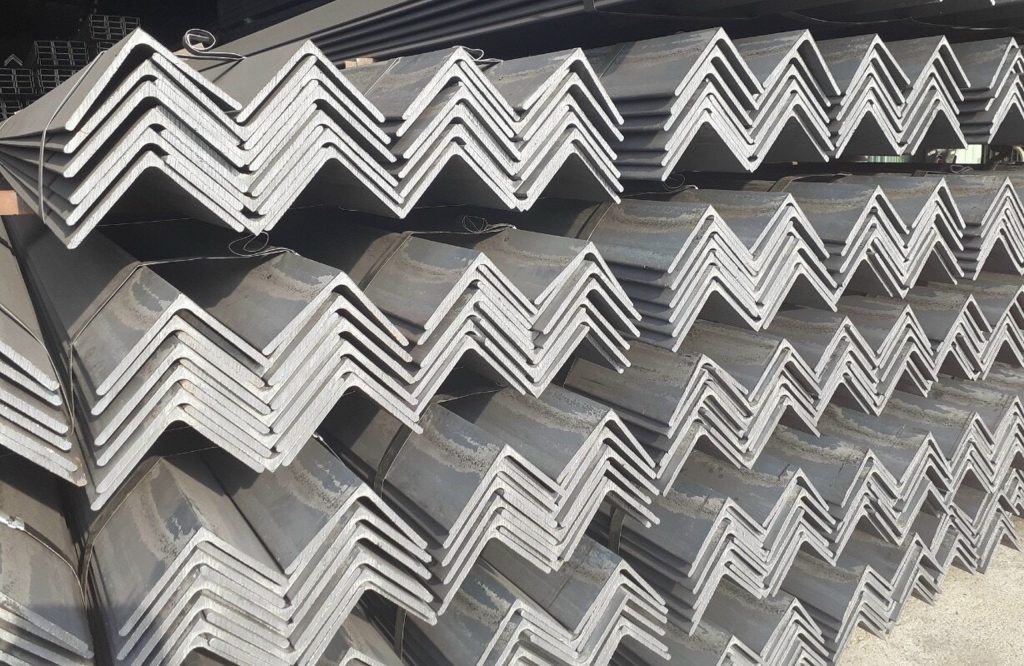
When purchasing steel angles, businesses should verify steel grades, leg dimensions, thickness, length, and surface condition. They should also review quality certificates, Certificates of Origin (CO), where required, and Material Test Certificates (MTC) to ensure that products meet the applicable acceptance requirements.
Stavian Industrial Metal recommends selecting steel angles based on structural loads, operating environments, and the required service life of structural components:
Steel angles should be stored in dry, well-ventilated areas with stable support systems and minimal direct contact with damp ground. Steel bundles should be categorized according to dimensions, steel grades, and production batches to facilitate inventory management, transportation, and subsequent use.
Steel products should not be stored near potentially corrosive chemicals. For galvanized steel angles, prolonged water accumulation between stacked steel bars should be avoided, and impacts that may damage the protective coating should be minimized.
Stavian Industrial Metal (Stavian Industrial Metal Joint Stock Company) operates in the industrial metal materials trading sector, supplying steel products for construction, mechanical fabrication, manufacturing, infrastructure, and industrial projects in domestic and international markets.
Within its project steel portfolio, Stavian Industrial Metal supplies structural steel sections in specifications including L40–L150, C8–C16, and I10–I15, along with other structural steel sections, steel pipes, hollow sections, and purlins suitable for various project requirements.
To optimize procurement costs, customers should clearly identify product specifications, length, thickness, steel grade, total weight, and surface treatment requirements before submitting a request for quotation. Stavian Industrial Metal will work with customers to determine suitable supply solutions based on the technical specifications and actual implementation schedules of their projects.
Steel angles are structural steel materials offering good rigidity, diverse specifications, and ease of fabrication, making them widely applicable in construction, mechanical engineering, and industrial infrastructure. Selecting the correct dimensions, steel grades, standards, and surface protection methods helps ensure construction quality and optimize investment costs. Stavian Industrial Metal supplies structural steel products suitable for the specific requirements of individual projects.
Address
Website: https://stavianmetal.com
Email: info@stavianmetal.com