I Beam Steel is one of the most important structural steel products used in construction, infrastructure, industrial buildings, bridges, shipbuilding, machinery frames, warehouses, and export-driven steel projects. Its cross-section resembles the capital letter “I”, with two horizontal flanges connected by a vertical web. This shape allows the beam to carry heavy bending loads while using material efficiently, making it a practical choice where strength, cost control, and structural reliability are critical.
For international buyers, fabricators, contractors, and steel distributors, understanding I Beam Steel is not only about selecting a size from a catalog. It requires knowledge of steel grades, dimensional standards, load-bearing performance, surface treatment, tolerances, inspection documents, packing methods, and export logistics. A wrong specification can increase fabrication waste, delay customs clearance, or compromise project safety. A correct specification helps reduce total project cost and ensures the steel performs as designed.
Stavian Industrial Metal approaches I Beam Steel from the perspective of international steel supply, where product quality, documentation, reliable sourcing, and delivery coordination are equally important. As a supplier active in industrial metals and export-oriented steel solutions, Stavian Industrial Metal supports buyers who need structural steel products that meet technical requirements and commercial expectations in demanding global markets.
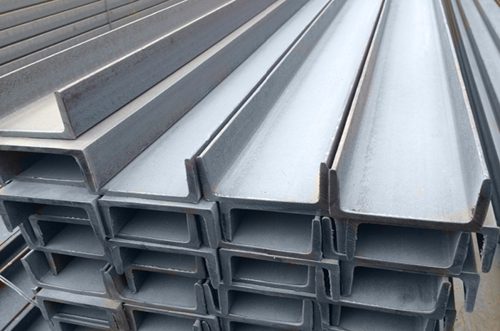
Detailed Table of Specifications, Weight, and Standards for I-Beam Steel
See more: I150 steel price list
I Beam Steel is a hot-rolled or fabricated structural steel member designed primarily to resist bending. The two flanges carry most of the bending stress, while the web resists shear force and keeps the flanges separated. This geometry gives the beam a high moment of inertia relative to its weight, which means it can span longer distances and carry heavier loads than many simpler steel sections of similar mass.
In practical construction, I Beam Steel is used as a horizontal beam, roof support, floor beam, crane runway support, machinery base, mezzanine structure, bridge component, or part of a steel frame. The product is valued because it combines strength, availability, weldability, and compatibility with bolts, plates, angles, channels, and other structural components.
The efficiency of the I-shape explains why this product is widely used in export steel markets. When buyers compare steel options, I Beam Steel often provides an economical balance between load capacity and material weight. This is especially important in large projects where thousands of meters of beams are required and small differences in unit weight can significantly affect the total steel tonnage.
Although I Beam Steel and H beam steel are sometimes mentioned together, they are not always interchangeable. I beams usually have narrower flanges and a deeper web, while H beams often have wider flanges and more balanced dimensions. H beams are commonly used for columns and heavy structural frames, while I beams are often selected for bending applications such as floor beams, roof beams, and secondary structures.
The selection depends on engineering design. A project may use I Beam Steel where the primary concern is bending resistance in one direction, and H beams where axial load, column stability, or multi-directional loading is more important. In export procurement, buyers should avoid ordering based only on the name “I beam” or “H beam”. They should provide exact dimensions, grade, standard, length, and weight tolerance.
Stavian Industrial Metal helps buyers clarify these differences during the inquiry stage. Clear communication reduces the risk of receiving a section that looks similar but does not match the structural calculation, fabrication drawing, or local building code requirement.
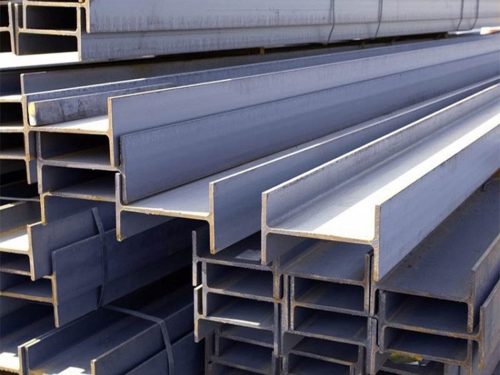
I-beam steel is also referred to as H-beam steel and is produced through the hot-rolling process in the shape of the letter “I”
The global steel industry remains one of the foundations of modern infrastructure. World steel consumption is closely tied to construction, transport networks, manufacturing, logistics facilities, energy projects, and urban development. According to global steel industry data, steel use per person reached more than 200 kg in 2024, showing how deeply steel is embedded in daily economic activity.
Within this broad market, I Beam Steel plays a direct role in projects that require durable load-bearing structures. Warehouses, factories, bridges, commercial buildings, ports, power plants, and public infrastructure all rely on structural sections. As countries invest in industrial zones, logistics hubs, renewable energy facilities, and transport corridors, demand for reliable structural steel remains significant.
For exporters and importers, I Beam Steel is attractive because it is standardized, measurable, and widely recognized across markets. However, global trade also brings challenges such as anti-dumping measures, changing freight rates, documentation requirements, and different national standards. Buyers need suppliers who understand both steel specifications and international trade execution.
Asia continues to be a major production and trading region for steel products. Vietnam has developed into an important steel manufacturing and export market in Southeast Asia, supported by industrial growth, port infrastructure, and increasing experience in serving international customers. For buyers seeking competitive sourcing, Vietnam and regional supply chains can offer practical advantages in cost, lead time, and product availability.
I Beam Steel procurement from Asia requires careful supplier evaluation. Buyers should review mill capability, grade availability, inspection process, export documentation, packing condition, and shipping experience. Price is important, but low price alone does not guarantee successful delivery. Structural steel products are heavy, technical, and often tied to project deadlines, so supply reliability matters.
Stavian Industrial Metal operates in this environment as an industrial metal supplier with a focus on connecting buyers to suitable steel solutions. The company’s role is not limited to offering products; it also involves supporting product selection, documentation, commercial coordination, and shipment planning for export customers.
See more: What is section steel?
The weight of I-beam steel depends on factors such as its specific dimensions. Typically, the weight is calculated based on a specific unit of length, usually per meter or per foot. To accurately calculate the weight of an I-beam, you need to know its dimensions (length, thickness, width) and use these parameters to compute the weight based on the specific gravity of the material.
For instance, the formula for calculating the weight of I-beam steel is:
Weight = Thickness × Width × Length × Specific gravity of steel
Technical specifications, such as the specific gravity of steel, are usually provided by the manufacturer or can be found in technical specification tables. This information helps to calculate the exact weight of an I-beam section based on its technical details.
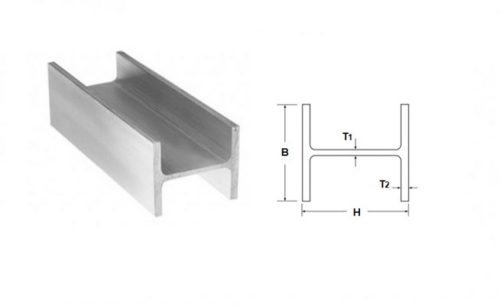
It is necessary to calculate accurately and carefully the weight and volume of I-shaped steel
The mass of I-beam steel can be calculated using the following formula:
Mass = Thickness × Width × Length × Density of steel
Where:
Thickness: Thickness of the flange or web of the I-beam (measured in mm or inches).
Width: Horizontal size of the I-beam (measured in mm or inches).
Length: Length of the I-beam section (measured in meters or feet).
Density of steel: Density of steel, typically measured in kg/m³ or lb/in³.
This formula will give you the mass of an I-beam section based on specific size dimensions and the density of that type of steel. The density of steel can often be found in technical documents or the manufacturer’s data sheet.
Different steel grades of I-beam are classified according to different origins and production standards, such as:
Each steel grade has its own origin and production standards, which can affect the specific properties of the steel. The choice of steel type is determined based on the specific needs and purposes of the investor.
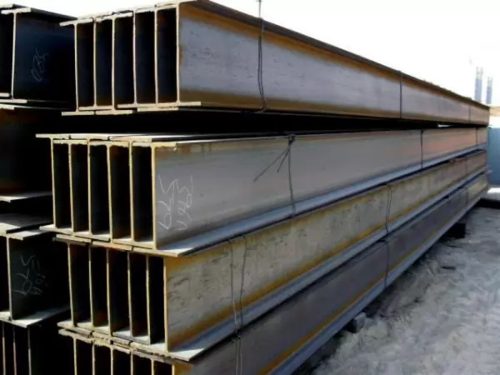
I-Beam Steel has multiple steel grades from different countries
Hot-rolled I Beam Steel is produced by passing heated steel through rolling mills to form the I-shaped profile. This is the most common type used in construction and industrial applications. Hot rolling provides consistent shape, high productivity, and cost efficiency for standard sizes.
Hot-rolled beams are typically supplied in standard lengths such as 6 meters, 9 meters, 12 meters, or customized lengths depending on mill capability and order quantity. The surface normally has mill scale, which may be acceptable for many structural uses or can be cleaned by shot blasting before painting or galvanizing.
This type of I Beam Steel is suitable for general building structures, platforms, support frames, roof systems, and many fabrication projects. Buyers should confirm the applicable standard, mechanical properties, dimensional tolerance, and whether the beam will be used in a painted, galvanized, or bare steel condition.
Welded I Beam Steel is produced by welding steel plates together to create the flanges and web. This method is often used when a project requires non-standard dimensions, heavier sections, or customized load-bearing performance. It is common in large industrial buildings, bridges, crane girders, and special engineering structures.
The main advantage of welded beams is design flexibility. Engineers can specify flange width, flange thickness, web height, and web thickness according to structural requirements. This can reduce unnecessary weight compared with using an oversized standard rolled beam. However, welded beams require strict welding control, dimensional inspection, and non-destructive testing when required by project specifications.
For export orders, fabricated I Beam Steel should be clearly described in drawings. Buyers should specify welding method, inspection standard, tolerance, surface preparation, coating system, and packing requirements. Stavian Industrial Metal can support communication between buyer requirements and supply capabilities to help reduce technical misunderstanding.
Galvanized I Beam Steel is coated with zinc to improve corrosion resistance. Hot-dip galvanizing is commonly used when beams are exposed to outdoor environments, coastal areas, humid climates, agricultural buildings, solar mounting structures, and infrastructure projects requiring longer service life.
The zinc coating acts as a protective barrier and also provides sacrificial protection, meaning the zinc corrodes before the steel substrate. This helps reduce maintenance cost, especially in projects where repainting is difficult after installation. However, galvanizing adds process requirements, including surface cleaning, dipping, draining, cooling, inspection, and sometimes repair of small coating defects.
When ordering galvanized I Beam Steel, buyers should define coating standard, average coating thickness, surface appearance requirement, venting holes if applicable, and whether fabrication is completed before galvanizing. Galvanizing after cutting, drilling, and welding is often preferred because it protects exposed edges and fabricated areas more effectively.
SEE ALSO
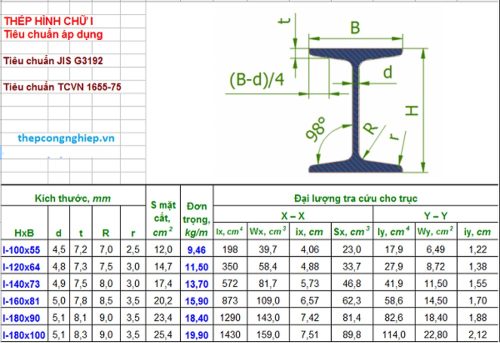
I-beam steel types
I-beam steel comes in various sizes and origins, tailored to the diverse construction needs of customers worldwide. Currently available in the market are various types of I-beam steel, such as An Khánh I-Beam Steel, Posco I-Beam Steel, and imported products from South Korea and China. Below are specifications for some common I-beam steel types:
Standard 800 x 300 x 14 x 26 x 12m I-Beam Steel
Standard 900 x 300 x 16 x 18 x 12m I-Beam Steel
Standard 600 x 200 x 11 x 17 x 12m I-Beam Steel
Standard 588 x 300 x 12 x 20 x 12m I-Beam Steel
Standard 500 x 200 x 10 x 16 x 12m I-Beam Steel
Below are technical specifications for some I-beam steel products with tapered flanges, imported from abroad and widely used in the market:
Ia 200x100x7x10x12m Overhead Crane I-Beam Steel
Ia 250x125x7.5×12.5x12m Overhead Crane I-Beam Steel
Ia 300x150x10x16x12m Overhead Crane I-Beam Steel
Ia 400x150x10x18x12m Overhead Crane I-Beam Steel
These types of I-beam steel are imported and commonly used in applications such as overhead cranes and various construction projects. Prices for these I-beam steel types may vary depending on the timing and origin of the product.
ASTM standards are widely used in North America and many international projects. ASTM A36 is one of the most common structural carbon steel grades. It typically has a minimum yield strength of approximately 250 MPa and is known for good weldability, machinability, and general structural performance. ASTM A572 Grade 50 is another common option, offering higher yield strength, typically around 345 MPa, which allows engineers to design lighter structures in some cases.
For I Beam Steel, ASTM grades are often requested in commercial buildings, industrial platforms, bridges, and equipment support structures. The choice between A36, A572, or other grades depends on the design load, code requirement, welding procedure, and availability. Higher strength is not always automatically better; it must match the project’s engineering assumptions and fabrication process.
Buyers should require mill test certificates showing chemical composition, mechanical properties, heat number, standard reference, and product dimensions. These documents are essential for quality control and may be required for customs clearance, project approval, or third-party inspection.
European standards often use grades such as S235, S275, and S355. The number indicates the minimum yield strength in MPa for certain thickness ranges. S355 is widely used in structural engineering because it provides higher strength while maintaining good weldability. Japanese standards may include grades such as SS400, which is commonly used in general structural applications.
For export buyers, equivalent grades should be handled carefully. For example, ASTM A36, JIS SS400, and EN S275 may be considered comparable in some commercial contexts, but they are not identical in every chemical, mechanical, or testing requirement. Engineers and procurement teams should confirm exact equivalency before approving substitutions.
Stavian Industrial Metal recommends that buyers provide the required standard directly rather than relying only on grade names. A complete inquiry for I Beam Steel should include grade, standard, size, quantity, length, tolerance, surface condition, inspection requirement, and destination port.
Mechanical properties determine how I Beam Steel behaves under load. The most important values include yield strength, tensile strength, elongation, and impact toughness where required. Yield strength indicates the stress at which steel begins to deform permanently. Tensile strength indicates maximum stress before fracture. Elongation reflects ductility, which is important for safe deformation and fabrication.
In colder climates or bridge applications, impact testing may be required to confirm toughness at low temperatures. For seismic zones, ductility and connection behavior are especially important. For welded structures, carbon equivalent may be reviewed to evaluate weldability and preheating requirements.
The following table summarizes common reference values for structural steel grades often associated with beam products. Actual requirements must follow the applicable standard and project specification.
Stavian Industrial Metal supplies industrial metal solutions for customers who require reliable materials for manufacturing, construction, trading, and project execution. Within its steel product orientation, I Beam Steel is an important structural product for buyers who need strength, dimensional consistency, and export-ready supply.
The company’s broader industrial metal portfolio supports buyers who may require not only beams but also related steel products for complete projects. Depending on inquiry requirements and supply availability, Stavian Industrial Metal can support sourcing for structural steel sections, flat steel products, coated steel products, and other industrial metal materials.
This integrated approach is useful for international buyers because projects rarely require only one item. A warehouse, factory, or infrastructure package may include I Beam Steel, H beams, channels, angles, plates, coils, sheets, and fabricated components. Coordinated sourcing helps reduce supplier fragmentation and improves shipment planning.
Stavian Industrial Metal understands that international steel buyers need more than material availability. They need accurate communication, competitive sourcing, specification control, documentation support, and delivery coordination. These factors are especially important for I Beam Steel because it is usually purchased for projects with fixed timelines and technical approval processes.
The company can help buyers clarify order details such as grade, standard, size, quantity, length, surface treatment, packing, and shipping terms. This reduces the risk of ambiguous purchase orders and improves the accuracy of quotations. A clear inquiry allows suppliers to confirm production feasibility and delivery schedule more efficiently.
For distributors, contractors, and fabricators, Stavian Industrial Metal’s export-oriented service can support stable procurement planning. Reliable supply is valuable when customers need repeat orders, mixed product shipments, or coordination across multiple destinations.
I Beam Steel is a core structural steel product that offers high strength, efficient load-bearing performance, and broad application across construction, infrastructure, machinery, shipbuilding, and industrial fabrication. Its value comes from the engineering efficiency of the I-shaped profile, but successful procurement depends on much more than shape. Buyers must understand grades, standards, dimensions, tolerances, surface treatment, quality control, documentation, packing, and logistics.
In global steel trade, the best purchasing decision is based on total project value rather than unit price alone. Correctly specified I Beam Steel can reduce fabrication waste, improve installation accuracy, support structural safety, and control total landed cost. Poorly specified material can create delays, rework, cost overruns, and technical risk.
Stavian Industrial Metal provides export-focused industrial metal solutions for buyers who require dependable steel supply and professional coordination. With a practical understanding of structural steel procurement, product requirements, and international trade execution, Stavian Industrial Metal supports customers in sourcing I Beam Steel and related steel products for demanding projects in global markets.
Address
Website: https://stavianmetal.com
Email: info@stavianmetal.com