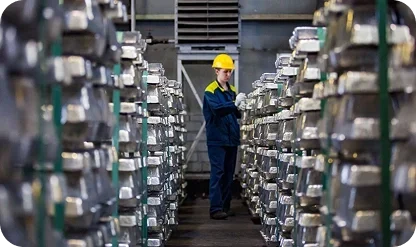
Hot Briquetted Iron, commonly known as HBI, is a densified form of Direct Reduced Iron (DRI) produced by compacting hot DRI into briquettes. In international bulk cargo terminology, hot-moulded DRI briquettes are formed from DRI feed material at a temperature above 650°C and have a density greater than 5,000 kg/m³. The densification process gives HBI a compact structure with substantially lower porosity than conventional sponge iron, improving its stability during storage, handling and long-distance transportation.
HBI is primarily used as a metallic feedstock in steelmaking. Its main application is in Electric Arc Furnace (EAF) production, where it can be charged together with steel scrap and other iron-bearing materials. Depending on the plant configuration, HBI can also be used in Basic Oxygen Furnace (BOF) steelmaking and as a metallic feedstock in blast furnace operations.
Stavian Industrial Metal supplies Hot Briquetted Iron (HBI) for industrial steelmaking applications. The product portfolio includes HBI with a metallization rate of 92–96%, total Fe content of 88–94%, metallic Fe content of 83–90% and apparent density of at least 5 t/m³. Alongside conventional HBI, Stavian Industrial Metal also supplies Green Hot Briquetted Iron for steel producers seeking metallic feedstocks aligned with lower-carbon production strategies.
1. What Is Hot Briquetted Iron?
Hot Briquetted Iron is a compacted form of Direct Reduced Iron. DRI is created by removing oxygen from iron ore through a solid-state reduction process without melting the iron. After reduction, the resulting porous metallic iron can be compacted at high temperature into dense briquettes, creating HBI.
The densification stage is the defining difference between conventional DRI and HBI. Direct reduced iron naturally has a sponge-like structure containing numerous pores left after oxygen is removed from iron oxide. This porous structure makes DRI comparatively reactive when exposed to air and moisture. By compressing the hot material into dense briquettes, the exposed surface area and porosity are reduced, providing better characteristics for commercial handling and transportation.
HBI therefore combines the metallurgical value of Direct Reduced Iron with a physical form designed for logistics. This characteristic has made Hot Briquetted Iron particularly relevant to international steel raw material supply chains where metallic feedstock must be stored, loaded, transported by sea and delivered over long distances before entering a steelmaking furnace.
Why Is HBI Produced from DRI?
DRI is an effective steelmaking feedstock because a large proportion of the iron contained in the original ore has already been converted into metallic iron. However, conventional sponge iron has relatively high porosity and can undergo reoxidation when exposed to oxygen and moisture. Under unsuitable conditions, this reaction can generate heat.
Hot briquetting addresses these physical handling limitations. DRI is compacted while still hot, creating briquettes with high apparent density and considerably reduced porosity. The resulting product retains its metallic iron content while becoming more suitable for bulk handling, storage and ocean transportation.
This does not mean HBI is chemically inert. HBI remains an iron-bearing metallic material and still requires proper management during transport and storage. Its denser structure, however, provides important advantages compared with loose, highly porous DRI.
HBI and Sponge Iron: Are They the Same?
Sponge iron is commonly used as another name for DRI because of its porous structure. HBI belongs to the DRI family but has undergone an additional hot-briquetting process. Therefore, all HBI originates from direct reduced iron, while not all DRI is HBI.
Commercial DRI is generally available in three principal forms: Cold Direct Reduced Iron (CDRI), Hot Direct Reduced Iron (HDRI) and Hot Briquetted Iron (HBI). The appropriate form depends on whether the material will be consumed near the reduction plant, transported cold to another facility or shipped over long distances.
| Product | Form | Main Characteristic | Typical Supply Situation |
| CDRI | Cold, porous DRI | DRI cooled after reduction | Storage and controlled transport as cold DRI |
| HDRI | Hot, porous DRI | Retains thermal energy after reduction | Transferred to a nearby steelmaking furnace |
| HBI | Dense hot-moulded briquettes | Higher density and lower porosity than conventional DRI | Suitable for bulk handling and long-distance transport |
2. How Is Hot Briquetted Iron Produced?
The production of Hot Briquetted Iron begins with the direct reduction of iron ore. Instead of melting the ore in a blast furnace, oxygen is chemically removed from iron oxide while the material remains in the solid state. The resulting metallic product is DRI.
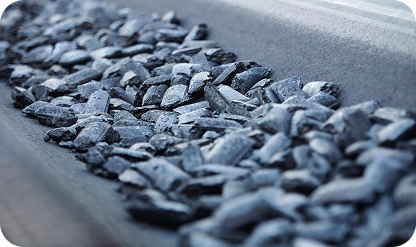
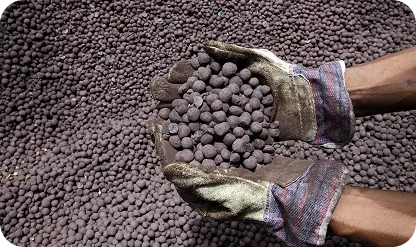
Suitable iron-bearing feedstocks may include iron ore pellets or appropriately prepared lump ore, depending on the direct reduction technology. Stavian Industrial Metal also supplies iron ore for industrial iron and steel production, with available fine and lump products and defined ranges for Fe content and major impurities.
After reduction, the hot DRI is sent to briquetting equipment rather than being fully cooled. High pressure compacts the porous material into dense briquettes. For material classified as hot-moulded DRI briquettes, the DRI feed is moulded at temperatures above 650°C and the finished material has a density greater than 5,000 kg/m³.
Direct Reduction Stage
The first stage converts iron oxide into metallic iron. In gas-based direct reduction, reducing gases containing hydrogen, carbon monoxide or combinations of both react with oxygen in iron oxide. Carbon monoxide removes oxygen and forms carbon dioxide, while hydrogen removes oxygen and forms water vapor.
Direct reduction occurs below the melting point of iron. Consequently, much of the physical structure of the original pellet or lump remains, but oxygen removal produces internal pores. This highly porous product is the material commonly referred to as DRI or sponge iron.
The quality of the DRI entering the briquetting process strongly influences final HBI quality. Metallization, total iron, metallic iron, carbon content, gangue and residual impurities all need to be controlled according to the requirements of the steelmaking application.
Hot Briquetting Stage
During briquetting, hot DRI is compressed under high pressure to transform the porous feed into compact briquettes. The process increases apparent density and reduces the volume of interconnected pores and exposed surface area.
The physical transformation is important because it improves the material’s suitability for logistics. Dense briquettes withstand bulk handling better than loose sponge iron and are more practical for stockpiling and long-distance transportation.
The product supplied by Stavian Industrial Metal has typical dimensions in the range of approximately 30–34 mm × 48–58 mm × 90–140 mm and an apparent density of at least 5 t/m³. Actual specifications should always be confirmed for the particular cargo or purchase contract.
3. Composition and Characteristics of Hot Briquetted Iron
The commercial value of Hot Briquetted Iron depends on more than its physical shape. Chemical composition and metallization directly influence metallic yield, melting performance, slag generation and steelmaking efficiency.
Important parameters typically evaluated when purchasing HBI include total Fe, metallic Fe, metallization, carbon, sulfur, phosphorus, gangue and apparent density. The required values depend on the steelmaking process and the operating practice of each plant.
HBI Specifications from Stavian Industrial Metal
Stavian Industrial Metal supplies HBI with clearly defined chemical and physical characteristics. The current product specification includes the following ranges:
| Characteristic | Stavian Industrial Metal HBI Specification |
| Origin | Global |
| Typical Size | (30–34) × (48–58) × (90–140) mm |
| Metallization Rate | 92–96% |
| Total Fe Content | 88–94% |
| Metallic Fe Content | 83–90% |
| Carbon (C) | 0.5–3% |
| Sulfur (S) | 0.001–0.03% |
| Phosphorus (P) | 0.005–0.09% |
| Gangue | 2.8–8.6% |
| Apparent Density | ≥ 5 t/m³ |
The product is manufactured with defined chemical and physical properties, allowing steelmakers to evaluate HBI as part of their metallic charge calculation. Final acceptance criteria should nevertheless be determined from the purchase specification agreed for each shipment.
Metallization Rate
Metallization indicates the proportion of iron that has been reduced to metallic form relative to the amount of iron available for metallization. It is one of the most important indicators when evaluating DRI and HBI because it provides insight into how completely the direct reduction stage has converted iron oxide into metallic iron.
A higher metallization level means that a greater share of the iron is already present as metallic Fe rather than residual iron oxide. This directly affects the amount of usable metallic iron delivered to the steelmaking furnace.
Stavian Industrial Metal’s conventional HBI portfolio specifies a metallization range of 92–96%. Steelmakers should evaluate this figure together with total Fe, metallic Fe, gangue and carbon rather than using metallization as a standalone purchasing criterion.
Total Fe and Metallic Fe
Total Fe represents the overall iron contained in HBI, including metallic iron and iron remaining in oxide form. Metallic Fe represents the iron that has already been reduced to metallic state.
This distinction is important because two materials may have comparable total iron content while containing different proportions of metallic iron. The difference can influence metallic yield and the energy and refining requirements of the receiving furnace.
For Stavian Industrial Metal’s HBI product, total Fe is specified at 88–94%, while metallic Fe is specified at 83–90%.
Carbon Content
Carbon in HBI can participate in steelmaking reactions after the material enters the furnace. Its effect depends on furnace practice, charge mix, oxygen injection and the chemistry required for the steel being produced.
Stavian Industrial Metal’s conventional HBI product has a specified carbon range of 0.5–3%. Rather than treating carbon content as an isolated quality indicator, steel producers generally evaluate it together with the complete furnace charge and operating strategy.
Gangue and Impurities
Gangue refers to non-metallic mineral components that remain in the material after direct reduction. Common constituents can include silica and alumina together with other oxides. These materials do not contribute directly to metallic yield and generally enter the slag phase during steelmaking.
Gangue content is therefore important to EAF and other steelmaking operations because additional non-metallic material can influence slag volume, flux requirements and energy demand. Stavian Industrial Metal specifies a gangue range of 2.8–8.6% for its conventional HBI product.
Sulfur and phosphorus are also important parameters because they can affect refining requirements and final steel chemistry. The HBI specification from Stavian Industrial Metal lists sulfur at 0.001–0.03% and phosphorus at 0.005–0.09%.
4. Uses of Hot Briquetted Iron in Steelmaking
The principal market for Hot Briquetted Iron is steel production. HBI supplies metallic iron that can be combined with scrap, hot metal or other iron units according to the design and operating strategy of the steel plant.
Its dense form makes it particularly useful for plants that need to purchase metallic feedstock from external suppliers rather than consuming DRI directly beside the reduction facility. Stavian Industrial Metal’s HBI can be used in different steelmaking furnaces, including EAF, BF and BOF systems at suitable charge ratios.
HBI in Electric Arc Furnace Steelmaking
The Electric Arc Furnace is the principal steelmaking market for HBI. EAF plants typically melt steel scrap and can supplement the charge with primary iron units such as DRI and HBI.
Steel scrap is an essential recycled raw material, but its composition varies depending on its source and classification. Residual elements contained in scrap may become increasingly difficult to control when producing steel grades with more stringent chemical requirements. HBI provides a source of metallic iron with defined chemical characteristics that can be blended with scrap to manage the overall metallic charge.
The appropriate HBI ratio depends on the furnace, scrap quality, required steel grade, HBI chemistry, electricity cost, oxygen practice and slag strategy. HBI is therefore not a universal replacement for scrap; it is a complementary metallic feedstock that gives EAF operators greater flexibility when designing a charge mix.
HBI in Basic Oxygen Furnace Steelmaking
Hot Briquetted Iron can also be used in Basic Oxygen Furnace operations. BOF steelmaking traditionally relies heavily on hot metal from the blast furnace together with steel scrap and other charge materials.
HBI provides an additional metallic iron source that can be introduced at an appropriate ratio depending on plant operating requirements. In BOF practice, its role must be evaluated in relation to the thermal balance, hot metal composition, scrap availability and desired final steel chemistry.
The use of HBI in BOF steelmaking demonstrates that the material is not limited to EAF facilities. Its high metallic iron content and dense physical form allow it to serve as an alternative iron unit in different steelmaking configurations.
HBI in Blast Furnace Operations
HBI can also be used as part of the burden in suitable blast furnace operations. Because a significant proportion of the iron in HBI has already been reduced to metallic form, the material enters the furnace at a different reduction state from conventional iron ore burden.
The actual charge ratio and operational benefit depend on individual blast furnace conditions, raw material strategy and production targets. Blast furnace operators therefore need to evaluate HBI specifications, burden composition and plant economics before establishing an appropriate charging practice.
5. Benefits of Hot Briquetted Iron
The principal advantages of Hot Briquetted Iron arise from the combination of high metallic iron content and a dense physical structure. Compared with conventional loose DRI, the briquetted form is designed to address important challenges associated with commercial storage, handling and long-distance transportation.
From a steelmaking perspective, HBI also gives producers access to primary iron units with defined chemical properties. This can be useful in markets where the availability or quality of steel scrap does not fully match the requirements of the steel grades being produced.
Higher Density and Lower Porosity than Conventional DRI
The hot-briquetting process compresses porous DRI into a much denser form. HBI has an apparent density above 5 t/m³, significantly reducing the exposed internal surface compared with loose sponge iron.
Greater density improves storage and logistics efficiency because more metallic material can be handled within a given volume. The compact briquettes also provide better physical characteristics for bulk loading and unloading operations.
Improved Stability for Transportation
Conventional DRI is highly porous and reactive, creating challenges when the product needs to travel significant distances from the reduction plant. HBI was developed specifically to improve the handling and transportation characteristics of direct reduced iron.
Densification reduces porosity and reactivity, which makes HBI more suitable for long-distance transportation and international trade. However, safe shipping procedures remain mandatory because HBI can still reoxidize and can evolve hydrogen when exposed to water.
Controlled Metallic Feedstock for Steel Production
Steelmakers purchasing HBI receive metallic iron with defined parameters such as total Fe, metallic Fe, metallization, carbon, sulfur, phosphorus and gangue. This enables the material to be incorporated into a planned furnace charge more predictably than heterogeneous metallic feedstocks with highly variable chemistry.
The benefit is particularly relevant in EAF operations where scrap qualities may vary. By combining HBI with recycled scrap, operators can adjust the balance between recycled metallics and primary iron units according to steel grade and process requirements.
Applicable to Multiple Steelmaking Routes
Although the EAF is the main market for HBI, the material is not restricted to a single furnace technology. Stavian Industrial Metal supplies HBI suitable for use at appropriate ratios in Electric Arc Furnaces, Blast Furnaces and Basic Oxygen Furnaces.
This versatility enables HBI to participate in different iron and steelmaking routes and gives industrial buyers more options when developing their metallic raw material strategy.
Hot Briquetted Iron Products from Stavian Industrial Metal
Stavian Industrial Metal’s ferrous raw material portfolio covers multiple stages of the iron and steel value chain. For steelmakers requiring metallic iron units, Stavian Industrial Metal supplies Hot Briquetted Iron with defined physical and chemical specifications for industrial steelmaking applications.
For plants using other forms of directly reduced metallic iron, Direct Reduced Iron is also available. Stavian Industrial Metal’s DRI portfolio covers the main commercial forms of CDRI, HDRI and HBI, providing alternatives according to steelmaking technology, logistics requirements and supply configuration.
For lower-carbon steel value chains, Green Hot Briquetted Iron extends the portfolio with a metallic feedstock produced through a direct reduction route using green hydrogen. This gives steel producers an additional option when evaluating raw materials for green transition and decarbonization programs.
Iron Ore
Iron ore is the primary iron-bearing material from which DRI and HBI ultimately originate. Stavian Industrial Metal supplies fine and lump iron ore products with Fe content and major impurities specified for industrial iron and steel production.
Iron ore quality has a direct relationship with downstream metallic feedstocks because gangue and impurity levels entering the direct reduction process can remain relevant in the resulting DRI and HBI.
Steel Billets
Further downstream in the steel value chain, Stavian Industrial Metal supplies steel billets manufactured through different production routes, including IF, EAF and BF technologies. Available nominal billet sizes include 120 × 120 mm, 130 × 130 mm and 150 × 150 mm, with grades and standards covering multiple industrial requirements.
Steel billets serve as semi-finished feedstock for the subsequent production of construction steel and other rolled products.
Hot Rolled Steel
Stavian Industrial Metal also supplies hot rolled steel in coil and plate form. Available grades include SS400, Q345B, A36, Q235B, Q355B and A572, among others, with products manufactured to standards such as JIS, ASTM, SAE, TIS, EN, MS and GB.
This downstream portfolio allows Stavian Industrial Metal to serve customers across different stages of the steel value chain, from iron-bearing and metallic feedstocks to semi-finished and finished steel products.
Construction and Coated Steel
For construction and infrastructure, Stavian Industrial Metal supplies construction steel including rebar, wire rod, structural steel, section steel and other specialized products serving civil, transportation and industrial projects.
The portfolio also includes coated steel, including galvanized steel, galvalume steel and pre-painted steel in multiple specifications for applications requiring corrosion protection, structural performance and surface finishing.
Conclusion
Hot Briquetted Iron is a dense form of Direct Reduced Iron created by compacting hot DRI into briquettes. The process reduces the porosity of conventional sponge iron and produces a material with an apparent density above 5,000 kg/m³, making it better suited to storage, bulk handling and international transportation while retaining its value as a high-iron metallic feedstock.
The principal application of HBI is Electric Arc Furnace steelmaking, where it can complement steel scrap and help operators manage metallic charge chemistry. HBI can also be used in suitable Basic Oxygen Furnace and Blast Furnace operations. Its commercial performance depends on key parameters including metallization, total Fe, metallic Fe, carbon, gangue, sulfur, phosphorus, dimensions and density.
Shipping and storage remain important considerations. Although HBI is less porous and less reactive than conventional DRI, it can still reoxidize and may evolve hydrogen when exposed to water. Proper moisture control, cargo monitoring, ventilation and compliance with applicable handling requirements are therefore essential throughout the supply chain.
Stavian Industrial Metal supplies Hot Briquetted Iron with metallization of 92–96%, total Fe of 88–94%, metallic Fe of 83–90% and apparent density of at least 5 t/m³. Stavian Industrial Metal also provides Direct Reduced Iron, Green HBI, iron ore, steel billets and downstream steel products, supporting industrial customers across multiple stages of the global ferrous-metal value chain.