Direct Reduced Iron, commonly abbreviated as DRI and also known as sponge iron, is a high-iron metallic material produced by removing oxygen from iron ore without melting the iron. The reduction takes place while the iron-bearing material remains in the solid state, distinguishing the direct reduction route from conventional ironmaking processes that produce molten hot metal in a blast furnace.
Depending on the production technology, iron ore in the form of pellets, lump ore or suitably prepared fines can be reduced by gases containing hydrogen and carbon monoxide or through coal-based reduction. When hydrogen-rich or pure hydrogen reducing gas is used, oxygen in the iron oxide reacts with hydrogen and is removed primarily as water vapor. This principle has made hydrogen-based direct reduction an important route in the development of lower-carbon iron and steel production.
In steelmaking, Direct Reduced Iron provides a source of metallic iron that can supplement steel scrap and other iron-bearing feedstocks. Stavian Industrial Metal supplies Direct Reduced Iron (DRI) for steelmaking applications, with the product positioned as a supplementary feedstock for processes including electric arc furnaces and other steelmaking routes. Stavian Industrial Metal’s DRI portfolio includes the major commercial forms of direct reduced iron: CDRI, HDRI and HBI.
1. What Is Direct Reduced Iron?
Direct Reduced Iron is metallic iron obtained by chemically reducing iron oxide at temperatures below the melting point of iron. Instead of melting iron ore to separate oxygen, the direct reduction process removes oxygen from iron oxides while the material remains solid. The resulting product retains a porous structure, which is why DRI is widely referred to as sponge iron.
The raw material used for DRI production normally needs sufficient iron content and suitable physical and metallurgical properties for the selected reduction technology. Depending on the process, feedstock may include iron ore pellets, calibrated lump ore or processed iron-bearing material. Stavian Industrial Metal also distributes iron ore with defined Fe content, particle-size ranges and controlled levels of major impurities for industrial iron and steel production.
The term “direct reduction” describes the removal of oxygen directly from iron oxide without passing through a fully molten iron stage. A typical reduction system operates at elevated temperatures, often within approximately 800–1,200°C depending on the technology. These temperatures are sufficient to accelerate the reduction reactions while remaining below the melting point of metallic iron.
Why Is DRI Called Sponge Iron?
During reduction, oxygen atoms are removed from the iron oxide structure. The removal of oxygen leaves microscopic pores throughout the metallic product. This gives the material a porous internal structure that resembles a sponge, leading to the widely used industry term sponge iron.
This porous structure provides a large reactive surface area, which can support efficient melting and metallurgical reactions when DRI is introduced into a steelmaking furnace. At the same time, the high surface area makes untreated DRI comparatively reactive when exposed to oxygen and moisture, which is why handling and storage conditions must be carefully controlled.
Direct Reduced Iron vs. Conventional Hot Metal
The fundamental difference lies in the state of the iron during reduction. In conventional blast-furnace ironmaking, iron-bearing materials are reduced and eventually melted to form liquid hot metal. In the direct reduction process, the oxygen is removed while the iron remains solid.
DRI therefore enters the next stage of steelmaking as a solid metallic feedstock. It is commonly charged into an electric arc furnace together with steel scrap or other metallic materials. Depending on the operating route and plant design, DRI can also be used in other ironmaking and steelmaking systems.
2. How Is Direct Reduced Iron Produced?
The objective of every direct reduction process is to convert iron oxide into metallic iron by removing oxygen without melting the iron-bearing material. Although individual technologies use different reactor designs, operating temperatures and reducing agents, the fundamental reduction principle remains the same.
Iron ore is introduced into a reduction reactor and contacted with a reducing medium. The reducing agent reacts with the oxygen chemically bonded to the iron. As the reduction progresses, iron oxides pass through intermediate oxidation states before metallic iron is produced.
Gas-Based Direct Reduction
Gas-based direct reduction uses a reducing gas containing hydrogen, carbon monoxide or a combination of both. The reducing gas flows through the iron ore burden and reacts with oxygen in the iron oxide. Carbon monoxide removes oxygen and forms carbon dioxide, while hydrogen removes oxygen and forms water vapor.
Natural gas can be converted into a hydrogen- and carbon-monoxide-rich reducing gas for conventional gas-based DRI production. Increasing the hydrogen share in the reducing gas reduces dependence on carbon-containing reduction reactions. With pure hydrogen acting as the reducing agent, the direct reduction reaction produces water vapor rather than carbon dioxide from the reduction chemistry itself.
Coal-Based Direct Reduction
Coal-based processes use solid carbonaceous material as the principal source of reducing gases. During heating, carbon-containing materials generate carbon monoxide and other gases that react with oxygen in the iron ore. This approach allows direct reduction to be carried out in regions where suitable natural gas supply is limited but coal resources are available.
The operating configuration, raw material preparation and energy balance differ from gas-based reduction, but the purpose remains unchanged: to produce metallic iron without melting the iron ore. Selection between gas-based and coal-based processes depends on local raw material availability, energy infrastructure, product requirements, plant configuration and overall production economics.
Hydrogen-Based Direct Reduction
Hydrogen-based DRI is receiving increasing attention because hydrogen can act as the reducing agent instead of carbon monoxide generated from fossil-based sources. During hydrogen reduction, hydrogen reacts with oxygen contained in the iron oxide and forms water vapor.
This route can support lower-carbon ironmaking when the hydrogen itself is produced using low-emission or renewable energy. The actual environmental performance of a DRI plant therefore depends not only on the reduction furnace but also on how hydrogen, electricity, iron ore pellets and other inputs are produced.
Stavian Industrial Metal has expanded its portfolio toward green metallic raw materials, including Green Hot Briquetted Iron produced through direct reduction using green hydrogen. The product page specifies a CO₂ emission factor of approximately 0.15 tonnes per tonne of product and lists Sustainability Certificate and EPD certification.
3. Main Types of Direct Reduced Iron
Direct Reduced Iron is generally divided into three major commercial forms: Cold Direct Reduced Iron (CDRI), Hot Direct Reduced Iron (HDRI) and Hot Briquetted Iron (HBI). The underlying reduced iron is similar, but its temperature, physical form, density and handling characteristics differ.
The choice between CDRI, HDRI and HBI depends on the configuration of the steel plant, the distance between the reduction plant and the steelmaking furnace, logistics requirements and the intended use of the metallic feedstock.
Cold Direct Reduced Iron (CDRI)
Cold Direct Reduced Iron is DRI that has been cooled after leaving the reduction reactor. Cooling makes it possible to store the material and transport it separately from the steelmaking furnace rather than charging it immediately while hot.
CDRI retains the porous structure associated with sponge iron. Because the material remains reactive, storage and transport must be controlled to limit exposure to moisture and conditions that can accelerate oxidation or heat generation.
Hot Direct Reduced Iron (HDRI)
Hot Direct Reduced Iron is transferred from the reduction unit to the steelmaking furnace while still at an elevated temperature. Instead of cooling the reduced iron and reheating it during melting, the steel plant can use part of the sensible heat already contained in the HDRI.
This arrangement is particularly relevant when the direct reduction unit and electric arc furnace are located close to each other. The logistics system must be specifically designed for safe transport of hot metallic material from the reduction reactor to the melting furnace.
Hot Briquetted Iron (HBI)
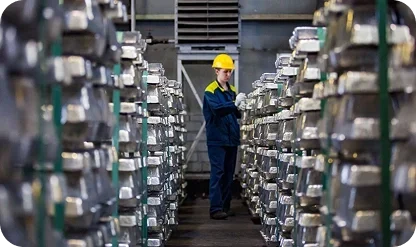
Hot Briquetted Iron is a densified form of direct reduced iron produced by compacting hot DRI into dense briquettes. Compared with conventional porous DRI, the higher density and more compact structure improve stability during storage, handling and transportation, making HBI particularly suitable for long-distance and international trade.
Stavian Industrial Metal supplies Hot Briquetted Iron (HBI) with published specifications including a metallization rate of 92–96%, total Fe content of 88–94%, metallic Fe content of 83–90%, carbon content of 0.5–3% and apparent density of at least 5 t/m³. The listed product dimensions range approximately from 30–34 × 48–58 × 90–140 mm.
| DRI Form | Main Characteristic | Typical Handling Approach |
| CDRI | Direct reduced iron cooled to near ambient conditions | Stored and transported as cold DRI under controlled conditions |
| HDRI | Direct reduced iron delivered hot from the reduction unit | Transferred directly or over a short distance to a steelmaking furnace |
| HBI | Hot DRI compacted into dense briquettes | Suitable for storage, bulk handling and long-distance transportation |
4. Direct Reduced Iron in Steelmaking
The principal industrial application of Direct Reduced Iron is as a metallic feedstock for steel production. Because DRI already contains a high proportion of metallic iron, it can be melted and refined into steel without first passing through a conventional blast-furnace hot-metal route.
DRI is particularly associated with electric arc furnace steelmaking, where it can be charged together with steel scrap. The proportion of DRI and scrap can be adjusted according to furnace practice, required steel chemistry, raw material availability and product quality targets.
DRI in Electric Arc Furnaces
The electric arc furnace uses electrical energy to melt metallic feedstocks. Steel scrap is a major raw material for EAF operations, while DRI can be added as a source of primary metallic iron. This combination allows steelmakers to manage the metallic charge according to the chemistry and quality required for the finished steel.
DRI can be especially valuable when available scrap contains residual elements that need to be controlled. Introducing a controlled source of primary iron can help adjust the overall composition of the furnace charge. The final charge strategy, however, depends on DRI chemistry, scrap quality, energy cost, slag practice and the steel grade being produced.
DRI as a Supplement to Steel Scrap
Steel scrap plays a fundamental role in circular steelmaking because it returns previously used metal to the production cycle. However, scrap streams are not chemically identical. Different scrap categories can contain varying levels of copper, tin, chromium, nickel and other residual elements.
Direct Reduced Iron provides additional iron units with more predictable chemistry than mixed scrap streams. Combining DRI with recycled steel can therefore give steelmakers greater flexibility when controlling metallic charge composition, particularly for steel grades with stricter chemical requirements.
DRI in Other Steelmaking Routes
Although closely associated with EAF production, DRI and HBI may also be used in other metallurgical processes depending on plant configuration. Stavian Industrial Metal identifies DRI as a supplementary feedstock suitable for technologies including EAF and BF/BOF routes, while HBI can be introduced into EAF, BF and BOF systems at different proportions.
The practical value of DRI therefore extends beyond a single furnace type. Steel producers evaluate the metallic iron content, metallization, carbon, gangue, sulfur, phosphorus, physical size and handling characteristics before determining where and how the material should be used.
5. Key Benefits of Direct Reduced Iron
Direct reduction technology was developed as an alternative route for producing metallic iron without requiring the entire conventional blast-furnace configuration. Its benefits depend on the plant design, energy source, iron ore quality and downstream steelmaking route.
For steelmakers, the most important advantage is the ability to obtain controlled primary iron units that can be combined with scrap or used in other metallic charge strategies. The process also creates multiple product forms—CDRI, HDRI and HBI—allowing producers to select the form best suited to their integrated plant, local market or export requirements.
High Metallic Iron Content
DRI is valued primarily because a substantial portion of the iron contained in the original ore has already been converted into metallic iron. The exact total iron content and metallization rate vary according to the feedstock, process technology and production target.
For purchasing and furnace planning, total Fe alone is not sufficient. Metallization, metallic Fe, carbon, gangue, sulfur, phosphorus and moisture all affect the actual value of DRI in steelmaking. Buyers therefore need to evaluate the complete specification rather than relying on a single headline iron percentage.
Flexible Metallic Charge for EAF Steelmaking
DRI can be blended with scrap at different ratios, allowing operators to adjust metallic inputs according to available raw materials and steel grade requirements. This flexibility is particularly relevant where high-quality scrap supply is limited or where residual elements in scrap need tighter control.
The ability to combine recycled scrap with primary iron units also allows EAF operators to balance circularity with metallurgical quality. The optimal mix varies from plant to plant and needs to account for yield, slag volume, power consumption and final steel chemistry.
Potential for Hydrogen-Based Ironmaking
The direct reduction route can use hydrogen as a reducing agent, creating a technical pathway for ironmaking with lower dependence on carbon-based reduction. When renewable or low-emission hydrogen is used, this route can contribute to the development of lower-carbon steel supply chains.
This transition is reflected in Stavian Industrial Metal’s green metals portfolio. In addition to conventional DRI and HBI, Stavian Industrial Metal supplies Green HBI manufactured through a green-hydrogen direct reduction route.
HBI for International Transportation
One limitation of conventional sponge iron is its high reactivity. Densifying hot DRI into HBI creates a product with higher apparent density and improved handling stability. This makes HBI more appropriate when metallic iron needs to be shipped over long distances or traded internationally.
Stavian Industrial Metal’s HBI portfolio lists global origin, defined physical dimensions and specified ranges for metallization, total Fe, metallic Fe, carbon and impurities, providing buyers with measurable criteria for evaluating the material before use.
6. Raw Materials Used in Direct Reduction
Successful Direct Reduced Iron production depends heavily on the quality of the iron ore feed. Direct reduction requires the reducing gas to penetrate the iron-bearing material and remove oxygen efficiently. Chemical composition, particle size, physical strength, porosity and gangue content therefore influence process performance.
Iron ore pellets and calibrated lump ore are common feedstocks for direct reduction. Some technologies can also process fine particles using specialized reactor configurations. Regardless of the form, consistent feed quality is important for stable reduction performance.
Iron Ore Pellets
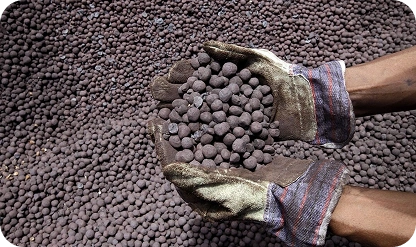
Pellets are manufactured from fine iron ore concentrate that is agglomerated into uniform spherical particles and hardened. Their controlled dimensions and physical strength can provide favorable gas flow and predictable reduction behavior in suitable DRI reactors.
Direct-reduction pellets generally require relatively high Fe content and controlled gangue because non-metallic components remain in the DRI and subsequently enter the steelmaking furnace. Higher gangue can increase slag generation and the energy required during melting.
Lump Iron Ore
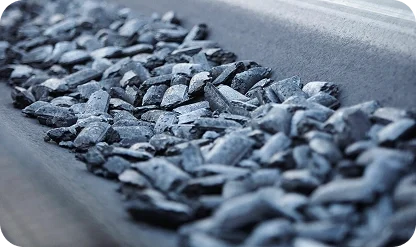
Lump ore consists of naturally occurring or processed iron ore in a controlled larger size range. When the chemical composition, strength and reducibility are suitable, lump ore can be used directly in certain direct reduction processes without first being pelletized.
Stavian Industrial Metal supplies iron ore in fine and lump size ranges. The published specifications include Fe content of 60–68%, with limits for silica, alumina, phosphorus, sulfur and moisture.
Direct Reduced Iron Products from Stavian Industrial Metal
Stavian Industrial Metal supplies Direct Reduced Iron as a high-iron metallic raw material for steelmaking. The DRI portfolio is intended for use as supplementary metallic feedstock alongside scrap and supports different steelmaking routes depending on the customer’s production configuration.
In addition to DRI, Stavian Industrial Metal offers Hot Briquetted Iron, providing a denser direct-reduction product suited to storage, bulk logistics and long-distance transport. The published product specification includes defined ranges for metallization, total iron, metallic iron, carbon, sulfur, phosphorus, gangue and density.
For customers pursuing lower-carbon metallic feedstock, Stavian Industrial Metal also supplies Green Hot Briquetted Iron produced using direct reduction technology with green hydrogen. This product extends the DRI portfolio toward steel producers seeking materials aligned with decarbonization and green-transition strategies.
Related Ferrous Raw Materials and Steel Products
Beyond Direct Reduced Iron, Stavian Industrial Metal serves different stages of the iron and steel supply chain. The company’s ferrous portfolio includes iron ore as a primary iron-bearing raw material and steel billets for downstream rolling and steel-product manufacturing. Steel billets supplied by Stavian Industrial Metal are available in multiple sizes, grades and standards and can be produced through IF, EAF and BF technology.
For downstream applications, Stavian Industrial Metal supplies hot rolled steel in coil and plate form, with grades including SS400, Q345B, A36, Q235B, Q355B and A572 under standards such as JIS, ASTM, SAE, TIS, EN, MS and GB.
The portfolio also includes cold rolled steel, construction steel, coated steel and shipbuilding steel, supporting applications ranging from general manufacturing and civil construction to infrastructure, industrial facilities and marine projects.
Conclusion
Direct Reduced Iron is a metallic iron feedstock produced by removing oxygen from iron ore while the material remains below its melting point. Gas-based and coal-based direct reduction technologies can be used, while hydrogen-based reduction provides an additional pathway for reducing dependence on carbon-containing reducing agents. The resulting product can be supplied as CDRI, HDRI or HBI according to the intended steelmaking and logistics requirements.
In modern steelmaking, DRI is particularly valuable as a supplementary metallic feedstock alongside steel scrap. Its metallization, total Fe, metallic Fe, carbon, gangue and impurity levels determine its performance in the furnace, while physical form affects storage and transportation. HBI provides a denser and more stable form for long-distance logistics, whereas HDRI can retain useful thermal energy when the reduction plant and steelmaking furnace are integrated.
Stavian Industrial Metal supplies Direct Reduced Iron, Hot Briquetted Iron and Green HBI, together with iron ore, steel billets and a broad portfolio of downstream steel products. This product ecosystem enables Stavian Industrial Metal to serve different stages of the ferrous-metal value chain, from iron-bearing raw materials and metallic feedstocks to semi-finished and finished steel products.