Located at the forefront of industrial metal solutions, Stavian Industrial Metal is proud to introduce our state-of-the-art aluminum billet casting plant, designed to meet the growing demands of modern manufacturing. With a focus on innovation, precision, and sustainability, our facility leverages advanced casting technologies to ensure consistent product quality and operational efficiency. Whether serving the construction, automotive, or aerospace sectors, our aluminum billets are crafted to exceed international standards and customer expectations. By optimizing every stage of the production process, we guarantee reliability, uniformity, and traceability in every batch. If you’re searching for a trusted partner with a technologically advanced aluminum billet casting plant, Stavian Industrial Metal delivers unmatched value and performance.
An aluminum billet casting plant is a highly specialized facility designed for the production of aluminum billets—solid, semi-finished forms of aluminum used as raw material in extrusion, forging, and rolling processes. These billets are essential for a wide range of industries, including automotive, aerospace, construction, and electronics, due to aluminum’s lightweight, corrosion-resistant, and conductive properties.
The plant typically includes advanced machinery and equipment for melting, casting, homogenizing, and cutting aluminum billets to required specifications. Operating such a facility demands strict control of temperature, alloy composition, and cooling rates to ensure consistent product quality. In today’s competitive market, the efficiency and automation level of an aluminum billet casting plant also play a key role in ensuring cost-effective production and adherence to international standards.
At Stavian Industrial Metal, we integrate cutting-edge technology and best practices in our aluminum billet casting plant to deliver high-performance billets that meet the strictest industry requirements.
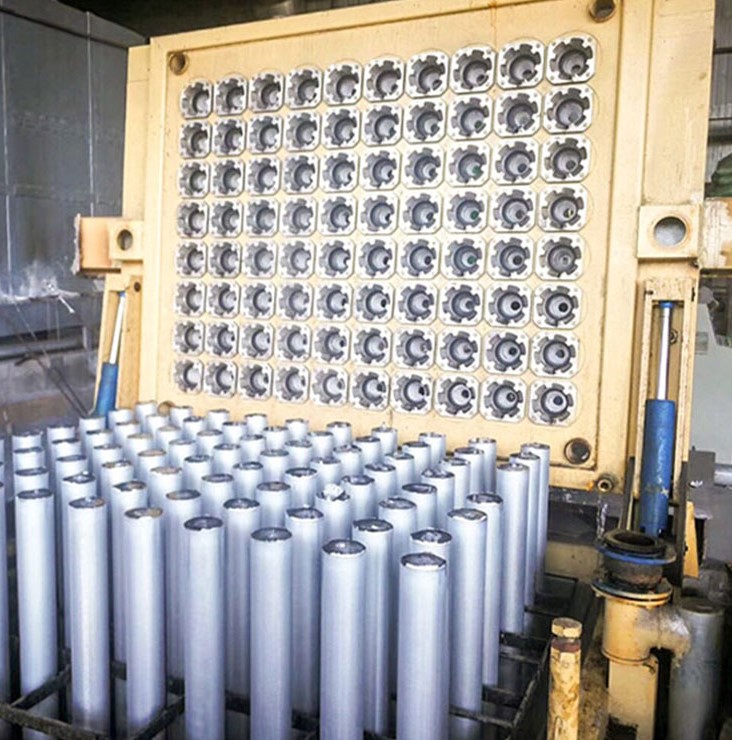
Producing high-quality aluminum billets involves several critical stages, each requiring precision control and technical expertise. Here’s a detailed look at the core steps in the aluminum billet casting process:
The process begins with melting raw aluminum or recycled aluminum scrap in high-capacity furnaces. Depending on the desired billet properties, alloying elements such as magnesium, silicon, copper, or zinc are added to the molten aluminum to create specific alloy grades.
This stage requires:
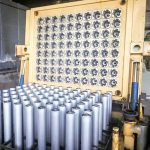
Once the alloy is ready, the molten aluminum is transferred to a casting unit—commonly a direct chill (DC) casting machine. Here, the liquid metal is poured into water-cooled molds, where it begins to solidify rapidly from the outside in.
Key factors at this stage include:
This stage determines the billet’s internal structure, which influences its performance during downstream processing.
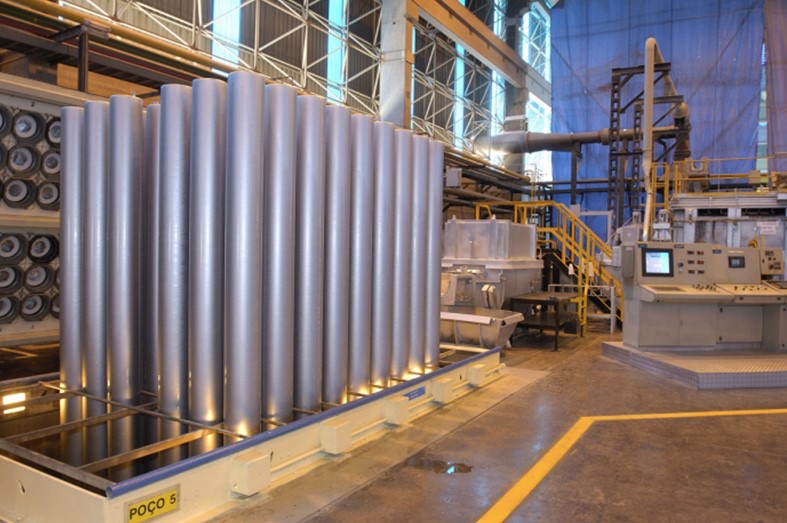
Technological advancements have significantly improved the efficiency, safety, and product quality of aluminum billet casting plants. Today’s leading facilities, such as those operated by Stavian Industrial Metal, are equipped with fully automated control systems and intelligent sensors.
Automation reduces human error and increases consistency across production batches. Key features include:
These systems not only enhance operational stability but also improve traceability and quality assurance for every billet produced.
Modern aluminum billet casting plants are designed with sustainability in mind. At Stavian, we implement multiple energy-efficient technologies, including:
Our commitment to eco-friendly operations not only meets global environmental regulations but also aligns with the growing demand for green aluminum solutions across industries.
Ensuring the quality of aluminum billets requires a comprehensive approach that starts with raw material selection and continues through the final inspection. Each stage is governed by strict quality control protocols.
After casting, billets are often subjected to a homogenization process, where they are heated to a uniform temperature and held for a specific duration. This helps:
Advanced furnaces with precise temperature controls are essential to achieve optimal homogenization.
Before shipping, billets undergo thorough inspection, which may include:
Documentation and traceability are maintained throughout, ensuring that each batch can be traced back to its production parameters—an essential feature for aerospace and automotive applications.
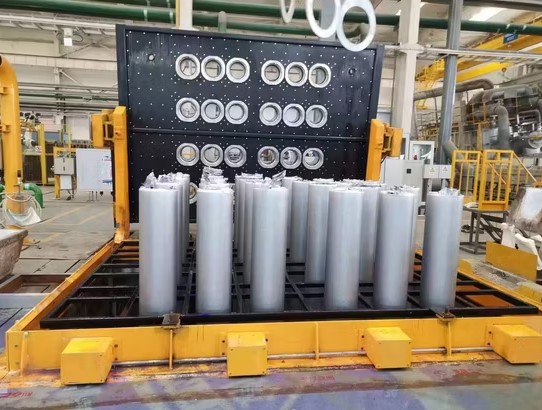
Aluminum billets are a versatile material widely utilized in numerous industrial sectors. Their lightweight nature, combined with excellent strength, corrosion resistance, and thermal conductivity, makes them ideal for both structural and functional components.
In the automotive sector, aluminum billets are processed into parts such as:
The demand for lightweight materials to improve fuel efficiency and reduce carbon emissions has made aluminum billets an essential material in both internal combustion and electric vehicles. Railways and aviation also use billet-based aluminum components to enhance speed, safety, and energy savings.
Aluminum billets serve as the foundation for extruded profiles used in:
The corrosion resistance and design flexibility of aluminum allow architects and engineers to develop long-lasting, energy-efficient structures while reducing maintenance costs. Additionally, aluminum’s recyclability supports sustainable building practices.
The aluminum billet industry is undergoing significant transformation due to technological advancements and evolving customer needs. Understanding current trends helps casting plants adapt to market demands and remain competitive.
Developing economies in Asia, Africa, and Latin America are witnessing rapid industrialization and urban expansion, leading to increased consumption of aluminum billets in:
This trend is encouraging aluminum billet casting plants to expand capacity and establish localized production facilities to reduce logistics costs and meet regional demand efficiently.
There is growing pressure from regulators and end-users to reduce the carbon footprint of metal products. As a result:
Stavian Industrial Metal leads this trend by prioritizing sustainable production practices and offering billets certified for low carbon emissions, catering to customers committed to environmental responsibility.
At Stavian Industrial Metal, our aluminum billet casting plant is engineered to deliver unmatched quality, reliability, and flexibility. Our success is built on a combination of advanced technology, skilled personnel, and a deep understanding of global industry needs.
We recognize that different industries require specific billet properties. That’s why we offer:
Our technical support team works closely with clients to ensure that each order meets or exceeds application-specific standards.
Stavian’s aluminum billets conform to major international standards such as:
We maintain comprehensive quality management systems (ISO 9001) and environmental certifications (ISO 14001), assuring our partners of consistent, traceable, and certified products that meet global regulatory and technical requirements.
As the manufacturing landscape evolves, so too must the processes used to produce aluminum billets. The future of aluminum billet casting is being shaped by innovation, digitalization, and sustainability.
The application of Industry 4.0 technologies enables real-time data collection and advanced process optimization. In the future, aluminum billet casting plants will benefit from:
Stavian is investing in these technologies to create a responsive, agile production environment that supports high-mix, low-volume manufacturing requirements.
Global industry is shifting toward circular production models that emphasize waste minimization and resource efficiency. Aluminum, being infinitely recyclable without quality loss, is at the heart of this transition.
Leading billet casting plants will focus on:
Through our sustainability-focused initiatives, Stavian aims to play a proactive role in building a low-carbon, circular aluminum value chain.
Read more
Aluminum Molding: Unlocking Efficiency and Precision in Production
What Is U-shaped Aluminum Profile? Characteristics, Applications and Price
Aluminum Tube Types, Applications & Benefits Explained
Sandwich Aluminum Panels: Structure, Classification, and Advantages
Address
Website: https://stavianmetal.com
Email: info@stavianmetal.com