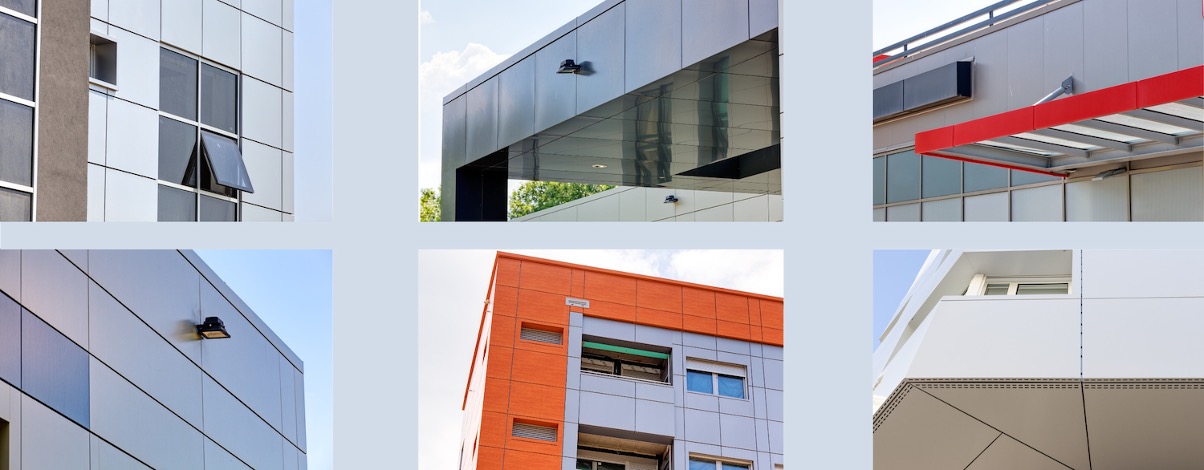
Aluminum composite panel installation is one of the most important stages in creating a modern, durable, and visually consistent building facade. Aluminum composite panels, commonly known as ACPs, are widely used in commercial buildings, industrial facilities, airports, shopping centers, residential towers, signage systems, and renovation projects because they combine lightweight structure, design flexibility, weather resistance, and efficient installation. However, even high-quality panels can fail if the installation process is not properly designed, engineered, and executed.
For contractors, architects, facade consultants, and project owners, understanding aluminum composite panel installation is essential for controlling long-term performance. A correct installation system helps prevent water leakage, panel deformation, oil-canning, color inconsistency, fastener failure, corrosion, and fire-safety risks. In export-oriented construction supply chains, installation quality is also closely connected to material specification, packaging, tolerance control, surface protection, and compliance with local building codes.
As an industrial metal supplier serving international markets, Stavian Industrial Metal understands that ACP installation is not only a site activity. It begins with material selection, technical consultation, quality control, logistics planning, and coordination between suppliers, fabricators, installers, and project engineers. This guide provides a detailed explanation of how ACP installation works, what technical factors matter most, and how to minimize risks in real construction conditions.
Aluminum composite panel installation refers to the process of fixing aluminum composite panels onto a building substrate, steel frame, aluminum frame, or supporting structure to create an exterior or interior cladding surface. An ACP typically consists of two thin aluminum sheets bonded to a core material. The core may be polyethylene, mineral-filled fire-retardant material, or non-combustible mineral-based material depending on project requirements and local fire regulations.
The aluminum skins are usually coated with finishes such as PVDF, FEVE, polyester, or anodized coating. For exterior facades, PVDF coating is commonly preferred because it offers strong resistance to ultraviolet radiation, chalking, fading, and chemical exposure. Interior applications may use polyester coating where weather exposure is limited. The installation method must match the panel type, coating specification, wind load, building height, local climate, and architectural design.
A complete ACP facade system usually includes panels, subframes, brackets, anchors, fasteners, sealants, backing rods, insulation materials, flashing, waterproof membranes, and expansion joints. The quality of the finished facade depends on how these components work together. ACP is lightweight compared with solid metal plates, but the installation system must still be engineered carefully to resist wind pressure, thermal movement, vibration, moisture, and long-term structural stress.
ACP is often selected because it creates a clean, modern, and premium appearance. Smooth surfaces, sharp corners, metallic colors, wood finishes, stone patterns, and customized designs make the material attractive for architects. Yet appearance is only one part of performance. Poor aluminum composite panel installation may cause visible defects within months, including waviness, misalignment, open joints, staining, peeling protective film, and water marks.
More seriously, incorrect installation can shorten facade service life. If expansion gaps are too small, panels may buckle under temperature changes. If sealants are incompatible, joints may crack or detach. If fasteners are over-tightened, panels may deform around fixing points. If water drainage is not considered, moisture can accumulate behind panels and lead to corrosion, mold, or damage to adjacent building layers.
In international projects, installation errors may also create contractual and warranty disputes. Exported materials must arrive in proper condition, but performance at the site depends on correct storage, fabrication, and installation. This is why technical documentation, handling guidelines, and supplier support are important parts of professional ACP projects.
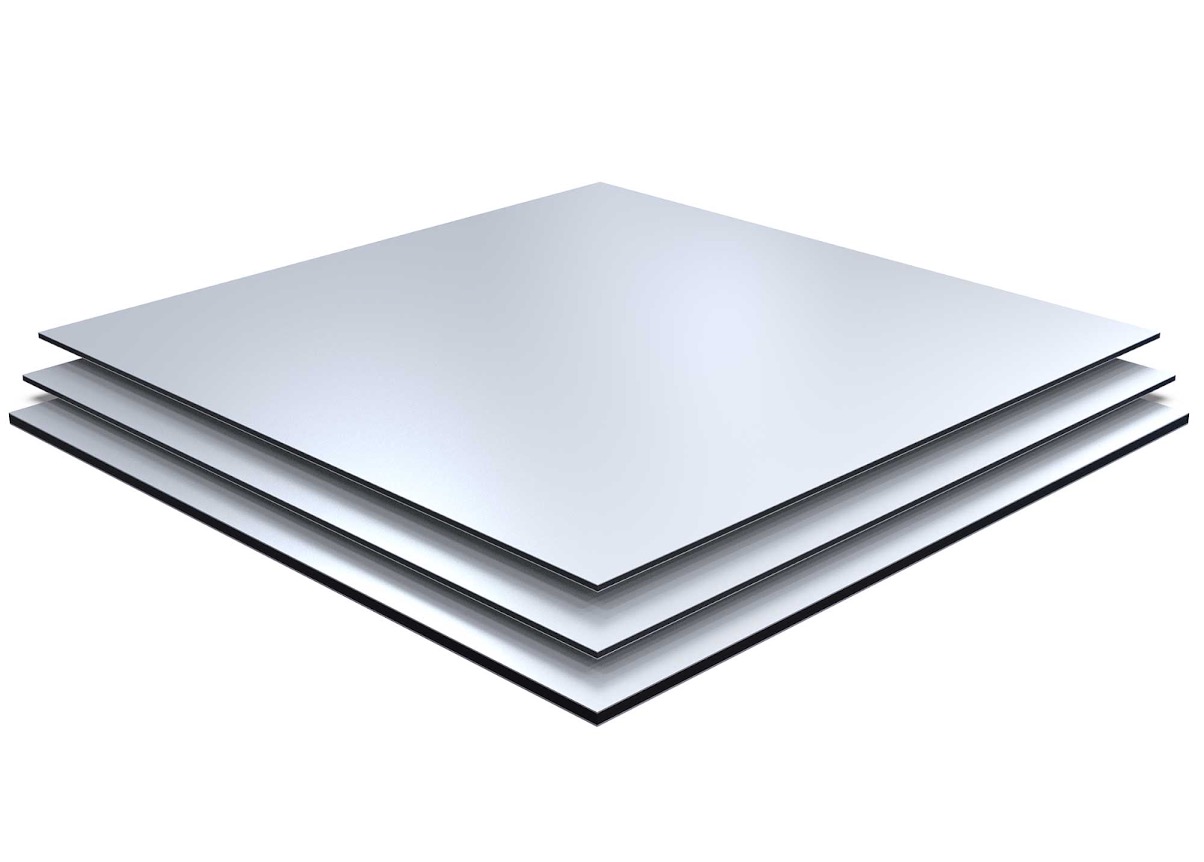
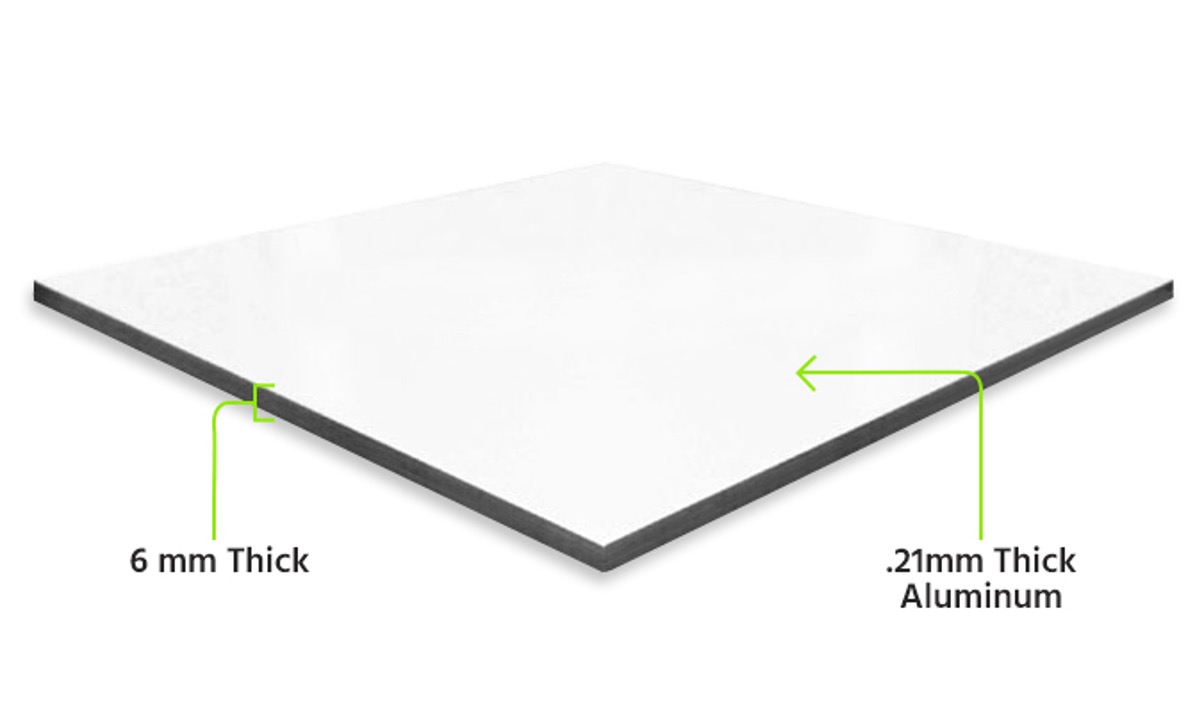
The panel itself is the core material in any aluminum composite panel installation. Standard ACP thickness is commonly 3 mm, 4 mm, or 6 mm, depending on application. For exterior facades, 4 mm is widely used, while thicker panels may be selected for higher rigidity or special project requirements. Aluminum skin thickness may vary, with common options including 0.21 mm, 0.30 mm, 0.40 mm, or 0.50 mm depending on quality grade, wind load, and expected service life.
Panel coating selection is crucial. PVDF coating is generally recommended for exterior projects exposed to sunlight, rain, humidity, pollution, and temperature changes. Polyester coating can be suitable for interior ceilings, partitions, and decorative wall systems. Fire-rated cores should be specified for high-rise buildings, public facilities, transportation hubs, and projects located in jurisdictions with strict fire codes.
Before installation, every panel should be checked for thickness tolerance, surface defects, coating consistency, color batch, flatness, protective film condition, and directional arrows. Metallic and special-effect colors may appear different when installed in different directions, so installers must follow the same orientation across the facade.
The supporting frame transfers loads from ACP panels to the building structure. It may be made from aluminum profiles, galvanized steel, stainless steel, or a combination of materials. The choice depends on project design, budget, corrosion environment, wind load, and compatibility with the main structure. In coastal or industrial environments, corrosion resistance becomes especially important.
Galvanized steel frames are often used because they provide strength and cost efficiency. Aluminum frames offer lighter weight and good corrosion resistance. Stainless steel may be used for anchors, brackets, or fasteners where high corrosion resistance is required. The substructure must be aligned accurately because ACP panels are thin and will reveal unevenness in the supporting frame.
Typical substructure components include vertical profiles, horizontal profiles, L-brackets, adjustable brackets, anchor bolts, rivets, screws, thermal pads, and insulation supports. Every fixing point must be designed to accommodate both structural load and thermal expansion.
Sealants are used to close joints, prevent water penetration, and allow movement between panels. Neutral-cure silicone sealants are commonly used in ACP facade systems because they provide flexibility and weather resistance. Sealant compatibility with coating, backing rod, primer, and adjacent materials should be verified before use.
Fasteners must be selected based on material compatibility, corrosion resistance, pull-out strength, and design load. Stainless steel fasteners are often preferred for exterior applications, especially in humid or coastal environments. When dissimilar metals are used together, galvanic corrosion must be prevented through isolation washers, coatings, or compatible material selection.
Other accessories include backing rods, waterproof membranes, flashing, gaskets, corner pieces, edge trims, ventilation screens, and drainage elements. These small components are often overlooked, but they play a major role in the long-term success of aluminum composite panel installation.
Accurate measurement is the first technical step before ACP installation. The installer must survey the building structure, check wall flatness, confirm dimensions, inspect corners, review openings, and identify deviations between design drawings and actual site conditions. Even small measurement errors can create visible joint misalignment across large facades.
For large projects, laser measuring tools and digital layout systems can improve accuracy. Measurements should include floor levels, column lines, window openings, slab edges, parapets, corners, canopy details, and interface areas with glass, doors, louvers, signage, or roofing. The installation team should also check whether the substrate can hold anchors safely.
A detailed site survey reduces waste, prevents rework, and helps optimize panel cutting layouts. Since ACP panels are usually fabricated based on shop drawings, errors discovered after fabrication can be expensive and time-consuming.
Professional aluminum composite panel installation requires detailed shop drawings. These drawings translate architectural intent into practical fabrication and installation instructions. They should show panel sizes, joint widths, fixing points, bracket spacing, fold lines, groove details, corner details, expansion joints, drainage paths, and interfaces with other building systems.
Shop drawings must also consider available panel sizes to reduce waste. For example, if a standard panel size is 1220 mm x 2440 mm or 1500 mm x 3050 mm, the design should be optimized to minimize offcuts while maintaining the required architectural rhythm. Poor layout planning increases material waste and installation cost.
Before production, shop drawings should be reviewed by architects, facade consultants, structural engineers, and the installation team. Approval should include color, coating, fire rating, panel thickness, fixing system, joint treatment, and tolerance requirements.
ACP panels installed on building exteriors must resist wind pressure and suction. Wind load depends on building height, location, terrain, facade zone, local wind speed, and building geometry. Corner zones and roof edges usually experience higher wind pressure than central wall areas. Therefore, bracket spacing and fixing density may need to vary across the building.
Structural calculations should verify panel deflection, fastener capacity, bracket strength, anchor pull-out resistance, and subframe stability. Excessive deflection may cause visible waviness or fatigue over time. The design should also allow movement without transferring uncontrolled stress to the panel surface.
For export projects, local engineering standards should always be followed. ACP installation in a tropical coastal city may require different details from installation in a cold climate or desert environment. A single generic fixing method is not suitable for all projects.
The wall or structural substrate must be clean, stable, and capable of supporting the facade system. Concrete surfaces should be checked for cracks, weak areas, honeycombing, or misalignment. Steel structures should be inspected for corrosion protection and dimensional accuracy. Any loose materials, dust, oil, or contaminants should be removed before installation begins.
If the substrate is uneven, adjustable brackets may be used to create a straight installation plane. This stage is critical because ACP panels are visually precise. A poor substrate can result in uneven panel surfaces even if the panels themselves are high quality.
The installation team should mark reference lines, grid lines, vertical control lines, and benchmark levels. These guide the entire installation process and help maintain consistent joint alignment from one floor to another.
Brackets are fixed to the main structure using anchor bolts, expansion bolts, chemical anchors, or other approved fixing methods. Anchor selection depends on substrate type, load requirement, edge distance, embedment depth, and site conditions. Pull-out testing may be required for critical projects to confirm anchor performance.
Bracket spacing should follow approved shop drawings and structural calculations. Installers must avoid random adjustment on site unless approved by the project engineer. Inconsistent bracket spacing can lead to uneven load transfer and panel deformation.
Thermal isolation pads may be installed between brackets and structural members to reduce thermal bridging or prevent galvanic corrosion between dissimilar metals. Every bracket should be checked for alignment before the next stage proceeds.
After brackets are installed, vertical and horizontal profiles are fixed to create the supporting grid. These profiles must be straight, level, and plumb. Any deviation will affect the final panel appearance. Aluminum profiles should be handled carefully to avoid bending, scratching, or surface damage.
Profile connections should allow movement where required. Long metal profiles expand and contract under temperature changes, so expansion joints should be included according to design. Overly rigid connections can create stress in the facade system.
At this stage, the installer should also confirm ventilation cavities, insulation position, waterproof layers, and drainage routes. A well-designed ACP facade should not trap water behind the panel surface.
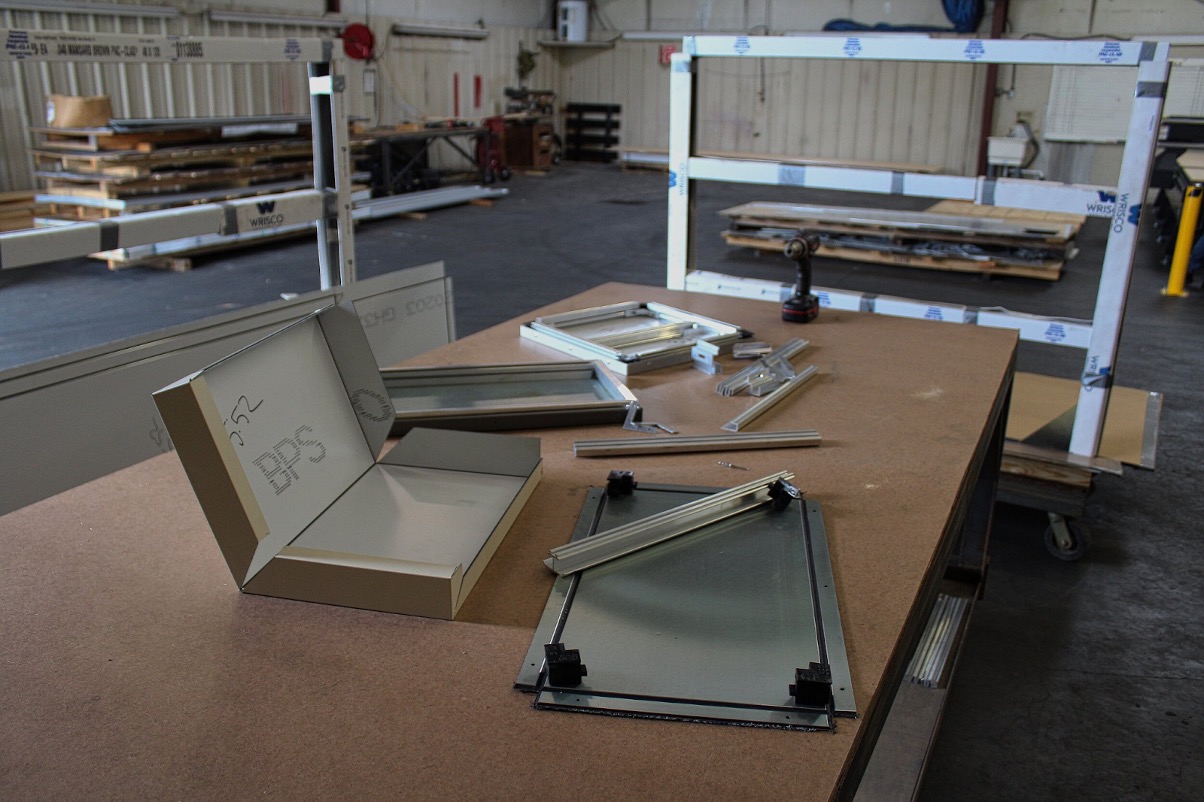
ACP panels are usually cut, routed, grooved, bent, and assembled into tray panels before installation. CNC routing improves accuracy and repeatability, especially for large projects. The routing depth must be controlled carefully so the panel can be folded without cracking while maintaining sufficient material strength.
Fabrication should follow approved panel dimensions and folding details. Corners may be reinforced with aluminum angles or stiffeners depending on panel size and system type. Protective film should remain on the panel surface during fabrication and installation, but it should not be left exposed for too long after installation because sunlight can make removal difficult.
Panel edges must be clean and free from burrs. Poor fabrication can cause weak corners, uneven folds, distorted surfaces, and poor joint alignment. Fabrication quality is one of the most important success factors in aluminum composite panel installation.
Panels are lifted into position and fixed to the subframe using rivets, screws, clips, hanging systems, or cassette fixing systems. The method depends on the facade design. Cassette systems are commonly used for high-quality exterior facades because they provide concealed fixing and better movement control.
Installers should start from a defined reference point and proceed systematically. Joint width must be checked continuously. Typical joint widths may range from 8 mm to 15 mm depending on design, panel size, movement requirements, and sealant system. Large panels and high-temperature environments may require wider movement allowance.
Fasteners should not be over-tightened. A small allowance for movement is important because aluminum expands and contracts with temperature changes. Over-tightening can restrict movement and create stress marks around fixing points.
After panels are fixed, joints are sealed using backing rods and approved sealants if the design requires wet sealing. The joint must be clean and dry before sealant application. Dust, oil, moisture, or incompatible primer can reduce adhesion and cause premature joint failure.
The sealant depth-to-width ratio should follow the sealant manufacturer’s recommendation. A backing rod helps control sealant depth and creates a flexible joint profile. Sealant should bond to two sides of the joint, not three, to allow proper movement.
Finishing details include corners, edges, window interfaces, parapet caps, soffits, louvers, signage connections, and drainage outlets. These areas often create the highest risk of leakage, so they require careful inspection.
The rivet fixing system is one of the simplest and most economical methods for aluminum composite panel installation. Panels are fixed directly to aluminum or steel subframes using visible rivets. This method is often used for signage, industrial buildings, low-rise facades, and budget-sensitive projects.
The main advantage is speed and cost efficiency. However, visible rivets may not provide the premium appearance required for high-end commercial facades. Installers must also ensure that rivet holes allow thermal movement. Oversized holes and suitable washers may be required depending on the design.
Rivet spacing should follow engineering requirements. Excessive spacing may cause panel vibration or deformation, while overly dense rivets may restrict movement and affect appearance.
The cassette system is commonly used for professional exterior facades. Panels are routed, folded, and reinforced into tray-like units, then mounted onto the subframe using concealed brackets, clips, or hanging profiles. This method provides cleaner appearance because fixing points are hidden.
Cassette systems offer better control over panel movement and joint consistency. They are suitable for high-rise buildings, office towers, commercial centers, and architectural projects requiring premium finishing. However, they require accurate fabrication and skilled installation.
The cassette system usually costs more than direct rivet fixing, but it provides stronger long-term visual quality and better technical performance when properly designed.
Some ACP systems use structural adhesive tapes or bonding systems to attach panels to subframes. This can create a clean appearance without visible fasteners. However, adhesive systems require strict surface preparation, compatible materials, controlled application conditions, and approved engineering design.
Temperature, humidity, dust, surface oxidation, and improper cleaning can affect adhesion. Therefore, adhesive fixing should not be treated as a simple shortcut. It must follow manufacturer instructions and project specifications carefully.
For exterior high-risk applications, mechanical fixing is often preferred or used in combination with adhesive systems for additional safety. Local regulations and facade engineering requirements should always guide the final decision.
Stavian Industrial Metal is positioned as a large-scale industrial metal trading company with access to a broad network of partners, warehouses, branches, and international markets through the Stavian ecosystem. The company focuses on industrial metals including steel, aluminum, copper, zinc, and related metal materials used in manufacturing, construction, infrastructure, and industrial applications.
For projects involving aluminum composite panel installation, reliable metal supply is essential. ACP facades often require not only panels but also aluminum coils, aluminum sheets, galvanized steel frames, steel profiles, brackets, fasteners, and supporting accessories. A stable supplier helps project teams reduce procurement risk, maintain specification consistency, and control delivery schedules.
Stavian Industrial Metal’s role is especially relevant for export-oriented customers who need professional sourcing, international trade capability, logistics coordination, documentation, and quality-focused supply. In global construction markets, price alone is not enough; buyers also need traceability, stable lead time, technical understanding, and responsive commercial support.
ACP installation depends on multiple metal products across the facade system. Aluminum is used in panel skins, profiles, trims, and brackets. Steel is used in supporting frames, structural members, and secondary systems. Zinc-coated or galvanized products help improve corrosion resistance in many construction environments. Copper and other metals may appear in specialized architectural or industrial applications.
Stavian Industrial Metal can support customers who require industrial metal materials for construction, mechanical processing, infrastructure, and export supply chains. For facade contractors and distributors, working with a supplier that understands both steel and aluminum markets can simplify procurement and improve project coordination.
The company’s product approach is aligned with the needs of modern construction: reliable materials, scalable supply, international trade execution, and practical support for industrial users. In ACP-related projects, this means helping customers think beyond the visible panel and consider the full metal system behind the facade.
The cost of aluminum composite panel installation depends heavily on material specification. Panel thickness, aluminum skin thickness, coating type, fire-rated core, color, surface finish, and order volume all influence price. Fire-retardant and non-combustible panels generally cost more than standard PE-core panels but may be required for compliance and safety.
Coating also affects cost. PVDF-coated panels usually cost more than polyester-coated panels but provide better exterior durability. Special finishes such as brushed metal, mirror, wood grain, stone pattern, and customized colors can also increase cost.
For export projects, buyers should also consider packaging, freight, import duties, insurance, local transportation, and storage. A low material price may not be economical if quality problems, damage, or delays occur.
Labor cost varies by country, project complexity, building height, access condition, and installation method. Cassette systems require more fabrication and skilled labor than simple rivet-fixed systems. Complex facade geometry, curves, corners, soffits, and interface details also increase installation time.
Fabrication cost includes cutting, routing, folding, stiffener installation, corner reinforcement, numbering, packaging, and handling. Accurate fabrication reduces site labor and improves installation speed. Poor fabrication may save money at the workshop but create expensive rework on site.
Project owners should evaluate total installed cost rather than material cost alone. A higher-quality system may deliver better long-term value by reducing maintenance, replacement, and defect risk.
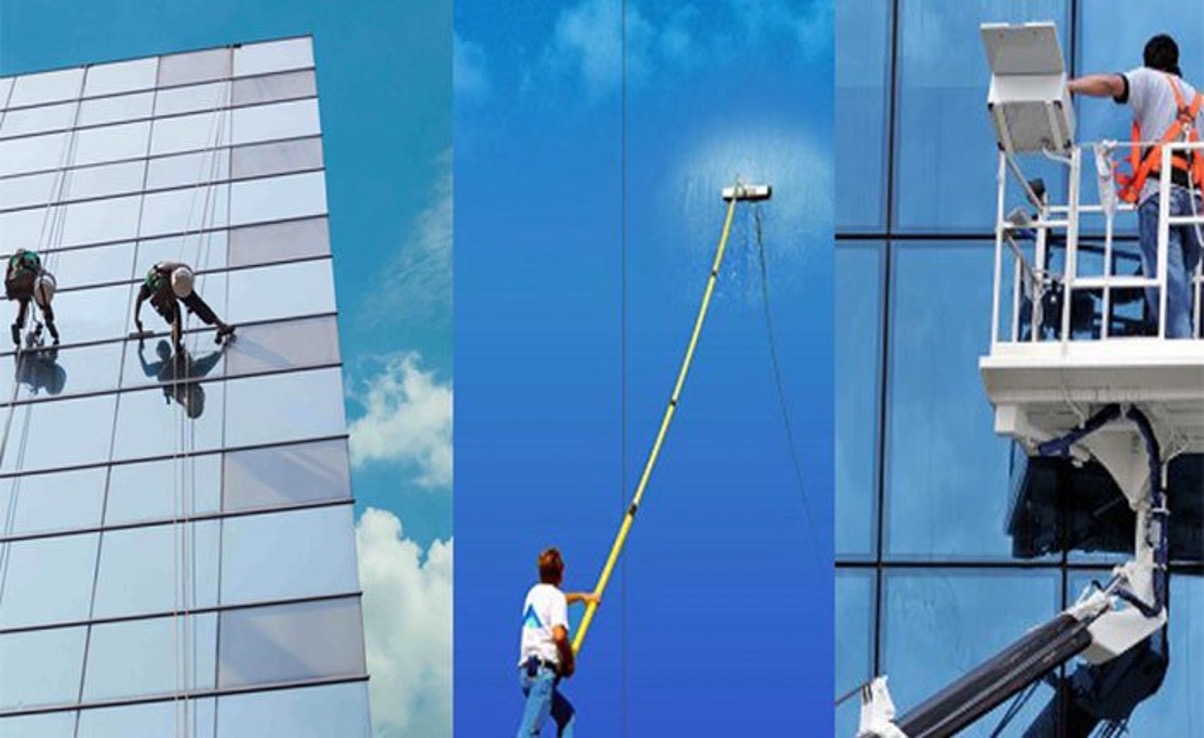
ACP facades require periodic cleaning and inspection. Maintenance cost depends on building height, pollution level, coating quality, access system, and local environment. PVDF coatings can maintain appearance for many years when properly cleaned and maintained.
Life-cycle cost should include initial material, installation, maintenance, repair, cleaning, and potential replacement. Cheap materials with poor coating durability may fade or chalk faster, leading to higher long-term cost. Incorrect installation may also cause early repair expenses.
A professional ACP project should balance budget with performance. The lowest initial price is not always the most economical decision over the full service life of the building.
The best ACP specification depends on building type, height, location, exposure, fire regulation, design expectation, and budget. Exterior high-rise buildings should prioritize fire safety, coating durability, wind-load performance, and engineered fixing systems. Interior decorative applications may use simpler specifications.
Project teams should not use one standard panel for every application. A petrol station canopy, coastal hotel, industrial factory, airport terminal, and indoor retail wall all have different performance requirements. Matching specification to application is the first step toward successful aluminum composite panel installation.
Material selection should be confirmed early in the design stage so that structural details, panel layout, procurement, and installation method can be coordinated efficiently.
ACP may look simple, but professional installation requires experience. Installers must understand measurement, frame alignment, panel fabrication, thermal movement, waterproofing, sealant application, and safety procedures. Skilled labor reduces rework and protects material value.
Clear documentation is equally important. Approved drawings, method statements, inspection checklists, material certificates, packing lists, and maintenance manuals help ensure consistent execution. For export projects, documentation also supports customs clearance, quality verification, and warranty management.
When all parties work from the same technical documents, project risk decreases significantly. Miscommunication is one of the most common causes of facade defects.
Maintenance should be considered during design, not after completion. Buildings should include safe access for cleaning and inspection. Coating type, joint design, drainage, and detailing should support long-term maintenance.
In polluted or coastal environments, cleaning frequency may need to increase because salt, dust, and chemicals can affect the facade surface. Abrasive cleaners, strong solvents, and harsh tools should be avoided unless approved by the panel manufacturer.
A well-maintained ACP facade can preserve its appearance and performance for many years. The combination of correct material, proper installation, and regular maintenance creates the best long-term result.
Aluminum composite panel installation is a technical process that directly affects building appearance, safety, durability, waterproofing, and life-cycle cost. The success of an ACP facade depends on more than selecting attractive panels. It requires correct specification, accurate measurement, engineered subframes, proper thermal movement allowance, compatible sealants, skilled fabrication, disciplined installation, and structured quality control.
As demand for lightweight and modern facade materials continues to grow globally, project owners and contractors must place greater emphasis on installation quality and supply-chain reliability. Fire safety, coating durability, wind-load resistance, corrosion protection, and export documentation are now essential parts of professional ACP projects.
Stavian Industrial Metal supports international customers with industrial metal supply capabilities across steel, aluminum, copper, zinc, and related materials. For ACP-related construction and facade projects, Stavian Industrial Metal understands that every successful installation begins with reliable materials, technical awareness, and coordinated supply. By approaching ACP installation as a complete system rather than a single product, builders can achieve facades that are visually impressive, structurally sound, and durable in real operating conditions.
The best ACP specification depends on building type, height, location, exposure, fire regulation, design expectation, and budget. Exterior high-rise buildings should prioritize fire safety, coating durability, wind-load performance, and engineered fixing systems. Interior decorative applications may use simpler specifications.
Project teams should not use one standard panel for every application. A petrol station canopy, coastal hotel, industrial factory, airport terminal, and indoor retail wall all have different performance requirements. Matching specification to application is the first step toward successful aluminum composite panel installation.
Material selection should be confirmed early in the design stage so that structural details, panel layout, procurement, and installation method can be coordinated efficiently.
ACP may look simple, but professional installation requires experience. Installers must understand measurement, frame alignment, panel fabrication, thermal movement, waterproofing, sealant application, and safety procedures. Skilled labor reduces rework and protects material value.
Clear documentation is equally important. Approved drawings, method statements, inspection checklists, material certificates, packing lists, and maintenance manuals help ensure consistent execution. For export projects, documentation also supports customs clearance, quality verification, and warranty management.
When all parties work from the same technical documents, project risk decreases significantly. Miscommunication is one of the most common causes of facade defects.
Maintenance should be considered during design, not after completion. Buildings should include safe access for cleaning and inspection. Coating type, joint design, drainage, and detailing should support long-term maintenance.
In polluted or coastal environments, cleaning frequency may need to increase because salt, dust, and chemicals can affect the facade surface. Abrasive cleaners, strong solvents, and harsh tools should be avoided unless approved by the panel manufacturer.
A well-maintained ACP facade can preserve its appearance and performance for many years. The combination of correct material, proper installation, and regular maintenance creates the best long-term result.
Aluminum composite panel installation is a technical process that directly affects building appearance, safety, durability, waterproofing, and life-cycle cost. The success of an ACP facade depends on more than selecting attractive panels. It requires correct specification, accurate measurement, engineered subframes, proper thermal movement allowance, compatible sealants, skilled fabrication, disciplined installation, and structured quality control.
As demand for lightweight and modern facade materials continues to grow globally, project owners and contractors must place greater emphasis on installation quality and supply-chain reliability. Fire safety, coating durability, wind-load resistance, corrosion protection, and export documentation are now essential parts of professional ACP projects.
Stavian Industrial Metal supports international customers with industrial metal supply capabilities across steel, aluminum, copper, zinc, and related materials. For ACP-related construction and facade projects, Stavian Industrial Metal understands that every successful installation begins with reliable materials, technical awareness, and coordinated supply. By approaching ACP installation as a complete system rather than a single product, builders can achieve facades that are visually impressive, structurally sound, and durable in real operating conditions.
Read more
Address
Website: https://stavianmetal.com
Email: info@stavianmetal.com