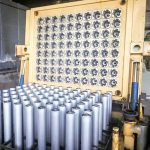
Aluminum billet casting is a critical process in the metal industry, shaping raw aluminum into semi-finished forms used across various manufacturing sectors. At Stavian Industrial Metal, we specialize in delivering high-quality aluminum billets through advanced casting technology and strict quality control procedures. With rising demand for lightweight and durable materials in automotive, aerospace, and construction, precision in aluminum billet casting ensures optimal mechanical properties and performance. Our commitment to innovation and sustainability makes us a trusted partner for businesses seeking reliable and cost-efficient aluminum solutions tailored to international standards.
Aluminum billet casting plays a pivotal role in transforming raw aluminum into usable semi-finished products for a wide range of industrial applications. The process begins with melting high-purity aluminum or aluminum scrap, then refining and casting it into cylindrical billets of specific dimensions. These billets are later used in extrusion, forging, or rolling processes to manufacture various components in industries such as automotive, aerospace, electronics, and construction.
The casting process typically involves either direct chill (DC) casting or continuous casting. In DC casting, molten aluminum is poured into a water-cooled mold, where it solidifies from the outside in. This method ensures better control over billet shape, density, and surface quality. Continuous casting, on the other hand, offers a more streamlined process that can increase productivity, although it may be less flexible in terms of billet dimensions and alloy types.
Control over key parameters—such as temperature, cooling rate, and alloy composition—is crucial to ensure billets meet mechanical and metallurgical standards. Each stage, from alloy preparation to solidification, is optimized to prevent defects like porosity, segregation, and cracks, which can compromise the billet’s performance during downstream processing.
The type of aluminum alloy used in billet casting directly affects the mechanical properties and applications of the final product. Alloys are categorized based on their primary alloying elements, which determine their strength, corrosion resistance, and machinability.
Common alloy series used in aluminum billet casting include:
Selecting the appropriate alloy depends on the intended use of the billet, as well as factors like required strength, formability, and environmental resistance. At Stavian Industrial Metal, our expertise lies in offering tailored alloy solutions that meet international specifications and application-specific requirements.
Maintaining consistent quality in aluminum billet casting is essential to ensure downstream manufacturability and end-product performance. As part of our commitment to excellence, Stavian Industrial Metal employs stringent quality control protocols throughout every stage of the casting process.
Some of the critical quality control measures include:
Additionally, billets are tested for dimensional accuracy, density, and grain structure. These tests confirm that the billets not only meet customer specifications but also perform reliably under intended operational conditions. The implementation of ISO-certified quality management systems reinforces our dedication to delivering only the highest-grade aluminum billets.
Aluminum billets, produced through precision casting, serve as the foundation for a diverse range of industrial and commercial applications. Their adaptability, combined with aluminum’s inherent properties—lightweight, corrosion resistance, and thermal conductivity—makes them indispensable in today’s engineering landscape.
Key sectors utilizing aluminum billet casting include:
The versatility of aluminum billets ensures their continued relevance across both traditional and emerging industries, particularly as sustainability and lightweight materials become more critical in product design.
Technological innovation continues to redefine efficiency and precision in aluminum billet casting. At Stavian Industrial Metal, we invest in state-of-the-art casting equipment and digital process control systems to maintain our competitive edge and meet the evolving demands of global industries.
Modern casting systems feature:
These advancements not only enhance productivity and reduce waste but also support the production of custom billet sizes and alloy blends. As a result, customers benefit from more consistent quality, faster turnaround times, and greater material performance tailored to their specific needs.
As industries worldwide shift toward more sustainable practices, aluminum billet casting has also evolved to reduce its environmental footprint. At Stavian Industrial Metal, we integrate eco-friendly practices and energy-efficient technologies into our casting operations to align with global sustainability standards.
One of the most impactful approaches is the use of recycled aluminum as a raw material. Recycling aluminum consumes up to 95% less energy than producing primary aluminum, significantly lowering greenhouse gas emissions. Our facility is equipped to handle a high percentage of secondary aluminum, ensuring both environmental benefits and cost savings for our clients.
Moreover, we employ closed-loop water cooling systems, air pollution control technologies, and waste heat recovery units to minimize environmental impact during the casting process. These efforts not only help meet regulatory compliance but also support our clients’ sustainability goals by providing responsibly sourced and produced aluminum billets.
While aluminum billet casting is a mature industrial process, it still presents technical challenges that can impact product quality and efficiency. Understanding and addressing these challenges is essential to maintaining high standards of production.
Common issues include:
At Stavian Industrial Metal, continuous process improvement, operator training, and investment in monitoring technology form the foundation of our defect prevention strategy. We also conduct root-cause analysis and corrective actions whenever deviations occur, ensuring a reliable supply of high-performance billets to our clients.
The aluminum billet casting market has seen notable growth driven by increasing demand for lightweight and energy-efficient materials across multiple sectors. With advancements in electric vehicles, green building initiatives, and renewable energy infrastructure, the need for high-quality aluminum billets is projected to rise significantly.
Key market trends include:
Stavian Industrial Metal stays ahead of these trends through strategic investments in R&D, customer collaboration, and flexible production capabilities. Our global partnerships and knowledge of international standards make us a preferred supplier in a competitive market landscape.
As a leading player in the aluminum industry, Stavian Industrial Metal offers comprehensive solutions in aluminum billet casting tailored to the exacting needs of global manufacturers. Our strength lies in combining advanced technology, metallurgical expertise, and a customer-centric approach to deliver outstanding results.
Clients choose us because:
Whether for high-volume manufacturing or custom applications, our commitment to quality, innovation, and reliability makes us a trusted partner in the aluminum billet casting industry.
Read more
Aluminum-Zinc Alloy-Coated Steel – Advantages, Disadvantages, Discounted Price List
Reliable Aluminum Billet Casting Service for Precision Manufacturing
Detailed guide to Making LED Matrix Aluminum Frame
Address
Website: https://stavianmetal.com
Email: info@stavianmetal.com