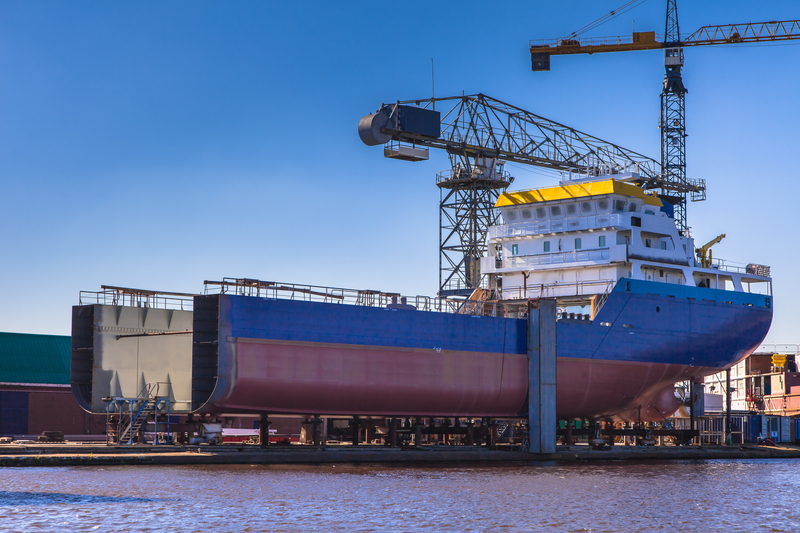
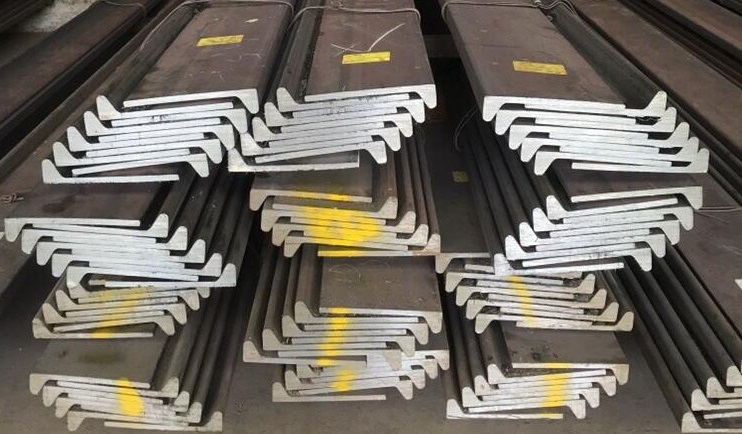
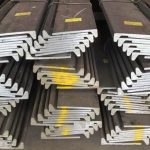
Shipbuilding steel is a core material in the modern shipbuilding industry, playing a decisive role in determining the strength, load-bearing capacity, and service life of marine vessels. As global maritime transportation demand continues to rise, selecting the appropriate specialized steel not only ensures construction quality but also optimizes costs and operational safety.
What are the outstanding characteristics of shipbuilding steel? How is it classified, and how is it applied in practice? Let’s explore these aspects in detail to help determine the most suitable choice for each project.
Technical Characteristics of Shipbuilding Steel Plates
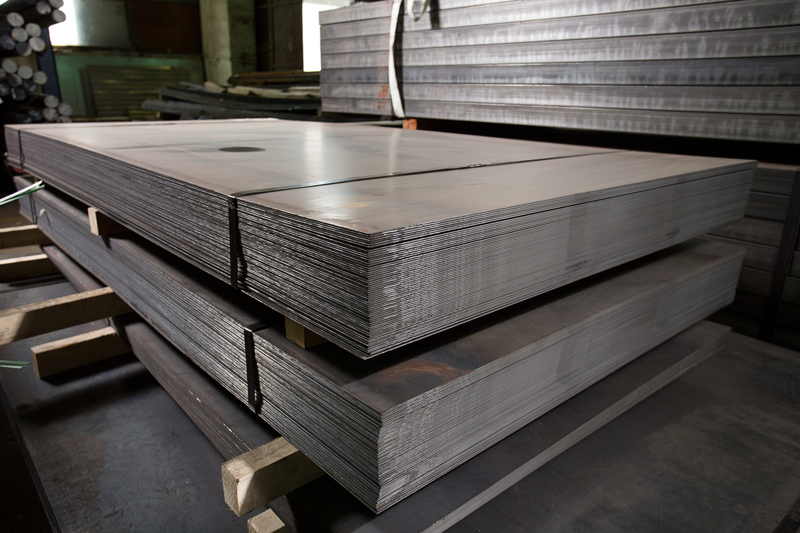
Shipbuilding steel is a type of carbon steel specifically engineered to withstand harsh marine environments such as saltwater exposure, high pressure, and constant impact. Unlike conventional construction steel, shipbuilding steel must strictly comply with international maritime standards.
Chemical Composition and Mechanical Properties
Steel used in shipbuilding must maintain a balanced combination of tensile strength, ductility, and corrosion resistance. Key elements include:
-
Carbon (C): Maintained at low levels to preserve ductility and prevent brittle fractures.
-
Manganese (Mn): Enhances strength and hardness.
-
Silicon (Si) and Sulfur (S): Help stabilize the metal structure and improve weldability.
-
Phosphorus (P): Strictly limited to ensure impact resistance at low temperatures.
Additionally, some high-grade steels incorporate alloying elements such as chromium (Cr), nickel (Ni), and molybdenum (Mo) to improve corrosion resistance and high-temperature strength.
Shipbuilding Steel Standards
Shipbuilding steel plates must comply with strict technical standards to ensure durability, corrosion resistance, and operational safety at sea. These standards are issued by individual countries or international organizations.
Below are some widely adopted standards in the shipbuilding industry:
-
ASTM Standards (United States): ASTM A131 is one of the most widely recognized standards for shipbuilding steel plates, covering various grades designed for specific applications.
-
JIS Standards (Japan): Important standards such as JIS G3131, JIS G3106, and JIS G3128 are commonly used in Japan’s shipbuilding industry, ensuring required mechanical strength and durability.
-
EN Standards (Europe): Standards including EN 10025, EN 10028, and EN 10225 are widely applied across European countries, specifying chemical composition, mechanical properties, and structural performance.
-
IACS Classification Society Standards: The International Association of Classification Societies (IACS) includes leading maritime classification organizations such as:
-
ABS (American Bureau of Shipping): ABS Grade A, B, D, E
-
DNV (Det Norske Veritas): DNV Grade A, B, D, E
-
BV (Bureau Veritas): BV Grade A, B, D, E
-
LR (Lloyd’s Register): LR Grade A, B, D, E
-
NK (Nippon Kaiji Kyokai): NK Grade A, B, D, E
-
RINA (Registro Italiano Navale): RINA Grade A, B, D, E
-
These organizations establish strict requirements regarding chemical composition, mechanical properties, tensile strength, impact resistance, and other technical parameters to ensure shipbuilding steel performs reliably in demanding maritime environments.
To select the appropriate steel for a specific project or technical requirement, businesses should consult the detailed standards issued by these organizations or national authorities.
Common Types of Shipbuilding Steel
1. Grade A Shipbuilding Steel Plate – The Most Common and Cost-Effective
Grade A steel plates are the most widely used materials in shipbuilding, particularly for ship hulls, bottoms, and structural components that do not bear heavy loads. This type of steel is standard carbon steel with moderate strength but excellent ductility and weldability. It typically has:
- Minimum yield strength: ~235 MPa
- Tensile strength: 400–520 MPa
Due to its relatively low production cost, ease of processing, and ability to meet basic maritime requirements, Grade A steel is widely used in cargo ships, fishing vessels, and barges.
However, because of its limited load-bearing capacity and corrosion resistance, Grade A steel is generally not used in heavily stressed structural components or in extremely harsh operating conditions. Maritime classification societies such as ABS, DNV, BV, and LR provide detailed specifications for Grade A steel (e.g., ABS Grade A, DNV Grade A) to ensure compliance with international material standards.
2. Grade B, D, and E Steel Plates – For Higher Structural Strength
Beyond Grade A, Grades B, D, and E were developed to meet higher requirements for strength and impact resistance in shipbuilding. The main differences between these grades lie in their yield strength and low-temperature performance.
- Grade B: Similar strength to Grade A but with stricter weldability and impact toughness requirements.
- Grade D: Designed to prevent brittle fractures at –20°C.
- Grade E: Suitable for even colder environments, with impact resistance at –40°C.
These steel grades are commonly used for ship decks, bulkheads, and vessels operating in cold waters, such as those in Northern Europe, Russia, or Alaska.
International classification societies such as LR, RINA, NK, and CCS provide detailed grading systems to ensure each steel grade is used appropriately for its intended technical and environmental conditions.
3. High-Strength Shipbuilding Steel – For Large Vessels and Specialized Structures
Modern shipbuilding increasingly uses high-strength shipbuilding steel to reduce vessel weight while maintaining structural integrity.
Common grades include:
- AH32, DH32, EH32
- AH36, DH36, EH36
These steels have:
- Yield strength up to 355 MPa
- Significantly higher tensile strength than conventional steels.
- High-strength steels allow ship designers to optimize vessel structures, improve fuel efficiency, and increase cargo capacity without compromising safety.
They are typically used in:
- Ship sides
- Transverse frames
- Longitudinal frames
- Main decks
- Double bottoms
These steels are commonly found in container ships, oil tankers, and naval vessels.
Grades with the E designation (e.g., EH36) are designed to perform well at extremely low temperatures, making them suitable for vessels operating in Arctic or other cold regions. Manufacturing, welding, and inspection of high-strength shipbuilding steel require advanced techniques and strict compliance with procedures established by international maritime organizations.
4. Specialized Alloy Steel – For Harsh Environments and Specialized Ships
In addition to standard carbon steel, the shipbuilding industry also uses specialized alloy steels to meet demanding requirements for corrosion resistance, durability, and specialized operating environments.
These steels may contain alloying elements such as:
- Nickel
- Molybdenum
- Chromium
- Manganese
For example:
- Nickel-rich steel is commonly used in LNG carriers due to its excellent low-temperature resistance and resistance to brittle fracture.
- Chromium–molybdenum steels are suitable for ships operating in highly corrosive environments, such as chemical tankers or offshore supply vessels.
Although significantly more expensive than conventional steel, specialized alloy steels are essential for projects requiring exceptional durability, longevity, and safety.
Their use must typically be approved and monitored by international classification societies such as DNV, ABS, or LR.
Practical Applications of Shipbuilding Steel
Shipbuilding steel is not limited to ship construction—it is widely used across various maritime and heavy industrial sectors.
Shipbuilding and Ship Repair
- Bulk carriers, container ships, oil tankers: High-strength steel is used to increase load capacity while maintaining safety.
- Fishing vessels, passenger boats, and high-speed vessels: Lightweight, corrosion-resistant steel is preferred.
- Ship repair and conversion: Requires steel compatible with existing structures and easy to weld and install.
Offshore Construction
- Offshore oil platforms, ports, and ferry terminals: Require corrosion-resistant steel with long service life in seawater environments.
- Floating structures, marine equipment, and support facilities: Require steel capable of maintaining strength during prolonged water exposure.
Supporting Industrial Applications
- Container manufacturing and cargo storage equipment: Requires high strength and deformation resistance.
- Steel structures for coastal factories: Must resist corrosion caused by salt spray and high humidity.
Standard Shipbuilding Steel Production Process
1. Raw Material Selection – The Foundation of Quality
The production process begins with selecting raw materials, a critical step that determines the final product quality.
Primary raw materials include:
- Iron ore
- Scrap steel
- Alloying elements such as manganese, silicon, and carbon.
These materials must meet strict purity and impurity standards. For instance, sulfur and phosphorus levels must be tightly controlled to prevent brittleness and ensure good weldability and impact resistance.
Modern steel plants typically analyze raw materials using spectrometers to precisely determine chemical composition before smelting.
2. Metallurgical Processing – Refining Composition and Removing Impurities
Once raw materials are verified, they are melted in furnaces such as:
- Blast furnaces
- Electric arc furnaces (EAF)
- Basic oxygen furnaces (BOF)
During this stage, metallurgists carefully adjust chemical compositions to achieve the desired mechanical properties for specific shipbuilding steel grades.
Unwanted elements such as sulfur, phosphorus, oxygen, and nitrogen are removed using processes like vacuum degassing (VD) to prevent gas porosity in the final steel.
This step ensures a uniform microstructure, high purity, and consistent material performance.
3. Slab Casting and Hot Rolling – Initial Plate Formation
Once the molten steel reaches the required composition, it is transferred to continuous casting systems to produce steel slabs, the main feedstock for hot rolling.
The slabs are reheated to approximately 1200–1250°C before entering hot rolling mills, where they are compressed and elongated through multiple rolling stands.
This process reduces thickness while increasing length and improves mechanical strength by refining the grain structure. Typical plate thicknesses include 6 mm, 8 mm, 12 mm, and other dimensions depending on application requirements.
4. Heat Treatment and Quality Inspection
After hot rolling, certain shipbuilding steels undergo heat treatment processes such as:
- Quenching
- Tempering
- Annealing
These treatments enhance hardness, strength, and low-temperature toughness. Comprehensive quality inspection follows, including:
- Tensile testing
- Charpy impact testing (at sub-zero temperatures)
- Bend testing
- Ultrasonic testing for internal defects
- Thickness and flatness inspection
Only steel plates that pass all tests receive certification and are approved for shipment.
Stavian Industrial Metal – A Trusted Partner in Shipbuilding Steel
As the shipbuilding industry demands increasingly higher material standards, Stavian Industrial Metal continues to establish itself as a trusted strategic partner in supplying specialized shipbuilding steel plates.
With a robust supply chain, strict quality control processes, and diverse sourcing capabilities, Stavian provides steel products that comply with international standards such as ABS, DNV, BV, LR, NK, and RINA, suitable for a wide range of vessels—from cargo ships and oil tankers to specialized vessels operating in icy waters.
Beyond steel supply, Stavian also provides technical consultation, steel grade selection, and optimized material solutions tailored to each shipbuilding or repair project.
Through an extensive distribution network, professional after-sales service, and a commitment to sustainable development, Stavian Industrial Metal remains a reliable partner for shipyards, steel structure contractors, and maritime industry enterprises worldwide.